OpenAI's AI Models Disprove 27-Year Exponential Time Hypothesis, Rendering Decades of Research Obsolete


19 Sources
[1]
Frontier AI labs say their models refuted the Exponential Time Hypothesis. What does that mean?
OpenAI released solutions to three blockbuster math problems that have long vexed researchers yesterday. One was a surprise rejection of the Exponential Time Hypothesis (ETH), a durable assumption in computer science that plays a large role in how we understand what is difficult to compute. As
[2]
An AI Breakthrough Has Made Decades of Computer Science Research 'Irrelevant'
Linköping University professor Peter Jonsson is set to have his work presented in two weeks' time at one of the most prestigious conferences in theoretical computer science. As of Monday, much of that work is "dead," he says, after AI showed that a 27-year-old hypothesis underpinning it is
[3]
OpenAI just scooped human researchers on a million-dollar quantum math problem
Another bombshell result shows how artificial intelligence is fueling fierce competition at the frontiers of math and physics If you've been keeping up with news in the math world, the story will sound strikingly familiar, right down to its cast of characters. Using a proprietary internal large
[4]
AI refutes 30-year-old mathematical assumption in computer science | New Scientist
A central tenet in computer science has apparently been disproven by OpenAI, a result that will force textbooks to be rewritten if it is confirmed OpenAI, the maker of ChatGPT, claims its AI models have disproven the Exponential Time Hypothesis - a fundamental assumption that underpins computer
[5]
Dueling proofs from OpenAI and Anthropic astound scientists
The results resolve major problems in math, physics and computer science. But like other recent AI-generated "slop drops," the release is already controversial Just a few weeks after dropping hundreds of AI-generated math breakthroughs on a field already in crisis, OpenAI is piling on
[6]

Sam Altman sympathizes with mathematicians, but says OpenAI's math onslaught won't stop
Altman says OpenAI has spent hundreds of millions on math -- and has more discoveries up its sleeve. After months of bombarding mathematicians with a relentless stream of AI-generated results, OpenAI CEO Sam Altman says he sympathizes with researchers struggling to make sense of it all. But he has
[7]
OpenAI announces three big science discoveries and a new way to work with academics
Less than a month after its mass release of hundreds of manuscripts that it said contained solutions to long-standing mathematics questions, OpenAI is back with three more "major" discoveries in math, computer science, and physics. What's different this time is the choice to have external experts
[8]

OpenAI announces new discoveries in mathematics, computer science and physics - Engadget
It formed groups of experts to examine and explain the results. Just a few weeks after OpenAI released manuscripts with over 700 pages of solutions and progress for 372 major math problems, the company has announced even more discoveries. This time, the discoveries don't just cover math results,
[9]

OpenAI says its AI model has disproved the Exponential Time Hypothesis
Two of the scientists who proposed the Exponential Time Hypothesis will lead an independent check of the claim. OpenAI also says its models settled the Kakeya conjecture. Hundreds of computer science papers rest on a conjecture that an internal OpenAI model now claims to have refuted, the company
[10]

OpenAI Trumpet's 3 More Math and Science Results, Along With a New Plan for Publishing Them
The company has already handed this work over to expert "shepherds" for completion. Look, we're all pretty sure 3-SAT can't be solved in polynomial time. So when this comes up -- as happens multiple times a day -- we all know where to turn. Say it with me: the Exponential Time Hypothesis (ETH). I
[11]

Sam Altman says OpenAI won't slow science paper blitz -- even though academics are calling it a 'giant bomb'
"It's really cool and terrible at the same time", say researchers * OpenAI will keep pushing AI's scientific discoveries, Sam Altman says * Some researchers are excited by the 'fantastic' breakthroughs * But others warn that the pace of change is 'psychologically taxing' One of the promises
[12]

OpenAI said AI cracked major math, computing and physics problems
OpenAI said outside expert groups will examine the proofs, including a disproof of the Exponential Time Hypothesis OpenAI announced three discoveries in which it said its AI models proved the local smoothing conjecture in every dimension, disproved the Exponential Time Hypothesis and produced a
[13]

OpenAI Proves ETH Is False, and Crypto Twitter Has Questions
A new OpenAI paper declares ETH false, a claim that hundreds of research papers lean on. Crypto Twitter degens and serious mathematicians are abuzz. In brief * OpenAI says its AI has proven that ETH is false -- but it's not the "ETH" crypto traders are thinking about. * The company says its AI
[14]

Shock, vindication, regret: Scientists react to AI roiling life's work
San Francisco (United States) (AFP) - For decades, three computer scientists built their careers around an idea about the limits of what computers can do. Artificial intelligence may now have shown it to be wrong: OpenAI and Anthropic each said on Monday one of their AI models had disproved the
[15]

Exponential Time Hypothesis: AI models have produced proofs challenging major theories in maths, computing, physics: OpenAI
OpenAI has claimed its AI models have disproved the Exponential Time Hypothesis, which impacts computer science research. The findings include proofs related to harmonic analysis and quantum field theory, influencing various scientific domains. Researchers will verify these claims, and OpenAI plans
[16]

Shock, vindication, regret: Scientists react to AI roiling life's work
San Francisco - For decades, three computer scientists built their careers around an idea about the limits of what computers can do. Artificial intelligence may now have shown it to be wrong: OpenAI and Anthropic each said on Monday that one of their AI models had disproved the "exponential time
[17]

OpenAI Says Its AI Solved Three Major Scientific Problems
OpenAI says its AI systems produced proofs for three major open problems in mathematics, computer science and physics -- and it's bringing in outside experts to check them. The ChatGPT maker is also testing new ways to share AI-generated research with the scientific community. The company said it
[18]

OpenAI Reveals New Discoveries in Mathematics, Computer Science, Physics
OpenAI has announced new scientific discoveries in mathematics, computer science and physics, including results involving wave equations, computational complexity and quantum field theory, with external researchers invited to examine, explain and evaluate the findings. OpenAI has announced three
[19]

OpenAI claims AI solved decades old science and math problems: What we know
According to OpenAI, their AI models have just accomplished what mathematicians and physicists have been seeking for decades. In one press release alone published on October 26th, OpenAI claimed that an AI proved a renowned computer science conjecture, solved a harmonic analysis conjecture in all
Share
Copy Link
OpenAI released AI-generated proofs disproving the Exponential Time Hypothesis, a foundational assumption in computer science since 1999. The breakthrough forces researchers to revisit decades of work while raising questions about cryptographic systems and the future role of AI in scientific discovery.
OpenAI and Anthropic Challenge Foundational Computer Science Assumption
OpenAI released AI-generated proofs on October 26 that disprove the Exponential Time Hypothesis (ETH), a 27-year-old mathematical assumption underpinning vast areas of computer science research
1
4
. Hours later, Anthropic released its own refutation of ETH, escalating competition between frontier AI labs1
. The AI breakthrough came as a complete shock to the scientific community, with University of Bergen professor Fedor Fomin stating that "nobody I know expected it"4
.
Source: TechCrunch
The Exponential Time Hypothesis, proposed in 1999 by UC San Diego computer scientists Russell Impagliazzo and Ramamohan Paturi, established limits on how quickly computers can solve certain logical puzzles
1
. The hypothesis suggested that computational effort needed to solve specific problems grows exponentially as problem size increases. OpenAI's AI models devised algorithms solving these puzzles in "sub-exponential" time, potentially proving ETH false1
.Massive Implications for Existing Research and Cryptographic Systems
The ramifications extend across theoretical computer science, with UC Santa Barbara professor Daniel Lokshtanov estimating the result renders him "galactically wrong" and makes around 50 of his published papers either "pointless" or requiring revision
2
. Linköping University professor Peter Jonsson described much of his work as "dead" just two weeks before presenting it at a prestigious IEEE Symposium on Foundations of Computer Science2
.MIT Professor Ryan Williams, who previously criticized OpenAI's October proof dump as a "DDOS attack on mathematicians," agreed to organize the computer science community's response
1
. Williams identified "two or three alien-looking parts" in OpenAI's proof that require collective examination from the entire scientific community1
.Beyond academic concerns, the breakthrough raises immediate cybersecurity questions. An improved algorithm could undermine cryptographic systems that rely on computational difficulty assumptions
1
. Williams pushed OpenAI to fund a conference addressing these implications, emphasizing the need to establish new foundations for computer science research1
.Connection to P vs NP and Broader Mathematical Problems

Source: The Verge
The Exponential Time Hypothesis relates directly to the P vs NP problem, which questions whether problems with easily verifiable solutions can also be solved easily
1
. While disproving ETH doesn't resolve P vs NP, University of Oxford researcher Leslie Goldberg noted it represents "an enormous breakthrough" if confirmed4
.OpenAI verified the ETH result using Lean, mathematical proof-checking software that ensures logical consistency
4
. Stefan Szeider at TU Wien in Austria expects the proof to withstand scrutiny, though researchers must verify the formally proven statement matches its intended meaning4
.The announcement accompanied two other major breakthroughs: a solution to the Kakeya conjecture across all dimensions and progress on the Yang-Mills problem, one of seven million-dollar Clay Millennium Problems
3
5
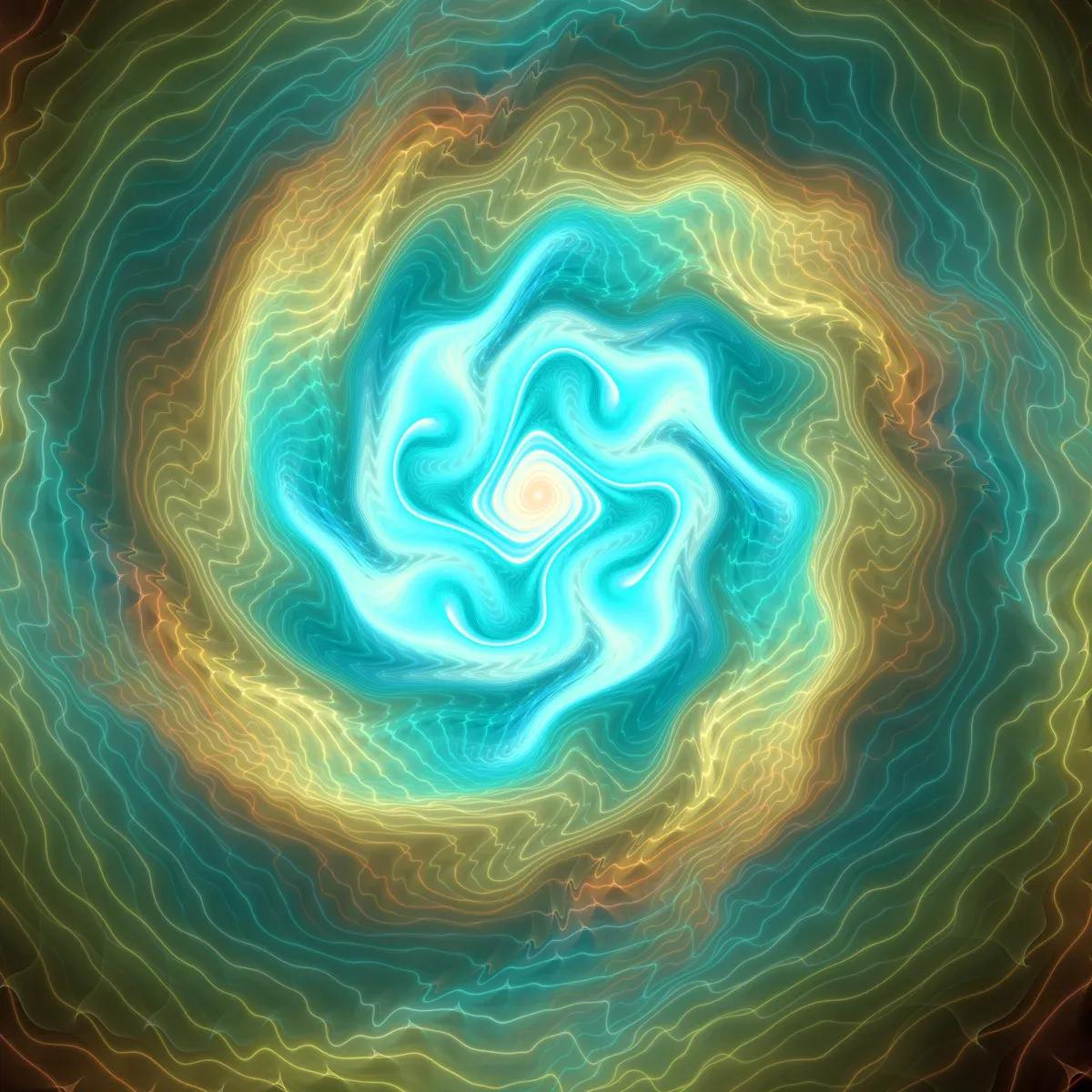
. The Yang-Mills work addresses quantum chromodynamics, validating the mathematical foundations of particle physics3
.
Source: Scientific American
Related Stories

Scientific Community Grapples with AI-Generated Discoveries
OpenAI structured its releases differently across disciplines this time. Mathematicians received work on GitHub, computer scientists formed a working group requesting public proof sharing and conference funding, while physicists established a group determining release protocols
1
.The rapid pace of AI-generated mathematical breakthroughs has created psychological strain within academic departments. IT University of Copenhagen algorithms research head Thore Husfeldt reported his department considered hiring an occupational psychologist because "some people are really depressed and really sad" as AI models regularly "annihilate the ongoing research projects of many people"
2
.Despite the disruption, some researchers express enthusiasm. Husfeldt described the finding as "fantastic," comparing it to "somebody just illuminated an entire subfield in floodlights of knowledge"
2
. University of Sydney researcher Clément Canonne noted that "proving something and understanding why it is true aren't the same thing," emphasizing the need to comprehend the underlying reasoning4
.Controversy Over Release Methods and Academic Protocols
The releases contradict recommendations from the Advisory Group on Mathematics and Artificial Intelligence (AGMAI), an expert panel OpenAI organized following mathematician criticism
5
. The large language model producing these proofs remains proprietary, with exact prompts, computation time, and chain-of-thought outputs undisclosed5
.OpenAI's approach violated an AGMAI clarifying statement published just one day prior by designating specific experts to shepherd results publicly
5
. The Yang-Mills proof remains unpublished while Nobel laureate David Gross examines it, prompting AGMAI to demand immediate release, stating "there is no scientific reason for delaying the release any further"3
5
.The timing proved particularly frustrating for Anthropic mathematician Levent Alpöge and Northwestern University's Ethan Sussman, who were publicly pursuing the Yang-Mills problem independently
3
. They updated their GitHub repository with intermediate results the night before OpenAI's announcement, believing they were "maybe even as close as a few weeks away" from completion3
.Royal Holloway's Magnus Wahlström described the phenomenon as "mathematics done by press," expressing concern that proprietary AI models can suddenly overturn months of researchers' work
4
. OpenAI commissioned an independent group including ETH co-proposers Impagliazzo and Paturi to examine findings, with their open letter acknowledging the work could "change an important part of theoretical computer science"4
.References
Summarized by

Navi
[1]
[3]
[5]
Related Stories
OpenAI Releases 722 AI-Generated Math Solutions, Triggering Existential Crisis in Mathematics
08 Oct 2026•Technology
OpenAI Releases 722 AI-Generated Math Papers on GitHub, Igniting Fury Among Mathematicians
01 Oct 2026•Science and Research
OpenAI's AI Math Breakthrough on Millennium Problem Sparks Fierce Attribution Battle
08 Sept 2026•Science and Research
Recent Highlights


Recent Highlights
Today's Top Stories








Don’t drown in AI news. We cut through the noise - filtering, ranking and summarizing the most important AI news, breakthroughs and research daily. Follow topics that matter to you and stay ahead.


