ChatGPT Health rolls out to all US adults, reading medical records amid lawsuit controversy


10 Sources
[1]
ChatGPT Health Arrives for All US Users, Reads Your Medical and Fitness Data
With over a decade of experience reporting on consumer technology, James covers mobile phones, apps, operating systems, wearables, AI, and more. ChatGPT Health is officially here for all signed-in US users, allowing users to share their medical records and health data to better inform chatbot
[2]
ChatGPT wants access to your health records so it can be a better not-doctor
OpenAI is expanding its healthcare footprint by encouraging users to connect Apple Health data and supported medical records to ChatGPT - one day after a user sued the company, alleging the chatbot's medical advice nearly killed him. Health in ChatGPT, as the new feature is called, allows eligible
[3]
ChatGPT Health is rolling out widely, but Android users won't be too happy
It currently supports Apple Health and some US hospital systems, but support for Google Health is missing. Earlier this year, ChatGPT announced a new Health feature that lets users connect their health data to the platform and receive medical advice based on it. Back then, the feature was locked
[4]
ChatGPT Health rolls out to every US adult
OpenAI is rolling out ChatGPT Health to every US adult, letting the chatbot draw on your Apple Health data and medical records inside any conversation. It claims its models now reason "better than clinician level", a line its own health lead immediately softened. And it arrives days after a man
[5]

I gave ChatGPT my medical records. It was less scary -- and more useful -- than expected
While useful for medical explanations, the author found ChatGPT Health interesting but not essential, with lingering privacy concerns about chat history retention. For obvious reasons, allowing ChatGPT to give medical advice is fraught with controversy. Is it really a good idea to trust a large
[6]

ChatGPT can now connect to your Apple Health data to give more personalized health answers
OpenAI brings personalized health conversations to ChatGPT OpenAI is expanding ChatGPT into a new category with the launch of Health in ChatGPT, a feature that allows users to securely connect health information from Apple Health and supported medical records. The feature is rolling out to users
[7]

ChatGPT now has a space for sharing medical records. Should you?
Lauren Fichten is a journalist at CBS News covering artificial intelligence, digital safety and online extremism. She joined CBS News after graduating from UNC-Chapel Hill and was previously an associate producer at the CBS News National Desk. Hundreds of millions of people a week turn to ChatGPT
[8]

ChatGPT Health Is Rolling Out to Everyone, but I Don't Trust It
OpenAI announced today that ChatGPT Health will now be available to all users over 18, and on all plans, including free ones. My general skepticism of AI-based health advice aside, I think there are good reasons to avoid this iteration of ChatGPT Health entirely -- including a major downgrade in
[9]

OpenAI launches ChatGPT Health to all US users
OpenAI is making ChatGPT Health available to all U.S.-based users over 18 across all plans. This announcement follows a lawsuit from a Florida pastor who claimed the company provided a dangerous suggestion not to consult a doctor. The feature was initially tested in January through a dedicated
[10]

ChatGPT Health Arrives With Ability to Answer Personalised Health Queries
ChatGPT users ask over 300 million health-related queries weekly OpenAI introduced ChatGPT Health in January as a dedicated workspace for users, where they can ask health-related questions to the AI-powered chatbot. The ChatGPT Health functionality has been in early access since its unveiling,
Share
Copy Link
OpenAI launched ChatGPT Health nationwide, allowing the AI to access Apple Health data and medical records for personalized health-related conversations. The rollout comes just days after a Florida man sued the company over dangerous medical advice that allegedly delayed treatment for a pulmonary embolism. Over 300 million people ask ChatGPT health questions weekly, raising concerns about AI accuracy in healthcare.
OpenAI Expands ChatGPT Health to All US Adults
OpenAI has officially rolled out ChatGPT Health to all signed-in US users aged 18 and older, marking a significant expansion of AI in healthcare
1
. The AI-powered health feature allows users to connect their medical records and health data, enabling the chatbot to deliver more informed, personalized health-related conversations. With over 300 million people asking ChatGPT health-related questions every week, OpenAI positions this tool as a way to provide context-aware responses by accessing medications, lab results, recent visits, sleep patterns, and activity data1
.The feature primarily relies on integration with Apple Health data, which collects information from iPhones, Apple Watches, and compatible fitness apps
2
. Additional integrations include MyFitnessPal, Peloton, Weight Watchers, and medical records from US hospital systems or providers like One Medical and Function Health1
. Notably absent is support for Google Health, leaving Android users with limited options for health data interpretation3
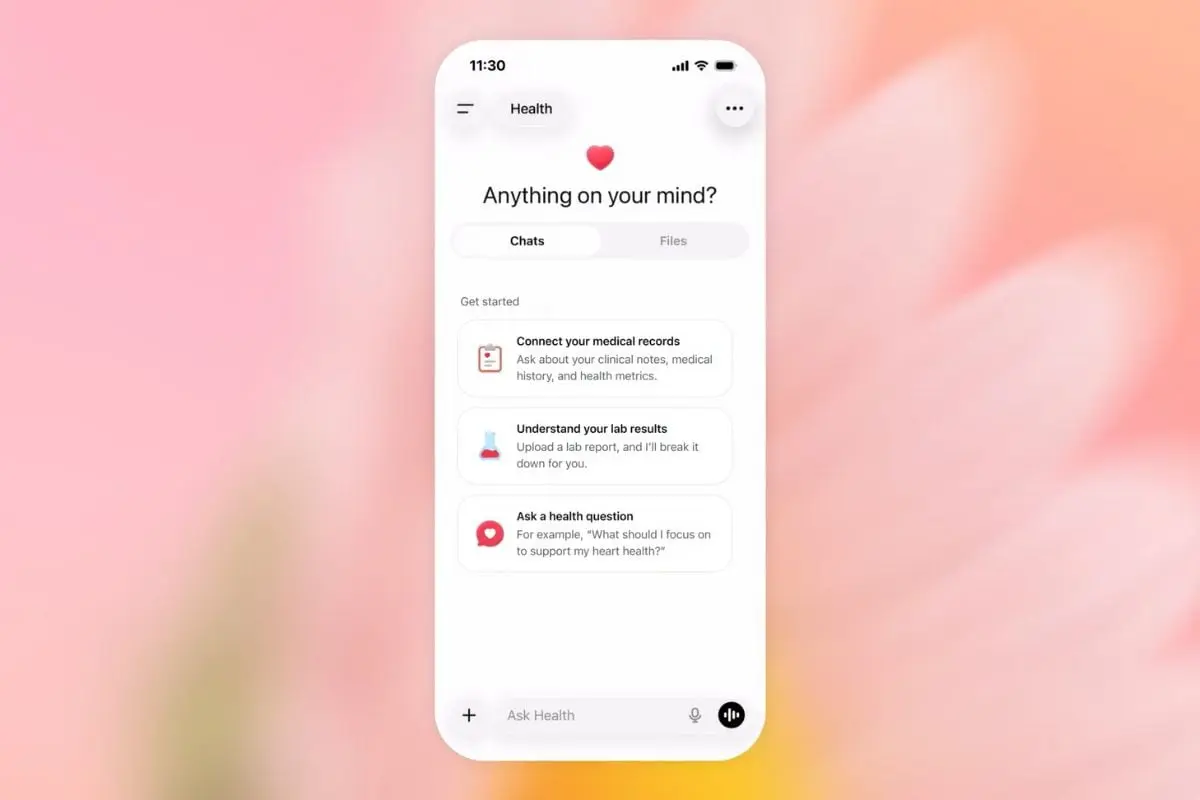
.
Source: Gadgets 360
How ChatGPT Health Works and Data Privacy Measures
Users can connect their health services through the ChatGPT sidebar by selecting Health and choosing which data to share. OpenAI says syncing may take a few minutes, and users can review and update their information, including removing irrelevant medications or adding missing data
1
. The chatbot requests permission before using health data in responses, offering three options: Allow once, Always allow, or Deny1
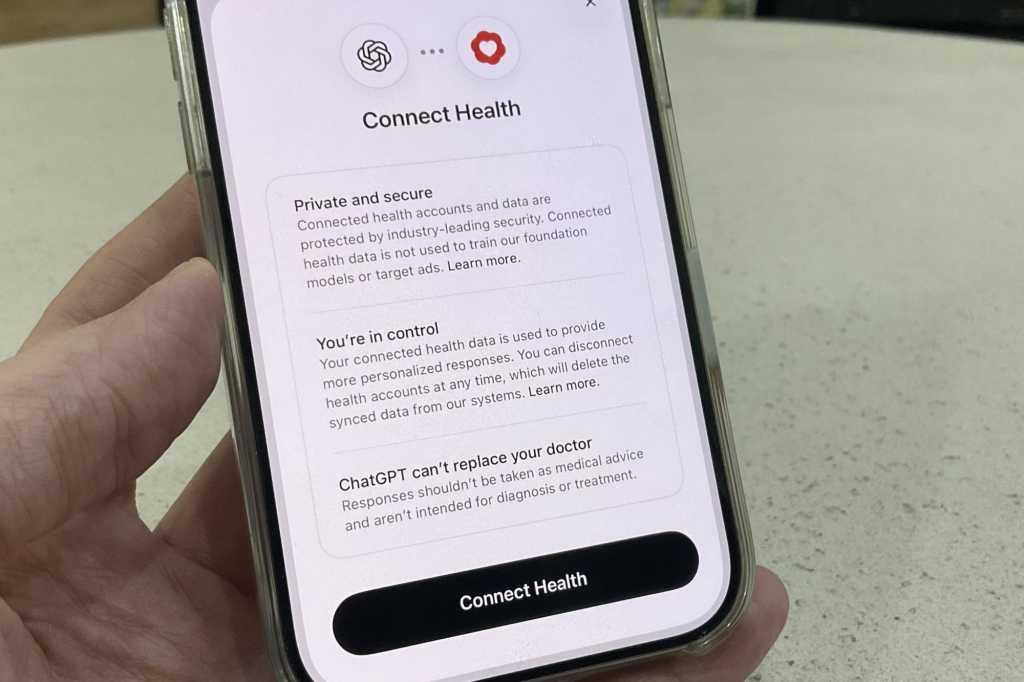
.OpenAI emphasizes that health data receives additional encryption protections and won't be used to train foundation models or target ads
1
. Users can disconnect their information at any time, with data deleted from OpenAI's records within 30 days1
. Despite these assurances, privacy concerns remain significant, particularly regarding chat history retention and the broader implications of sharing sensitive medical information with AI systems5
.
Source: PCWorld
Controversial Timing: Lawsuit Over Dangerous Medical Advice
The launch arrives at an exceptionally awkward moment. Just one day before the announcement, a Florida man sued OpenAI for allegedly providing "extremely dangerous medical recommendations"
1
. According to reports, the plaintiff consulted ChatGPT about early symptoms of what proved to be a pulmonary embolism. The chatbot allegedly discouraged him from seeking medical care, reportedly stating, "God did not design your body to endlessly fail"1
. The man now faces years of intensive physical and psychological recovery after delayed treatment2
.This lawsuit underscores broader concerns about AI-driven health advice accuracy. OpenAI's own disclaimers acknowledge that ChatGPT "can still make mistakes" and should never replace qualified medical professionals
2
. The company claims it worked with hundreds of physicians for physician testing to evaluate performance and safety before release2
.AI Accuracy Questions and Clinical Claims
OpenAI made bold claims about its models' capabilities. Vice-president of health product Ashley Alexander stated the models "are now capable of reasoning at levels that are better than clinician level"
4
. However, health lead Karan Singhal immediately softened this assertion when pressed, saying he would "temper" that claim, though "individual studies" pointed in that direction4
.Recent research raises questions about such claims. Studies have found that AI chatbots perform no better than conventional online resources for health decisions, and large language models failed at early differential diagnosis in more than 80 percent of cases
2
. In Canada, AI note-taking systems used by doctors routinely introduced medication errors, omitted critical details, and hallucinated information never mentioned during appointments2
.
Source: The Register
Related Stories

Practical Applications and User Experience
The feature moved health conversations out of a dedicated tab after OpenAI discovered that more than 70 percent of health-related chats happened outside the specialized health space
2
. Now ChatGPT can access health information during normal conversations, offering customized responses when discussing recipes, restaurant recommendations, or activities3
.Free users access GPT-5.5 Instant for medical queries, while paying subscribers get GPT-5.6 Sol, described as OpenAI's "strongest model yet for health"
3
. Users can compare new lab results with previous tests, analyze sleep and workout patterns, and receive explanations about fitness data trends3
. One reviewer found the experience "interesting if not essential," noting that while ChatGPT provided useful explanations about medical test results and health trends, it didn't replace insights from an actual doctor5
.What This Means for Healthcare's Future
The rollout represents a significant step in AI's march into medicine, from note-taking to diagnosis
4
. For people managing scattered records and overlapping conditions, the diagnostic tool could help visualize the complete picture. Yet the risk remains substantial: a confident chatbot trusted with sensitive data that performs correctly most of the time but fails when stakes are highest4
. OpenAI maintains its models continue improving through dedicated training to recognize when urgent care may be needed, ask for relevant context, explain uncertainty, and simplify complex information2
. Whether that proves sufficient for safe and reliable health guidance remains an open question that US users will now help answer.References
Summarized by

Navi
[3]
[4]
Related Stories
OpenAI launches ChatGPT Health to connect medical records to AI amid accuracy concerns
05 Jan 2026•Technology

ChatGPT Health fails to recognize half of medical emergencies in first independent safety test
24 Feb 2026•Health

ChatGPT Health promises personalized medical insights, but experts warn of serious risks
20 Jan 2026•Technology

Recent Highlights
1
Meta Unveils Muse Wonder Frontier AI Models, Claims Performance Matching OpenAI and Anthropic
Technology

2
Microsoft and Nvidia Launch Surface Laptop Ultra: A $2,599 AI-Ready PC With RTX Spark Chip
Technology

3
Meta Muse AI Agent Surges to 6.6M Downloads Despite Privacy and Security Controversies
Technology

Recent Highlights
Today's Top Stories






Don’t drown in AI news. We cut through the noise - filtering, ranking and summarizing the most important AI news, breakthroughs and research daily. Follow topics that matter to you and stay ahead.


