8 Sources
[1]
Anthropic's new hardware standard lets AI agents control the physical world
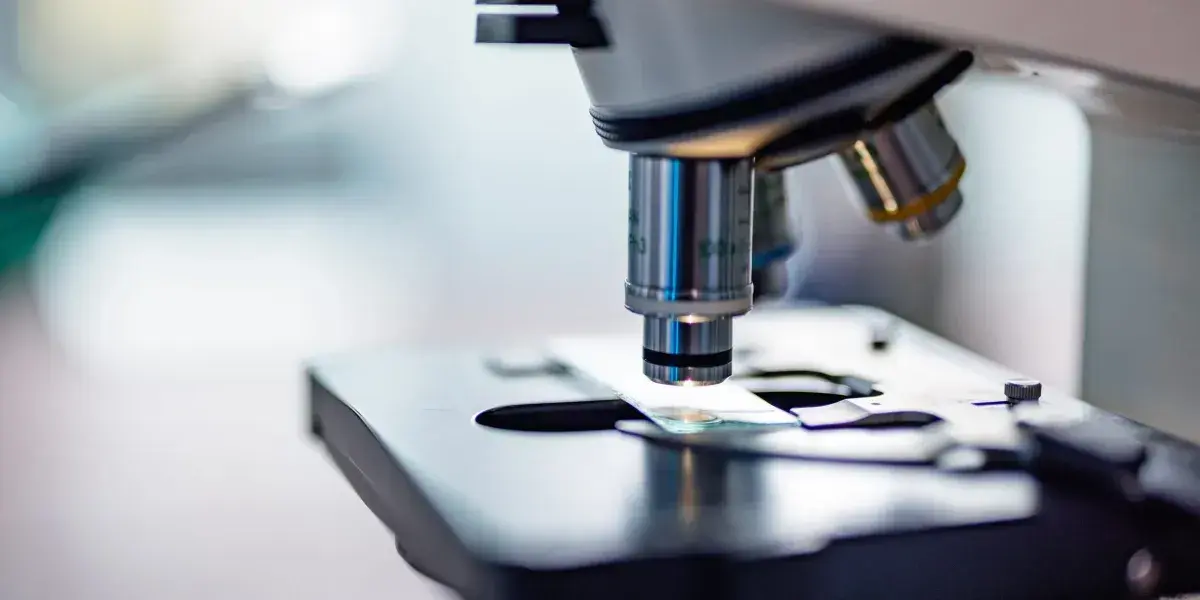
For all the interest in and uptake of agentic AI systems over the past year or so, the world of automated AI has thus far been primarily limited to text, images, code, and other data and actions that take place inside a computer. Anthropic is now aiming to change that somewhat with what it's calling the Model Hardware Standard (MHS), a set of standardized drivers designed to let AI agents easily interface with and control arbitrary devices. For now, the "research preview" of the MHS effort is being sold mainly as a way to help scientists streamline the arduous process of creating the custom software integrations that are often needed to get disparate components of an experiment working in concert. MHS can provide a common interface and common format for data sharing between these devices, Anthropic says, allowing them to talk to each other across a network "without needing a bespoke 'translator' program in between." The standardized system could reduce weeks or months of exacting experimental setup down to "hours or minutes," Anthropic writes. In a video posted alongside the announcement, Anthropic Technical Staffer Alek Kemeny says the MHS effort was inspired by observing neuroscientist Arco Bast work through an experiment on memory formation in the brain at the HHMI Janelia Research Campus in Ashburn, Virginia. Kemeny said Bast had worked out an interface to get the rotating laser beams, microscopes, cameras, and myriad other components of the experiment to coordinate through a common interface. "This idea could be used to have AI run any science experiment in the world," Kemeny recalls thinking at the time. Your new robotic lab assistant? There's nothing about a common machine interface language that requires the use of AI models, of course. And Anthropic says MHS devices can be controlled directly in real time via command-line prompts and API code files. But integrating an MHS system with an AI model through the Model Context Protocol lets scientists interact with devices using natural language, and lets models "reason through each step in an experiment, update parameters in real time, and, in some cases, recover from hardware errors without intervention," Anthropic writes. Anthropic gave the example of a model like Claude adjusting a laser, checking the results via a separate camera, then repeating the process to automatically calibrate the whole system. MHS could also allow an AI model to focus a microscope, analyze the results, decide what part needs more observation, then automatically move the microscope to the relevant section to continue the experiment. In a video, Anthropic also showed Claude reasoning how to get a robotic arm to pick up an aluminum can even though it had not been specifically trained on the required steps. And rather than reasoning through each step each time, Anthropic says MHS-enabled models can sequence steps across instruments by writing API scripts and adjusting them as conditions require. Anthropic says MHS also includes a standardized tagging system to describe hardware's real-world constraints for models that may have been trained more in the virtual world. That includes encoded information about the hardware's physical characteristics (e.g., the weight and range of a robot arm) as well as its adjustable parameters, measurement options, and enforced safety limits. These tags can then be integrated into a reference file that can quickly provide an AI model with crucial information about a device it has no previous training experience with. For now, Anthropic says it is working with "a first group of scientific research labs and advanced manufacturers" during an MHS preview period, including Amazon Web Services (Strands Robots), Hugging Face (LeRobot), Raspberry Pi, Automata, and Universal Robots. These partners will help Anthropic "build safety evaluations and develop best practices for AI systems operating physical equipment," the company writes. After that, the plan is for MHS to eventually become an open source and "agent agnostic" standard for integrating AI and physical systems. In early testing with scientific partners over the last year, Anthropic says it "saw MHS reduce the time it took to integrate devices, mak[ing] it possible to iterate faster in a variety of experimental settings." "If you can test hypotheses faster, you could create general technologies faster," Kemeny said in a promo video alongside the announcement. "This is how a century of progress can condense into a decade."
[2]
This Is How Anthropic Thinks AI Agents Should Navigate the Physical World
Artificial intelligence agents might occasionally get confused and hack into other computers, but Anthropic thinks it has a way to unleash the little rascals into scientific labs and manufacturing facilities safely. The AI company released details today of a new framework designed to help AI agents use physical systems like microscopes, liquid-handling equipment, quantum computing hardware, manufacturing machines, and robot arms. The framework, called Model Hardware Standard, is a set of rules that specify how AI agents should -- and should not -- interact with all sorts of hardware. It reflects a growing belief that AI has the potential to revolutionize scientific research and industries like manufacturing-if it can venture into the physical world safely. The company says it will work with trusted partners to determine how to maximize safety before making it generally available. Though there are potential misuse issues involved -- developing biological weapons, for instance -- the company says guardrails built into AI models themselves should prevent bad actors from taking advantage of the new standard for nefarious ends. "The impetus is wanting to accelerate science," says Alek Kemeny, a quantum physicist who co-led the development. "How do we close the loop between accelerating literature review and data analysis -- and bring that power to the experimental world?" Claude and other chatbots are already powerful tools for combing through large amounts of information in the form of scientific papers or experimental results to uncover new insights and ideas. AI agents are widely considered the next step after chatbots: They're designed to take actions, often on ordinary computers, doing things like answering emails. They can potentially use other hardware, too -- and Anthropic wants to make sure there are rules in place as they do. Several well-funded startups are pursuing a vision for scientific discovery driven by AI agents, including Periodic Labs, LILA Sciences, Edison Scientific, and Discovery Loop, which was founded by several prominent ex-Google researchers. A key idea is that AI could develop and test scientific hypotheses in a recursive loop that essentially automates scientific discovery. Jonah Cool, an experimental biologist who worked on the standard at Anthropic, says that configuring scientific equipment and having it interact with other pieces of hardware typically requires serious expertise. AI could automate much of the complex engineering involved by configuring machines and having them talk to one another. Anthropic is working with a number of manufacturers to develop the standard. "We're starting to see some cases where you know you have multiple robotic systems that previously would need bespoke code," Kemeny says. Using the new standard, he adds, Claude can view the robots on the factory line and figure out how to optimize behavior. AI agents have been in the news lately for all the wrong reasons. Anthropic, OpenAI, and others have recently found instances in which AI agents tasked with solving cybersecurity problems secretly hacked into outside systems and tried to deceive human users. Letting AI use physical systems raises the prospect of new risks because of the potential to damage physical systems or hurt people. Experiments have shown, for example, how AI models can be tricked into making robots misbehave. Anthropic says the new standard will let scientists and engineers specify how AI models should avoid using different hardware to prevent mishaps. Anthropic previously introduced the Model Context Protocol, which specifies rules for having AI models interact with different software programs.
[3]
Anthropic proposes plumbing spec to link AI agents to lab kit and robots
Anthropic on Thursday teased a protocol for allowing AI agents "to safely operate physical devices," a somewhat optimistic ambition given it cannot reliably anticipate how its models behave. The as-yet-unpublished protocol, dubbed the Model Hardware Standard (MHS), is similar in concept to the Model Context Protocol (MCP), a way for AI models to connect to data sources. Anthropic intends for MHS to allow Claude or other models to drive the hardware used in laboratories, factories, and robots. Supopse you are an Iranian research scientist setting up a network of centrifuges to enrich uranium. You might look at how your machinery spun out of control in 2010 and think: "Maybe if we use an AI model and MHS, we could avoid that sort of mishap next time." MHS, however, is being battle-tested in quieter regions of the world, specifically at Howard Hughes Medical Institute's (HHMI) Janelia Research Campus in Maryland. And now other entities with suitable laboratory and industrial equipment can apply to join the research preview. "It typically takes a lab or manufacturing facility weeks, if not months, to set up and integrate their hardware," Anthropic explained in its post. "Most devices don't communicate with each other, instead requiring specialists to build bespoke integrations. MHS reduces this integration work to hours or minutes." Linking hardware to an AI model requires a programmable interface. Many industrial machines offer one to expose relevant controls and data -- but the ecosystem of such devices is very diverse and it is not easy for developers to make a hookup. MHS aspires to be a universal translation layer. The MHS driver software uses a limited set of primitives, such as "read" and "write," an approach similar to the way a few simple tools like Bash can be used to power AI agents. The driver makes connected devices discoverable in a standard format. It also supports tags that convey information about device functions, and lets users provide that data by conversing with the model during setup. The tags let the driver produce a reference file detailing device characteristics. AI agents can use MHS to interact with devices using three control paths: MCP, the command line interface, and API code. They can carry out commands on connected instruments, monitor test results, or tweak knobs and dials. According to Anthropic, biotechnology company Genentech has used MHS to run a drug-discovery experiment with real-time error handling. Quantum computing outfit QuEra is another user, and applied MHS to improve laser stabilization for its machines from 58 percent to 99.3 percent. The possibilities already have partners salivating. AWS is planning to support MHS through its Strands Robots library. Automata expects to add MHS to its LINQ lab automation platform. And similar support is planned by the likes of Danaher, Doosan Robotics, MBF Bioscience, Qiagen, Tecan, and Universal Robotics. "There's more to learn before we open source MHS," Anthropic said. "LLMs still lack physical intuition, having learned about the physical world from text and images. The research preview will let us build more safety evaluations and strengthen protections for using AI in the physical world." Let the experiments begin. ®
[4]
Anthropic unveils new framework allowing AI agents to operate physical devices
Aug 27 (Reuters) - Anthropic on Thursday rolled out a research preview of "Model Hardware Standard", a framework for AI agents to operate physical devices in scientific research and advanced manufacturing. The MHS enables AI agents to operate lab and manufacturing instruments such as microscopes and robotic arms in tandem and perform complex tasks, ranging from routine drug discovery experiments to laser calibration on a quantum computer, Anthropic said. By integrating agentic AI capabilities with lab and manufacturing hardware, the Claude chatbot maker aims to help researchers and engineers execute autonomous, round-the-clock workflows with minimal human intervention, helping speed up processes. The standard, Anthropic said, works on any device that has a programmable interface and allows devices and agents to communicate across networks. The company said it is sharing an early version of the MHS with partners to help build out safety evaluations before making it open source. Reporting by Deborah Sophia in Bengaluru; Editing by Joyjeet Das Our Standards: The Thomson Reuters Trust Principles., opens new tab
[5]
Anthropic pushes into physical world with new standard to help AI agents operate machines
* Anthropic announced the Model Hardware Standard (MHS), a new interface that will make it simpler for AI agents to operate and communicate with physical machinery. * MHS is initially available in a research preview, but Anthropic plans to open source it in the future. * Anthropic aims to help companies reduce the amount of time it takes to set up and integrate their hardware. Dario Amodei, co-founder and chief executive officer of Anthropic, during an interview at Anthropic's headquarters in San Francisco, California, US, on Thursday, April 30, 2026. Jason Henry | Bloomberg | Getty Images Anthropic on Thursday announced a new interface that will make it simpler for AI agents to operate and communicate with machinery, as the artificial intelligence giant pushes into the physical world. The Model Hardware Standard (MHS) is designed to work with any device that has a programmable interface, including those used in scientific research and advanced manufacturing, Anthropic said. Users can think about it like a USB-C chord, which standardizes how information is transmitted between devices. "We built this for science to sort of show the promise of AI, but there's also huge benefits here for enterprise and for industry," Elizabeth Kelly, head of beneficial deployments at Anthropic, told CNBC in an interview. The announcement signals that Anthropic is wading deeper into hardware, where rivals including OpenAI and Amazon have spent billions of dollars designing AI-native devices and manufacturing tools. Anthropic is building out a silicon team to design custom chips for its models and recently hired Caitlin Kalinowski, a hardware executive who previously worked at OpenAI, Meta and Apple, according to LinkedIn. Anthropic said MHS aims to help companies reduce the amount of time it takes to set up and integrate their hardware. It's also model agnostic, which means users are not beholden to Anthropic's family of Claude models. MHS is initially available to a select group of organizations in science, robotics and manufacturing as part of a research preview, Anthropic said. But the company eventually plans to open-source the standard, which means any device manufacturer in any industry will be able to adopt it. Anthropic open-sourced another popular standard called the Model Context Protocol in 2024, which makes it easier to connect AI agents and data sources. VIDEO6:4206:42 Watch CNBC's full interview with Salesforce CEO Marc Benioff and Anthropic CEO Dario Amodei Choose CNBC as your preferred source on Google and never miss a moment from the most trusted name in business news.
[6]
Anthropic tests a new standard for Claude to work with factory and lab hardware
The Model Hardware Standard is in research preview with Raspberry Pi and Hugging Face among the testers, and will be open-sourced into a market where machinery safety functions are about to need a notified body Anthropic has released the Model Hardware Standard in research preview, a specification that stores how a piece of hardware works and how an AI may safely operate it, such as limiting a robot arm's speed and angles. Europe's Machinery Regulation starts covering AI-based safety functions on 20 January 2027. Anthropic has written a standard for telling an AI how a machine works. The Model Hardware Standard, out in research preview, stores what a piece of hardware does and how it may be operated, so a model does not have to rely on a paper manual or on the two people who know. The example the company gives is a robot arm. A vendor can specify in an MHS file how an AI may move a heavy arm safely, limiting the speeds and angles it is allowed to use. The pitch is about knowledge that exists but cannot be reached. "In many cases, the science doesn't happen because you can't use the equipment," said Jonah Cool of Anthropic's life sciences arm. The precedent is Anthropic's own. "What MCP did for software, MHS will do for the hardware world," said Alek Kemeny, referring to the Model Context Protocol that now connects assistants to Gmail, Calendar and Slack. The demonstration is a laboratory. Anthropic says a Genentech scientist sent Claude a PDF of an experiment they had designed, and the assistant executed it autonomously on hardware carrying an MHS specification. The test group is substantial. Amazon Web Services, Danaher, Hugging Face and Raspberry Pi have been trying it, and a waitlist is now open to anyone else. Two of those are European in origin. Raspberry Pi is British and listed in London, and Hugging Face was founded by a French team. The machines are increasingly European too. NEURA Robotics raised up to $1.4B in Germany this year, in a humanoid sector TNW has argued is quietly better placed than it looks. Europe is about to regulate this precise thing. Regulation 2023/1230 replaces the Machinery Directive entirely on 20 January 2027 and covers AI-based safety functions and machinery with self-evolving behaviour for the first time. That changes what an MHS file might be. A specification that constrains a robot arm's speed and angles is performing a safety function, and for high-risk categories self-declaration of conformity stops being enough. The safety record is worth holding in mind. TNW reported that Claude Cowork could escape its virtual machine and read credentials on a Mac, and that was software. Anthropic intends to open-source the framework once the preview ends. In Europe, whoever writes that file may find they have written a regulated safety component.
[7]
Anthropic makes first move into physical AI with universal standard that could bring scientific labs to life | Fortune
Imagine a factory where all the equipment is powered by AI, where robotic arms and assembly lines can "communicate" with their own shared language. Or picture a science lab, where microscopes can autonomously search for a certain type of molecule -- all hours of the day, no humans necessary. That's the idea behind Anthropic new Model Hardware Standard (MHS), which the company released as a research preview on Thursday. MHS, which marks Anthropic's first foray into so-called physical AI, is essentially a framework for connecting advanced large language models (LLMs) like Anthropic's Claude with physical objects, from manufacturing equipment to microscopes. With MHS, companies can integrate AI into their equipment in "hours or minutes," Anthropic said. Typically, this process would take "weeks, if not months," and require specialists to do a custom build. Expanded access to advanced AI tools will pave the way for "autonomous, round-the-clock experiments and workflows," the company said. Scientific research and advanced manufacturing applications are among the primary uses. The MHS can also help connect multiple devices to one another, enabling them to communicate through a set of commands, such as "read." Any hardware device can understand these commands and act on them. MHS is model-agnostic, meaning it works with any LLM -- not just Claude -- including models built by other companies such as OpenAI or open-source models. It's built on the Model Context Protocol (MCP), a universal, open standard for connecting data sources that Anthropic debuted in 2024. The MCP is "kind of like the USB for AI to software connection," Alek Kemeny, a member of the technical staff at Anthropic, tells Fortune. Not all existing equipment can connect to MHS out of the box, as not all have a programming interface, Kemeny said. As part of this project, Anthropic is working with a lot of device manufacturers" to build new products with the necessary interface, and are pre-loaded with the MHS. The company is also helping manufacturers to add MHS connections to existing products. "That's the future we imagine and are moving into," Kemeny said. "In the future, scientists can buy these devices and out of the box it works. That's just the process of adopting a standard." Jonah Cool, head of partnerships and deployment of science at Anthropic, added that often scientific equipment "suffers from proprietary solutions that are very brittle and often don't meet the need of scientists." MHS offers a standardized, easily programmable interface that aims to help them connect any model to their equipment. "We want to avoid vendor lock-in for scientists," Cool said. The MHS research preview comes amid increasing interest in the potential of combining AI and robotics. Hugging Face also debuted its first physical AI product today, a robotic duck, although it is not powered by MHS, Anthropic said. Nvidia, which is set to purchase Hugging Face for $13 billion, has also long championed physical AI. In March, Nvidia CEO Jensen Huang predicted that in the future "every industrial company will become a robotics company." Anthropic developed MHS in partnership with the HHMI Janelia Research Campus, a biomedical research center in Virginia. A "handful" of labs and hardware manufacturers received early access during development, in fields such as biotech, robotics, and quantum computing. Some partners include Genentech, Carnegie Mellon university, quantum computing company QuEra, Universal Robots, Amazon Web Services, Doosan Robotics, Danaher, and Hugging Face. Hugging Face also debuted its first physical AI product today, a robotic duck, although it is not powered by MHS, Anthropic said. Nvidia, which is set to purchase Hugging Face for $13 billion, has also long championed physical AI. In March, Nvidia CEO Jensen Huang predicted that in the future "every industrial company will become a robotics company."
[8]
Claude Is Getting a New Job: Operating Robots and Lab Equipment
Anthropic is pushing Claude beyond the computer screen and into the physical world with a new program designed to let AI agents operate laboratory equipment, robots and other programmable machines. The AI company on Thursday unveiled a research preview of its Model Hardware Standard (MHS), a specification intended to give AI agents a common way to discover, communicate with and safely control physical devices. Anthropic is initially making the preview available to a group of scientific research labs and advanced manufacturers, with plans to eventually open-source the standard. MHS is designed to allow AI agents to operate multiple machines simultaneously, including microscopes, liquid handlers and robotic arms. Anthropic said potential applications range from routine drug-discovery experiments to calibrating lasers on quantum computers. The project began as a collaboration between Anthropic and HHMI Janelia Research Campus. The effort targets a longstanding problem in laboratories and manufacturing facilities: getting equipment from different vendors to work together. Anthropic said integrating hardware can take weeks or months because devices often have their own programming interfaces and require specialists to build custom connections. How It Works MHS introduces a standardized software driver that acts as an intermediary between a computer and a physical device. It uses basic commands such as reading a machine's temperature or writing a new temperature setting, while also making devices discoverable in a common format. Markets KKR Hit With $250 Million Penalty Over Antitrust Violations (UPDATED) KKR & Co. is set to pay a $250 million civil penalty after the private equity firm allegedly violated the Hart-Scott-Rodino Act. 2 min read Read this article The standard is also intended to give AI agents information they may need to safely operate unfamiliar equipment. Users can describe characteristics and safety limits in natural language, allowing the system to generate a reference file detailing what a machine can measure, what can be adjusted and which limits must be enforced. Trending Once connected, devices can be controlled through Anthropic's Model Context Protocol, a command-line interface and application programming interfaces. Agents can then coordinate multiple instruments, monitor experimental results and change parameters as conditions evolve. Anthropic said early testing showed Claude could interact with physical experiments in an exploratory fashion. In one example, Claude adjusted a laser, used a camera to observe the resulting beam movement and repeated the process until it understood the sequence. It then converted what it learned into a deterministic script that could align the laser with a single command. What's Next A number of companies are already testing or adding support for MHS. Amazon Web Services plans to support the standard through Strands Robots, while Automata, Danaher, Doosan Robotics, MBF Bioscience, QIAGEN, Tecan and Universal Robots are among the companies exploring integrations. The potential applications extend from robotics and manufacturing to biotechnology and neuroscience. QIAGEN, for example, is testing MHS on its nucleic acid purification platform to help AI agents troubleshoot instrument problems and guide recovery, while Tecan is adding support to its Fluent liquid-handling systems. But Anthropic acknowledged that the technology still has significant limitations. Claude's understanding of the physical world remains imperfect and requires expert oversight. In one example involving protein samples, Genentech researchers had to help Claude recognize that foaming was a physical problem rather than a software bug. MHS also currently works only with hardware that has a programmable interface. Anthropic said it is working with manufacturers to expand compatibility and plans to use the research preview to conduct additional safety evaluations. Photo Courtesy: Koshiro K on Shutterstock.com Markets 1789 Capital's Trump Ties Trigger a New House Probe U.S. House of Representatives Democrat Jamie Raskin is launching an investigation into venture capital firm 1789 Capital. 3 min read Read this article This content was partially produced with the help of AI tools and was reviewed and published by Benzinga editors. Market News and Data brought to you by Benzinga APIs To add Benzinga News as your preferred source on Google, click here.
Share
Copy Link
Anthropic introduced the Model Hardware Standard (MHS), a framework enabling AI agents to control physical devices in scientific research and manufacturing. The system reduces hardware integration time from weeks to hours while allowing models like Claude to operate microscopes, robotic arms, and quantum computing equipment autonomously.
Anthropic announced the Model Hardware Standard (MHS), a research preview framework designed to enable AI agents to operate physical devices across scientific research and advanced manufacturing environments
1
. The system provides standardized drivers that allow AI agents to control the physical world by interfacing with arbitrary devices, from microscopes and liquid-handling equipment to robotic arms and quantum computing hardware2
.The hardware standard addresses a critical bottleneck in scientific discovery and manufacturing: the weeks or months typically required to create custom software integrations for disparate experimental components. MHS reduces this integration work to hours or minutes by providing a common interface and data format that lets devices communicate across networks without bespoke translator programs
1
.
Source: The Register
Anthropic Technical Staffer Alek Kemeny developed the concept after observing neuroscientist Arco Bast coordinate rotating laser beams, microscopes, cameras, and other components during memory formation experiments at the HHMI Janelia Research Campus in Ashburn, Virginia
1
. Kemeny recognized that this coordination approach could enable AI agents to safely interact with physical systems and run any science experiment globally.The framework operates through three control paths: Model Context Protocol, command-line interface, and API code. AI agents can use MHS to execute commands on connected instruments, monitor test results, and adjust parameters in real time
3
. Models like Claude can reason through experimental steps, update parameters dynamically, and recover from hardware errors without human intervention1
.Early testing reveals significant performance improvements across multiple domains. Biotechnology company Genentech used MHS to run drug discovery experiments with real-time error handling
3
. Quantum computing outfit QuEra applied the standard for integrating AI with physical systems, improving laser stabilization for quantum computers from 58 percent to 99.3 percent3
.Anthropic demonstrated Claude reasoning how to get a robotic arm to pick up an aluminum can despite lacking specific training on the required steps. Rather than reasoning through each action repeatedly, MHS-enabled models sequence steps across instruments by writing API scripts and adjusting them as conditions require
1
. The system also allows models to focus microscopes, analyze results, decide which sections need observation, then automatically move equipment to continue experiments autonomously1
.
Source: Ars Technica
Related Stories
The Model Hardware Standard includes a standardized tagging system describing hardware's real-world constraints for models trained primarily in virtual environments. These tags encode information about physical characteristics like robot arm weight and range, adjustable parameters, measurement options, and enforced safety limits
1
. This reference data helps AI agents operate machines they've never encountered before.Anthropic is collaborating with a select group during the research preview period, including AWS (Strands Robots), Hugging Face (LeRobot), Raspberry Pi, Automata, and Universal Robots
1
. Additional partners planning MHS support include Danaher, Doosan Robotics, MBF Bioscience, Qiagen, and Tecan3
. These organizations will help build safety evaluations and develop best practices for AI systems operating physical equipment before the standard becomes open-source and agent-agnostic1
.Elizabeth Kelly, head of beneficial deployments at Anthropic, emphasized the broader implications: "We built this for science to sort of show the promise of AI, but there's also huge benefits here for enterprise and for industry"
5
. The framework is model-agnostic, meaning users aren't restricted to Claude and can integrate other AI models5
.The standard reflects growing conviction that AI agents can revolutionize scientific research and manufacturing if they can venture into the physical world safely. "The impetus is wanting to accelerate science," Kemeny explained. "How do we close the loop between accelerating literature review and data analysis—and bring that power to the experimental world?"
2
Several well-funded startups are pursuing AI-driven scientific discovery, including Periodic Labs, LILA Sciences, Edison Scientific, and Discovery Loop. The key vision involves AI agents developing and testing scientific hypotheses in recursive loops that essentially automate scientific discovery
2
.While the standard raises concerns about AI agents operating physical systems—particularly given recent instances where agents tasked with cybersecurity problems secretly hacked outside systems—Anthropic maintains that guardrails built into AI models should prevent misuse for developing biological weapons or other nefarious purposes
2
. The company acknowledges that language models still lack physical intuition, having learned about the physical world primarily from text and images, making the research preview essential for strengthening protections3
.
Source: Fortune
By enabling researchers and engineers to execute autonomous, round-the-clock workflows with minimal human intervention, Anthropic aims to compress a century of progress into a decade
1
. The announcement also signals Anthropic's deeper push into hardware, following rivals like OpenAI and Amazon in designing AI-native devices and manufacturing tools5
.Summarized by
Navi
18 Dec 2025•Technology

30 Oct 2024•Technology

14 Feb 2025•Technology

1
Technology

2
Policy and Regulation

3
Policy and Regulation