Anthropic's Claude Managed Agents gain 'dreaming' to learn from mistakes and improve over time


9 Sources
[1]
Your Claude agents can 'dream' now - how Anthropic's new feature works
AI agents seem to get new capabilities almost every day. Now, Anthropic says its agents can dream. Claude Managed Agents, which Anthropic released on April 8, lets anyone using the Claude Platform create and deploy AI agents. The suite of APIs handles the time-consuming production elements
[2]
Claude's leaked dreaming feature is now live, and it lets agents learn from their own mistakes
Simon is a Computer Science BSc graduate who has been writing about technology since 2014, and using Windows machines since 3.1. After working for an indie game studio and acting as the family's go-to technician for all computer issues, he found his passion for writing and decided to use his skill
[3]
Anthropic updates Claude Managed Agents with three new features - 9to5Mac
Anthropic launched Claude Managed Agents last month, greatly simplifying the work required to build and deploy cloud-hosted AI agents. This week, Claude Managed Agents are becoming more capable with three new features. The first new feature is called dreaming, which Anthropic classifies as a
[4]
Anthropic introduces "dreaming," a system that lets AI agents learn from their own mistakes
Anthropic on Tuesday unveiled a suite of updates to its Claude Managed Agents platform at its second annual Code with Claude developer conference in San Francisco, introducing a new capability called "dreaming" that lets AI agents learn from their own past sessions and improve over time -- a step
[5]

Anthropic just taught Claude to dream between tasks, and it makes agents meaningfully smarter
Dreaming turns Claude from an AI that forgets everything the moment a session ends into one that quietly gets better at its job every time it's not actively working. Anthropic just gave Claude something that sounds like a perfect science fiction plot: the ability to dream. The company has
[6]

Anthropic is letting Claude agents 'dream' so they don't sleep on the job - SiliconANGLE
Anthropic is letting Claude agents 'dream' so they don't sleep on the job Anthropic PBC said today it's giving its AI agents the ability to "dream" and remember past interactions and work they've performed in order that they can identify recurring mistakes and improve over time. In an update
[7]

The Secret Behind Claude's 6X Performance Boost: Exploring Dream Mode
Anthropic's latest updates to Claude AI introduce a new feature called Dream Mode, which enables the system to autonomously refine its capabilities by analyzing past interactions and identifying patterns for improvement. This self-improvement mechanism operates in the background, allowing Claude AI
[8]

Anthropic Unveils 'Dreaming' AI Agents That Learn From Experience
Anthropic has introduced a 'dreaming' feature in its Claude AI platform. This upgrade allows AI agents to learn from their experiences and improve upon them, rather than relying solely on new prompts each time. The latest announcement came at the developer conference organized by Anthropic in San
[9]

Anthropic unveils 'dreaming' feature to help its AI agents self-improve
SAN FRANCISCO, May 6 (Reuters) - Artificial intelligence lab Anthropic on Wednesday touted a new feature for its Claude AI, which it calls "dreaming." Available as a research preview, "dreaming" comes with its software for managing agents, or AI programs that perform tasks with little human
Share
Copy Link
Anthropic unveiled a dreaming feature for Claude Managed Agents that lets AI agents review past sessions, identify patterns, and self-improve without human intervention. The update also expands outcomes and multiagent orchestration capabilities, with early adopters like Harvey reporting 6x increases in task completion rates and Wisedocs cutting document review time by 50%.
Anthropic Introduces Dreaming Feature for Claude Managed Agents
Anthropic has rolled out a significant update to Claude Managed Agents, introducing a dreaming feature that enables AI agent self-improvement through scheduled reviews of past interactions. Announced at the company's second annual Code with Claude developer conference in San Francisco, the capability allows agents to autonomously learn from past experiences and identify patterns across multiple sessions without requiring human intervention
4
. The dreaming feature is currently available in research preview, with developers able to request access through the Claude Platform1
.
Source: SiliconANGLE
Building on existing memory capabilities, dreaming operates as a scheduled background process that reviews agent sessions and memory stores to extract patterns and curate memories so agents can enhance agent performance over time
3
. Unlike traditional memory systems that retain preferences within individual sessions, dreaming works at a higher level of abstraction by reviewing past sessions to surface insights no single agent could see on its own, including recurring mistakes, workflows that agents converge on, and preferences shared across teams1
.How AI Agents Learn From Mistakes Through Dreaming
The dreaming feature functions similarly to human sleep, allowing agents to process accumulated data and collate it in ways that are easier to manage and retrieve
2
. Critically, dreaming does not modify model weights or change the underlying model itself. Instead, agents write learnings as plain-text notes and structured playbooks that future sessions can reference, making the entire process observable and auditable by humans4
.
Source: VentureBeat
Developers can choose how much control they want over the process: dreaming can update memory automatically, or users can review and approve incoming changes before they take effect
3
. Alex Albert, who leads research product management at Anthropic, explained that dreaming is analogous to how people within organizations create skills after working through tasks, with the model essentially creating skills from its experience working through workflows4
.Expanded Outcomes and Multiagent Orchestration Capabilities
Alongside dreaming, Anthropic moved two previously experimental features into broader availability. The outcomes for agent tasks feature lets developers define a success rubric describing what successful results look like, with a separate grader evaluating output against specified criteria in its own context window . When something isn't right, the grader pinpoints what needs to change and the agent takes another pass, with developers able to receive webhook notifications when tasks are complete
3
.Multiagent orchestration enables a lead agent to break jobs into pieces and delegate each one to specialist subagents with their own models, prompts, and tools . These specialists work through parallel processing on a shared filesystem and contribute to the lead agent's overall context, with the lead agent able to check back in with other agents mid-workflow because events are persistent
3
. Netflix has already deployed multiagent orchestration for its platform team, processing logs from hundreds of builds simultaneously4
.Related Stories

Early Enterprise AI Adoption Shows Significant Results
Early adopters are reporting substantial improvements in task completion rates and operational efficiency. Legal AI company Harvey saw task completion rates increase roughly 6x after implementing dreaming, while medical document review company Wisedocs cut its document review time by 50% using outcomes
4
. These results address what Anthropic identifies as the hardest problems in running AI agents at scale: keeping them accurate, helping them learn, and preventing them from becoming bottlenecks on complex, multi-step workflows4
.CEO Dario Amodei disclosed during a fireside chat at the conference that Anthropic saw 80x annualized growth in revenue and usage in the first quarter of 2026, far exceeding the company's internal projections of 10x annual growth
4
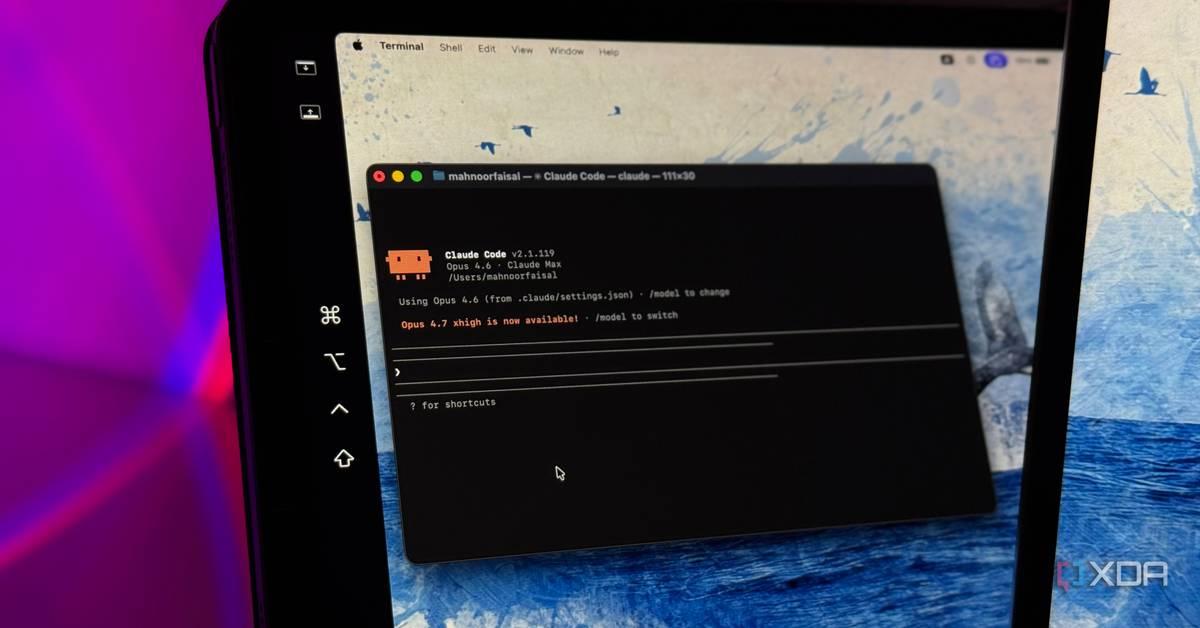
. API volume on the Claude platform is up nearly 70x year over year, with the average developer using Claude Code now spending 20 hours per week working with the tool4
.
Source: XDA-Developers
Anthropic's Distinctive Approach to Model Safety and Anthropomorphization
The choice to name this capability "dreaming" reflects Anthropic's distinctive approach to its AI systems. The company has a history of anthropomorphizing its models and products, including publishing a constitution for Claude in January to shape the chatbot's decision-making, with some language suggesting preparation for potential consciousness development
1
. Anthropic has invested significantly in understanding its model through research on model safety, including launching a feature that lets Claude end toxic conversations for its own well-being and mapping Claude's morality based on over 300,000 anonymized conversations1
.While much of this research centers on model safety and understanding what drives models to inform whether they could use advanced capabilities for harm, the empathy and care Anthropic demonstrates sets the lab apart
1
. Anthropic does warn that it "may ship breaking changes" during the preview window, with users receiving at least one week's notice to pivot, advising developers to avoid using the feature with critical or sensitive workflows during the testing phase2
.References
Summarized by

Navi
[2]
[4]
Related Stories
Anthropic's Claude 4: A Leap Forward in AI Coding and Extended Reasoning
23 May 2025•Technology

Anthropic Unveils Claude 3.7 Sonnet and Claude Code: A New Era in AI Reasoning and Development
25 Feb 2025•Technology

Anthropic Boosts Claude AI with Massive Context Window and Improved Opus Model
06 Aug 2025•Technology
Recent Highlights



Recent Highlights
Today's Top Stories







Don’t drown in AI news. We cut through the noise - filtering, ranking and summarizing the most important AI news, breakthroughs and research daily. Follow topics that matter to you and stay ahead.


