Tesla's AI trainers refuse to ride in Full Self-Driving vehicles they helped build


4 Sources
[1]
Why Tesla's AI trainers don't trust its self-driving tech - or its safety stats
Tesla says its Full Self-Driving software is up to 10 times safer than human drivers. But the figures the company uses to support its claims don't withstand scrutiny - and staffers who trained the technology say it isn't close to safely delivering autonomous vehicles at scale. In a Utah office,
[2]
Former Tesla employees say full self-driving is nowhere near as capable as Elon Musk claims
Serving tech enthusiasts for over 25 years. TechSpot means tech analysis and advice you can trust. In brief: Tesla's Full Self-Driving software is still struggling with basic driving tasks, based on interviews with former employees who reviewed internal training footage and data. Their accounts,
[3]
The people who trained Tesla's self-driving AI won't ride in it
A Reuters investigation found 7 of 9 Tesla data labelers wouldn't ride in FSD. They routinely saw the system speeding and failing on camera. Reuters interviewed nine former Tesla data labelers and a former self-driving engineer about their views on Tesla's Full Self-Driving mode. Seven of the nine
[4]
Tesla's own AI trainers don't trust 'Full Self-Driving' or its safety stats, Reuters finds
A major Reuters investigation published today reveals that Tesla's widely touted "Full Self-Driving" safety statistics are built on deeply flawed methodology -- and that the company's own data labelers, the workers who train the AI system, don't trust the technology to drive them. The report,
Share
Copy Link
A Reuters investigation exposes serious gaps between Tesla's safety claims and reality. Seven of nine data labelers who trained the Full Self-Driving system say they wouldn't trust it to drive them. The report reveals flawed safety statistics that inflate FSD's performance by a factor of three, while former employees describe regular failures with basic driving tasks and extensive route mapping that contradicts Elon Musk's claims about Tesla's autonomous driving approach.
Tesla's AI Trainers Won't Trust the System They Built
A Reuters investigation has uncovered troubling revelations about Tesla Full Self-Driving technology, with the people who know it best refusing to trust it with their lives. Seven of nine former Tesla employees who worked as data labelers told Reuters they would not ride in a vehicle operating on FSD
1
. One former worker was emphatic: they wouldn't ride in a Tesla robotaxi "if you f---ing paid me"2
. A former self-driving engineer who reviewed crash data for years offered equally stark advice: "Definitely, don't trust Elon on this"3
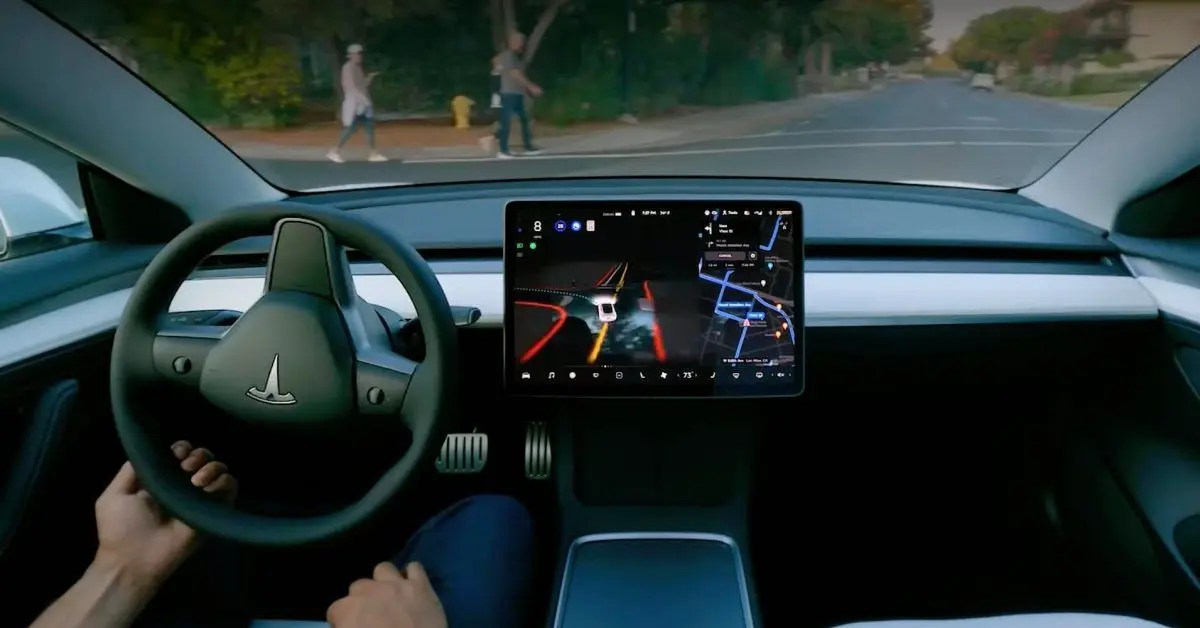
.These Tesla's AI trainers, known as data labelers, spend their days in a Utah office reviewing footage captured by Tesla vehicles using FSD. Their job involves annotating incidents of good and bad driving, escalating problems to engineers working to improve the autonomous driving system
1
. What they see regularly concerns them: videos of Teslas striking animals, failing to slow down in time to avoid potential collisions with pedestrians, and near-misses with children playing in the street2
.
Source: Electrek
FSD Software Capabilities Fall Short on Basic Maneuvers
Former Tesla employees describe a self-driving technology that continues to struggle with fundamental driving tasks. The system has shown repeated failures to respond appropriately to emergency vehicles, missed hazards, and required last-second driver interventions
2
. Data labelers reported seeing FSD-piloted vehicles fail at basic tasks including pulling over for emergency vehicles, giving motorcyclists enough space, braking on freeway off-ramps, and avoiding construction zones4
.At least five former employees told Reuters they routinely saw clips of Teslas driving above the speed limit while operating on FSD
3
. After Tesla introduced a "Mad Max" mode for more aggressive driving, the system regularly exceeded speed limits by 20 to 30 mph, with one labeler reporting an FSD vehicle traveling 60 mph in a 25-mph zone4
. Troublingly, the speeding issue was treated as a low priority by engineers and managers, while edge-case problems like unusual road configurations received more attention .Tesla's Safety Claims Built on Flawed Methodology
Elon Musk and other Tesla executives have repeatedly claimed that FSD is up to 10 times safer than human drivers. Tesla CFO Vaibhav Taneja first made this claim in July, and Tesla Board Chair Robyn Denholm repeated it at a November shareholder meeting where Musk displayed a chart claiming "85% less crashes"
4
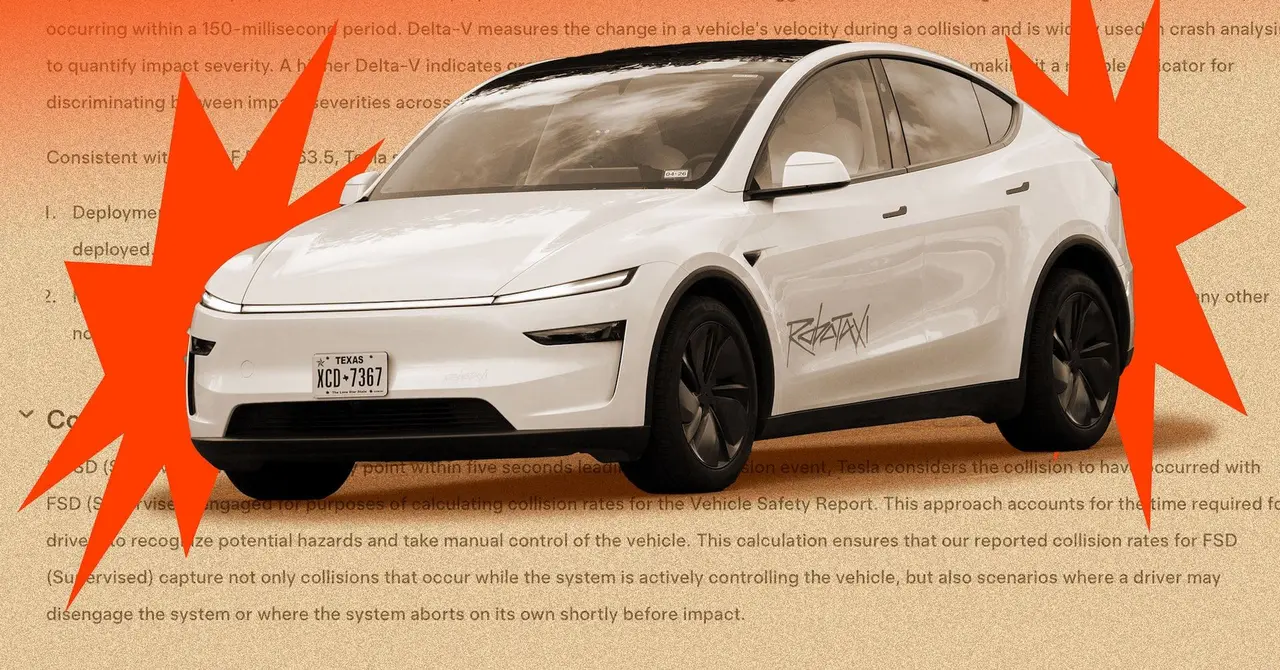
. However, the Reuters investigation reveals these misleading safety statistics are built on deeply flawed comparisons.Tesla exaggerates FSD safety by comparing crashes in FSD-piloted vehicles that triggered airbag deployments to federal crash data that includes far less-severe accidents requiring only a tow truck
1
. When University of Michigan researcher Marco Benedetti performed the correct comparison—airbag crashes for Teslas versus airbag crashes for all vehicles—the result dropped from "10 times safer" to roughly three times farther between crashes4
. This means a central comparison error inflated Tesla's claimed safety level by a factor of three.Ten of 11 traffic-safety researchers who reviewed Tesla's methodology for Reuters said the statistics amounted to misleading marketing rather than a serious safety investigation
1
. The company also compares its relatively new vehicles—averaging about four years old—to the much older U.S. fleet averaging 12.8 years2
. Phil Koopman, a Carnegie Mellon University engineering professor and autonomous-vehicle safety expert, explained: "Any new car is dramatically safer than a 12-year-old car. It's like saying: 'My jet airplane is faster than your World War II bomber.' Yeah, so, what's your point?"1
.Related Stories


Extensive Route Mapping Contradicts Musk's Core Claims
One of the most significant findings concerns how Tesla prepared for public demonstrations. Before the robotaxi pilot launch in Austin, Texas, and a 2024 event at Warner Bros. studios, teams spent weeks collecting and annotating video from specific routes
2
. Workers manually labeled lane markings, curbs, and traffic signals to help the system navigate those environments more reliably—a process requiring localized training that directly contradicts Elon Musk's repeated claims.Musk has long stated that Tesla's camera-only approach doesn't require the laborious local mapping of roads and hazards employed by rivals like Waymo
1
. He has described FSD as a "generalized AI solution" that will work anywhere globally and allow the company to scale up its robotaxi service at "hyperexponential" speed1
. Yet former employees said these labor-intensive safeguards are impossible to deploy on a broad scale1
.
Source: Reuters
For weeks before the October 2024 Cybercab unveiling, staff tested prototypes every night from 6 p.m. until dawn, with data labelers spending hundreds of hours annotating curbs and road markings
4
. The Utah data-labeling staff doubled to about 300 workers in the six months before the Austin launch, working primarily on making the test go smoothly4
.What This Means for Tesla's Autonomous Future
The findings raise fundamental questions about Tesla's path to full autonomy, which underpins the automaker's $1.6 trillion stock-market value
1
. Inside Tesla, progress on the system has been uneven, with metrics such as how often drivers need to intervene fluctuating with each software update. "It would go up and down like the stock market," one worker said2
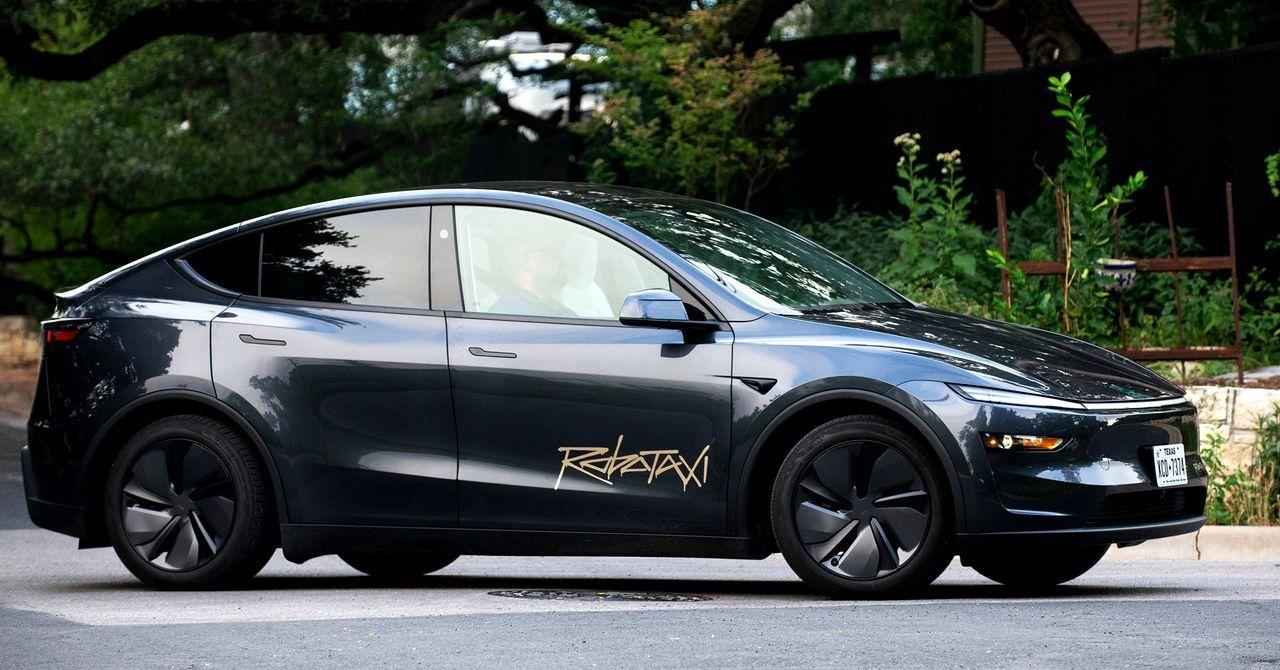
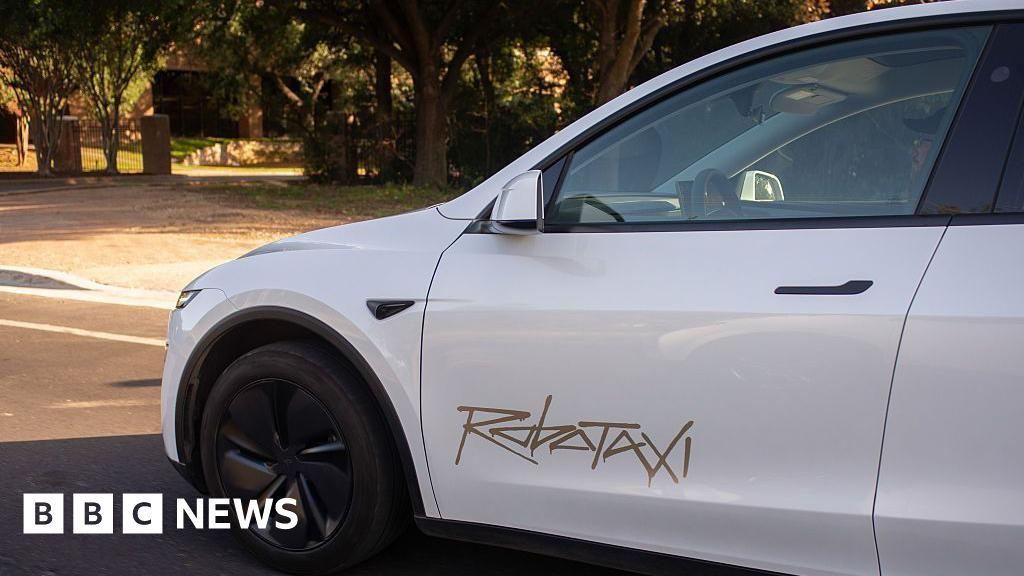
.The company's robotaxi rollout reflects these limitations. In Austin, Tesla operates a small fleet within a defined, heavily trained service area, with human oversight still in place
2
. Tesla confirmed FSD availability in China last week, though it remains unclear whether mainstream consumers can yet activate the system3
. The FSD (Supervised) system remains classified as Level 2, requiring constant driver attention .The testimony from data labelers carries particular weight because these workers see raw performance data rather than marketing materials or earnings projections . They witness hours of video showing exactly how the software behaves on public roads. If the people who train the AI don't trust it, the investigation asks, why should the people who ride in it? Tesla did not respond to detailed questions from Reuters for this report
1
.References
Summarized by

Navi
[2]
[3]
Related Stories
Recent Highlights



Recent Highlights
Today's Top Stories






Don’t drown in AI news. We cut through the noise - filtering, ranking and summarizing the most important AI news, breakthroughs and research daily. Follow topics that matter to you and stay ahead.


