33 Sources
[1]
With new Mac Studio and Mac mini, Apple leans hard into local AI inference
The Mac mini and Mac Studio occupy two distinct points in Apple's lineup of desktops, but lately, they've had something in common: They're popular for local AI inference and software development thanks to the advantages of their unified memory architecture and the fast CPUs and GPUs on their systems-on-a-chip. Today, Apple announced new iterations of both desktops, along with two new chips: the M6, the first 2nm chip in Apple's M-series lineup for Macs, and the M5 Ultra, now the most powerful chip in the lineup for most things -- especially AI workloads. There aren't any major new features for either machine. This is just a specs bump. But based on how Apple is presenting these refreshes, they're leaning hard into those use cases, which weren't even a thought when earlier iterations were first engineered. The devices' popularity for production inference took off after macOS 26.2 shipped last December. According to Apple's release notes, 26.2 enabled "low-latency communication between Thunderbolt 5 hosts for use cases including distributed AI inference using MLX." Thunderbolt 5 is a very fast wired data connection, and MLX is an open source array framework designed to help machine learning workflows take full advantage of the M-series chips' unified memory. Since then, both hobbyists and professional developers and researchers have been essentially daisy-chaining Mac minis or Mac Studios to run inference on local large language models that are much bigger than anything that could run a single mass-market device -- providing an alternative to ultra-beefy specialized hardware featuring specialized Nvidia GPUs. The story here is the chips themselves. The M6 is, as expected, a next-generation SoC (system-on-a-chip) meant for a wide range of consumer applications. It has a 12-core CPU, which includes two of what Apple calls "super cores," alongside four performance cores and six efficiency cores. It's the first Apple SoC to use all three core types. There aren't any verifiable benchmarks to work from yet, but Apple claims it's up to 40 percent faster at multi-threaded CPU performance compared to the M4 two generations ago. It also has a 12-core GPU, which is two cores more than its immediate predecessors, and faster unified memory with up to 160GB per second of bandwidth. Memory capacity is limited to 32GB, though. That's where the new M6 Ultra -- which will be available in the updated Mac Studio -- comes in. Its maximum capacity is a whopping 512GB (for the fortunate few who can afford it). In many respects, it's literally two M6 Maxes running side by side on one SoC, for 36 CPU cores (12 super, 24 performance) and 80 GPU cores. Apple claims it can achieve up to 1.2TB per second in terms of unified memory bandwidth. Most people would never, ever need that, but that's what we mean when we say that the AI inference use case is really what Apple is optimizing for here. That kind of memory and bandwidth is of course useful for other things, like gaming and other 3D graphics applications, but local inference is a growing use case, particularly for software developers. Many developers have been changing their workflows to incorporate AI coding agents more heavily, thanks to powerful frontier large language models and increasingly sophisticated harnesses like Claude Code or Codex, but the cost of running those cloud models is steep, and many are questioning whether it will remain practical. Open-weight models that can be run locally, like some of the latest Qwen and DeepSeek models, can accomplish many of the same tasks but without charging a fortune for tokens, as they're smaller and driven by the user's own local energy and compute. Still, most standard consumer hardware, like an average-spec MacBook Pro, is just far behind enough in terms of the size of models they can run that we're not fully living in a "just run it all locally on your regular dev workstation" future just yet. That's why some are tapping these chains of Mac minis or Mac Studios. As noted, that's the main story with these refreshes, but in other respects they're standard upgrades for consumers who aren't interested in all that. Both have Apple's N1 chip, which supports Wi-Fi 7 and Bluetooth 6. Apple claims the storage is up to twice as fast, at 15GB/s. And this Mac mini ships with 2.5Gb Ethernet as standard, with the option to upgrade to 10Gb. The Mac mini with M6 starts at $899 with 16GB of memory, and configurations with M5 Pro start at $1,699, while the Mac Studio with M5 Max starts at $2,499, and the M5 Ultra configurations start at $5,499. They can, of course, get a lot more expensive than that, depending on how you configure them. Preorders for both start today, and they're shipping on September 22 (though the 512GB memory config for the M5 Max won't ship until late October). Apple also says they'll ship with macOS 27 Golden Gate, suggesting that the annual OS update may arrive by then for other Mac users, too.
[2]
Apple debuts its 'most powerful chip ever' in M5 Ultra and M6
Apple announced two new processors on Tuesday, which power its new Mac Mini and Mac Studio models: the M5 Ultra and M6 chips. The M5 Ultra, which Apple deems its "most powerful chip ever," fuses two dual-die M5 Max chips to form Apple's first quad-die chip, designed to manage hefty AI workloads. The chip includes an up-to-36 core CPU and up-to-80 core GPU and 1.2 TB/s of unified memory bandwidth, which is 50% more than the M3 Ultra, which Apple released only about a year and a half ago. While the M5 Ultra is designed for professionals doing compute-intensive work like complex 3D rendering, visual effects, and running frontier AI models, the Mac Studio with M5 Ultra will no doubt appeal to hobbyist AI developers as well. But Apple's M6 chip is more geared toward these everyday users, according to the company. "Built using the cutting-edge 2 nm process, M6 combines a new CPU complex, two additional CPU and GPU cores, a Dual 16-core Neural Engine, and more unified memory bandwidth to power through workloads with amazing energy efficiency," Apple vice president of Silicon Engineering Sri Santhanam said in a press release. With the M6's 12-core CPU complex, which adds two more cores than the M5, the M6 chip can offer nearly a 30 percent increase in peak GPU compute for AI compared to the M5, which improves the speed of prompt processing when using on-device LLMs. "With these frameworks and new chips, developers can run and fine-tune large AI models locally on their Mac," Apple wrote in a press release. "Apple's developer tools and frameworks automatically optimize performance across the CPU, GPU, and Neural Engine, and give developers the ability to use Apple Foundation Models, App Intents to tap into Apple Intelligence features, or their own proprietary AI models to build and run powerful AI workloads entirely on device." Apple trailed behind its competitors when it comes to building its own proprietary AI model -- the long-awaited Siri upgrade is powered by Google's Gemini. But Apple has excelled in using on-device technology to allow users to more securely take advantage of tools like Face ID and Touch ID, which would be a privacy nightmare if processed via the Cloud. Similarly, Apple's emphasis on powering on-device AI workloads could be where the company has a chance to shine, offering a more secure, controlled environment for developers to experiment with new AI tools. Apple's newest Mac Mini devices are available for pre-order now, starting at $899. They will ship after September 22.
[3]
Apple Refreshes the Mac Mini and Mac Studio, Both With New AI-Ready Chips
Apple's Mac Mini and Mac Studio have been tough to buy for months, but updated versions have arrived. Both include new chips optimized for AI, with the M6 Mac Mini getting a $200 price bump. Apple has announced fresh versions of the Mac Mini and Mac Studio desktop computers, alongside some new chips: the M6 and M5 Ultra. Neither Mac desktop has undergone any physical changes on the exterior, but the long-awaited update brings these Macs back into stock after being difficult to buy for most of this year. Importantly, this serves as our first introduction to the M6 chip, which we will likely see much more of in future MacBooks. Skipping the M5 entirely, the Mac Mini now comes in two flavors: the M6 and the M5 Pro. The M5 Pro is the same chip that's currently found in the MacBook Pro, but the M6 is brand new. It's the first Apple Silicon part to be built on 2-nanometer process technology and also adds extra cores to the mix. This is a 12-core CPU -- another first for Apple -- broken down into two super cores, four performances cores, and six efficiency cores. New here are the performance cores, which Apple says are designed to speed up multithreaded tasks while preserving efficiency. Apple claims the M6 is 20 percent faster than the M5 in multithreaded performance and 40 percent faster than the M4. The M6 comes with a faster GPU too, adding two more cores to the mix for a total of 12 GPU cores. This is also the first Mac Mini to have Neural Accelerators for faster on-device AI performance, a feature that launched in the M5 chip last year. The result is a Mac Mini that Apple claims is twice as fast as the M4 Mac Mini, along with providing higher throughput for gaming. Lastly, the M6 Mac mini also comes with what Apple calls a "dual 16-core Neural Engine," which doubles the peak AI performance. In addition to the extra performance, however, it also comes with a $200 price increase. The M6 Mac Mini now starts at $899 for the model with 16 GB of unified memory. The Mac Mini can still be configured with up to 32 GB of unified memory, and Apple says the tiny desktop is 40 percent faster, with bandwidth now up to 170 GB per second. The M5 Ultra Arrives The Mac Studio is also receiving a significant update. Like the Mac Mini, it still comes in two flavors: the M5 Max and the new M5 Ultra. This is the fourth generation of the Mac Studio to come out, with the M3 Ultra (and M3 Max) model coming out in early 2025. Apple proudly claims that the M5 Ultra is Apple's most powerful chip ever, and the first to use a "quad-die" architecture. Apple's "Ultra" chips have always connected two Max dies together using using a technology called UltraFusion across a high-speed interconnect. The difference this time is that the M5 Max already had two dies itself, which is where the four dies come from. To keep those four chips running as fast as possible, the next version of UltraFusion increases the inter-die bandwidth to over 4.4 TB per second, allowing the whole array to function as a single CPU. M5 Ultra Mac Studio comes with four more CPU cores for a total of 36. There are still 80 GPU cores (the same as on the M3 Ultra), but the M5-specific improvements to the GPU apply here for better overall performance. In a briefing on the Mac Studio, Apple even discussed the ability to connect multiple Mac Studios together over Thunderbolt 5 to run frontier-level LLMs with over a trillion parameters locally, allowing the four systems to share memory. Hypothetically, that allows you to run models locally on a Mac that just weren't possible before. Apparently, four Mac Studios can even be connected in this way to run over a standard wall outlet. Both the Mac Mini and Mac Studio are available for preorder starting today and will come with macOS 27 Golden Gate preinstalled. However, systems won't ship until September 22. In a briefing, Apple said this delay wouldn't be reflective of shipping times for these new Mac Mini or Mac Studio systems.
[4]
Apple's latest Mac Mini runs on a new M6 chip, and starts at $899
Apple on Tuesday unveiled a new Mac Mini that runs on the latest iteration of its "M" processors, the M6. The base model of this device comes with 256GB of storage, 16GB of RAM, and costs $899. It's available for pre-order now, but the device will ship only after September 22, the company said. Apple said the new Mac Mini's AI performance is 4x better than the M4 model, and storage and graphics are twice as fast. The new processor has a 12-core CPU and 12-core GPU, as compared to the 10-core CPU and 10-core GPU on the M4. Alongside the M6 model, there is also a Mac Mini with the M5 Pro chip. This model comes with base storage of 512 GB and RAM of 24GB, and starts at $1,699. By default the M5 Pro chip ships with a 15-core CPU and 16-core GPU, and can be upgraded to a 18-core CPU and 20-core GPU. Both variants have Wi-Fi 7 and Bluetooth 6, along with a 2.5Gb Ethernet port. Users can upgrade to a 10Gb port as well. The new Mac Minis will start shipping on September 22nd with macOS 27 and Siri AI. The Mac Minis have grown popular over the past year among tech enthusiasts for running local AI agents such as OpenClaw and Hermes. People were selling Mac Minis at marked-up prices on platforms like eBay earlier this year due to rising demand. Besides the new Mac Minis, the company also released new Mac Studio models that run on the M5 Max and M5 Ultra chips, starting at $2,499 and $5,499, respectively. The M5 Max base model comes with 36GB of unified memory and 512GB of storage. The M5 Ultra base model has 96GB of unified memory and 1TB storage. Earlier this year, the company discontinued the previous base model of the Mac Mini, which offered 256GB of storage and retailed for $599. It was until now offering the 512GB version with an M4 processor for $799 as the base model.
[5]
Apple launches new Mac Studios with its 'most powerful chip ever' -- the M5 Ultra
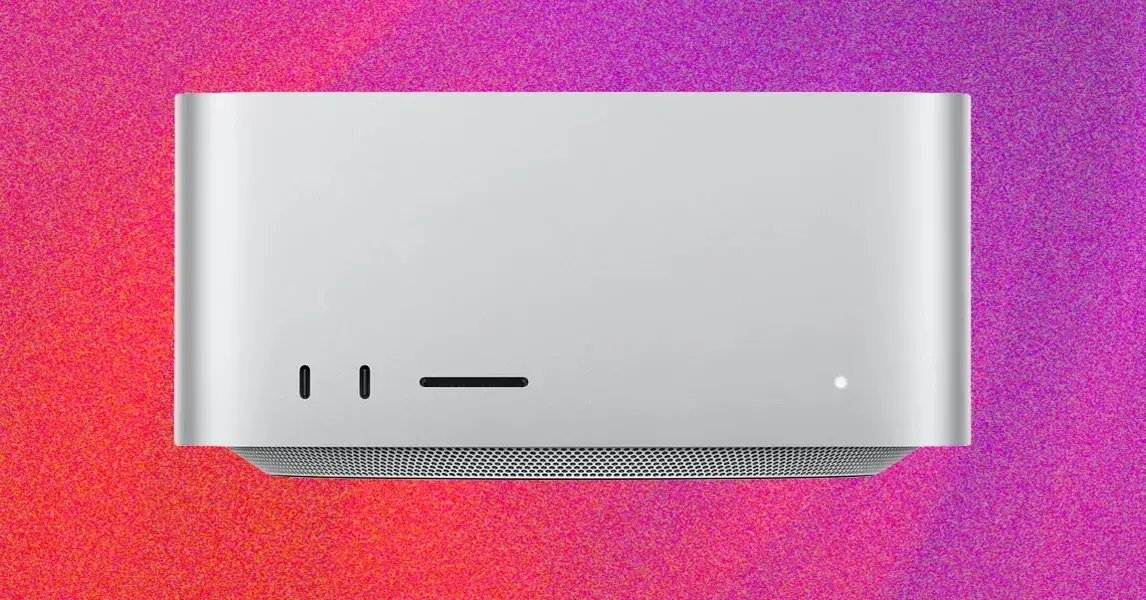
Apple is announcing new models of the Mac Studio, now using the existing M5 Max and a new M5 Ultra. This reunification under one chip generation comes over a year after Apple awkwardly split the Studio between M4 Max and M3 Ultra offerings. (The older sounding M3 Ultra was actually the more powerful one, and there was never an M4 Ultra chip.) The new Studios look identical to previous generations, utilizing the same small form factor chassis since its introduction in 2022 (right down to the USB-A ports on the rear), but inside are Apple's most powerful SoCs. The new Mac Studio with the existing M5 Max chip comes with 36GB of unified memory and 512GB of storage, starting at $2,499. That matches the current starting price of the M4 Max model after its $500 price hike in June. The new $5,499 M5 Ultra model starts with 96GB of memory and 1TB of storage. That's only $200 more than the starting price of the outgoing M3 Ultra model, but keep in mind the M3 Ultra launched at a much lower $3,999 last year. These new Studios are set to arrive running macOS 27 Golden Gate on September 22nd, alongside the new Mac Minis. But its highest-end M5 Ultra configuration with a whopping 512GB of memory is coming in late-October with pricing TBD for now -- though it's best we start bracing ourselves for the eventual sticker shock. These are chip bumps, through and through, but what bumps they are. While the RAM and storage amounts for the new Mac Studios match their predecessors, like recent MacBooks they have storage that's twice-as-fast. In its press release, Apple describes the new Studios as, "A monumental step for AI" with a claim of up 4.3x faster AI compute in the M5 Ultra. But even when it comes to raw CPU and GPU performance, the M5 Ultra and its up to 36-core CPU and 80-core GPU are said to have up to 1.8x faster graphics and 1.3x faster CPU speed than the M3 Ultra. The memory bandwidth of the M5 Ultra is now up to 1.2TB per second -- as if the M3 Ultra's 819GB per second didn't sound fast enough. Apple achieved all this in the M5 Ultra by using its next-gen UltraFusion connection to merge two dual-die M5 Max chips together into a quad-die architecture. And it's why Apple isn't mincing words by advertising the M5 Ultra as "the most powerful chip ever." But the Mac Studios also pack another, more pedestrian upgrade for a slight quality of life improvement: Wi-Fi 7 and Bluetooth 6 support. With the recent sunsetting of its Mac Pro line of desktops, these Mac Studios are as powerful as Apple computers get. And they're small enough to fit under your monitor (or up to four of Apple's 5K / 120Hz Studio Display XDR monitors running at full resolution). But thanks to RAMageddon, Apple's most powerful chip and its fastest Macs ever are also much pricier than their predecessors were just a short while ago.
[6]
Apple Updates Mac mini With M6, M5 Pro Processors and a Price Hike
Ahead of its annual fall event, Apple has refreshed the Mac mini with M6 and M5 Pro processors. With the upgrade, Apple retains the size of the M4 Mac mini but packs a new M6 processor to deliver four times better AI performance, two times faster storage and graphics, and 40% better CPU performance, the company says. Preorders begin today, with shipping expected to start on Sept. 22. The M6 model starts at $899, while the M5 Pro model starts at $1,699, which is $100 more than their predecessors. However, the Mac mini jumps from a 10-core CPU, 10-core GPU, and 16-core neural engine to a 12-core CPU, 12-core GPU, and a Dual 16-core Neural Engine. Launched in 2024, the M4 model has surged in popularity as AI enthusiasts started using the device to run AI agents locally. So, it's unsurprising that Apple's press release puts considerable emphasis on how the M6 chip improves the Mac mini's AI performance. The M6 is Apple's first 2nm chip, which turns the Mac mini into a "powerhouse for all things AI," Apple says. In a first for a Mac mini, each CPU core on the M6 also packs a Neural Accelerator, which makes everything feel extra snappy and responsive, the company says. Compared with the M4, LLM prompt processing is up to 4.8 times faster, spreadsheet calculations are 2.3x faster, and gaming is 2x faster with ray tracing in Cyberpunk 2077: Ultimate Edition. Apple promises similar performance gains for the M5 Pro Mac mini over the last-generation M4 Pro Mac mini. First introduced with the MacBook Pro earlier this year, the M5 Pro processor delivers up to 4x faster prompt processing, up to 1.4x faster rendering performance with ray tracing in Blender, and up to 1.5x faster image processing in Affinity. Both the M6 and M5 Pro Mac minis support Wi-Fi 7, Bluetooth 6, and 2.5Gb Ethernet, which can be upgraded to 10Gb. On the front of the tiny computer, you get two USB-C ports that support USB 3 and a headphone jack. On the back of the M6, you get three Thunderbolt 4 ports, an HDMI port, and an Ethernet port. On the back of the M5 Pro, you get the same setup but with upgraded Thunderbolt 5 ports. The M6 variant begins with 16GB unified memory, expandable up to 32GB. It has a memory bandwidth of 170GB/s, up from the 120GB/s on the M4. The M5 Pro variant, on the other hand, begins with 24GB of unified memory but can be upgraded to 64GB of unified memory with 307GB/s of memory bandwidth. All variants will support macOS 27, as well as genlock synchronization between a display and an iPhone 17 Pro. Also today, Apple refreshed its Mac Studio with the M5 Max and M5 Ultra chips.
[7]
Apple's new M6 chip gets more cores and more AI compute
Apple has announced a new M6 chip for Macs, along with an M5 Ultra that it says is its "most powerful chip ever," designed for tasks like 3D rendering and running frontier AI models. The M6 is Apple's first 2nm chip, which Apple says will bring improvements in performance and power efficiency, and it also has a Dual 16-core Neural Engine for on-device AI workloads. The M6 has a 12-core CPU, up from 10 in the M5, and it includes two super cores, four performance cores, and six efficiency cores. (Apple's "super" core terminology used to refer to performance cores, but it introduced a new type of performance core starting with the M5 Pro and M5 Max.) The company says the CPU offers "the world's fastest single-threaded performance" and up to 1.2x faster multithreaded performance in comparison to the M5. The chip also has a 12-core GPU, up from 10 cores in the M5, and includes a Neural Accelerator with each core, Apple says. It supports as much as 32GB of unified memory. Apple says that the M5 Ultra uses the company's UltraFusion interconnect technology to connect two dual-die M5 Max chips together as one quad-die architecture. The M5 Ultra has an up to 36-core CPU with 12 super cores and 24 performance cores, an up to 80-core GPU, and a 32-core Neural Engine. It supports up to 512GB of "high-bandwidth" unified memory, which as usual with the M series isn't upgradeable after purchase. The M6 chip will be available in a new Mac Mini, while the M5 Ultra will launch in a new Mac Studio. Both computers will be available for preorder beginning Tuesday ahead of a release on September 22nd.
[8]
Apple refreshes Mac mini and Mac Studio with new M6 and M5 Ultra chips - Engadget
They're faster but much more expensive than previous generations. Apple hasn't forgotten about the Mac mini, after all. The company's popular diminutive desktop is getting refreshed today with a brand new M6 chip, while the Mac Studio is getting bumped up to the M5 Max and new M5 Ultra chips. Curiously, the Mac mini didn't get an upgrade to the M5 chip last year, but you'll be able to upgrade the newer model to an M5 Pro if you need more power. Pricing, unfortunately, has gotten worse since Apple's latest hikes: The Mac mini now starts at $899 with the M6 chip ($100 more than before, with a meager 256GB of storage), while the Mac Studio starts at $2,499 with M5 Max. The Mac Studio with an M5 Ultra will run you at least $5,499. Over the last few years, AI aficionados have been buying up Mac minis en masse to run local models and AI assistants. With the M6 chip, Apple's first 2-nanometer design, the company seems to be making the Mac mini an even better AI workhorse for hobbyists. It's a 12-core chip, powered by two super cores, four performance cores and six efficiency cores. In comparison, the M5 was a 9 or 10-core offering with up to four super and six efficiency cores. The M6 also sports a Dual 16-core Neural Engine, making for a total of 32 Neural Engine cores with double the AI processing power of the M5, according to Apple. Building on the strong graphics performance of the M5 chip, the M6 features a 12-core GPU with neural accelerators in every core. Those neural accelerators originally made their debut with the M5, but this is the first time they're available on the Mac mini. Apple claims the new GPU configuration is up to four times faster for AI processing and twice as fast for gaming compared to the M4 Mac mini. If you need more power than the M6, you can also configure the Mac mini with an M5 Pro for $1,699. That's the same chip we've already seen on the latest MacBook Pro, with up to an 18-core CPU and 20-core GPU. As before, it supports up to 64GB of RAM with a 307 GB/s of memory bandwidth, while the M6 maxes out with 32GB of RAM with 170 GB/s bandwidth. You'll also only find rear Thunderbolt 5 USB-C ports on the M5 Pro mini, the M6 model just has Thunderbolt 4. Given the price jump, the M5 Pro Mac mini is clearly meant for a more demanding audience-the sort of people who needs pro-grade performance, but can't justify the jump to the $2,499 Mac Studio. While nothing has changed with the Mac mini design-wise, it remains the best-looking mini-desktop on the market with its ridiculously small aluminum case. The new model also packs in some nifty standard upgrades, like Wi-Fi 7 and 2.5 Gbps Ethernet. Overall, the updated Mac mini looks like a solid upgrade for anyone running the M1 or M2 models, but you probably don't need to throw out any M4 systems just yet. It's just a shame that thanks to the AI RAMaggedon, it's now starting at $899, $300 more than earlier Mac mini systems. (Come on Apple, at least upgrade the base storage to 512GB!) The new Mac Studio is similarly unchanged, style-wise, but the M5 Max and M5 Ultra mark a new level of performance for professional users. We've already seen the M5 Max in the MacBook Pro-the M5 Ultra is another beast entirely. Much like previous "Ultra" chips, it's essentially two Max chips stuck together. But in this case, it's two M5 Max chips joined with the company's 4.4 TB/s "UltraFusion" connectivity layer, creating Apple's first-ever quad-die chip. The M5 Ultra can be configured with up to 36 CPU cores (12 super, 24 performance), delivering up to 25 percent faster single-threaded speeds than the M3 Ultra and 30 percent faster multi-threaded speeds, according to Apple. It can also be equipped with up to 80 (!) GPU cores, which offers up to 40 percent faster graphics than the M3 Ultra and a whopping 4.5X faster AI compute. It's no wonder the M5 Ultra Mac Studio starts at $5,499 -- it's meant more for the likes of Pixar, not typical creatives. On top of faster CPUs, the new Mac Studio also offers up to double the storage speeds of the previous generation, thanks to its next-gen PCIe Gen 6 SSDs. It also has two Thunderbolt 5 ports for accessory expansion, and it can support up to four Apple Studio Display XDR monitors running at 5K/120Hz. We'll have to put these systems through their paces to see if Apple's performance claims are true, naturally. It's just unfortunate that the RAMaggedon is making both the Mac mini and Mac Studio more inaccessible for regular users. The Mac mini used to be one of the best deals in computing at $599. Now it's a much more serious investment, and it also feels like a bit of a rip-off with just 256GB of storage.
[9]
Apple announces new Mac Mini and Mac Studio models with AI upgrades
* Apple on Tuesday announced new Mac Mini and Mac Studio models with updated chips and other improvements for artificial intelligence applications. * The announcement shows how desktop computers have become strategically important for Apple as a foothold in the AI development world and as a showcase for the AI capabilities of its chips. * The Mac Mini can now be configured with two new chips, the M6 and M5 Pro, and now starts at $899, versus $799 for the prior model. In this article * TSM * AAPL Follow your favorite stocksCREATE FREE ACCOUNT The new Apple Mac Studio computer and Studio Display are displayed shortly after going on sale at the Apple Store on 5th Avenue in Manhattan, in New York City, New York, March 18, 2022. Mike Segar | Reuters With more consumers turning to Apple's computers for creating and running AI agents, the company is rolling out new Mac Mini and Mac Studio models with updated chips and other upgrades for artificial intelligence applications. The announcement, a few weeks before Apple is expected to release new iPhone models, shows how desktop computers have become strategically important for Apple as a foothold in the AI development world, and as a showcase for the capabilities of its processors. Developers using software like OpenClaw to create their own agents often prefer to run them on a dedicated Mac Mini computer instead of in the cloud. And Apple's Mac Studio is a popular choice for AI researchers who are experimenting with training and deploying local models. Apple highlighted in Tuesday's announcement that it builds its iPhone and Mac chips with special parts called neural engines dedicated to running models, and that it uses a RAM architecture that eliminates some memory bottlenecks. "With these frameworks and new chips, developers can run and fine-tune large AI models locally on their Mac," Apple said in the press release. The Mac Mini can now be configured with two new chips, the M6 and M5 Pro. It's the first Apple computer with an M6-generation chip, which is manufactured on a 2-nanometer process from Taiwan Semiconductor Manufacturing Co. Read more CNBC tech news The prior version was available with M4, M4 Pro and M4 Max chips. Apple said the computer configured with the M5 Pro can process large language model prompts 8.5 times faster than older Pro versions of the Mac Mini. Prices are also going up. The computer now starts at $899, up $100 from the prior model. That followed an increase over the summer from $599, which Apple blamed on memory costs. The Mac Studio is Apple's most powerful computer that doesn't have a built-in screen (Apple's Mac Pro was discontinued earlier this year). Some models will come with the M5 Max chip, which Apple says will allow LLMs to run nearly four times faster than its predecessor. Some can be configured with Apple's M5 Ultra chip, the most powerful chip Apple currently offers. And Apple says multiple Mac Studios with the Ultra chip can be linked together to work as one machine, pool memory together and run trillion-parameter frontier AI models. Mac Studio computers with an M5 Max chip start at $2,499 -- the same as before -- and a Mac Studio with the M5 Ultra starts at $5,499. Apple previously charged at least $5,299 for a Mac Studio with an Ultra chip, and the past model was equipped with an M3 Ultra chip, a generation behind. The new computers go on presale on Tuesday and will ship on Sept. 22. watch now VIDEO1:5901:59 Apple brings the Mac mini to Texas as Cook makes a final U.S. manufacturing push Squawk on the Street Choose CNBC as your preferred source on Google and never miss a moment from the most trusted name in business news.
[10]
Apple Built the New Mac Mini For All the People Who Made the Last One Sell Out
Apple's undeniably cute Mac minis became so popular for on-device AI, we lost any hope of getting one for a low price with base specs. Now, the company is back with a tiny desktop that's built explicitly for the people who made the last version so hard to come by. Apple's new $900 Mac mini (which is $100 more than the last version after recent price hikes) may not seem like a major upgrade, at least judging by a cursory glance. It's maintaining the same compact shape that first debuted in 2024 with the M4 Mac mini (including the excellent thermal design and awkward downward-facing power button). The new pint-sized desktop also still starts with 256GB of SSD storage and 16GB of unified memory. Things are more interesting when you go The Magic School Bus route and start trawling through its bowels. The M6 chip is Apple's first 2nm chip, boasting even better power efficiency than earlier 3nm chips like the M5. The M6 is composed of a larger 12-core CPU broken down into two "Super" cores, four "Performance" cores, and another six "Efficiency" cores. Apple started the "Super" nomenclature with the M5 series, but all you need to know is that they're supposed to push the system's single-thread performance -- which is what helps your browser pages and apps load faster. Otherwise, the M6 is mainly geared for all the AI work that made the Mac mini so popular this past year. Apple promised the M6 CPU is 1.2X faster than the M5 in terms of multi-thread capabilities -- how well the computer handles demanding apps. The larger 12-core GPU is the most telling aspect to the new mini's design. This new design includes neural accelerators built into every GPU core, which is how Apple can claim you're supposed to get 2x faster graphics than the M4 Mac mini. Apple promised this new desktop will offer strong performance for rendering and gaming (once you find a game on macOS that you actually want to play). That new GPU is how Apple's promising 30% better peak GPU power for AI tasks compared to the M5. That's also thanks to the new "dual 16-core Neural Engine." As the name suggests, it's two times the number of Neural Engine cores in M5, and it's built for running on-device AI like vibecoding in Xcode or running OpenClaw like all those people living that radical "agentic" lifestyle. Of course, the new Mac mini ships with macOS 27 Golden Gate, which packs in the revised AI Siri assistant. There's another variant of the Mac mini to consider as well. The version with the M5 Pro should be even more powerful in some of these tasks thanks to its 18-core GPU. Apple promises you'll get 4.5X rendering performance with path tracing in an app like Blender and 8.5X the speeds of on-device LLM (large language model) processing compared to the previous-gen M4 Pro. The new desktops pack in Wi-Fi 7 support, an upgrade over the previous Wi-Fi 6E, and Bluetooth 6. However, any would-be AI developers need to consider your I/O options. An M6 MacBook mini packs in three Thunderbolt 4 ports on the rear-facing plate, but the M5 Pro allows for three Thunderbolt 5 ports, all offering even faster data transfer speeds. You'll need Thunderbolt 5 if you plan to cluster several Mac minis together into a homunculus of an AI processing system. Apple obviously expects to ship a significant number of new Mac minis. It's giving potential customers a long runway to preorder starting Tuesday. The new Apple desktops start shipping Sept. 22. While you'll be pushing and shoving to get in line for a new Mac mini, Apple will likely be ready to announce a whole slate of new iPhone products and -- judging by recent leaks and rumors -- several more smart home products and maybe even a new Apple TV box.
[11]
Apple's M5 Ultra with an 80-core GPU will power through your AI models and 8K video - Engadget
With the launch of the latest Mac mini and Mac Studio computers, Apple introduced some brand new chips with cutting-edge technology. The M6 is the company's first processor built on a 2-nanometer process, while the the M5 Ultra is debuting a new "quad-die" configuration that marries four M5 processors into a single, powerful chip ideal for AI or content creation. Let's start with the Apple's most powerful processor ever, the M5 Ultra, coming to new high-end Mac Studio machines. Though based on the M5's older third-generation 3nm process, it fuses two dual-die M5 Max chips to form the quad-die architecture, "a first for Apple silicon," according to the company. Joining four chips might sound clunky, but the M5 Ultra's interconnects run at a record 4.4TB/s, allowing the quad dies to operate very much as a single processor. It's available with up to 36 cores (12 super cores and 24 performance cores) that deliver up to 25 percent higher single-threaded performance and 30 percent better multithreaded performance than the M3 Ultra. The M5 Ultra supports up to 512GB of high-bandwidth unified memory with 1.2TB/s of bandwidth, up 50 percent over the M3 Ultra. Given current sky-high memory prices, that could push your Mac Studio with M5 Ultra into five-figure territory, since the base model starts at $5,499. That may be worth it for some AI power users, though. The extra memory will let them "store huge datasets entirely in local memory, increase the tokens-per-second speed, and run huge LLMs with hundreds of billions of parameters entirely on device," Apple explains. Boosting those speeds further is a next-gen 80-core (max) GPU with a neural accelerator in each core that bumps peak AI compute 4.5 times compared to the M3 Ultra, while boosting graphics performance by 40 percent. It should handle whatever video creators throw at it as well, thanks to an updated Media Engine with four ProRes encode and decode engines, along with hardware-accelerated AV1, H.264 and HEVC codecs. Along with the extra compute power, Apple promises "industry leading energy efficiency."
[12]
Apple announces new Mac mini with M6 and M5 Pro chips
Apple today announced the first Mac mini update in nearly two years. The new Mac mini keeps the same compact design, but delivers a major performance boost with the new M6 and M5 Pro configurations. The new Mac mini lineup is available to pre-order today. Head below for all the details. M6 Mac mini The previous generation Mac mini was powered by the M4 and M4 Pro chips. Apple has taken a different strategy this time, opting to use the all-new M6 chip for the base configuration. The next tier, meanwhile, is powered by the M5 Pro, which first debuted in the MacBook Pro earlier this year. The M6 chip in Mac mini is Apple's first 2nm processor. It features a 12-core CPU, which is two more cores than M4 and M5. Apple touts that it offers "the world's fastest single-threaded performance." M6 is Apple's first chip to use all three of its CPU core types: 2 super cores, 4 performance cores, and 6 efficiency cores. Super cores prioritize maximum single-threaded performance, performance cores are optimized for multithreaded workloads, and efficiency cores handle lighter and background tasks Apple says that combination delivers up to 40% faster multithreaded performance than M4. You get a 12-core GPU, which is also two more cores than before. Apple is also bringing its Neural Accelerators to the base Mac mini for the first time, resulting in up to 4x faster AI performance and 2x faster graphics than M4. M6 also has the new dual 16-core Neural Engine, which Apple says is up to 2x faster than the previous generation. The M6 Mac mini starts with 16GB of unified memory and is configurable up to 32GB. It also offers faster memory bandwidth at 170GB/s, up from 153GB/s on the M5 chip and 120GB/s on the M4. Here are some performance statistics for Mac mini with M6 shared by Apple: * Up to 13.5x faster LLM prompt processing in LM Studio when compared to Mac mini with M1, and up to 4.8x faster than M4. * Up to 2.3x faster spreadsheet calculations in Microsoft Excel when compared to Mac mini with M1, and up to 1.5x faster than M4. * Up to 2x faster gaming performance with ray tracing in Cyberpunk 2077: Ultimate Edition when compared to Mac mini with M4. M5 Pro Mac mini Meanwhile, the higher-specification Mac mini offers the M5 Pro chip. You can get up to an 18-core CPU paired with up to a 20-core GPU. The GPU has Neural Accelerators in every core, an enhanced shader core, and third-generation ray tracing. The Mac mini with M5 Pro supports up to 64GB unified memory with 307GB/s bandwidth. Here are Apple's benchmarks for Mac mini powered by M5 Pro: * Up to 8.5x faster LLM prompt processing performance in LM Studio when compared to Mac mini with M2 Pro, and up to 4x faster than M4 Pro. * Up to 4.5x faster rendering performance with ray tracing in Blender when compared to Mac mini with M2 Pro, and up to 1.4x faster than M4 Pro. * Up to 2.1x faster image processing in Affinity when compared to Mac mini with M2 Pro, and up to 1.5x faster than M4 Pro. More Mac mini specs * Wi-Fi 7 and Bluetooth 6, thanks to Apple's N1 chip * 2.5Gb Ethernet is now standard, with 10Gb available as an upgrade * Both models have storage that's up to 2x faster * Genlock support over USB-C for precise synchronization between a display and professional camera capture. * M6 Mac mini: Three Thunderbolt 4 ports on the back, along with HDMI and Ethernet. Two USB-C ports with USB 3 support and a headphone jack on the front. * M5 Pro Mac mini: Three Thunderbolt 5 ports on the back, along with HDMI and Ethernet. Two USB-C ports with USB 3 support and a headphone jack on the front. New Mac mini pricing and availability The new Mac mini is available for pre-order today and will start arriving for customers on September 22. Pricing starts at $899 for the base configuration with the M6 chip, 256GB of storage, and 16GB of unified memory. Mac mini with M5 Pro starts at $1,699. Pre-order the new Mac mini at Apple: * Mac mini with M6: from $899 (or $799 for education) * Mac mini with M5 Pro: from $1,699 (or $1,599 for education) Notably, that's a $100 price increase for the base configurations compared to the previous-generation Mac mini with M4 and M4 Pro.
[13]
Apple just announced the new Mac Studio with M5 Ultra -- and it will be a local AI powerhouse
Apple just announced a new Mac Studio built around the M5 Max and an all-new M5 Ultra. It's still the same compact desktop that sits on your desk, but this time it focuses on local AI performance and the heaviest pro workloads. The company is claiming up to 4.3x faster AI performance, up to 1.8x faster graphics, up to 1.3x faster CPU speeds, higher memory bandwidth, and up to twice the storage speed compared with the previous generation. You also get Wi-Fi 7 and Bluetooth 6 for the first time on Mac Studio, plus Thunderbolt 5 ports. It pairs with Studio Display and Studio Display XDR and runs the upcoming macOS 27 Golden Gate with the next version of Apple Intelligence, including Siri AI. Pre-orders start today, with units scheduled to start arriving September 22. Here's everything you need to know about the new Mac Studio. Mac Studio: Price & availability The Mac Studio with M5 Max starts at $2,499 (or $2,299 for education), while the Mac Studio with M5 Ultra starts at $5,499 (or $5,099 for education). Apple offers configure-to-order options on its site. The top 512GB unified memory configuration is expected in late October. Pre-orders begin today on Apple's website and in the Apple Store app in 30 countries and regions, including the U.S. Units begin shipping on September 22. Mac Studio: Design The new Mac Studio keeps the familiar compact form factor that fits on a desk. Apple didn't announce major exterior changes, so it should look and feel like the previous model. What is new is the connectivity. Thunderbolt 5 ports deliver up to 120Gb/s, which is useful for fast external storage, PCIe expansion chassis, and high-performance hubs. You can also cluster multiple Mac Studio systems together over Thunderbolt 5 with RDMA support. Apple says a cluster of four can deliver up to 3x faster distributed AI inference than a single machine. Wireless gets an upgrade too. The Apple N1 chip brings Wi-Fi 7 and Bluetooth 6 to the Mac Studio for the first time. There's also genlock support over USB-C for tighter synchronization between a display and a camera (Apple specifically calls out the iPhone 17 Pro). On the display side, the Mac Studio can drive up to eight displays, or up to four Studio Display XDR units at full 5K resolution and 120Hz. Storage is faster as well. Apple switched to a next-generation SSD architecture based on PCIe Gen 6 and claims up to 2x the performance of the previous Mac Studio for loading projects, transferring files, and working with large language models. Mac Studio: Specs & performance There are two chips here. M5 Max is the more affordable option for serious pro work. M5 Ultra is the maxed-out version for the most extreme workloads. Apple says the GPU is up to 50% faster than the previous generation. It also includes third-gen hardware-accelerated ray tracing and enhanced shader cores. The Media Engine handles hardware-accelerated H.264, HEVC, ProRes, and AV1 decoding, which should help with uncompressed 8K footage and multiple concurrent video streams. Other claims for M5 Max include: * Up to 10.7x faster LLM prompt processing in LM Studio versus Mac Studio with M1 Max (3.9x versus M4 Max) * Up to 7.4x faster text-to-image performance versus M1 Max (3.5x versus M4 Max) * Up to 5.3x faster Magic Mask in Blackmagic Design DaVinci Resolve Studio versus M1 Max (3x versus M4 Max) * Up to 3.5x faster DNA sequencing basecalling in Oxford Nanopore MinKNOW versus M1 Max (1.9x versus M4 Max) Apple positions the Ultra as the chip with no real equivalent. Multithreaded CPU performance is listed at up to 1.3x higher than the M3 Ultra. Graphics are up to 1.8x faster than the prior generation. Neural Accelerators appear on the Ultra for the first time, helping deliver the peak AI numbers. The Media Engine has twice as many video encode and decode blocks as the M5 Max, enough to play up to 33 streams of 8K ProRes 422 at 30 fps simultaneously. Other claims for M5 Ultra include: * Up to 15.4x faster CopyCat ML training in Foundry Nuke versus Mac Studio with M1 Ultra (3.3x versus M3 Ultra) * Up to 9.8x faster LLM prompt processing in LM Studio versus M1 Ultra (4x versus M3 Ultra) * Up to 8.2x faster text-to-image performance versus M1 Ultra (4.3x versus M3 Ultra) * Up to 4.7x faster scene rendering in Maxon Redshift versus M1 Ultra (1.7x versus M3 Ultra) On the AI side, Apple highlights Neural Accelerators in every GPU core to speed up matrix multiplication. M5 Max is rated up to 3.9x faster AI performance than the prior generation. M5 Ultra reaches up to 4.3x the peak AI compute of M3 Ultra and 9.8x that of M1 Ultra. Combined with the large unified memory pools, the pitch is that you can run substantial open-weight models entirely on-device. Apple is also pushing two frameworks: Core AI (a new architecture optimized for unified memory, CPU, GPU, and Neural Engine) and the existing open-source MLX framework. Both are meant to make local training, fine-tuning, and deployment more practical on Apple silicon. Mac Studio: Outlook The new Mac Studio is for people who want to run large AI models, complex video timelines, heavy 3D/VFX work, or big data jobs on a single compact desktop instead of relying on the cloud. The jump in memory (especially the 512GB Ultra configs), the faster storage, Thunderbolt 5 clustering, and the Neural Accelerator hardware are the main selling points. Whether the real-world gains match Apple's claims will depend on the specific apps and workloads you actually use. The base prices are in line with previous high-end Mac Studios, though they're certainly not cheap. We'll see what the Mac Studio can do when we get it into our testing lab in September, so stay tuned for more! Follow Tom's Guide on Google News and add us as a preferred source to get our up-to-date news, analysis, and reviews in your feeds.
[14]
Apple announces the M5 Ultra Mac Studio with up to 512GB of RAM
The new Mac Studio is visually identical to the previous model but has major upgrades inside. Instead of the M4 Max and M3 Ultra options, you can now buy a Mac Studio with an M5 Max or M5 Ultra processor, with up to a whopping 512GB of RAM. Here are the specs Apple is offering for the two chips: While the M5 Ultra is still double the capability of the M5 Max, Apple doesn't mention its UltraFusion packaging architecture, which links two Max dies over 10,000 high-speed connections that offer low latency and high bandwidth. It was previously reported that Apple was working to create a new version of the Ultra chip that removed the UltraFusion connector. Apple is leaning hard into AI and calls the M5 Ultra Mac Studio "a game changer for AI workloads" and says "AI coding agents process significantly faster, image generation tools can render creations in an instant, and enterprise teams can cluster multiple systems to scale performance to new heights." In addition to the new chips, the Mac Studio now has an N1 chip to bring Wi-Fi 7 and Bluetooth 6, as well as "a next-generation SSD architecture built on PCIe Gen 6." We already praised the MacBook Pro for its super-fast storage speeds, and Apple now claims the new SSDs deliver "industry-leading read and write speeds for rapid project loading, file transfers, and loading huge LLMs." Now for the not-so-good news. The M5 Ultra Mac Studio now starts at $5,499, a price hike of another $200 over the previous price hike. That means you're paying $1,500 more than if you bought an M3 Ultra Mac Studio before June. You're also paying more for storage and RAM, so get ready to shell out well over 10 grand for a fully loaded model (which won't be available until October). The M5 Max model starts at $2,499. The M5 Mac Studio is available for pre-order now but won't begin shipping until September 22.
[15]
Apple Debuts M5 Ultra as Most Powerful Chip Ever
Apple today announced the M5 Ultra, which the company says is its most powerful chip ever. The M5 Ultra is built by connecting two dual-die M5 Max chips using Apple's next-generation UltraFusion technology, which is the first time Apple has used a quad-die architecture in an M-series chip. UltraFusion increases inter-die bandwidth to over 4.4TB/s and connection density by more than 6x, allowing the four dies to function as a single processor. The chip includes an CPU with up to 36 cores, containing 12 super cores and 24 performance cores, delivering up to 1.25x higher single-threaded performance and up to 1.3x higher multithreaded performance than the M3 Ultra. Its GPU scales up to 80 cores, with a Neural Accelerator built into each core for the first time on an Ultra chip. Apple says this delivers up to 4.3x the peak AI compute performance compared to the M3 Ultra, along with up to 1.8x faster graphics than the previous-generation chip. The M5 Ultra also includes a 32-core Neural Engine and a more capable Media Engine, with twice the video encode and decode blocks as M5 Max, allowing users to simultaneously play up to 33 streams of 8K ProRes 422 at 30 fps. The chip supports up to 512GB of unified memory and up to 1.2TB/s of memory bandwidth, a 50% increase over M3 Ultra. Apple says the added memory and bandwidth let users store large datasets locally, increase tokens per second, and run large language models with hundreds of billions of parameters entirely on device. The M5 Ultra is exclusively available in the new Mac Studio, which is available for pre-order today, with availability beginning on September 22. Configurations with 512GB of memory launch in late October.
[16]
The OpenClaw Effect? Apple Reportedly Rolling Out Surprise New Mac Mini Line, Possibly Days From Now
Want a Mac Mini to power the AI agents that do your work for you, but you haven't seen a new one in months? Apple may soon have you covered once again. Back in February, when everyone with chronic AI brain was in a frenzy over token-guzzling agentic AI systems like OpenClaw, Mac Minis vanished from Apple Store shelves. Gaping security holes or not, running swarms of AI models day and night really only made sense if you handed those functions over to their own dedicated machine, and Mac Minis -- which can run while sitting in a drawer -- fit the bill nicely. They're also a hit with people who like to run open weight models on their own home hardware. In April, CEO Tim Cook said on an earnings call that the whole Mac Mini AI craze had blindsided the company, and so they, along with Mac Studios, would need "several months to reach supply demand balance." Welp, according to Bloomberg's Mark Gurman, Apple may have just taken a stab at reaching supply demand balance by plotting to release a surprise run of newly updated Mac Minis. As is often the case, Gurman's reporting comes from "people familiar with the matter," who "asked not to be identified because the plan isn't public." Interestingly, these alleged new Mac Minis, which Gurman says have been tested with M5 and M6 chips, may come out, "as soon as the coming days," which would mean before Apple's big expected September event, when new iPhones will likely be announced. And the current line of Mac Minis, if you can find one, are M4-powered, meaning this is a big update either way. If Gurman is right about there being an M6 version, by my reckoning that would be the very first M6 product released by Apple. This AI hardware rumor coincides with a big AI software rumor: Meta will release its Hatch agentic platform in a matter of weeks, according to the Information. So if you're planning to get onboard with Zuck, and, uh, join the Hatch revolution(?) Apple may have your hardware needs covered for that.
[17]
Apple's new Mac mini looks the same, but the M6 inside brings a major performance boost
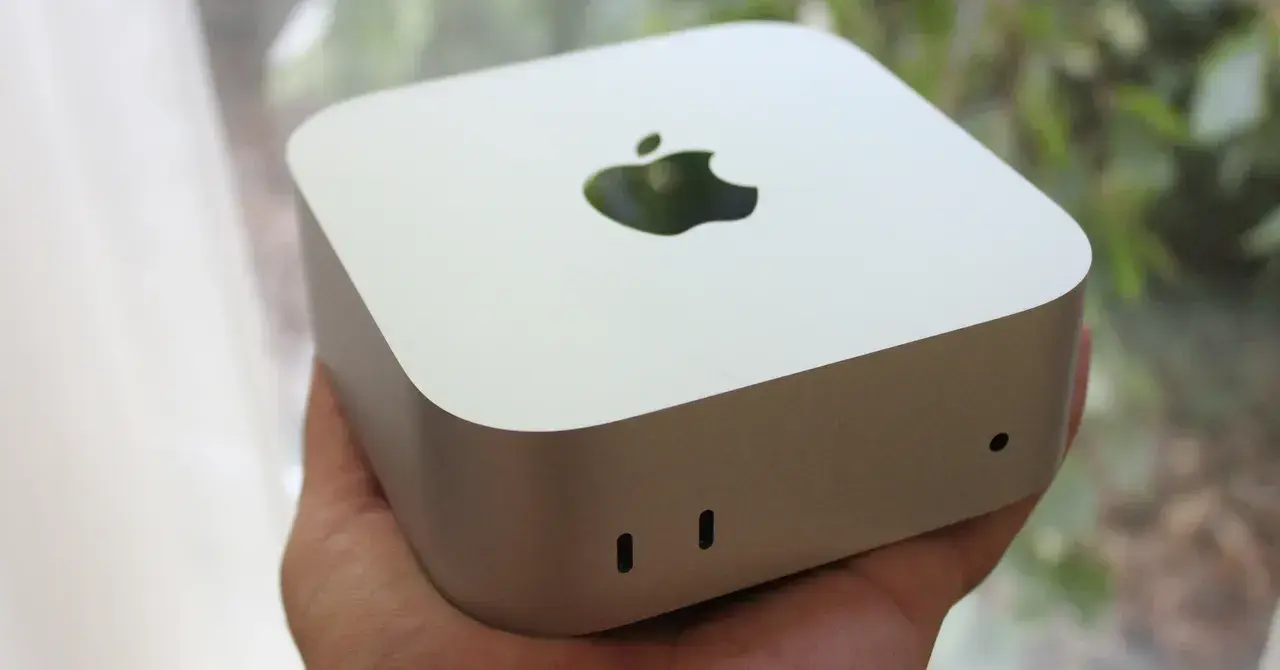
* Apple introduces the M6 chip, and it lands first in the new Mac mini * It's a bit more expensive than its predecessor, but offers improved performance, with a focus on AI tasks * It can also be configured with the M5 Pro, while the latest Mac Studio gets the M5 Max or new M5 Ultra Apple reintroduced the Mac mini in its sportier, more compact design with M4 chips in October 2024, and now, just a few months shy of two years later, we're getting the next generation. Apple is sticking with the ultra-tiny build that doesn't skimp on ports, and it's also using its new entry-level Mac desktop to usher in its next generation of silicon: the M6. While this next-gen Mac mini sports an identical look to its predecessor, it's built to pack a performance punch with either the M6, which is Apple's first 2nm chip, or the M5 Pro for those who need an even more substantial setup. This performance boost comes at the cost of a price increase over the M4-powered Mac mini. The Mac mini with M6 starts at $899 / £899 / AU$1,449 for 256GB of storage and 16GB of RAM -- that's a $100 increase in the US over the current price of the M4 model -- while the M5 Pro starts at $1,699 / £1,699 / AU$TBC with 512GB of storage and 24GB of RAM. You can, of course, pay more for more RAM and storage -- we're waiting to see full pricing. The Mac mini with M6 will start at $899 -- a $100 increase in the US over the $799 MSRP for the M4 model - with 256GB of storage and 16GB of RAM, while the mini with M5 Pro will start at $1,699 with 512GB of storage and 24GB of RAM. Of course, you can pay more for more RAM and storage -- we're waiting to see pricing. The M6 isn't the only new chip arriving from Apple. The next-gen Mac Studio, which keeps its now-iconic design, is sporting either the M5 Max or the M5 Ultra under the hood for extreme performance, be it creative or professional workflows, or the demands of AI processes. Like the Mac mini, it's a bit more costly, starting at $2,499 / £2,499 / AU$4,299 for the Mac Studio with M5 Max or $5,499 / £5,499 / AU$TBC for the M5 Ultra. The reveal timing is a little out of line with the release cycle we've gotten used to for the Mac lineup, as it comes just weeks before Apple's rumored September event, at which Apple will likely debut its iPhone 18 lineup and other devices. Let's dive into what we know about the M6 and the new Mac mini, its first home, and the even speedier Mac Studio. The Mac mini pushes forward with M6 While the new Mac mini's design is unchanged -- and we're just fine with that -- the big change is under the hood. Apple says the M6 delivers up to 40% faster CPU performance and up to four times faster AI performance. Note that latter claim, as AI is a theme that Apple's going with here, and it makes sense considering how many folks are choosing to run OpenClaw and other models on the Mac mini (if they can get their hands on one -- we're hoping Apple has addressed the supply chain issues that have resulted in some customers facing long waits for the previous-gen Mac mini and Mac Studio). As I noted above, the M6 is Apple's first 2-nanometer chip, and it boasts some seriously impressive specs on paper. For starters, it's now a 12-core CPU, the first such Apple silicon, with two super cores, four performance cores, and six efficiency cores. That's the CPU side of the M6, while the GPU side has 12 cores with Neural Accelerators, support for the FP8 format, and higher overall geometry throughput, which should aid 3D graphics and gaming visuals. One aspect we're keen to test is a new dual 16-core Neural Engine, which promises up to twice the peak AI compute performance. There's also the even more impressively equipped Mac mini with M5 Pro, the same chip that's currently available in the MacBook Pro. In the Mac mini, it as in the MacBook Pro, the M5 Pro starts with a 15-core CPU, 16-core GPU, and 16-core Neural Engine. Whether you opt for the M6 or M5 Pro, the new Mac mini also gets the Apple-made N1 chip for connectivity, specifically support for Wi-Fi 7 and Bluetooth 6. There's a 2.5Gb Ethernet port as standard, which you can upgrade to 10Gb, and while the M6 has Thunderbolt 4 ports, the M5 Pro gets Thunderbolt 5, which should make it easy to chain multiple Mac minis together. Mac Studio levels up with M5 Max and M5 Ultra We've been waiting a while now for Apple to level up the current M4 Max and M3 Ultra Mac Studio, and these are looking like considerably beefy upgrades that'll ensure that whether you are running advanced professional, creative, AI, or even gaming tasks, the Studio will rise to the occasion. The M5 Max inside the Mac Studio boasts an 18-core CPU and a 40-core GPU for up to 30% faster compute performance and 40% faster graphics performance compared to the M4 Max, according to Apple. For ultimate performance, meanwhile, the M5 Ultra, the latest chip made using Apple's next-gen UltraFusion technology, is essentially two M5 Max chips connected together in a quad-die architecture. The result is a chip with a 36-core CPU -- made up of 12 Super Cores and 24 Performance Cores -- an 80-core GPU, and a 16-core Neural Engine. As in the Mac mini, Apple is using its own N1 chip to power connectivity in the upgraded Mac Studio, with support for Wi-Fi 7 and Bluetooth 6. You'll also get faster, more efficient RAM and storage to speed things up even more. Together, these upgrades are all about boosting performance and making these machines better equipped for almost any task, whether professional or creative, with or without AI processes. Apple's Mac Studio with M5 Max starts with 512GB of storage and 36GB of RAM, while the Studio with M5 Ultra starts at 1TB of storage and 96GB of RAM. Pricing starts at $2,499 / £2,499 / AU$4,299 and $5,499 / £5,499, respectively. Based on Apple's shared benchmarks and performance numbers, both the Mac mini and Mac Studio are AI performance powerhouses. Whether it's using an app to upscale an image, quickly render out a task, or even run full frontier models on-device, it's clear that Apple knows what people are using its desktops for, and is offering those users something with even more muscle. As with the Mac mini, the new Mac Studios arrive with a price hike. In the US, the Mac mini with M6 starts at $100 more than the current prices of the M4 model. The Mac Studio keeps the same starting price at $2,499 for the M5 Max versus the M4 Max, while the M5 Ultra starts at $200 more than the M3 Ultra, at $5,499 compared to $5,299. Storage increases and RAM upgrades will come at hefty costs, but with 256GB starting storage in the Mac mini and 512GB starting storage in the Studio for the base chips -- and both the RAM and SSDs are said to be faster here -- Apple is still looking to max out the value proposition, even at the starting prices. Preorders for these new Macs are open now, and with shipping from September 22. That's a bit of a wait, but it might be that this schedule is timed to coincide with that for other items Apple might reveal in the next few weeks. The Macs will ship with macOS 27, including some new Apple Intelligence features, out of the box. Follow TechRadar on Google News and add us as a preferred source to get our expert news, reviews, and opinion in your feeds.
[18]
Apple Announces Its Most Powerful Mac Mini Yet
Apple has announced a new generation of its popular Mac mini series that comes with the brand new M6 chip as well as the M5 Pro chip. The previous generation of the tiny desktop computer -- that requires an external monitor, keyboard, and mouse -- had become scarce due to high demand. Apple today announced two variants of the latest Mac mini: one with the brand new M6 chip that starts at $899, and a more powerful version with the M5 Pro chip that starts at $1,699. Both starting prices are $100 higher than the previous generation. The M6 version starts with 16GB of unified memory and 256GB of storage. It features a 12-core CPU -- which is two more cores than the previous generation -- and a 12-core GPU, also two more cores than last time. It now includes Neural Accelerators in each core for the first time on Mac mini; this gives 4x faster AI performance and 2x faster graphics than the Mac mini with an M4 chip. The Mac mini with M5 Pro starts with 24GB memory and 512GB storage and is designed for more computer-intensive tasks -- it features an 18-core CPU and a 20-core GPU. "With Neural Accelerators in each GPU core, M5 Pro also delivers significant gains in AI compute compared to the previous Mac mini, allowing users to tackle more advanced AI workflows like photo and video upscaling, and running large diffusion models faster than ever," Apple says in its press release. Both versions support Wi-Fi 7 and Bluetooth 6 while providing 2.5-gigabit Ethernet ports. There are two USB-C ports at the front and a headphone jack. On the back, there are three Thunderbolt 4 ports on the M6 Mac mini, and three Thunderbolt 5 ports on the M5 Pro Mac mini, along with an HDMI port and Ethernet port. "Mac mini has always been our most versatile Mac. Whether it's being used as a home computer, powering a professional studio, or as an always-on agentic device, it's the little Mac that can do it all," says Apple's chief hardware officer, Johny Srouji. "Today, we're taking this versatility even further. With a more powerful CPU and graphics, Neural Accelerators in the GPU, and higher memory bandwidth, Mac mini with M6 delivers a whole new level of AI performance. And with up to an 18-core CPU and 20-core GPU, Mac mini with M5 Pro is an ultracompact powerhouse for complex pro workflows. We can't wait to see all the incredible ways people will use it next." Both Mac minis are available to pre-order now. They will be shipped with macOS 27 no later than September 22.
[19]
Apple announces new M6 Mac mini and M5 Ultra Mac Studio
Well, that was fast. A day after rumors broke that Apple was preparing new Mac devices for release, the company announced it's refreshing its desktop computer lineup. Today, the company surprise-announced a new Mac mini with the new M6 chip and a Mac Studio with the new M5 Ultra chip, its most powerful processor yet. The new chips offer "the next giant leap in performance and AI compute," said Sri Santhanam, Apple's vice president of Silicon Engineering Group, in a press release. Both Macs come in a second configuration with the existing M5 Pro and M5 Max chips, respectively. The M6 Mac mini has a Dual 16-core Neural Engine that offers up to twice the performance of older Mac minis to power through everyday on-device AI tasks. It starts at $899 with 16GB of RAM and 256GB of storage. The M5 Pro version starts at $1,699. This year, Mac mini desktops have become a popular choice for people running AI agents, and the devices have sometimes been hard to find in stock. The M5 Ultra Mac Studio has up to a 36-core CPU and 80-core GPU with up to a whopping 512GB of unified memory. Johny Srouji, Apple's chief hardware officer, billed it as "the ultimate desktop for on-device AI and the world's most demanding pro workflows." It starts at $5,499 with a 30-core CPU, 64-core GPU, and 36GB of memory plus 512GB of storage. The new M5 Max Mac Studio starts at $2,499. Both new desktops are available for preorder ahead of their Aug. 22 launch. These announcements come ahead of Apple's annual September hardware event, where the company is expected to unveil the iPhone 18 series, a new foldable iPhone, updated smart home devices, and new Apple Watches.
[20]
Apple launches M6 Mac Mini and updated Mac Studio with AI upgrades
Apple $AAPL announced on Tuesday a new Mac Mini featuring its first M6-generation chip, alongside an updated Mac Studio, with both lines carrying upgrades aimed at AI workloads including local model inference and agentic computing. Apple's updated Mac Mini is available with your choice of the M6 or the M5 Pro chip. Apple says the M6 delivers up to 4x faster AI performance and 2x faster graphics than the M4-equipped model it replaces. The M6 features a 12-core CPU and 12-core GPU and supports up to 32GB of unified memory. The M5 Pro configuration supports up to 64GB of unified memory and, according to Apple, can process large language model prompts in LM Studio up to 8.5 times faster than the M2 Pro version of the Mac Mini. The new Mac Mini also comes with a higher price tag. The M6 configuration is priced at $899 -- a $100 jump from what buyers previously paid -- while the M5 Pro starts at $1,699. According to CNBC, that follows an earlier hike from $599 that Apple tied to the rising cost of memory. The updated Mac Studio starts at $2,499 for models with the M5 Max chip and $5,499 for models with the M5 Ultra chip. The previous Mac Studio with an Ultra chip started at $5,299 and used an M3 Ultra chip. Apple says Mac Studio units equipped with the M5 Ultra can be linked together to pool memory and run large AI models. The M5 Max configuration, the company said, allows large language models to run nearly four times faster than the preceding generation. Apple opened preorders for both machines on Tuesday, with units set to arrive in customers' hands on September 22. The new machines will run macOS 27, which includes an updated version of Siri the company is calling Siri AI. "With a more powerful CPU and graphics, Neural Accelerators in the GPU, and higher memory bandwidth, Mac Mini with M6 delivers a whole new level of AI performance," Apple chief hardware officer Johny Srouji said in a statement. The new Mac Mini will be assembled in Houston, where Apple opened an Advanced Manufacturing Center and confirmed Mac Mini production at a Foxconn facility earlier this month. Apple has said it invested hundreds of millions of dollars in that site. The Mac Mini drew renewed attention as an AI platform in Apple's most recent quarter, when delivery delays stretched out amid a global shortage of memory chips and processors.
[21]
Apple unveils new Mac Studio with M5 Max and M5 Ultra
Alongside the new Mac mini, Apple today has announced its next-generation Mac Studio. The new Mac Studio lineup is powered by the M5 Max and M5 Ultra chips and supports up to 512GB of unified memory. The new Mac Studio models are available to pre-order today. M5 Max Mac Studio First, Apple has announced a new Mac Studio powered by M5 Max, an upgrade from the previous-generation M4 Max model. The M5 Max first debuted in the MacBook Pro earlier this year. M5 Max features an 18-core CPU with 6 super cores and 12 performance cores. The GPU can be configured with up to 40 cores, with Neural Accelerators built into each core. Apple says GPU performance is up to 50% faster than the previous generation. It offers up to 614GB/s of unified memory bandwidth, up from up to 546 GB/s with the M4 Max generation. The M5 Max Mac Studio starts with 36GB of unified memory and supports up to 128GB. For comparison's sake, those numbers are the same as when the M4 Max Mac Studio was first announced. In the intervening year, however, Apple has gradually whittled down the options due to the industry-wide memory shortage. As of yesterday, the M4 Max Mac Studio started at 36GB of memory and maxed out at 96GB. Here are some benchmarks Apple shared for the M5 Max Mac Studio: * Up to 10.7x faster LLM prompt processing in LM Studio when compared to Mac Studio with M1 Max, and 3.9x faster than M4 Max. * Up to 7.4x faster text-to-image performance when compared to Mac Studio with M1 Max, and up to 3.5x faster than M4 Max. * Up to 5.3x faster Magic Mask performance in Blackmagic Design DaVinci Resolve Studio when compared to Mac Studio with M1 Max, and up to 3x faster than M4 Max. * Up to 3.5x faster basecalling for DNA sequencing in Oxford Nanopore MinKNOW when compared to Mac Studio with M1 Max, and up to 1.9x faster than M4 Max M5 Ultra Mac Studio The real star of the show today is the M5 Ultra Mac Studio. The new M5 Ultra Mac Studio offers up to a 36-core CPU with 12 super cores and 24 performance cores. This delivers up to 1.3x higher multithreaded performance than the previous-generation M3 Ultra Mac Studio. The M5 Ultra packs an up-to-80-core GPU, which Apple says is the most powerful Apple silicon GPU ever. This also marks the first time Apple has added its Neural Accelerators to the Ultra chip. Neural Accelerators are dedicated hardware in each GPU core designed to speed up AI workloads. In terms of memory, Mac Studio with M5 Ultra starts with 96GB and can be configured with up to 512GB. This is unchanged from when the M3 Ultra Mac Studio first launched. Over the last year, however, Apple cut the M3 Ultra Mac Studio memory options to just 96GB due to memory shortages. Memory bandwidth clocks in at up to 1.2TB/s. The M5 Ultra's Media Engine has twice the video encode and decode blocks as M5 Max, supporting up to 33 simultaneous streams of 8K ProRes video. Apple touts the following benchmarks for the M5 Ultra Mac Studio: * Up to 15.4x faster CopyCat ML training performance in Foundry Nuke when compared to Mac Studio with M1 Ultra, and up to 3.3x faster than M3 Ultra. * Up to 9.8x faster LLM prompt processing in LM Studio when compared to Mac Studio with M1 Ultra, and up to 4x faster than M3 Ultra. * Up to 8.2x faster text-to-image performance when compared to Mac Studio with M1 Ultra, and up to 4.3x faster than M3 Ultra. * Up to 4.7x faster scene rendering performance in Maxon Redshift when compared to Mac Studio with M1 Ultra, and up to 1.7x faster than M3 Ultra. More Mac Studio specs and tidbits * Wi-Fi 7 and Bluetooth 6, powered by Apple's N1 networking chip * Support for up to eight external displays, or up to four Studio Display XDR at 5K resolution and 120Hz refresh rate * Storage performance is up to twice as fast thanks to PCIe Gen 6 support * Thunderbolt 5 with up to 120Gb/s bandwidth * Support for genlock over USB-C for precise synchronization between a display and professional camera capture. Mac Studio pricing and availability Mac Studio with M5 Max starts at $2,499, and the base configuration includes 512GB of storage. That price is unchanged compared to the M4 Max Mac Studio. Mac Studio with M5 Ultra starts at $5,499 with 1TB of storage. That is a $200 increase compared to the M3 Ultra configuration. Buy Mac Studio at Apple: * M5 Max Mac Studio: from $2,499 (or $2,299 for education) * M5 Ultra Mac Studio: from $5,499 (or $5,099 for education) The new Mac Studio lineup is available to order starting today and will begin arriving to customers on September 22. Apple, however, says the M5 Ultra Mac Studio with 512GB of memory "is coming in late October." My favorite Apple deals right now: * AirPods Pro 3 $199 (Reg. $249) * AirTag 2: from $20 each (Reg. $29) * M5 Pro MacBook Pro $2,699 (Reg. $3,199) * AirPods Max 2 $429 (Reg. $549) * Apple Watch Series 11 $329 (Reg. $429)
[22]
Apple is turbocharging the Mac mini with its new M6 chip -- but the model with an M5 Pro is actually faster
Apple just announced a new Mac mini that's available with either the all-new M6 chip or the more powerful M5 Pro chip. You're still getting what looks to be one of best mini PCs and the most affordable Apple desktop, but with this new generation of Mac mini, overall speed and the ability to run AI models locally seem to be the main focus. Given how popular the Mac mini M4 became with AI enthusiasts, the company has given the base model a major boost in that department. According to Apple, the Mac mini with M6 delivers up to 4x faster AI performance, 2x faster storage and graphics as well as 40% faster CPU performance. When it comes to the Mac mini with M5 Pro, the company says it provides 4x faster LLM prompt processing performance in LM Studio and compared to the M2 Pro, it's 8.5x faster. Even if you're not interested in AI, the Mac mini with M6 and the Mac mini with M5 Pro will make for great desk companions and a great alternative to one of the best MacBooks for those who prefer a more stationary setup. Regardless of which new Mac mini you pick up, you're getting Wi-Fi 7 and Bluetooth 6 support as well as an upgraded 2.5 Gigabit Ethernet port around back. Both mini PCs will also ship with macOS 27 Golden Gate, which includes the next version of Apple Intelligence and a first for the Mac mini, Siri AI. Pre-orders start today, with units scheduled to start arriving on September 22. Here's everything you need to know about Apple's new Mac mini. Mac mini: Price & Availability The Mac mini with M6 starts at $899 (or $799 for education), while the Mac mini with M5 Pro starts at $1,699 (or $1,599 for education). Apple will also offer configure-to-order options on its site where you can bump up the unified memory in the Mac mini with M6 from 16GB to 32GB and the Mac mini with M5 Pro all the way up to 64GB. Pre-orders begin today on Apple's website and in the Apple Store app in 30 countries and regions, including the U.S. Units begin shipping on September 22. Mac mini: Design The new Mac mini with M6 and Mac mini with M5 Pro are both compact mini PCs that are small enough to find a place on any desk. Apple hasn't announced any major exterior changes, so it's likely that both will feature the redesigned form factor first introduced with the Mac mini M4. This means there will be two USB-C ports and a headphone jack on the front of both Mac mini models. Around back is where things differ. While the Mac mini with M6 will retain the three rear Thunderbolt 4 ports of its predecessor, the Mac mini with M5 Pro will have three rear Thunderbolt 5 ports instead. Likewise, both models will have HDMI around back along with upgraded 2.5Gb Ethernet out of the box, though you can upgrade either to a 10 Gigabit Ethernet port, albeit in a custom configuration. On the Mac mini with M5 Pro, its Thunderbolt 5 ports deliver up to 120Gb/s which is useful for connecting fast external storage and monitors like the Apple Studio Display and Apple Studio Display XDR. However, there's another benefit to having these faster ports. With Thunderbolt 5, you'll also be able to cluster multiple Mac mini systems together which allows you to run large AI models locally instead of over the cloud. Wireless connectivity is getting a big upgrade on both new Mac mini models too. Instead of Wi-Fi 6E and Bluetooth 5.3 on the Mac mini M4, the Mac mini with M6 and the Mac mini with M5 Pro now support Wi-Fi 7 and Bluetooth 6. When paired with one of the best Wi-Fi 7 routers, you'll likely see faster downloads and uploads while the addition of Bluetooth 6 brings precise device tracking, lower latency and better power efficiency for your wireless peripherals like Apple's Magic Mouse, Magic Keyboard and Magic Trackpad as well as your AirPods. Although Apple didn't reveal how many displays these new Mac mini models can drive, you'll likely be able to use three of the best monitors simultaneously, though their resolutions and connection configurations will likely differ depending on whether you're running the all-new M6 chip or the more powerful M5 Pro. On the video front, we're also getting a brand new feature delivered through USB-C called genlock support. Available on both the Mac mini with M6 and Mac mini with M5 Pro, it enables precise synchronization between a display and camera, including the iPhone 17 Pro. Finally, storage speeds on both Mac minis are getting an upgrade. Apple switched to a next-generation SSD architecture based on PCIe Gen 6 for its upgraded Mac Studio and it looks like the new Mac mini will be following suit. The company claims up to 2x the performance compared to prior generations, which should make loading projects, transferring files and working with large language models even faster. Mac mini: Specs & performance Just like with the last generation, there will be two distinct versions of the Mac mini: one designed for consumers and one for pros. While both previously used different versions of the same chip, this time around, Apple is mixing things up. The base model will be powered by Cupertino's all-new M6 chip which features a 12-core CPU alongside a 12-core GPU. Single-threaded performance is the big upgrade here and Apple claims that the M6 offers the "world's fastest," so expect everything to feel extra snappy and responsive. Likewise, we're also getting Neural Accelerators inside each core of its 12-core GPU which is a first for Mac mini. As a result, Apple claims this new chip will deliver up to 4x faster AI performance and 2x faster graphics. Multitasking is getting a boost too thanks to higher memory bandwidth up to 170GB/s. The Mac mini with M5 Pro takes things even further performance-wise for professionals who aren't ready to step up to a Mac Studio. With up to an 18-core CPU and up to a 20-core GPU, this upgraded model redefines what's possible on a small desktop to handle tasks like app development, video rendering, scientific simulations and more. You're also getting third-generation ray tracing for even more complex 3D design, VFX and game development. With up to 64GB of unified memory with 307GB/s of memory bandwidth, the Mac mini with M5 Pro looks to be a tiny AI powerhouse capable of running even larger local AI models. However, even with this extra power under the hood, it remains a quiet and efficient always-on desktop that's ideal for creative workflows or running AI agents. Mac mini: Outlook The new Mac mini is following in the footsteps of its predecessor, both in terms of design and use case. While the Mac mini with M6 will be a great desk companion with upgraded performance and improved local AI capabilities, the Mac mini with M5 Pro is more of a workstation for professionals who want even more performance in the same small form factor. Both Mac mini models are getting a bit of a price hike compared to the previous generation but with higher memory and storage prices, this is to be expected. We'll see what the Mac mini with M6 and the Mac mini with M5 Pro are truly capable of when we get them into our testing lab in September, so stay tuned for more. Follow Tom's Guide on Google News and add us as a preferred source to get our up-to-date news, analysis, and reviews in your feeds.
[23]
Apple Reveals M6 as First-Ever 2nm Chip
Apple today announced the M6 chip, its first built using a 2-nanometer process and featuring a Dual 16-core Neural Engine. Apple says the 2nm process packs greater transistor density into a smaller die, contributing to the chip's overall gains in performance and power efficiency. The M6 chip features a larger, more powerful 12-core CPU, two more cores than the M5, made up of two super cores, four performance cores, and six efficiency cores. Apple says the chip delivers the world's fastest single-threaded performance and up to 1.2x faster multithreaded performance than the M5, and up to 2.4x faster than the M1. The chip also features a 12-core GPU, with two more cores than the M5, with a Neural Accelerator built into each core. Apple says this delivers nearly a 30% increase in peak GPU compute for AI compared to the M5, and more than 8x compared to the M1, resulting in faster prompt processing for on-device LLMs. The GPU also gains updates to the shader core architecture, Dynamic Caching, and hardware-accelerated ray tracing, along with a 50% increase in geometry rates for more complex graphics. The M6 introduces a Dual 16-core Neural Engine, offering up to 2x the peak compute of previous generations. Apple says system frameworks can automatically use both engines at once, allowing applications to run AI models faster. The chip supports up to 32GB of unified memory and up to 170GB/s of unified memory bandwidth, which is a 10% increase over M5 and 2.5x more than the M1. The M6 debuts in the new Mac mini, which launches on Tuesday, September 22.
[24]
Apple's New Mac Studio Supports Up to 512GB of Unified Memory
Apple has unveiled the M5 Ultra chip and the first Mac to feature it: the upgraded, super-powerful Mac Studio. With the death of the Mac Pro earlier this year, the Mac Studio is now Apple's sole professional-grade desktop computer, and the updated Mac Studio aims to live up to that billing with massive performance improvements. The new Mac Studio, Apple's "most powerful Mac," is available with the excellent M5 Max that debuted earlier this year in the upgraded MacBook Pro and the all-new M5 Ultra. In both cases, Apple promises big performance leaps over the M4 Max- and M3 Ultra-powered Mac Studio. "Mac Studio is the ultimate desktop for on-device AI and the world's most demanding pro workflows, relied on by users for its tremendous performance and extensive pro connectivity, all in a quiet, compact design that sits right on your desk -- and today, we're pushing the boundaries even further," says Johny Srouji, Apple's chief hardware officer. "With the powerful M5 Max and the incredible capabilities of M5 Ultra, Mac Studio ushers in a new era of desktop computing, delivering huge performance gains for pro workloads and AI inference with frontier-class models. By integrating Neural Accelerators directly into the GPU and offering massive amounts of high-bandwidth unified memory, the new Mac Studio is our most powerful Mac ever." Overall, the refreshed Mac Studio lineup promises up to 4.3 times faster AI performance, up to two times faster storage, up to 1.8 times faster graphics, and up to 1.3 times faster CPU performance. There's also higher memory bandwidth. Max Studio With M5 Max The Mac Studio with M5 Max features an 18-core CPU, up to 40 GPU cores (each with Neural Accelerators), and up to 128GB of unified memory. The machine has up to 614GB/s of unified memory bandwidth. Apple says the Mac Studio with M5 Max is "ideal for musicians, photographers, software engineers, and designers pushing real-time 3D and motion graphics." The Mac Studio with M5 Max has third-generation hardware-accelerated ray tracing, promising better graphics performance. Its powerful Media Engine has hardware-accelerated H.264, HEVC, ProRes, and AV1 decoding. Apple says the M5 Max-powered Mac Studio is great for color grading and editing uncompressed 8K footage. Apple says Magic Mask performance in Blackmagic's DaVinci Resolve Studio is up to 5.3 times faster than the Mac Studio with M1 Max and up to three times faster than the Mac Studio with M4 Max. Mac Studio With M5 Ultra The Mac Studio with M5 Ultra has an up to 36-core CPU, up to an 80-core GPU, and up to 512GB of unified memory, which Apple fairly describes as "staggering." It is a Mac designed for the most extreme professional workloads. "There is no other chip like M5 Ultra, which delivers the highest levels of performance and massive amounts of unified memory, enabling pros to push the limits of what they can accomplish on a single machine," Apple says. "Filmmakers can color-grade uncompressed 8K footage in real time, VFX artists can render complex simulations, and data scientists can train local AI models on expansive datasets." The Mac Studio with M5 Ultra has up to 1.3 times faster multithreaded performance than the Mac Studio with M3 Ultra. It's also the first Ultra Mac with Neural Accelerators across every core, delivering 4.3 times faster peak AI compute performance than Apple's last Ultra chip, the M3 Ultra. As of now, the M3 Ultra remains the most powerful chip PetaPixel has ever tested for graphics-intensive workflows, although the M5 Ultra is almost certainly going to crush it. Apple says the M5 Ultra is its most powerful Apple silicon GPU ever. Graphics performance is up to 1.8 times faster than before. The Media Engine is better, too. It can play up to 33 streams of 8K ProRes 422 at 30 frames per second simultaneously. Other Improvements for Both New Mac Studio Desktops Both models feature Wi-Fi 7 and Bluetooth 6, a first for Mac, and feature Thunderbolt 5 connectivity across the board with up to 120GB/s bandwidth per port. With Thunderbolt 5, users can take advantage of the fastest external storage on the market today, plus PCIe expansion chassis and various hub solutions for professional workflows. Thunderbolt 5 also enables multiple Mac Studio machines to be clustered, delivering up to three times faster performance for distributed AI inference compared to a single machine. The new Mac Studio also has a next-generation SSD architecture built on PCIe Gen 6. The Mac Studio supports up to eight displays, including four Studio Display XDR monitors at full 5K resolution and 120Hz refresh rates. Pricing and Availability The Mac Studio with M5 Max starts at $2,499 with an 18-core CPU and 32-core GPU. Upgrading the GPU to 40 cores adds $300 to the price tag. The base model ships with 36GB of RAM, while the 40-core GPU version starts with 48GB of RAM. Both versions ship with a 512GB SSD. A maxed-out Mac Studio with M5 Max, including 128GB of unified memory and an 8TB SSD, is $8,899. The Mac Studio with M5 Ultra starts at $5,499. This version has a 30-core CPU and 64-core GPU, 96GB of unified memory, and a 1TB SSD. The version with a 36-core CPU and 80-core GPU starts at $6,799 and includes 96GB of unified memory and a 1TB SSD. A fully maxed-out Mac Studio with M5 Ultra, including the upgraded chip, 256GB of unified memory, and a 16TB SSD, is $18,299. The Mac Studio with M5 Ultra with 512GB of unified memory is not currently available to preorder, and Apple says it will be available in October. It is unclear how much it will cost, but it will obviously not be cheap. All other new Mac Studio SKUs will be available on September 22.
[25]
Apple reportedly set to unveil new Mac mini soon
'Customers increasingly...[use] Mac mini as a powerful platform for agentic AI', Tim Cook said in July. Apple is set to unveil a new Mac mini desktop computer after nearly two years, Bloomberg's chief correspondent for Apple Mark Gurman reported earlier today (25 August). The new device can be expected in the coming days, ahead of the company's annual September series of launches, sources told the publication. This is likely the last new product launch under CEO Tim Cook, who is set to retire on 1 September. The expected upgrade to Apple's Mac mini line follows a growth in demand for the small, portable device popularly used to run AI applications locally. "We're seeing customers increasingly...[use] Mac mini as a powerful platform for agentic AI to deploying clusters of Mac Studio systems to run frontier class models locally," Cook said at the company's last earnings call in July. The machine is one of a number of Apple products set to launch soon, including the iPhone 18 Pro, Apple's first foldable smartphone, a new range of Apple Watches, AirPods and a smart home device. The company is also readying a new Apple TV set-top box, a HomePod mini smart speaker and a revamped iPad mini with an OLED screen. The memory chip crunch has hit consumer device developers hard. Earlier this year, Apple announced that it was hiking prices for several of its products including Macs and iPads. "The rapid expansion of AI data centres has created an extraordinary surge in demand for memory and storage", a company spokesperson said at the time, adding that Apple has "never seen a component price increase this much, this quickly". According to Counterpoint Research, global smartphone shipments are poised to drop nearly 14pc in 2026, with prices expected to jump by as much as 13pc. The Mac mini has been a particular problem for Apple, with deliveries taking weeks or months to be completed. Cook said that the company's new advanced manufacturing centre in Houston will be assembling Mac minis starting "later this year". Don't miss out on the knowledge you need to succeed. Sign up for the Daily Brief, Silicon Republic's digest of need-to-know sci-tech news.
[26]
Apple launches next-gen Apple Silicon chips: M6 and M5 Ultra
Apple has unveiled two new Apple Silicon chips today. The M6 chip debuts in a new Mac mini model and marks Apple's first 2nm processor. The M5 Ultra launches in a refreshed Mac Studio and is Apple's most powerful chip ever. Apple's new M6 chip The M6 is Apple's first 2-nanometer chip, which the company says increases transistor density and power efficiency. This allows it to upgrade compute blocks without increasing die size. The M6 features a 12-core CPU, two more than the M5 chip. Notably, it's Apple's first processor with all three CPU core types. That includes two super cores, four performance cores, and 6 efficiency cores. Super cores prioritize maximum single-threaded performance and are Apple's most powerful core type. Performance cores are optimized for demanding multithreaded work, and efficiency cores handle background tasks. All told, Apple says this means M6 has "the world's fastest single-threaded performance" and offers "up to 1.2x faster multithreaded performance as compared to M5." M6 features a 12-core GPU, which is two more cores than M5. There's a Neural Accelerator in each core. Apple says this enables a 30% increase in peak GPU compute for AI compared to M5. The M6 GPU also features updates to its shader core architecture, Dynamic Caching, and hardware-accelerated ray tracing. M6 supports up to 32GB of unified memory with up to 170GB/s of unified memory bandwidth. That's up to 10% faster than M5. Additionally, M6 can process FP8 natively in hardware, whereas M5 handles FP8 through software. FP8 is an 8-bit format designed to make AI workloads faster and more memory-efficient M6 specs and benchmarks: * CPU: Up to 1.2x faster multithreaded performance than M5 and 2.4x faster than M1. * GPU AI compute: Nearly 30% higher peak GPU compute for AI than M5 and more than 8x higher than M1. * Geometry performance: 50% higher geometry rates for complex graphics. * Neural Engine: The Dual 16-core Neural Engine delivers up to 2x the peak compute of previous generations. * Memory bandwidth: Up to 170GB/s, 10% higher than M5 and 2.5x M1. M6 is launching today in the new Mac mini, which you can read more about in our dedicated coverage. M5 Ultra At the high end, Apple has announced the M5 Ultra. The company says this is its "most powerful chip ever." The headlining change is that the M5 Ultra uses a next-generation UltraFusion technology. Apple explains that the new UltraFusion technology connects two dual-die M5 Max chips, resulting in its first quad-die chip architecture. The new UltraFusion design delivers more than 4.4TB/s of inter-die bandwidth and over 6x higher connection density, allowing all four dies to behave as a single unified processor. M5 Ultra offers an up-to-36-core CPU with 12 super cores and 24 performance cores. Apple says this enables up to 1.25x higher single-threaded performance and up to 1.3x higher multithreaded performance compared to M3 Ultra. For graphics, the M5 Ultra offers a next-generation GPU with up to 80 cores, with a Neural Accelerator in each core. Apple says M5 Ultra offers up to 4.5x peak GPU compute for AI compared to M3 Ultra. More M5 Ultra GPU specs include: * Apple's latest shader core with second-generation dynamic caching * Hardware-accelerated mesh shading * Third-generation ray tracing All in all, Apple says you can expect up to 40% faster graphics performance with M5 Ultra compared to M3 Ultra. M5 Ultra supports up to 512GB of unified memory with up to 1.2TB/s of unified memory bandwidth, which is 50% higher than M3 Ultra. M5 Ultra specs and benchmarks * CPU: Up to 1.25x faster single-threaded performance and 1.3x faster multithreaded performance than M3 Ultra. * GPU AI compute: Up to 4.5x the peak GPU compute for AI compared to M3 Ultra and over 6x compared to M1 Ultra. * Graphics: Up to 40% faster graphics performance than M3 Ultra. * Memory bandwidth: 1.2TB/s, which is 50% higher than M3 Ultra. M5 Ultra is launching today in the new Mac Studio, which you can learn more about in our full coverage. My favorite Apple deals right now: * AirPods Pro 3 $199 (Reg. $249) * AirTag 2: from $20 each (Reg. $29) * M5 Pro MacBook Pro $2,699 (Reg. $3,199) * AirPods Max 2 $429 (Reg. $549) * Apple Watch Series 11 $329 (Reg. $429)
[27]
Apple Unveils M6, its First 2-Nanometer Chip, and the Extremely Powerful M5 Ultra
Apple just surprisingly unveiled the brand-new M6 and M5 Ultra chips. They are debuting in new, more powerful Mac mini and Mac Studio desktop machines. "Today, we're debuting the next giant leap in performance and AI compute for Apple silicon with the incredibly advanced M6 and the most powerful M-series chip yet, M5 Ultra," says Sri Santhanam, Apple's vice president of Silicon Engineering Group. "Built using the cutting-edge 2 nm process, M6 combines a new CPU complex, two additional CPU and GPU cores, a Dual 16-core Neural Engine, and more unified memory bandwidth to power through workloads with amazing energy efficiency," Santhanam continues. "And for the ultimate desktop performance and the ability to run massive AI models, M5 Ultra features a massive GPU, now with Neural Accelerators, and more unified memory bandwidth, pushing the boundaries of what a desktop can do." Apple M6, the Company's First-Ever 2-Nanometer Chip The M6 is Apple's first-ever 2-nanometer chip. Apple says the M6 is designed for everyday computing and promises an "ideal balance" of performance, power efficiency, and on-device AI compute. "M6 is built using cutting-edge 2 nm process technology, packing greater transistor density into a smaller die for a major leap in performance and power efficiency," Apple explains. "M6 also introduces a Dual 16-core Neural Engine, providing up to 2x the peak compute over previous generations to make on-device AI workflows run even faster." The new smaller, denser M6 chip features a brand-new 12-core CPU complex, two more cores than M5. Among these dozen cores are two super cores, four performance cores, and six efficiency cores. All 12 cores include a Neural Accelerator, which powers nearly 30 percent higher peak GPU compute for AI than the M5 and eight times better peak GPU compute than M1. M6 boasts "the world's fastest single-threaded performance," and the chip is up to 1.2 times faster than M5 with multi-threaded workflows. Compared to the first M1 chip, the M6 is up to 2.4 times faster for multi-threaded performance. The M6 supports up to 32GB of unified memory and has up to 170GB/s of unified memory bandwidth, a 10 percent increase over M5 and a 2.5 times increase versus M1. Apple M5 Ultra, the Ultimate Powerhouse Chip for Mac After Apple's M4 generation skipped an Ultra variant, Apple's flagship chipset has returned, promising absolutely wild performance. The M5 Ultra, Apple's most powerful chip ever, promises the ultimate CPU and GPU performance plus Apple's best memory bandwidth. While the M3 Ultra paired two M3 Max chips using Apple's UltraFusion technology, the M5 Ultra takes things up a notch. The M5 Ultra fuses two dual-die M5 Max chips to create Apple's first "quad-die architecture." UltraFusion increases interdie bandwidth to over 4.4 TB/s and increases connection density by over six times. Together, the four dies all behave as a single, unified processor. M5 Ultra features an up-to-36-core CPU with 12 super cores and 24 performance cores, which delivers up to 1.25 times higher single-threaded performance and up to 1.3 times higher multithreaded performance than M3 Ultra. While that may not sound like much, the M3 Ultra remains the most powerful chip PetaPixel has tested for graphics-intensive workflows. However, it won't hold that title for long, clearly. The M5 Ultra has a next-generation GPU with up to 80 cores, each with a Neural Accelerator. Apple says that peak GPU compute for AI applications is 4.5 times better than with M3 Ultra. Keep in mind, many photo and video editing tools rely on AI these days. Overall graphics performance is up to 40 percent faster than with M3 Ultra. The M5 Ultra also has a more powerful Media Engine, including hardware-enabled H.264 HEVC, four ProRes encode and decode engines, and hardware-accelerated AV1 decode. Apple says M5 Ultra is the "ultimate solution for high-resolution video editing." The Apple M5 Ultra supports up to 512GB of unified memory, a new benchmark for Mac. The new chip has 1.2TB/s of unified memory bandwidth, 50 percent higher than the M3 Ultra.
[28]
Apple's First 2nm Chipset, The M6, Is Finally Here And Powers A Mac mini That Doubles Down On CPU, GPU, And AI Cores That Won't Blow a Hole In Your Wallet
The M6 has gained bragging rights for not just being Apple's first 2nm SoC, but the industry's first next-generation silicon to leverage TSMC's bleeding-edge lithography, as the company has unveiled the latest chipset alongside M5 Ultra and the Mac Studio refresh. The M6 will power a new Mac mini and offer a truckload of cores for all users to take advantage of. The M6 relies on a new dual 16-core Neural Engine and brings significant performance improvements over the M5 A new 12-core CPU with two super cores, four performance cores, and six efficiency cores is housed inside the M6, with Apple claiming the fastest single-threaded performance and up to 20 percent faster multi-threaded performance compared to the M5. There's also a 12-core GPU, and like the M5, there's a Neural Accelerator in each core, with the design improvement bringing a 30 percent increase in peak GPU compute. Apple has also incorporated its new graphics architecture, enabling the M6 to deliver a 50 percent increase in geometry rates for complex graphics. The M6 supports up to 32GB of unified memory, with the bandwidth going up to 170GB/s, marking a 10 percent improvement over the M5. This bump will improve LLM performance while also allowing all sorts of users, including developers, to take advantage of the increased core count. Coming to the Mac mini refresh, Apple says the latest hardware can be configured with the M6 or M5 Pro, and it offers a decent assortment of I/O, ranging from 2.5GbE, two USB-C ports capable of USB 3 speeds, and three Thunderbolt 4 ports at the back, along with HDMI. For wireless connectivity, the Mac mini now supports Wi-Fi 7 and Bluetooth standards. The starting price is $899 ($799 for students) instead of $599 for the M4 version, with the M5 Pro variant setting you back by $1,699 ($1,599 for students). Both configurations can be pre-ordered today, with a release happening on September 22. Follow Wccftech on Google to get more of our news coverage in your feeds.
[29]
Apple introduces new Mac Studio with M5 Max and M5 Ultra chips; India price starts at Rs. 2,79,900
Apple has launched the new Mac Studio in India with the M5 Max and the all-new M5 Ultra chips, alongside the new Mac mini. The compact desktop brings Apple's latest silicon with upgrades to AI performance, graphics, storage and connectivity. Mac Studio with M5 Max The M5 Max features an 18-core CPU with six super cores and 12 performance cores, an up-to-40-core GPU with Neural Accelerators, and up to 128GB of unified memory with up to 614GB/s bandwidth. Apple says it delivers up to 3.9x faster AI performance and up to 50% faster GPU performance than the previous generation. It also includes third-generation hardware-accelerated ray tracing, enhanced shader cores and a Media Engine supporting hardware-accelerated H.264, HEVC, ProRes and AV1 decoding. This supports uncompressed 8K footage and multiple video streams. Apple's performance claims include: * Up to 10.7x faster LLM prompt processing in LM Studio than M1 Max and 3.9x faster than M4 Max. * Up to 7.4x faster text-to-image performance than M1 Max and 3.5x faster than M4 Max. * Up to 5.3x faster Magic Mask performance in DaVinci Resolve Studio than M1 Max and 3x faster than M4 Max. * Up to 3.5x faster DNA sequencing basecalling in Oxford Nanopore MinKNOW than M1 Max and 1.9x faster than M4 Max. Mac Studio with M5 Ultra The M5 Ultra comes with up to a 36-core CPU with 12 super cores and 24 performance cores, an up-to-80-core GPU with Neural Accelerators, and up to 512GB of unified memory with 1.2TB/s bandwidth. Apple says the M5 Ultra delivers up to 4.3x the peak AI compute performance of M3 Ultra and 9.8x that of M1 Ultra. Graphics performance is up to 1.8x faster than the previous generation, while multithreaded CPU performance is up to 1.3x higher than M3 Ultra. Its Media Engine has twice as many video encode and decode blocks as the M5 Max and supports up to 33 streams of 8K ProRes 422 video at 30fps. Apple's performance claims include: * Up to 15.4x faster CopyCat ML training in Foundry Nuke than M1 Ultra and 3.3x faster than M3 Ultra. * Up to 9.8x faster LLM prompt processing in LM Studio than M1 Ultra and 4x faster than M3 Ultra. * Up to 8.2x faster text-to-image performance than M1 Ultra and 4.3x faster than M3 Ultra. * Up to 4.7x faster scene rendering in Maxon Redshift than M1 Ultra and 1.7x faster than M3 Ultra. AI, storage and connectivity The Mac Studio supports Core AI, Apple's framework for building, running and deploying AI models on Apple silicon. It uses the CPU, GPU, Neural Engine and unified memory, allowing developers to run full-scale LLMs locally and integrate custom models into apps. Apple's open-source MLX framework supports running, training and fine-tuning models locally, while Xcode and other AI tools support development workflows. Multiple Mac Studio systems can be connected using Thunderbolt 5 and RDMA to create a shared memory pool for larger AI models. Apple says a cluster of four systems can deliver up to 3x faster AI inference than a single system. Key connectivity features include: * Storage: PCIe Gen 6-based SSD architecture with up to 2x faster storage performance. * Thunderbolt 5: Up to 120Gb/s bandwidth for external storage, displays and PCIe expansion chassis. * Wireless: Wi-Fi 7 and Bluetooth 6 through Apple's N1 chip. * Genlock: USB-C genlock support for synchronising displays with professional camera capture, including iPhone 17 Pro setups. * Displays: Support for up to eight displays, including up to four Studio Display XDR monitors at full 5K resolution and 120Hz. The new Mac Studio supports the upcoming macOS 27 (Golden Gate), including Siri AI and Apple Intelligence features. It also gets macOS 27 improvements to performance, search and the Liquid Glass interface. Environmental features The Mac Studio contains 35% recycled content, including 100% recycled aluminium in the enclosure and 100% recycled rare earth elements in its magnets. Apple says 40% renewable energy is used across its manufacturing supply chain. The packaging is 100% fibre-based and recyclable at home. The Mac Studio is also part of Apple's plan to make its entire business carbon neutral by 2030. Pricing and availability * Mac Studio with M5 Max: Starts at Rs. 2,79,900 ($2,499 in the US); Rs. 2,56,900 ($2,299 in the US) for education * Mac Studio with M5 Ultra: Starts at Rs. 6,29,900 ($5,499 in the US); Rs. 5,84,900 ($5,099 in the US) for education * 512GB unified memory configuration: Available from late October Pre-orders open today (August 25), across 30 countries and regions, including India, through the Apple Store online and Apple Store app. The new Mac Studio will be available from September 22 through Apple Store locations and Apple Authorised Resellers.
[30]
Apple introduces new Mac mini with M6 and M5 Pro chips; India price starts at Rs. 99,900
Apple has officially introduced its latest Mac mini lineup, featuring the newly designed M6 and high-performance M5 Pro silicon. The updated compact desktop brings major gains across compute capability, graphics throughput, and local AI processing, alongside modernized wireless and wired connectivity standards. Operating on macOS 27 with upgraded Apple Intelligence and integrated Siri AI features, the new systems are positioned for everyday productivity, high-end creative pipelines, and continuous, on-device agentic AI workloads. Mac mini with M6: Architecture and Performance The entry-tier Mac mini integrates Apple's M6 chip, expanding core counts and integrating on-die acceleration tailored for machine learning workflows. * Core Architecture: Features a 12-core CPU paired with a 12-core GPU. Each GPU core incorporates dedicated Neural Accelerators, contributing to up to 4x faster AI operations and a 2x boost in graphics performance compared to the M4 generation. * Neural Engine & Memory: A Dual 16-core Neural Engine doubles throughput over the previous generation. Unified memory begins at 16GB (configurable up to 32GB) with bandwidth reaching 170GB/s. * Storage & CPU Gains: Delivers 40 percent faster CPU speeds and up to 2x faster storage throughput compared to previous baselines. Performance Benchmarks: * LLM Processing: Up to 13.5x faster prompt processing in LM Studio compared to M1 models, and up to 4.8x faster than M4. * Productivity: Up to 2.3x faster spreadsheet calculations in Microsoft Excel versus M1 (1.5x faster than M4). * Gaming & Graphics: Up to 2x improvement in ray-traced gaming performance in titles such as Cyberpunk 2077: Ultimate Edition relative to M4. Mac mini with M5 Pro: High-End Workstations Targeted at professional workflows including 3D animation, game design, and local model fine-tuning, the M5 Pro configuration substantially elevates parallel processing ceilings. * Compute & Graphics: Configurable with up to an 18-core CPU and up to a 20-core GPU featuring third-generation hardware ray tracing, enhanced shader cores, and per-core Neural Accelerators. * Memory Headroom: Supports up to 64GB of unified memory delivering 307GB/s of memory bandwidth, accommodating large datasets, 3D scenes, and local diffusion models. Performance Benchmarks: * LLM Prompt Execution: Up to 8.5x faster in LM Studio compared to M2 Pro, and up to 4x faster than M4 Pro. * 3D Rendering: Up to 4.5x faster ray-traced rendering in Blender versus M2 Pro (1.4x faster than M4 Pro). * Image Processing: Up to 2.1x faster operations in Affinity compared to M2 Pro (1.5x faster than M4 Pro). I/O and Connectivity Both desktop variants incorporate updated communication standards and flexible port layouts: The Thunderbolt 5 interface on the M5 Pro model enables clustering capabilities, allowing users to bridge multiple Mac mini units to run extensive AI models natively. The added Genlock support over USB-C provides hardware-level frame synchronization between external displays and camera systems, including iPhone 17 Pro. Pricing and availability * mac mini M6 12-Core CPU, 12-Core GPU, 16GB Unified Memory, 256GB SSD - Rs. 99,900 ($899 in the US) * mac mini M5 Pro 15-core CPU, 16-core GPU, 24GB Unified Memory, 512GB SSD - Rs. 2,09,900 ($1699 in the US) * mac mini M5 Pro 18-core CPU, 20-core GPU, 24GB Unified Memory, 512GB SSD - Rs. 2,33,900 ($1899 in the US) Pre-orders open today across 30 countries and regions, with official retail availability beginning September 22.
[31]
Apple unveils 2nm M6 and Quad-Die M5 Ultra SoCs
Apple has expanded its desktop lineup with the introduction of the M6 system on a chip in the Mac mini and the M5 Ultra in the Mac Studio, delivering architecture-level updates across compute, graphics, and on-device artificial intelligence. M6: 2nm Process and Re-Architected Compute The M6 marks Apple's transition to a 2-nanometer manufacturing process, increasing transistor density to improve processing throughput and power efficiency. The chip incorporates a newly configured 12-core CPU complex comprising 2 super cores, 4 performance cores, and 6 efficiency cores. A ccording to technical specifications, this setup delivers up to 1.2 times faster multithreaded performance compared to the M5 and up to 2.4 times faster performance than the original M1. On the graphics and AI side, the M6 features: * Dual 16-core Neural Engine: Delivers up to 2x peak compute over previous generations, allowing system frameworks to run parallel model execution across both engines. * 12-core GPU with Neural Accelerators: Embeds dedicated Neural Accelerators into each core, increasing peak GPU compute for AI by roughly 30 percent over the M5 and more than 8x over the M1. * Updated Graphics Architecture: Incorporates updated shader core architecture, Dynamic Caching, hardware-accelerated ray tracing, and a 50 percent increase in geometry rates. * Unified Memory: Supports up to 32GB of unified memory with bandwidth reaching 170GB/s -- a 10 percent gain over the M5. M5 Ultra: Quad-Die Architecture for Professional Workloads Targeted at high-demand professional, scientific, and enterprise AI workflows, the M5 Ultra utilizes next-generation UltraFusion packaging technology. By interconnecting two dual-die M5 Max chips, the processor functions as a single unified quad-die SoC with inter-die bandwidth exceeding 4.4TB/s. Key hardware specifications for the M5 Ultra include: * CPU: Up to a 36-core configuration (12 super cores and 24 performance cores), yielding up to 1.25x faster single-threaded and 1.3x faster multithreaded performance over the M3 Ultra. * GPU & Acceleration: Up to 80 GPU cores with integrated Neural Accelerators, second-generation Dynamic Caching, mesh shading, and third-generation ray tracing, providing up to 40 percent faster graphics rendering compared to the M3 Ultra. * Dedicated Media Engines: Hardware-accelerated support for H.264, HEVC, AV1 decode, and four ProRes encode/decode streams. * Memory and Bandwidth: Capacity of up to 512GB of unified memory with 1.2TB/s of bandwidth, enabling local execution of large language models containing hundreds of billions of parameters. Framework and Developer Integration Both chips integrate with Apple's software stack, including Core AI, Core ML, Metal, and Xcode. The toolsets automatically distribute compute tasks across the CPU, GPU Neural Accelerators, and Neural Engines, allowing developers to execute, fine-tune, and deploy large models locally using Apple Foundation Models, App Intents, or custom architectures.
[32]
Apple upgrades its Macs to win over AI developers
Apple has unveiled new Mac Mini and Mac Studio models with more powerful processors and upgrades aimed at artificial intelligence applications. The company is looking to capitalize on the growing use of its computers to build and run AI agents and models locally. Its chips notably include specialized Neural Engines and a memory architecture designed to ease certain bottlenecks, allowing developers to run and fine-tune large models directly on their machines. The Mac Mini can now be configured with M6 and M5 Pro chips, with the M6 becoming Apple's first processor built on TSMC's 2-nanometer process. The company says the M5 Pro processes large language model queries 8.5 times faster than previous Pro versions. Its starting price, however, rises to $899, after an earlier increase from $599 to $799 tied to memory costs. The Mac Studio, for its part, adopts the M5 Max and M5 Ultra, with prices starting at $2,499 and $5,499, respectively. Apple says the M5 Max can run large language models nearly four times faster than the prior generation. Several Mac Studio units equipped with the M5 Ultra can also be linked to pool their memory and run models with one trillion parameters. Now the most powerful Apple computer without a built-in display since the Mac Pro was discontinued, the Mac Studio further strengthens the group's positioning with AI researchers. Preorders begin Tuesday, with first deliveries expected on September 22.
[33]
Apple launches new Mac Mini and Mac Studio with M6 and M5 Ultra chips: Check price and specs
Apple has officially launched its new Mac mini powered by the M6 chip, with an optional M5 Pro chipset for users looking for more power. Alongside the compact desktop, the Cupertino giant has also unveiled the next-generation Mac Studio, which comes with M5 Max and M5 Ultra chipset options. The new Macs are focused on delivering faster performance, stronger graphics and improved AI capabilities while keeping power use efficient. The M6 marks Apple's first 2-nanometre chip and brings upgrades across the CPU, GPU and Neural Engine. Meanwhile, the M5 Ultra is aimed at professionals handling demanding tasks such as video editing, 3D work, scientific research and running large AI models directly on their Macs. Here's everything you need to know about the all-new Mac mini and Mac Studios. This is a developing copy...
Share
Copy Link
Apple unveiled refreshed Mac Studio and Mac mini desktop computers powered by new M6 and M5 Ultra chips, optimizing for local AI inference with massive unified memory bandwidth. The M6 debuts as Apple's first 2nm chip while the M5 Ultra becomes the company's most powerful processor ever, featuring quad-die architecture with up to 512GB memory capacity.
Apple announced updated Mac Studio and Mac mini
1
2
desktop computers on Tuesday, introducing two new Apple M-series chips: the M6 and M5 Ultra. These refreshes represent a significant push toward local AI inference and on-device AI processing, addressing growing demand from developers and AI enthusiasts who have been daisy-chaining these machines to run large language models locally.
Source: Digit
The Mac mini now starts at $899 with the M6 chip
4
, marking a $200 price increase from previous models, while Mac Studio configurations begin at $2,499 with the M5 Max and $5,499 with the M5 Ultra5
. Both machines are available for pre-order now and ship September 22 with macOS 27 Golden Gate preinstalled, though the highest-end M5 Ultra configuration with 512GB memory won't arrive until late October.The M6 chip represents Apple's first 2nm process
3
chip in the M-series lineup for Mac computers. Built with a 12-core CPU complex featuring two "super cores," four performance cores, and six efficiency cores, the M6 is the first Apple system-on-a-chip to use all three core types simultaneously. Apple claims the M6 delivers 20 percent faster multithreaded performance than the M5 and 40 percent faster than the M41
.
Source: Wccftech
The chip includes a 12-core GPU, adding two more GPU cores than its predecessors, and features a dual 16-core Neural Engine that doubles peak AI performance
2
. Unified memory bandwidth reaches up to 170GB per second, though memory capacity maxes out at 32GB. According to Apple, the M6 delivers nearly 30 percent increase in peak GPU compute for AI workloads compared to the M5, significantly improving prompt processing speeds when using on-device large language models.Apple describes the M5 Ultra as "the most powerful chip ever"
2
, featuring a groundbreaking quad-die architecture. The chip fuses two dual-die M5 Max chips using UltraFusion technology, achieving inter-die bandwidth exceeding 4.4TB per second3
. This configuration delivers up to 36 CPU cores (12 super cores and 24 performance cores) and 80 GPU cores, with unified memory bandwidth reaching 1.2TB per second—50 percent more than the M3 Ultra released just 18 months earlier.
Source: MacRumors
The M5 Ultra supports up to 512GB of unified memory, a specification clearly targeting AI workloads rather than typical consumer needs. Apple claims the chip offers 4.3x faster AI compute than previous generations
5
, alongside 1.8x faster graphics performance and 1.3x faster CPU speed compared to the M3 Ultra. Storage speeds have doubled to 15GB/s across both Mac mini and Mac Studio models.Related Stories
These refreshes directly address the growing popularity of Mac Studio and Mac mini for local AI inference, a use case that gained momentum after macOS 26.2 shipped in December. That update enabled "low-latency communication between Thunderbolt 5 hosts for use cases including distributed AI inference using MLX"
1
, Apple's open source array framework designed to optimize machine learning workflows for M-series chips' unified memory architecture.Developers and researchers have been connecting multiple Mac minis or Mac Studios to run inference on local large language models that exceed the capacity of single devices, providing alternatives to specialized hardware with Nvidia GPUs. During briefings, Apple discussed connecting up to four Mac Studios over Thunderbolt 5 to run frontier-level LLMs with over a trillion parameters locally
3
, allowing the systems to share memory while running on a standard wall outlet.Many developers are shifting workflows to incorporate AI coding agents more heavily, but cloud model costs remain steep. Open-weight models like recent Qwen and DeepSeek releases can accomplish similar tasks locally without token charges
1
. However, most consumer hardware still lags behind in model size capacity, making these chained Mac configurations increasingly attractive for AI-ready development environments.Both machines include Apple's N1 chip supporting Wi-Fi 7 and Bluetooth 6
1
. The Mac mini ships with 2.5Gb Ethernet as standard, with optional 10Gb upgrades. The M6 Mac mini starts at $899 with 16GB memory, while M5 Pro configurations begin at $1,6994
. Mac Studio with M5 Max starts at $2,499, and M5 Ultra configurations start at $5,499, though prices escalate significantly with higher specifications.These updates arrive after months of limited availability for both desktop computers, which have been difficult to purchase throughout 2026
3
. The Mac minis have grown particularly popular among tech enthusiasts for running local AI agents, with units selling at marked-up prices on platforms like eBay due to rising demand4
.Summarized by
Navi
1
Technology

2
Policy and Regulation

3
Technology