AI music floods Spotify as frustrated listeners build blockers and demand transparency


9 Sources
[1]
AI music is flooding streaming services -- but who wants it?
This is The Stepback, a weekly newsletter breaking down one essential story from the tech world. For more on how AI is changing music and the music industry, follow Terrence O'Brien. The Stepback arrives in our subscribers' inboxes at 8AM ET. Opt in for The Stepback here. The use of generative AI
[2]
I Made a Kitschy Pop Song With AI. It's Fast, Easy, and Completely Empty
AI can generate anything from code, essays, pictures, podcasts, and more, so why not music and music videos? You've probably already heard AI music on TikTok, Spotify, YouTube, or even the radio without realizing it, in fact. Unfortunately, it's nearly as easy to create a song and music video using
[3]
Why Spotify has no button to filter out AI music
In mid-2025, frustration boiled over for Cedrik Sixtus. Finding his Spotify playlists increasingly sprinkled with tracks he suspected were AI generated, the Leipzig-based software developer built a tool to automatically label and block them from his listening. He uploaded his Spotify AI Blocker
[4]
AI music is flooding streaming platforms. But listeners like it less and less
The decline is especially notable with young listeners who are part of Gen Z and Gen Alpha. Fiordaliso/Getty Images/Moment RF hide caption Music fans are becoming increasingly uncomfortable with AI songs, according to a recent report published by the music and entertainment insights company
[5]

'It is about choice -- if you want to hear AI music or if you don't.' One Spotify user got so frustrated with AI slop that they created an 'AI blocker', but it 'may violate Spotify's terms of service'
* A Spotify user has developed their own AI song-filtering software * It's been downloaded by hundreds of users, but it's creator warns that it may violate Spotify's terms of service * Over the past 12 months, Spotify told us it removed 'over 25 million AI tracks' AI-generated music is a growing
[6]

Spotify apparently has no solid plan to label AI-generated music
There's a quiet anxiety spreading through music streaming -- and Spotify, the platform more than half a billion people trust to soundtrack their lives, is doing remarkably little about it. AI-generated tracks are flooding streaming platforms at a pace that would've felt dystopian five years ago.
[7]
'Every label in the world is delivering AI': Apple Music executive says over a third of uploads are '100% AI' as it clamps down on AI fraud
* Oliver Schusser from Apple Music says a third of uploads are AI-generated * Despite this, only 0.5% of all users are engaging with this content * Apple Music has plans to combat the AI epidemic even further Apple Music has become the latest music streaming service to be hit with the influx of
[8]

AI Can Write a Song. It Can't Build a Career.
The music industry has seen disruption before. Vinyl gave way to cassettes, CDs to Napster, downloads to streaming. Each shift rewired how the music industry distributes and monetizes songs but did not change what music fundamentally is or the fact that humans have always created it. Artificial
[9]

One-third of Apple Music uploads now fully AI-generated
Apple Music reports that over one-third of its uploads consist of 100% AI-generated music, according to Oliver Schusser, VP of Apple Music. The growing prevalence of AI submissions has prompted Apple to take action, despite only 0.5% of its users engaging with this content. Schusser highlighted
Share
Copy Link
AI-generated music is overwhelming streaming platforms like Spotify and Deezer, with uploads reaching 44% of daily content on some services. Listener frustration has grown so intense that users are building their own AI blockers, while platforms struggle to implement effective detection systems. The surge raises serious questions about artist royalties and the future of human-made music.
AI Music Overwhelms Streaming Platforms at Unprecedented Scale
AI music has evolved from experimental curiosity to existential crisis for streaming platforms. What began with pioneering albums like Taryn Southern's I AM AI in 2018 transformed dramatically with the December 2023 launch of Suno and Udio's April 2024 debut
1
. These tools democratized music creation, allowing anyone to generate complete compositions from simple text prompts.
Source: PC Magazine
The consequences have been staggering. Deezer reported that AI-generated music comprised 28 percent of uploads in September 2025, escalating to 50,000 tracks daily by year's end—accounting for 34 percent of all uploads
1
. By early 2026, that figure climbed to 75,000 daily uploads, representing approximately 44 percent of content flooding streaming platforms4
. Spotify removed over 25 million AI tracks in just 12 months, according to Sten Garmark, the company's Head of Consumer Experiences [5](https://www.techradar.com/audio/spotify/it-is-about-choice-if-you-want-to-hear-ai-music-or-if-you-dont-one-spotify-user-got-so-frustrated-with-ai-slop-that-they-created-an-ai-blocker-but-it-may-violat e-spotifys-terms-of-service).Listener Frustration Drives DIY Solutions and Growing Backlash
Public sentiment toward AI music has soured dramatically. A Luminate study tracking attitudes from May to November 2025 found overall interest dropped from -13% to -20%, with listeners increasingly uncomfortable with both partial and full AI usage in music creation
4
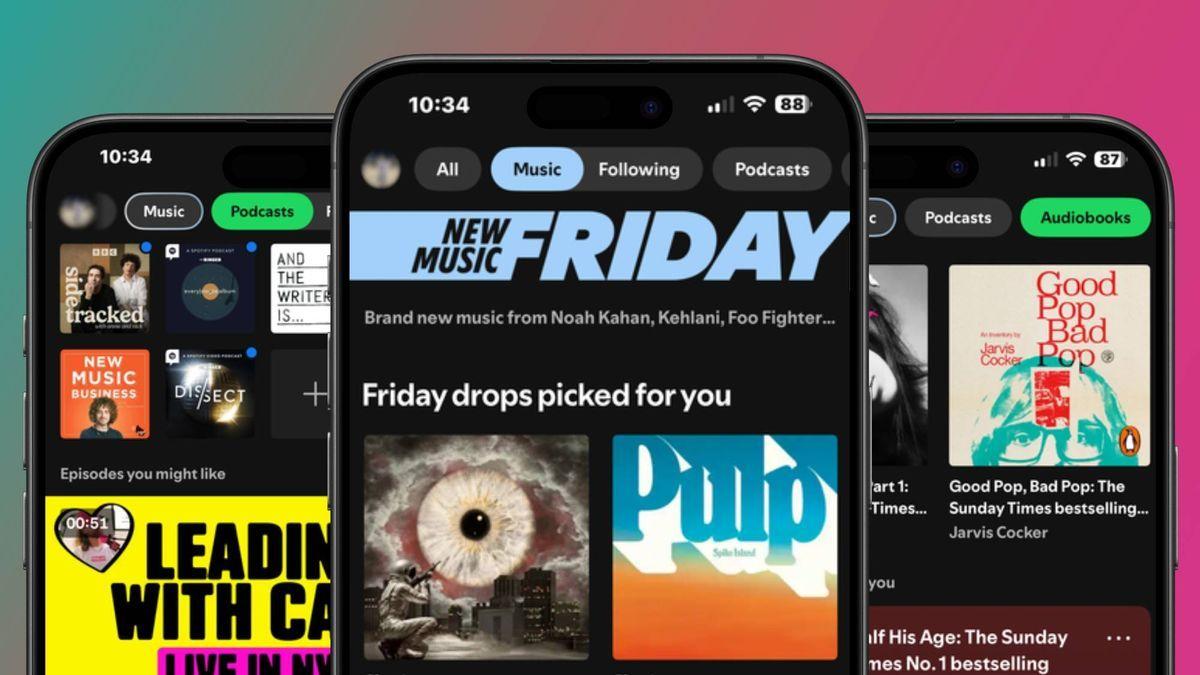
. The decline proved especially pronounced among Gen Z and Gen Alpha listeners. Leipzig-based software developer Cedrik Sixtus exemplifies this listener frustration. Finding his Spotify playlists increasingly contaminated with suspected AI content, Sixtus built a Spotify AI Blocker that automatically labels and filters out tracks from over 4,700 suspected AI artists3
.
Source: TechRadar
Hundreds have downloaded his tool from code-sharing websites, though Sixtus warns it "may violate Spotify's terms of service" [5](https://www.techradar.com/audio/spotify/it-is-about-choice-if-you-want-to-hear-ai-music -or-if-you-dont-one-spotify-user-got-so-frustrated-with-ai-slop-that-they-created-an-ai-blocker-but-it-may-violate-spotifys-terms-of-service). "It is about choice - if you want to hear AI music or if you don't," Sixtus told the BBC, expressing his preference for platforms to implement official labeling and filtering systems
3
.Royalty Issues and Content Dilution Threaten Human Artists
The AI music surge creates serious economic consequences for human artists. Streaming platforms like Spotify and Apple Music operate on a pro rata royalty model—if an artist's catalog represents a certain percentage of total streams, they receive that percentage of royalty payouts
4
. AI slop dilutes these pools, siphoning millions in royalties away from legitimate artists1
. In February, several artists' rights groups published an open letter titled "Say No To Suno," claiming AI content "dilutes the royalty pools of legitimate artists from whose music this slop is derived"4
. Despite the flood of uploads, actual listening remains minimal. Deezer found AI songs account for less than 3 percent of total streams, with most deemed fraudulent and driven by bots rather than human listeners4
. The company has demonetized 85 percent of AI streams1
.Related Stories

Platforms Implement Inconsistent AI Detection Tools and Transparency Tags
Deezer became the first major platform to implement AI detection tools, using proprietary technology that trains AI models to identify statistical patterns in sound
3
. The service labels AI-generated content, prevents algorithmic recommendations, and recently began selling its detection technology industry-wide. CEO Alexis Lanternier stated that "AI-generated music is now far from a marginal phenomenon and as daily deliveries keep increasing, we hope the whole music ecosystem will join us in taking action to help safeguard artist's rights and promote transparency for fans"1
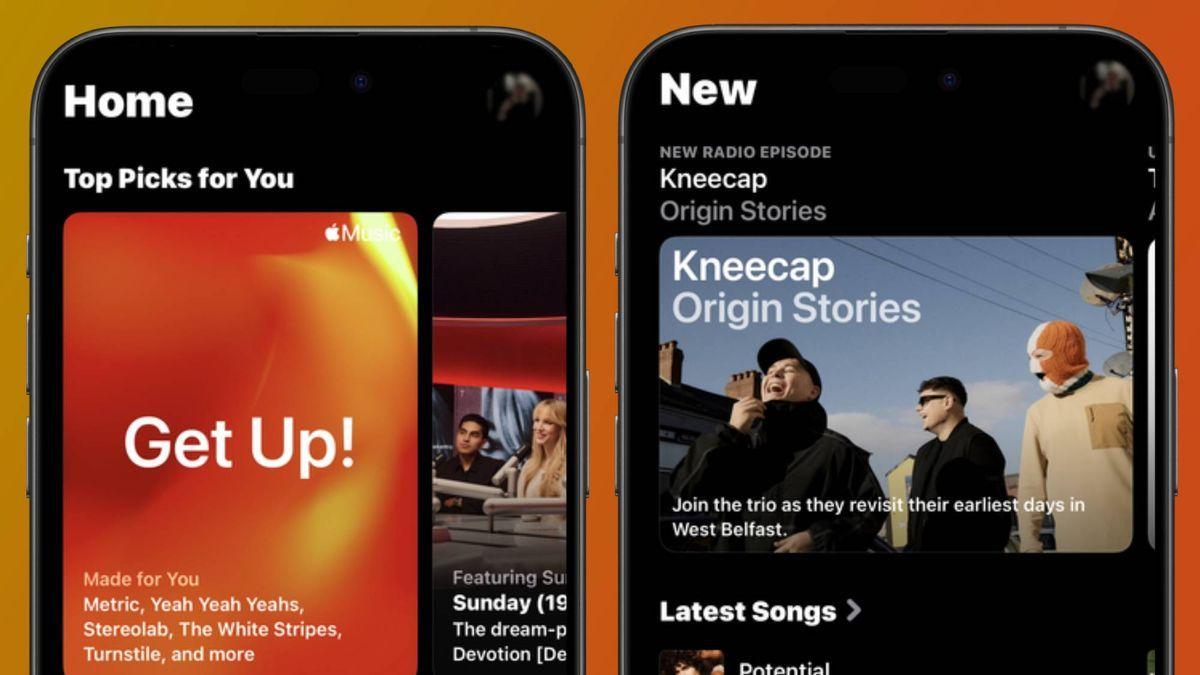
. Apple Music introduced transparency tags requiring labels and creators to voluntarily disclose AI content, though the system relies entirely on self-reporting with unclear enforcement1
.
Source: TechRadar
Spotify launched AI credits in April, working with standards group DDEX to allow artists to specify whether AI created lyrics, vocals, or backing music
1
. However, Sam Duboff, Spotify's global head of Marketing & Policy for Artists, acknowledged that third-party detection tools still make a "material amount of incorrect assessments"1
.The Challenge of Detection as AI Music Becomes Indistinguishable
The technical sophistication of AI music generators poses fundamental challenges for detection. In a controlled Deezer-Ipsos poll, 97 percent of listeners failed to correctly distinguish between AI-generated and human-made tracks
3
. Creating AI music requires minimal effort—users simply select genres, generate lyrics, and click create2
. Services like Suno produce polished songs with vocals and instrumentation in seconds. Robert Prey, who studies streaming platforms at Oxford University's Internet Institute, describes Spotify's position as "a difficult - borderline existential - balancing act"3
. The platform must avoid value judgments about how music is created while maintaining trust among listeners, artists, and the industry through adequate transparency. Maya Ackerman, an AI and computational creativity expert at Santa Clara University and CEO of WaveAI, notes that AI music exists on a continuum, making straightforward labeling difficult3
. While some tools operate as "prompt in, song out" systems where labels would be straightforward, others involve varying degrees of human and AI collaboration.References
Summarized by

Navi
Related Stories
Major Labels Embrace AI Music Platforms After Copyright Battles, Raising Artist Concerns
16 Dec 2025•Entertainment and Society

AI Music Generation Tools Spark Debate and Disruption in the Music Industry
01 Sept 2025•Technology

YouTube Music users furious as AI slop floods recommendations, threatening paid subscriptions
06 Jan 2026•Technology
Recent Highlights
1
Meta Unveils Muse Wonder Frontier AI Models, Claims Performance Matching OpenAI and Anthropic
Technology

2
IMF Report Warns AI Market Correction Could Spark Global Financial Crisis With $1.4T at Risk
Business and Economy

3
OpenAI Releases 722 AI-Generated Math Solutions, Triggering Existential Crisis in Mathematics
Technology

Recent Highlights
Today's Top Stories






Don’t drown in AI news. We cut through the noise - filtering, ranking and summarizing the most important AI news, breakthroughs and research daily. Follow topics that matter to you and stay ahead.


