Apple Escalates OpenAI Lawsuit With Evidence Destruction Claims Over Stolen Trade Secrets


21 Sources
[1]
Apple accuses OpenAI of destroying evidence
Apple is pushing for "expedited discovery" in its legal battle against OpenAI over concerns the company is actively destroying evidence, as reported earlier by Bloomberg. In a filing on Monday, Apple alleges OpenAI only just handed over a MacBook used by a former employee at the center of the
[2]
OpenAI says Apple has only itself to blame in trade-secret fight
SAN FRANCISCO, Aug 31 - OpenAI denied Apple's allegations of trade secret theft on Monday, saying the iPhone maker failed to show any confidential information was stolen by former employees. "This dispute is a mess of Apple's own making, and it is trying to blame everyone else," OpenAI said in a
[3]
Apple adds more allegations to its trade secrets lawsuit against OpenAI - Engadget
It claims a laptop proves that a former employee accessed and used proprietary files for the AI company. Apple offered new evidence in support of its claims that OpenAI used trade secrets taken by former employees in support its new hardware business. As part of a push to obtain expedited
[4]
Apple Claims Former Employee Stole Trade Secrets for OpenAI, Then Tried to Destroy the Evidence
Apple just delivered its latest blow in its lawsuit against OpenAI, claiming to have unearthed "shocking evidence" from a former employee's laptop. In a brief submitted Monday to a United States District Court in the Northern District of California, Apple's legal team said that Chang Liu -- who
[5]
Apple alleges OpenAI employee accessed circuit plans after joining startup
SAN FRANCISCO, Aug 31 (Reuters) - Apple (AAPL.O), opens new tab on Monday alleged that a defendant in its trade secret case against ChatGPT creator OpenAI accessed a power converter circuit schematic while at OpenAI, according to a filing in U.S. federal court. *Apple alleged that Chang Liu, a
[6]

OpenAI calls trade secret dispute 'a mess of Apple's own making'
Apple yesterday presented what it said was "shocking evidence" based on analysis of a MacBook owned by Chang Liu, a former employee who moved to OpenAI. The company is alleging that two of its former employees stole trade secrets relating to hardware design and more. The AI company hit back with
[7]

Apple Says Former Engineer Used Stolen Trade Secrets at OpenAI, Taught AI Agent to Run Them
Apple today submitted new evidence in its lawsuit against OpenAI, with the hope that the new information will persuade the judge to grant an expedited discovery process. Apple filed a theft of trade secrets lawsuit against OpenAI employees Chang Liu and Tang Tan in July, accusing them of using
[8]

Apple reveals 'shocking evidence' in OpenAI trade secrets lawsuit
Apple claims it has evidence that a former employee stole trade secrets to benefit his new employer, OpenAI. Credit: VCG/VCG via Getty Images Apple's lawsuit against OpenAI and two of its former employees over alleged stolen trade secrets is heating up. In a new filing, Apple says it has found
[9]

Apple, OpenAI legal fight keeps escalating. Here's how we got here
Why it matters: If the case makes it to the discovery process, two of the most secretive companies in tech could be forced to reveal sensitive information about how they recruit talent, develop hardware and protect confidential information. Driving the news: On Monday, OpenAI responded to Apple's
[10]
Apple reveals 'shocking evidence' from ex-employee's MacBook in OpenAI suit
Apple has filed a new document in its ongoing lawsuit against OpenAI as it continues to push for expedited discovery. In today's filing, Apple says that it has new "shocking evidence" based on early forensic inspection of a laptop used by former engineer Chang Liu. Apple first filed the lawsuit in
[11]

OpenAI: Apple's trade secret theft accusation is baseless
OpenAI argued in a court filing Monday that Apple's accusations of trade theft against the AI company are baseless, suggesting the problem instead lies in the iPhone maker's own policies. The ChatGPT maker pointed to Apple's practice of encouraging employees to use personal accounts for work and
[12]

OpenAI Blames Apple for Being Unable to Safeguard Its Own Trade Secrets
* OpenAI has reportedly hired about 400 former Apple employees * OpenAI has been planning to launch its own hardware * Apple reportedly demands monetary compensation Apple accused OpenAI of stealing its trade secrets by soliciting confidential information from the iPhone maker's former
[13]

OpenAI vs Apple trade secret lawsuit: OpenAI says Apple has only itself to blame in trade-secret fight
"This dispute is a mess of Apple's own making, and it is trying to blame everyone else," OpenAI said in a filing late Monday in U.S. District Court in San Jose, California. OpenAI denied Apple's allegations of trade secret theft on Monday, saying the iPhone maker failed to show any confidential
[14]

Apple claims OpenAI is using confidential Apple material and destroying evidence
Apple has escalated its legal battle against OpenAI, claiming in a new court filing that OpenAI is actively destroying crucial evidence and that former iPhone engineer Chang Liu "not only downloaded a confidential Apple circuit schematic but also used it in his work" at the artificial intelligence
[15]
Apple trade secret case against OpenAI: Apple alleges OpenAI employee accessed circuit plans after joining startup
Apple alleged that Chang Liu, a former Apple senior system electrical engineer, accessed the circuit and trained an AI agent using proprietary Apple information in March 2026. Apple on Monday alleged that a defendant in its trade secret case against ChatGPT creator OpenAI accessed a power
[16]

OpenAI Blames Apple for iPhone Maker's Trade Secret Lawsuit | PYMNTS.com
The legal battle continued this week, with Apple now alleging that an OpenAI employee has destroyed evidence in the case, and OpenAI saying Apple has no one to blame for the suit but itself. In a motion for expedited discovery filed in federal court Monday (Aug. 31) and obtained by PYMNTS, Apple
[17]

Apple's accusations are making things uncomfortable for OpenAI
A laptop arrived late. What was on it made things worse. And now Apple is asking a federal court to move faster, arguing that evidence in its lawsuit against OpenAI is being actively destroyed. Apple filed a new brief on Aug. 31, escalating its legal battle against the ChatGPT maker. The filing
[18]

Apple vs OpenAI: New Circuit-Plan Allegations Against Chang Liu
Apple accused former engineer Chang Liu of accessing a confidential Apple power-converter circuit schematic after joining OpenAI and using the proprietary information to train an artificial intelligence agent. The allegation emerged in a new court filing dated August 31, 2026, in Apple's ongoing
[19]

OpenAI slams Apple trade-secret theft lawsuit as 'baseless': 'A mess of Apple's own making'
OpenAI slammed a lawsuit from Apple alleging it stole the iPhone maker's trade secrets by hiring its employees, saying it's "a mess of Apple's own making," according to a new legal filing. The Sam Altman-led firm argued Apple's lawsuit was a "baseless" attempt to keep the company from recruiting
[20]
Apple, OpenAI Clash Over Trade Secrets as New Evidence Emerges
Apple also claims Tan encouraged prospective OpenAI employees to bring physical components to interviews. OpenAI says any components shown during interviews were old or publicly available and served only as engineering demonstrations. Apple is seeking a preliminary injunction that could restrict
[21]

Apple vs OpenAI gets bigger: New evidence allegedly reveals use of confidential data
Apple is seeking a court order to restrict OpenAI's hardware work while the trade secrets case continues. Apple has submitted what it calls shocking evidence in its ongoing trade secrets lawsuit against OpenAI. This has escalated its allegations against former Apple employees who joined the AI
Share
Copy Link
Apple filed new allegations against OpenAI claiming former employee Chang Liu downloaded confidential circuit schematics and trained AI agents using proprietary Apple information. The legal battle intensifies as Apple pushes for expedited discovery while OpenAI denies wrongdoing and blames Apple's employee exit process for the dispute.
Apple Accuses OpenAI of Destroying Evidence in Escalating Legal Battle
Apple is demanding expedited discovery in its legal battle with OpenAI over concerns the AI company is actively destroying evidence.
1
In a Monday filing, Apple accuses OpenAI of only recently handing over a MacBook used by former Apple employee Chang Liu, which allegedly contained discussions about "destroying the types of forensic data Apple needs."1
The filing represents the latest escalation in the Apple OpenAI lawsuit that began in July, centering on allegations that the ChatGPT-maker engaged in trade secret theft to build AI devices.
Source: MacRumors
Former Apple Employee at Center of Trade Secret Allegations
The lawsuit revolves around three former Apple employees who recently joined OpenAI, with Chang Liu emerging as a central figure. Apple alleges that Liu, a former senior system electrical engineer, kept a company-owned MacBook after leaving Apple in January.
4
Apple accuses OpenAI of failing to inspect the laptop "despite having the MacBook in their possession since the start of the lawsuit" in July.1
When OpenAI finally provided the device to Apple on August 21st, forensic inspection allegedly uncovered that Liu "not only downloaded a confidential Apple circuit schematic but also used it in his work at OpenAI."1
Circuit Schematic and AI Agent Training Raise Concerns
Apple's forensic investigation revealed that Liu allegedly downloaded dozens of confidential Apple files from the company's third-party cloud storage system, including a highly confidential power converter circuit schematic.
3
According to the filing, Liu uploaded this circuit schematic to LTspice software, a program that simulates circuit performance before physical construction.4
Apple alleges that Liu accessed the circuit and trained an AI agent using proprietary Apple information in March 2026.5
In a text message from that period included in the brief, Liu reportedly stated he deployed an AI agent to autonomously run circuit simulations.4
Apple's legal team argues this creates irreversible damage: "Where trade secret information is fed into an AI agent or model that 'learns' from it, such 'learning' may create irreversible and continually propagating uses of the trade secret."4
Source: Mashable
Evidence of Alleged Cover-Up Attempts
Apple's investigation uncovered messages suggesting Liu attempted to destroy forensic evidence after learning about the company's internal investigation in June. The filing claims Liu discussed with OpenAI colleague Yu-Ting Peng "the need to 'restore' and then 'start using' Apple-owned devices" and "discussed destroying the types of forensic data Apple needs."
1
4
Apple maintains that "important forensic artifacts on which forensic inspections rely -- such as logs, metadata, and usage records -- are transient and at risk of being lost, overwritten, or destroyed."1
The company also claims that Liu's Mac Mini, allegedly used to power the LTspice simulations, should be handed over as evidence, arguing that "the full scope of [his] misconduct thus remains unknown."4
Related Stories
OpenAI Denies Wrongdoing, Blames Apple's Exit Process
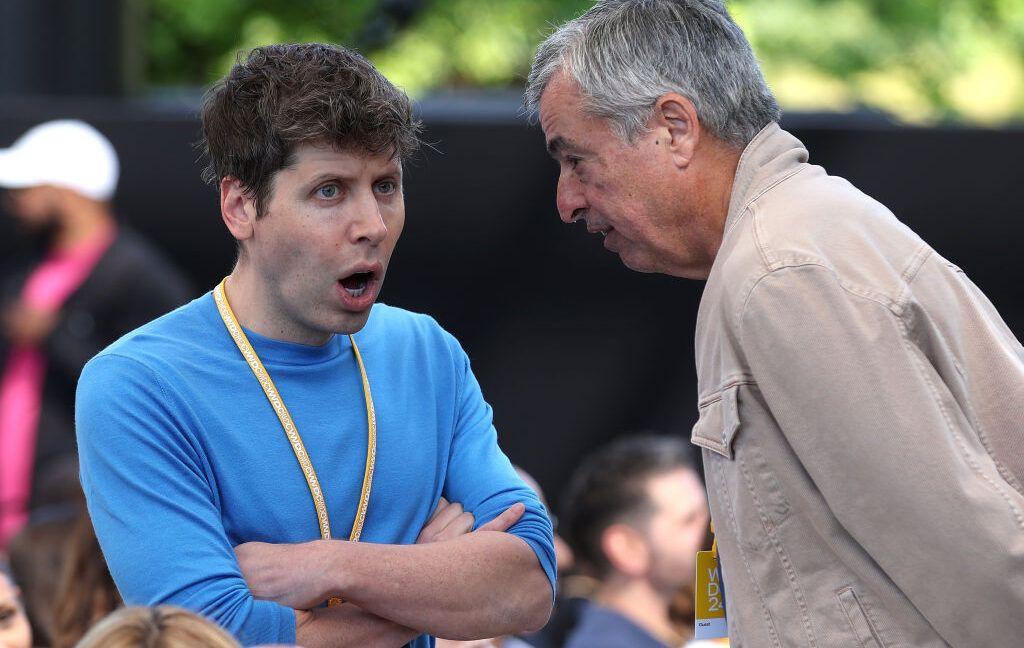
OpenAI has vigorously denied the allegations of misappropriating trade secrets, arguing "this dispute is a mess of Apple's own making, and it is trying to blame everyone else" in a Monday filing.
2
The AI company maintains "there is no evidence that Liu accessed any Apple information through improper means or for any improper purpose," adding that "Liu has no use for Apple confidential information."1
OpenAI contends that Apple encourages employees to use personal iCloud accounts to access work documents, making it difficult for departing employees to separate personal and company information.2
The company criticizes Apple's employee exit process, noting that the policy of immediately escorting departing employees from premises doesn't give them enough time to return company devices, transfer internal files, or hand over responsibilities.2
AI Talent Poaching and Broader Corporate Disputes
The legal battle reflects intensifying competition for AI talent between the tech giants. OpenAI has hired roughly 400 employees from Apple for its hardware initiative, according to court filings.
2
The AI lab, led by CEO Sam Altman, contends Apple is using the lawsuit to slow a potential competitor and discourage employee departures.2
OpenAI emphasized that California law allows employees to freely move between rivals, arguing that "employees can leave a company like Apple that has struggled to adopt AI and move to an exciting startup that builds innovative products."2
The lawsuit also names Tang Tan, another former Apple employee who spent 24 years at the company, accusing him of encouraging departing employees to discuss confidential information during OpenAI interviews.4
Tan maintains he returned Apple prototypes before departing and only retained non-confidential materials.2
This corporate dispute marks a dramatic shift from just two years ago when the companies forged a partnership intended to boost ChatGPT's reach and help Apple gain footing in AI, though the relationship quickly soured as competition intensified.2
Source: Axios
References
Summarized by

Navi
[1]
[4]
Related Stories
Apple sues OpenAI for allegedly stealing trade secrets as battle for AI gadgets intensifies
10 Jul 2026•Policy and Regulation
OpenAI Calls Apple's Trade Secrets Lawsuit 'Careless and Oddly Personal' as Legal Battle Escalates
04 Aug 2026•Business and Economy
Apple vs OpenAI: Trade Secret Lawsuit Reaches Critical Court Hearing Over AI Hardware Secrets
Today•Policy and Regulation
Recent Highlights
1
Meta Unveils Muse Wonder Frontier AI Models, Claims Performance Matching OpenAI and Anthropic
Technology

2
IMF Report Warns AI Market Correction Could Spark Global Financial Crisis With $1.4T at Risk
Business and Economy

3
OpenAI Releases 722 AI-Generated Math Solutions, Triggering Existential Crisis in Mathematics
Technology

Recent Highlights
Today's Top Stories






Don’t drown in AI news. We cut through the noise - filtering, ranking and summarizing the most important AI news, breakthroughs and research daily. Follow topics that matter to you and stay ahead.


