8 Sources
[1]
OpenAI is reportedly preparing legal action against Apple; it wouldn't be the first partner to feel burned | TechCrunch
OpenAI is so frustrated with Apple over a ChatGPT integration that failed to deliver the subscribers and prominence it expected that the company is now actively exploring legal action against the iPhone maker, Bloomberg News reported Thursday, citing people familiar with the matter. According to Bloomberg, OpenAI has enlisted an outside law firm to work through its options, which could include sending Apple a formal breach-of-contract notice without necessarily escalating to a full lawsuit (at least not immediately). Any legal move would likely wait until after the conclusion of OpenAI's ongoing trial with Elon Musk. Still, it's a reminder of what a difficult partner Apple can be for major software companies. The iPhone is an enormously attractive platform for growth, but it's fully under Apple's control -- and companies that build there are only guests. From Google to Adobe, there's a long history of Apple showing guests the door when they seem as if they're getting too comfortable. TechCrunch has reached out to both OpenAI and Apple for comment. The OpenAI partnership, announced at Apple's Worldwide Developers Conference in June 2024, wove ChatGPT into Apple's operating systems as an option within Siri and as part of the iPhone's Visual Intelligence feature (allowing users to use their camera to analyze their surrounds and send photos to ChatGPT with related questions). OpenAI, along with industry watchers, expected the deal might eventually funnel billions of dollars in new subscriptions its way and give the company prime real estate across one of the world's most-used mobile ecosystems. Instead, Bloomberg reports, OpenAI has grown increasingly aggravated, complaining that the integration has been buried, its features hard to find, and that revenue from the tie-up is nowhere close to projections. "They basically said, 'OpenAI needs to take a leap of faith and trust us,'" one OpenAI executive told Bloomberg. "It didn't work out well." Apple, for its part, has its own grievances, including concerns about OpenAI's privacy standards and, according to Bloomberg, irritation over OpenAI's push into hardware, an effort led by former Apple executives including ex-design chief Jony Ive. Either way, OpenAI is hardly the first partner of Apple to regret hitching its wagon to the company. Apple has a long history of embracing partners and then alienating them. The most famous case is Google Maps, which was a flagship feature of the original iPhone. It was so central to the device's appeal that its removal in 2012 -- replaced by Apple's markedly inferior Apple Maps product -- became one of the biggest tech fiascos of the decade, prompting a rare public apology from CEO Tim Cook. The friction between the two companies had been building for years at that point, thanks to the rollout of Google's Android phone a year after the iPhone's 2007 debut; after Google's then-CEO Eric Schmidt stepped down from Apple's board in 2009, that rivalry only intensified. Adobe has some scar tissue, too. Steve Jobs refused to support Flash on the iPhone and iPad, publishing a famous open letter in 2010 explaining why and effectively dooming the technology. Flash never recovered its footing on mobile. Then there's Spotify, which spent years arguing that Apple leveraged its control over the App Store to disadvantage rival music streaming services after launching Apple Music in 2015. The European Commission agreed, fining Apple nearly €1.8 billion in March 2024. Sometimes these rifts can be overcome in the name of commercial interests. Google is now Apple's AI infrastructure partner, having struck a multiyear deal in January to power the next generation of Apple Intelligence with Gemini models. Apple is paying Google roughly $1 billion a year. In the meantime, OpenAI has had its own share of strained relationships lately. Elon Musk's lawsuit against the company -- which accuses OpenAI of abandoning its nonprofit founding mission and operating in bad faith -- is currently at trial. The company has also reportedly navigated tensions with Microsoft, its biggest backer and infrastructure partner, as it pushes for greater independence ahead of its own IPO ambitions.
[2]
OpenAI considering legal action against Apple over iPhone AI deal
OpenAI is exploring legal action against Apple over their deal to integrate ChatGPT into the iPhone, underlining the bitter competition between leading AI groups to access the iPhone-maker's massive consumer base. The start-up was considering its legal options over what it sees as a lack of progress by Apple over enacting its 2024 agreement, according to people familiar with the matter. OpenAI was concerned about a "pattern of behaviour from Apple . . . showing no interest in investing required resources to deliver on the promise of the partnership", one of the people said. "They are focused solely on extracting a tax for their market position," they added. Bloomberg first reported OpenAI's legal threat. Apple has stayed on the sidelines as its Big Tech peers pour hundreds of billions of dollars into bets on AI models and infrastructure, instead striking deals to serve up third-party models to more than 1bn iPhone users. The tension between Apple and OpenAI comes after the hardware giant earlier this year partnered with Google to use its Gemini AI models to power "Apple Intelligence", its suite of AI features. The announcement was widely viewed as a rebuke of OpenAI, which was the first AI company to partner with Apple. The OpenAI partnership allowed Apple users to access results from ChatGPT when submitting queries to Siri and integrated the AI chatbot into Apple's writing tools. OpenAI is frustrated that Apple has not done more to integrate and promote its AI tools for iPhone users. Apple is expected to announce updates with its new operating system later this year that will allow users to plug into a variety of third-party AI models. OpenAI has meanwhile poached talent from Apple's AI team. The AI start-up also hired Apple's former design chief Jony Ive to work on a new device, which could become a competitor to the iPhone. The threat comes as the ChatGPT maker faces a jury verdict as soon as this week in a case brought by Elon Musk over its transformation into a for-profit company. OpenAI and Apple declined to comment.
[3]
OpenAI preparing legal action against Apple as ChatGPT-Siri partnership unravels
OpenAI's partnership with Apple, announced to considerable fanfare in June 2024, is fracturing. The AI company's lawyers are actively working with an outside legal firm on options that could include sending Apple a formal notice alleging breach of contract, according to Bloomberg, which cited people familiar with the deliberations. No lawsuit has been filed, and OpenAI says it still hopes to resolve the dispute without going to court. But the company has concluded that Apple failed to hold up its end of a deal that was supposed to turn ChatGPT into a default feature of the world's most valuable consumer ecosystem. The core grievance is distribution. OpenAI believed that weaving ChatGPT into Siri, Writing Tools, and Image Playground would drive a significant number of iPhone users toward paid subscriptions - potentially generating billions of dollars per year, according to people familiar with the company's expectations. Instead, Apple's implementation buried the integration behind friction. Users must explicitly invoke the word "ChatGPT" when speaking to Siri to trigger OpenAI's models. Responses appear in constrained windows with limited information. Apple customers overwhelmingly prefer using the standalone ChatGPT app, according to user studies conducted by OpenAI. The deal, struck when Apple was scrambling to catch up on generative AI, gave iPhone users the ability to access ChatGPT results through Siri, generate text, analyse images via Visual Intelligence, and create pictures in Image Playground. Apple took a cut of subscription revenue generated through its platforms. OpenAI got what it believed would be prime placement inside an ecosystem of more than a billion active devices. That placement never materialised in the way OpenAI expected. An executive at the company, speaking to Bloomberg on condition of anonymity, said Apple had not made an honest effort to promote the integration. OpenAI now believes the implementation has actively damaged its brand, with the limited, windowed responses creating an impression of inferior capability compared with the full ChatGPT experience. During initial discussions in 2024, Apple characterised the opportunity as comparable to its search deal with Google in Safari - a partnership that generates tens of billions of dollars annually for both sides. That comparison has proved spectacularly inapt. The same executive said OpenAI had been told to take a leap of faith, and that the leap had not paid off. The rift with Apple is not happening in isolation. OpenAI is simultaneously fighting a federal trial with Elon Musk over its nonprofit-to-profit conversion, with potential damages of $150 billion. It recently renegotiated its exclusive deal with Microsoft, capping revenue-sharing payments at $38 billion through 2030 and shifting to a non-exclusive licensing model that allows OpenAI to serve customers on any cloud provider. Amazon, meanwhile, has deepened its investment in Anthropic with an additional $5 billion. Apple has its own list of grievances. The company has been concerned about OpenAI's privacy practices. And OpenAI's $6.5 billion acquisition of io, the device startup co-founded by former Apple design chief Jony Ive, has created a direct competitive threat. The business, now run by former Apple executives Tang Tan and Evans Hankey, is working to build an alternative to the iPhone. Apple executives have been, as Bloomberg put it, fuming over OpenAI's recruitment of Apple hardware engineers, with the AI company offering stock packages worth millions more than Apple provides. Any legal action by OpenAI is unlikely before the conclusion of the Musk trial, according to Bloomberg's sources. The timing suggests OpenAI is managing its legal exposure carefully, avoiding a second front while the first remains unresolved. The partnership's deterioration is happening as Apple prepares to diminish OpenAI's role in its software. iOS 27, expected to be unveiled at the Worldwide Developers Conference on 8 June, will introduce a system called Extensions that allows users to install rival AI chatbots from the App Store and route Siri queries, writing tasks, and image generation through whichever model they choose. Apple is testing integrations with both Anthropic's Claude and Google's Gemini. Separately, Apple struck a deal late last year to use Google's Gemini models as the foundation for its own AI capabilities, paying roughly $1 billion annually for a custom 1.2-trillion-parameter model that will power the next generation of Siri. OpenAI was considered for this deeper integration but declined to participate, feeling burned by the original relationship. The OpenAI executive told Bloomberg that Apple's embrace of other providers is not driving the legal dispute, since the partnership was never meant to be exclusive. The new Extensions system might even benefit ChatGPT by giving it more prominent placement through a model-picker interface. But the broader trajectory is clear: Apple is building an AI architecture designed to reduce its dependence on any single provider, and OpenAI is moving from privileged partner to one option among several. Apple's AI strategy has been defined by a series of forced compromises. The company marketed AI features for the iPhone 16 that were not ready, leading to a $250 million class-action settlement over false advertising. It partnered with OpenAI because its own models were inadequate, then found the partnership unsatisfying. It turned to Google for the underlying intelligence that its in-house team could not deliver. At each stage, the company that built its reputation on vertical integration has been forced to depend on others for the capability its customers expect. For OpenAI, the Apple experience is a lesson in the limits of distribution without control. Being inside the iPhone sounded like a growth engine. In practice, it meant accepting Apple's design choices, Apple's revenue terms, and Apple's willingness - or unwillingness - to promote the product. The company that believed it was getting a Safari-scale partnership got something closer to a buried settings toggle. Whether the dispute escalates into litigation or resolves through renegotiation, the strategic picture has already shifted. OpenAI is building hardware. Apple is building its own AI stack. The deal that once symbolised their mutual need now illustrates why the two largest ambitions in consumer technology - owning the device and owning the intelligence may be fundamentally incompatible as long-term partnerships.
[4]
OpenAI Falls Behind and Looks to Blame Apple
Apple has made it clear that it plans on opening up its AI relationships. OpenAI isn't taking it well. According to Bloomberg's Mark Gurman, the partnership between the two companies has become strained lately, and OpenAI is looking at its legal optionsâ€"as if the company hasn't spent enough time in court lately. Whether there's a case for OpenAI to pursue is an open question, but it is pretty clear from the report that the company has found Apple to be a pretty cold partner. Per Bloomberg, OpenAI expected ChatGPT to be more deeply ingrained in the iOS ecosystem and feature prominently on the mobile platform so that iPhone users would know they were using ChatGPT. That just never really came to fruition. It's understandable why OpenAI would want that. When the two first signed an agreement back in 2024, ChatGPT was the only AI model to integrate into Apple Intelligence, including serving as the brains of a supposedly smarter Siri voice assistant. But Apple has had nothing but trouble actually making its AI features work, so it might have saved OpenAI some trouble by not associating ChatGPT with broken tools. Apple also hasn't exactly been thrilled with how things have gone with OpenAI. Per Bloomberg, the company apparently had real doubts that it could trust OpenAI to protect user privacy. It also reportedly didn't take super kindly to OpenAI announcing plans for its own device, which seems like it will just be a competing smartphoneâ€"but, hey, a smartphone from iPhone designer Jony Ive. It'd be understandable if Apple would just like OpenAI to get some of its own ideas. The simmering resentment between the two has apparently stalled out negotiations to re-up the agreement. Apple seems like it's decided to move on from exclusivity entirely and reportedly plans to open Apple Intelligence to any AI model that wants to participateâ€"including OpenAI rivals like Google and Anthropic. That doesn't leave OpenAI with much other than being a face in the crowd, which isn't going to drive subscriptions the way that it expected. It seems unlikely that OpenAI would pull out of the iOS ecosystem as retribution, simply because there are too many users there to leave on the table. It does seem like the company may opt to take some legal action against Apple, but even that might be more of a symbolic gesture than anything meaningful. Bloomberg suggested the company may send Apple a notice alleging that it is in breach of its contract without actually filing a lawsuit. You can probably bet that one ends up in the shred pile.
[5]
OpenAI preparing 'legal action' against Apple over Siri partnership: report - 9to5Mac
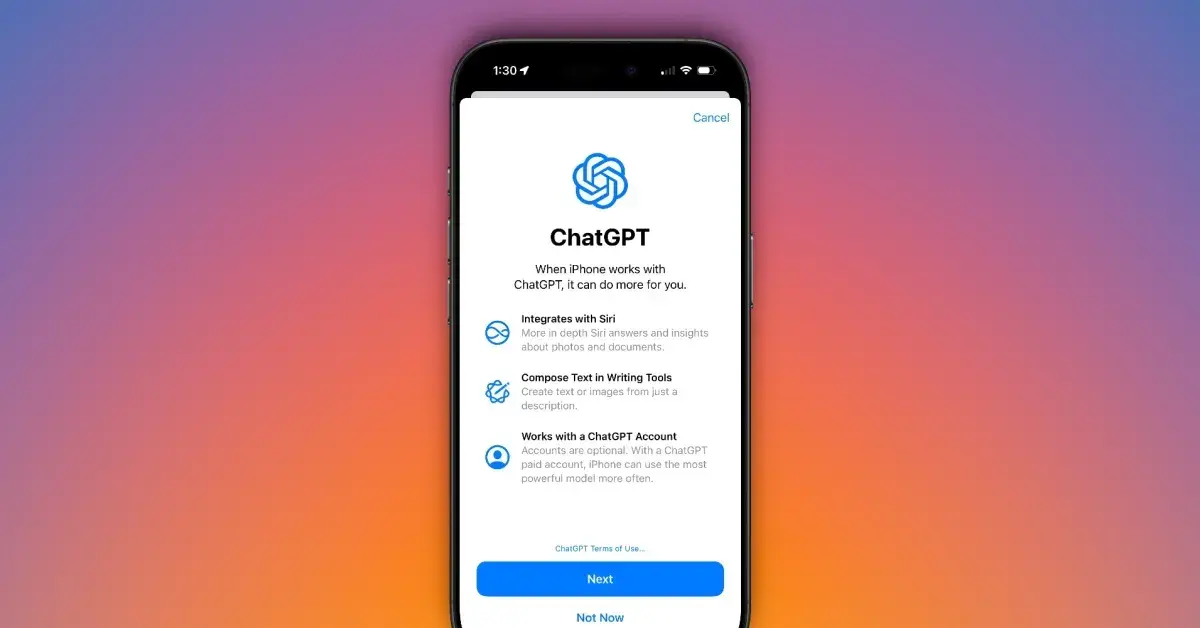
Apple and OpenAI inked a deal to integrate ChatGPT with Siri as part of iOS 18 in 2024. According to a new report today, however, OpenAI is displeased with how the partnership has played out and is considering taking legal action against Apple. According to Bloomberg, OpenAI lawyers are working with an outside legal firm "on a range of options that could be formally executed in the near future." One possible outcome is that OpenAI sends Apple a notice "alleging breach of contract without necessarily filing a full lawsuit at the outset." The report says: "OpenAI believed that the companies' partnership, which wove ChatGPT into Apple software, would coax more users into subscribing to the chatbot. It also expected deeper integration across more Apple apps and prime placement within the Siri assistant." An unnamed OpenAI executive, quoted by Bloomberg, alleges that the company has "done everything from a product perspective," while Apple has not held up its end of the deal. "We have done everything from a product perspective," the executive said. "They have not, and worse, they haven't even made an honest effort." One aspect of the OpenAI integration into iOS is the ability to sign up for a paid ChatGPT subscription via the Settings app on iPhone. OpenAI reportedly believed this "could generate billions of dollars per year in subscriptions," which apparently "hasn't come close to happening." "When we heard about this opportunity, it sounded amazing: being able to acquire a giant number of customers and have distribution in such a big mobile ecosystem," said the OpenAI executive. At the time, though, Apple was unwilling to share exactly what the product would be, the person said. "They basically said, 'OpenAI needs to take a leap of faith and trust us,'" the executive said, adding that the deal ended up being a failure for the startup. OpenAI's displeasure comes ahead of WWDC, where Apple is expected to announce a next-generation version of Siri powered by Google Gemini. iOS 27 will also reportedly let users integrate with other AI models, including Anthropic's Claude. Apple opening the iPhone up to other AI models "isn't driving the company's legal action since the partnership wasn't meant to be exclusive from the start," according to the unnamed OpenAI executive. OpenAI wasn't interested in working with Apple on the new models because it felt burned by the initial relationship, according to the people. "Apple has so much market power that they can dictate terms," the executive said. "We already took this leap of faith with you, and it didn't work out well." Meanwhile, OpenAI is also developing its own hardware products and has poached many Apple engineers to work on the devices. Additionally, that effort is being led by former Apple design chief Jony Ive. Apple executives "have been fuming for more than a year" over OpenAI's recruiting tactics. "No final decisions have been made, and OpenAI still hopes to resolve its issues with Apple outside of court," the report says.
[6]
OpenAI Believes Apple Hasn't Made "An Honest Effort" To Integrate ChatGPT Within The iPhone, Even As Apple Fumes At Over 40 Engineers Poached By Sam Altman
OpenAI was the first entity to come to Apple's rescue when its own AI efforts stumbled in late 2024. While OpenAI's motives for doing so were by no means altruistic in nature, it asserts it entered into a partnership in good faith, and now believes it has been short-shrifted by Apple. This comes as the maker of iPhones nurses its own grievances against OpenAI for stealing its talent, setting the stage for another epic clash in the courts. According to Bloomberg's Mark Gurman, OpenAI is extremely frustrated with the offhand manner in which Apple appears to have integrated ChatGPT within its iPhones. Specifically, OpenAI has taken umbrage with the fact that Apple has chosen to integrate ChatGPT in a manner that does not utilize its full capabilities, yielding "summarized results that are subpar to what is present in the ChatGPT App Store app." What's more, OpenAI is frustrated that, contrary to its expectations of billions of dollars in incremental revenue, ChatGPT's allegedly flawed integration within the iOS has yielded little financial return, especially as its internal data indicates that users overwhelmingly prefer the ChatGPT app over Apple's integrated implementations. Do note that little money actually changes hands between Apple and OpenAI under their current partnership, save a cut that Apple takes of each qualifying subscription to OpenAI's services. According to OpenAI, it held up its end of the bargain, while Apple did not. Critically, OpenAI believes Apple did not even make "an honest effort" to better integrate ChatGPT within its iOS. Consequently, OpenAI lawyers are now working with an external law firm to explore available options, including invoking a breach of contract to take Apple to court. This comes as Apple is all set to open up its ecosystem to third-party AI agents within iOS 27, and as it continues to work with Google's bespoke Gemini models to power the all-new chatbot-style Siri. For its part though, Apple is brimming with righteous fury against OpenAI for poaching its prized talent. As we've previously reported, OpenAI has poached over 40 Apple engineers in the past few months, including those belonging to its core design team. These poaching efforts seem to have accelerated ever since OpenAI acquired Jony Ive's io to work on an "iPhone killer" device.
[7]
OpenAI-Apple Relationship Deteriorates As OpenAI Prepares Legal Case - Alphabet (NASDAQ:GOOGL)
OpenAI lawyers are working with an outside firm on options that could include a breach-of-contract notice, people familiar with the matter told Bloomberg's Mark Gurman. A full lawsuit is not the only option on the table. OpenAI Says Apple Did Not Deliver The startup believed the 2024 deal that wove ChatGPT into Siri and Apple's Writing Tools would funnel iPhone users into paid ChatGPT subscriptions. "We have done everything from a product perspective," an OpenAI executive told Bloomberg. "They have not, and worse, they haven't even made an honest effort." OpenAI initially believed the arrangement could generate billions of dollars per year in subscription revenue, according to the report. The startup now believes the Apple implementation has hurt OpenAI's brand. The tension extends beyond software. OpenAI last year acquired a hardware startup co-founded by former Apple design chief Jony Ive, and has poached Apple engineers with stock packages worth millions more than Apple offers. Polymarket Eyes The Ive Device The "What kind of product will OpenAI announce in 2026?" market has Earbuds/Headphones leading at 31%, Glasses at 27% and a Smartphone at 21%, on more than $258,000 in volume. Any of those categories would put OpenAI in direct hardware competition with an Apple product line. The Musk Trial Clock Any legal move likely will not come until after the conclusion of OpenAI's trial with Elon Musk, which entered closing arguments Thursday in Oakland with jury deliberations expected next week. Polymarket gives Musk a 34% chance of winning the case against Altman, on more than $389,000 in volume. A Musk win would tie up OpenAI's legal bandwidth and likely delay any move against Apple further. WWDC Sets The Stage Apple is separately paying Google roughly $1 billion annually for AI technology to power its underlying models. Apple is trading around $297, slightly off its all-time high set Wednesday. Apple did not immediately respond to a request for comment from Benzinga. Image: Shutterstock Market News and Data brought to you by Benzinga APIs To add Benzinga News as your preferred source on Google, click here.
[8]
OpenAI explores legal options against Apple, Bloomberg News reports
May 14 (Reuters) - Apple's two-year-old partnership with OpenAI has become strained, with the AI startup failing to see the expected benefits from the deal and now preparing possible legal action, Bloomberg News reported on Thursday. OpenAI lawyers are actively working with an outside legal firm on a range of options, including potentially sending the iPhone maker a notice alleging breach of contract without necessarily filing a full lawsuit at the outset, the report said, citing people familiar with the matter. Apple and OpenAI did not immediately respond to Reuters' requests for comment. Reuters could not independently verify the report. (Reporting by Jaspreet Singh in Bengaluru; Editing by Shilpi Majumdar)
Share
Copy Link
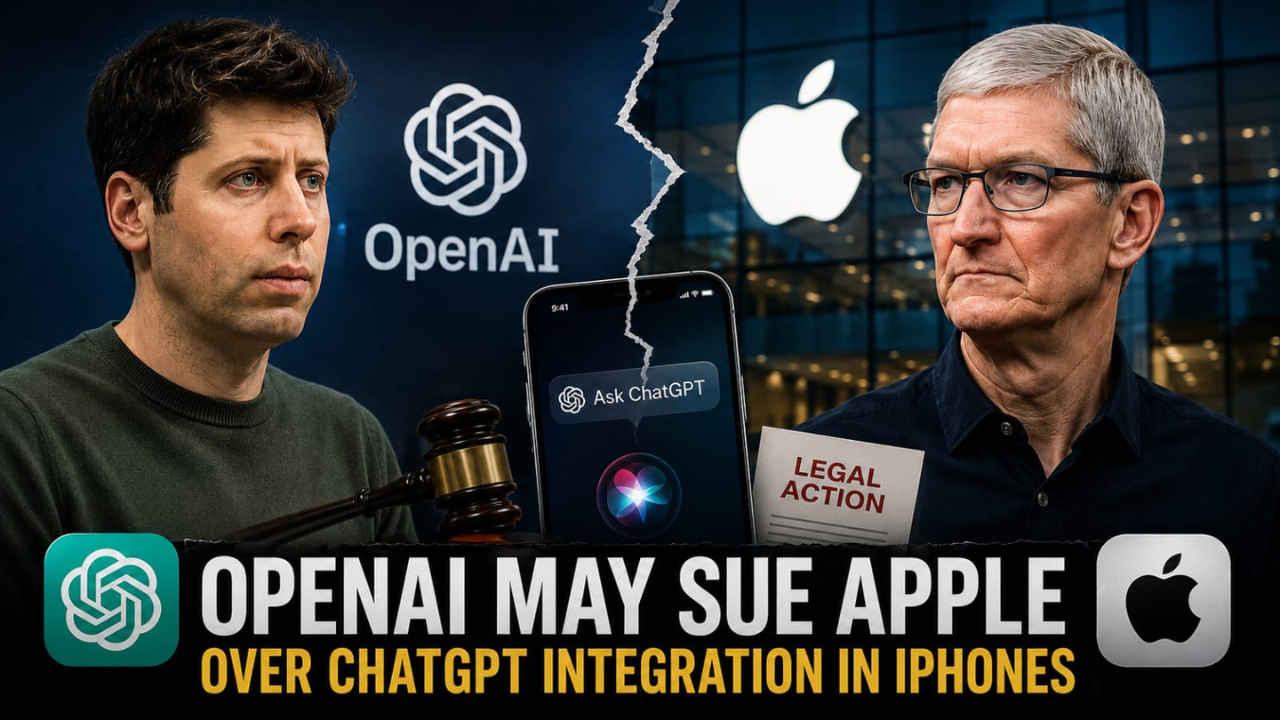
OpenAI is exploring legal action against Apple over their ChatGPT integration deal, citing buried features and revenue far below projections. The AI company enlisted outside counsel to consider breach of contract allegations, marking another chapter in Apple's history of difficult partnerships with major tech firms.
The OpenAI Apple partnership, announced with considerable fanfare at Apple's Worldwide Developers Conference in June 2024, is now fracturing. OpenAI has enlisted an outside law firm to explore legal action against Apple, with options including sending a formal breach of contract notice, according to Bloomberg
1
. The AI company's dissatisfaction with their partnership centers on what it views as Apple's failure to deliver on the promise of deep ChatGPT integration across iOS 18 and the broader Apple Intelligence ecosystem2
.
Source: Wccftech
OpenAI believed the ChatGPT-Siri partnership would funnel billions of dollars in subscription sign-ups annually by placing its chatbot prominently across more Shubhamore than 1 billion active iPhone devices. Instead, the company found its features buried and difficult to access. Users must explicitly invoke the word "ChatGPT" when speaking to Siri to trigger OpenAI's models, with responses appearing in constrained windows
3
. An OpenAI executive told Bloomberg that Apple showed a "pattern of behaviour" indicating no interest in investing required resources to deliver on the partnership's promise, adding that "they are focused solely on extracting a tax for their market position"2
.The potential legal dispute between OpenAI and Apple stems from fundamental disagreements about implementation. OpenAI expected the deal to resemble Apple's lucrative search partnership with Google in Safari, which generates tens of billions of dollars annually for both companies
3
. During initial discussions in 2024, Apple was unwilling to share exact product details. "They basically said, 'OpenAI needs to take a leap of faith and trust us,'" one OpenAI executive explained. "It didn't work out well"1
.
Source: 9to5Mac
The strained partnership between OpenAI and Apple has practical consequences. User studies conducted by OpenAI show that Apple customers overwhelmingly prefer using the standalone ChatGPT app rather than the integrated version
3
. OpenAI now believes the limited implementation has actively damaged its brand, creating an impression of inferior capability compared with the full ChatGPT experience3
. Meanwhile, Apple has its own grievances, including concerns about OpenAI's user privacy standards and frustration over OpenAI's push into hardware development1
.Apple has stayed on the sidelines as other Big Tech companies pour hundreds of billions of dollars into AI infrastructure, instead striking deals to serve up third-party models to iPhone users
2
. Earlier this year, Apple partnered with Google to use Google Gemini models to power Apple Intelligence, paying roughly $1 billion annually for a custom 1.2-trillion-parameter model that will power the next generation of Siri3
. The announcement was widely viewed as a rebuke of OpenAI, which was the first AI company to partner with Apple2
.Apple is expected to announce iOS 27 at its Worldwide Developers Conference on June 8, introducing an Extensions system that allows users to install rival AI chatbots from the App Store and route Siri queries through whichever model they choose
3
. Apple is testing integrations with both Anthropic's Claude and Google Gemini3
. OpenAI was considered for deeper integration but declined to participate, feeling burned by the original relationship3
.Related Stories
The friction extends beyond software. OpenAI has poached talent from Apple's AI team and hired Apple's former design chief Jony Ive to work on a competing device that could become an alternative to the iPhone
2
. Apple executives have been "fuming for more than a year" over OpenAI's recruitment tactics, with the AI company offering stock packages worth millions more than Apple provides3
.OpenAI preparing legal action against Apple highlights a pattern of difficult partnerships between Apple and major software companies. Apple has a history of embracing partners and then alienating them, from Google Maps—removed in 2012 and replaced by Apple's inferior product, prompting a rare apology from CEO Tim Cook—to Adobe's Flash, which Steve Jobs refused to support on iPhone and iPad in 2010
1
. Spotify spent years arguing that Apple leveraged App Store control to disadvantage rival music streaming services, with the European Commission fining Apple nearly €1.8 billion in March 20241
.
Source: Gizmodo
Any legal action by OpenAI will likely wait until after the conclusion of its ongoing trial with Elon Musk, which involves accusations that OpenAI abandoned its nonprofit founding mission
1
. No final decisions have been made, and OpenAI still hopes to resolve its issues with Apple outside of court5
.🟡 waving towards the right. Another person is partially visible near him.Summarized by
Navi
[1]
[4]
30 Sept 2024•Business and Economy

14 Nov 2025•Policy and Regulation

01 Oct 2025•Policy and Regulation

1
Technology

2
Technology

3
Technology