OpenAI Calls Apple's Trade Secrets Lawsuit 'Careless and Oddly Personal' as Legal Battle Escalates


35 Sources
[1]
OpenAI says Apple's trade secrets lawsuit is "aggressive and oddly personal"
OpenAI has accused Apple of waging a "careless, aggressive and oddly personal lawsuit" in a blog post rebutting the iPhone maker's claims that the AI start-up stole top-secret information. "We do not have, nor want, any of their trade secrets," the ChatGPT maker wrote on Monday evening, accusing
[2]
OpenAI says Apple's own security practices undermine its trade secrets case
OpenAI's motion to dismiss Apple's trade secrets lawsuit, along with newly filed exhibits, reveals the company's legal defense strategy. Rather than focusing on whether former Apple employees working at OpenAI had accessed certain information, the AI company argues that Apple's own security
[3]
Apple says more ex-employees may have taken confidential data to OpenAI
Apple is now seeking a preliminary injunction in its trade secrets case against OpenAI, which aims to stop the AI model maker from moving forward with developing an AI device or other products based on Apple's technology. The iPhone maker also claims that more of its former employees may be
[4]
OpenAI Hits Back at Apple, Calls Lawsuit 'Careless, Aggressive and Oddly Personal' - CNET
Katelyn is a reporter with CNET covering artificial intelligence, including chatbots, image and video generators.... Read full bio Three weeks after Apple filed a landmark case accusing OpenAI of stealing trade secrets, OpenAI is hitting back. In a new blog post, the ChatGPT-maker said Apple's
[5]
OpenAI says Apple's trade secrets lawsuit is 'rotten to its core'
OpenAI has asked a federal judge to toss out Apple's landmark lawsuit accusing the ChatGPT maker of stealing trade secrets, describing the allegations as "meritless." In a motion filed yesterday to dismiss the complaint, OpenAI says that Apple is mischaracterizing both the actions of the AI
[6]

Apple is taking OpenAI to court over alleged theft of trade secrets -- ChatGPT maker suggests it doesn't want Cupertino's knowledge anyway
Apple and OpenAI are heading to court in a clash of two of the world's largest and most well-funded companies. With teams of lawyers and bottomless pockets to fund them, these two industry titans are squaring off over claims of theft of trade secrets. Apple is asking the courts to block its former
[7]

OpenAI: Here's What Apple's Trade Secret Theft Lawsuit Gets Wrong
OpenAI is responding to an Apple lawsuit that accuses it of trade secret theft by taking the legal battle to the court of public opinion. "Apple is getting this wrong," OpenAI says in a blog post. "This careless, aggressive, and oddly personal lawsuit sadly doesn't live up to [Apple's]
[8]

OpenAI says Apple's trade secrets lawsuit aims to stop employees leaving
OpenAI has accused Apple of trying to stem an employee exodus to the ChatGPT maker with a "baseless and pretextual" trade secrets lawsuit and has asked a US court to dismiss the landmark case. It marks OpenAI's first legal rebuttal of Apple's claims that the start-up used former and current Apple
[9]

Apple seeks preliminary injunction against OpenAI in trade secrets case
Aug 3 (Reuters) - Apple on Monday asked a U.S. judge for a preliminary injunction barring two former employees and OpenAI from accessing, acquiring, using or disclosing alleged confidential information as it moves ahead with its trade secrets case. Apple last month sued OpenAI and the two former
[10]
'Apple is getting this wrong,' says OpenAI -- startup blasts iPhone maker over lawsuit alleging it stole confidential information through ex-Apple employees
Apple filed a lawsuit against OpenAI in July, alleging that the latter stole trade secrets through former Apple employees. The startup has finally publicly responded to the lawsuit today, posting a blog post on its website titled, "Apple is getting this wrong." "Apple is one of the greatest
[11]

Apple claims that even more ex-employees may have given trade secrets to OpenAI - Engadget
The company is requesting expedited discovery in an ongoing lawsuit. Apple has claimed that even more former employees may have given trade secrets to OpenAI, according to a report by TechCrunch. The company is seeking a preliminary injunction in its case against OpenAI, which would stop the AI
[12]

OpenAI Says Apple's Real Problem Is Being Bad at AI, Not Stolen Secrets
The legal battle between OpenAI and Apple just got (even more) personal. In response to a bombshell lawsuit accusing the startup's employees of stealing Apple's trade secrets, OpenAI called the case "meritless" and requested that it be tossed out by a federal judge. The response also suggested
[13]

OpenAI wants Apple's trade-secrets case thrown out
In a combative motion, OpenAI argues that Apple's own loose data policies, not any theft, explain how information travelled with the hundreds of staff who left for it. OpenAI is not interested in a quiet settlement with Apple. The company has asked a federal judge to dismiss Apple's trade-secrets
[14]
OpenAI hits back at Apple over 'oddly personal' trade secrets fight
Legal clash deepens after an AI partnership over devices gives way to acrimony OpenAI has accused Apple of waging a "careless, aggressive and oddly personal lawsuit" in a blog post rebutting the iPhone maker's claims that the AI start-up stole top-secret information. "We do not have, nor want,
[15]

OpenAI Asks Judge to Dismiss Apple's Trade Secrets Lawsuit
OpenAI has asked a federal judge to dismiss Apple's lawsuit accusing the AI company of stealing trade secrets, calling the allegations "meritless." Lawyers for OpenAI said Apple's suit twists the actions of its employees. Bloomberg reports that the filing defends Chief Hardware Officer Tang Yew
[16]
OpenAI Is Trying to Shame Apple Into Backing Down From Its Lawsuit
The tech industry reeled last month when Apple sued OpenAI for allegedly stealing trade secrets as the startup builds its nascent AI hardware business. In a blog post published late Tuesday night, OpenAI dismissed the lawsuit as a baseless witch hunt -- and said it has the evidence to prove
[17]

OpenAI moves to dismiss Apple's trade secret lawsuit
Why it matters: The motion is an early step in a legal fight that could stretch for years. If the case survives, discovery could expose sensitive details about both companies' hiring, hardware development and data-security practices. What's inside: OpenAI's motion bristles with digs at Apple,
[18]

OpenAI takes Apple lawsuit to court of public opinion, posts texts
In July, Apple filed a blockbuster lawsuit against OpenAI, maker of ChatGPT, accusing the company of hiring former Apple employees and improperly gaining confidential information. Now, OpenAI is striking back against Apple, but not just in court. On Aug. 3, OpenAI posted a public blog post denying
[19]

OpenAI moves to dismiss Apple trade secrets lawsuit
OpenAI called Apple's complaint "baseless and pretextual," arguing the iPhone maker failed to identify a protectable trade secret or plausibly allege misappropriation OpenAI filed a motion Wednesday seeking dismissal of Apple $AAPL's lawsuit, which charges the AI company and two of its hires from
[20]

OpenAI fires back at Apple, publishing private emails to counter trade-secret claims | Fortune
OpenAI has come out swinging in its legal battle with Apple -- and brought receipts. The AI lab published a response -- along with a tranche of private emails and messages -- pushing back on some of the claims in Apple's lawsuit filed last month that accused OpenAI, its hardware unit io Products,
[21]

Apple and OpenAI escalate legal battle over devices
San Francisco (United States) (AFP) - A legal battle between Apple and OpenAI over the ChatGPT-maker's secretive device project escalated this week when the artificial intelligence (AI) developer called the iPhone-maker's allegations "baseless" and asked for the lawsuit's dismissal. Apple sued
[22]

OpenAI calls out Apple's 'careless, aggressive and oddly personal lawsuit' in latest blog post
After two former Apple employees started working for OpenAI, the Cupertino-based company alleged that trade secrets went with them and straight to the creator of ChatGPT. After it asked for a preliminary injunction to stop those employees and OpenAI from accessing confidential information, OpenAI
[23]

OpenAI wants to be the underdog against Apple. That won't be easy
OpenAI, the artificial intelligence pioneer, is trying on a new public image: the scrappy underdog David defending itself from Apple's creaky Goliath. It's an understandable strategy, but making that image stick won't be easy. The root of the dispute is OpenAI's plan to develop its own AI-centric
[24]

Apple and OpenAI escalate legal battle over devices
The case comes at a sensitive time for OpenAI, which is worth a reported $852 billion as it works towards a potential IPO. The lab is also locked into a fierce competition with Anthropic, a rival AI lab in San Francisco that was founded by a group of former OpenAI employees. A legal battle between
[25]

OpenAI Seeks Dismissal of Apple Trade Secrets Lawsuit - Apple (NASDAQ:AAPL)
OpenAI Moves to Dismiss Apple's Trade Secrets Lawsuit, Says It Has 'No Use, Need or Desire' for AAPL's Proprietary Information In a motion to dismiss, OpenAI's lawyers said the company had no use for Apple's proprietary information. "OpenAI has no use, need or desire for Apple's trade secrets,"
[26]

OpenAI Paints A Picture Of Utter Incompetence At Apple, Shows Apple Lawyers "Emailed The Wrong Person After Confusing Two Asian Last Names"
When Apple filed a damning lawsuit against OpenAI a few weeks back for supposedly stealing secrets related to a slew of upcoming consumer-oriented AI devices, we were led to believe that the maker of iPhones had a rock-solid case against OpenAI, replete with the proverbial smoking gun. OpenAI's
[27]
OpenAI seeks dismissal of Apple's trade secrets lawsuit
OpenAI asked a judge to dismiss Apple's lawsuit accusing it of trade-secret theft. The company stated it is building something entirely new and different from Apple. Apple had alleged OpenAI exploited confidential information through former employees and suppliers. The lawsuit highlights a battle
[28]

OpenAI Seeks Dismissal of Apple Trade Secrets Lawsuit | PYMNTS.com
The artificial intelligence startup said Apple's claims have no merit, and its lawsuit falsely portrays its employees' actions, according to documents filed Wednesday (Aug. 5) by OpenAI in federal court. "Apple built its reputation by paying close attention to the smallest details," the filing
[29]

Apple Says More Ex-Staffers Involved in Data Leaks; OpenAI Takes Lawsuit Into Public Forum
Apple seeks temporary injunction on OpenAI's possible hardware plans while the ChatGPT-maker claims the iPhone-maker has got it all wrong The legal battle between Apple and OpenAI has escalated into a major one with OpenAI going to great lengths to push back on the iPhone-maker's allegations of
[30]
Apple Seeks Court Order in AI Trade Secrets Dispute With OpenAI | PYMNTS.com
The request, filed in the U.S. District Court for the Northern District of California, seeks to bar the defendants from using or disclosing what Apple says are its proprietary trade secrets while the lawsuit proceeds. Apple also requested expedited discovery, including documents and depositions
[31]
Apple seeks preliminary injunction against OpenAI in trade secrets case
Apple has requested a judge to prevent former employees and OpenAI from using confidential information. The tech giant is suing OpenAI and two ex-employees for trade secret theft. Apple also filed a motion seeking expedited discovery of relevant documents. The lawsuit aims to protect Apple's future
[32]

Apple asks judge to slam breaks on OpenAI's hardware ambitions, latest twist in high-stakes suit
Apple has asked a federal judge to slam the brakes on OpenAI's hardware ambitions, leading the ChatGPT maker to fire back that the iPhone giant's own lawyers couldn't even email the right Asian executive The Cupertino, Calif.-based behemoth sought a preliminary injunction late Monday barring
[33]

OpenAI asks court to throw out Apple trade secrets lawsuit, says iPhone maker is masking AI failures
The legal battle follows Apple's earlier request for an injunction to stop OpenAI from allegedly using confidential trade secrets. OpenAI has moved to dismiss the controversial Apple's trade secret lawsuit. The ChatGPT maker has accused Apple of using the courts to cover up its own struggles in
[34]
Elon Musk says OpenAI cannot be trusted as Apple seeks court injunction in trade secrets lawsuit
Apple also said its investigation has identified 11 other former Apple employees beyond Liu and Tan who may have been witnesses or played a role in the case. Apple has stepped up its legal fight against OpenAI by asking a US court for a preliminary injunction in its trade secrets lawsuit. The
[35]
OpenAI hits back at Apple trade secret lawsuit, says iPhone maker got key facts wrong
OpenAI defended former Apple executive Tang Tan and said it has no interest in using Apple's confidential information. OpenAI has openly pushed back against Apple's trade secret lawsuit accusing the iPhone maker of filing a case based on inaccurate claims and failing to engage with the company
Share
Copy Link
OpenAI has fired back at Apple's trade secrets lawsuit, calling it 'careless, aggressive and oddly personal' while filing a motion to dismiss. The AI company argues Apple's own security lapses allowed former employees access to systems, and that more than 400 ex-Apple workers now at OpenAI were simply attracted by innovative AI work.
OpenAI Denies Theft, Challenges Apple's Claims
OpenAI has filed a motion to dismiss Apple's trade secrets lawsuit, describing the allegations as "meritless" and "rotten to its core."
5
In a strongly worded blog post published Monday evening, the ChatGPT maker stated it does not have, nor wants, any of Apple's trade secrets, accusing the iPhone maker of "making vague accusations" and waging a "careless, aggressive and oddly personal lawsuit."1
The legal battle marks a significant escalation between two tech giants increasingly encroaching on each other's territory as OpenAI ventures into consumer products and Apple partners with Google to revamp its Siri voice assistant.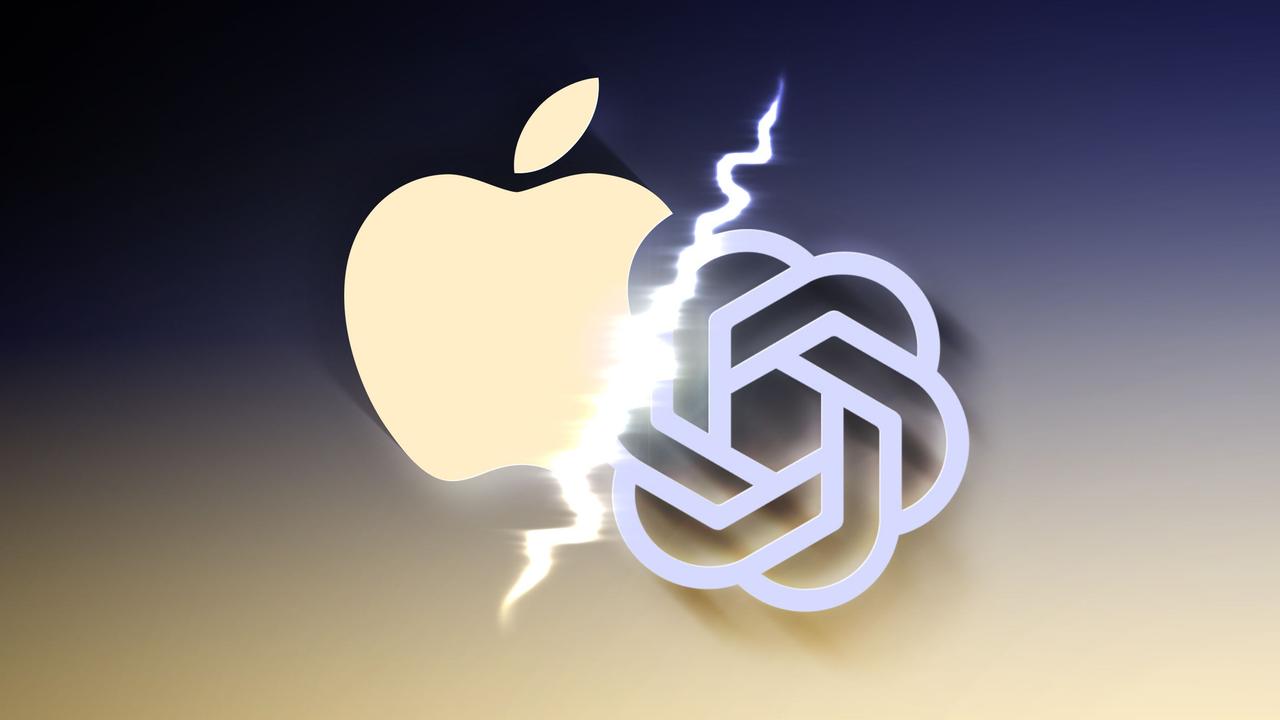
Source: MacRumors
Apple's Security Practices Under Scrutiny
Rather than focusing solely on whether former Apple employees accessed certain information, OpenAI's defense strategy targets Apple's own security practices and offboarding procedures.
2
The AI company argues that Apple allowed employees to use personal iCloud accounts for work and failed to properly revoke access after they left the company. OpenAI submitted text message records showing that an Apple manager remained logged into the personal iCloud account of defendant Chang Liu after he departed, transferring files and later asking him for help with technical questions about Apple projects.2
This "residual access" issue, OpenAI contends, undermines Apple's claim that the information qualifies as legally protected trade secrets.The Case Against Chang Liu and Tang Tan
Apple filed its lawsuit in July, alleging that more than 400 of its former Apple employees now work at OpenAI.
1
The complaint specifically names Chang Liu, a former employee who worked on some of Apple's "most sensitive product development programs," accusing him of accessing Apple's trade secrets after leaving the company in January.1
Apple also named OpenAI's chief hardware officer Tang Tan, a 24-year Apple veteran, whom it accused of seeking out proprietary information when interviewing Apple's employees.4
However, OpenAI claims that Apple employees themselves contacted Liu and asked for his help to locate information, something the iPhone maker "only now admits."1
Apple Seeks Preliminary Injunction and Expedited Discovery
Apple on Monday sought a preliminary injunction in the US to prevent former employees and OpenAI from accessing, using or disclosing its trade secrets.
1
The company also filed a second motion asking the court to expedite discovery and order several OpenAI employees, including Liu and Tang Tan, to sit for depositions.1
In its filing requesting expedited discovery, Apple claims its continued investigation has revealed 11 other former Apple employees beyond Liu and Tan may have been witnesses or otherwise involved in the case.3
Apple alleges that one former employee met with Liu and discussed Apple proprietary information relating to unannounced products before an interview at OpenAI, while another took screenshots of confidential Apple documents relating to an unannounced Apple product before interviewing.3
Communication Missteps and Competing Narratives
OpenAI released selected text and email exchanges to support its claim that Apple made mistakes in the lead-up to filing its lawsuit.
4
According to OpenAI, Apple's lawyers "emailed the wrong person after confusing two Asian last names" and "claimed they had a discussion with our General Counsel, which they now concede never happened."1
The AI company states that Apple "never raised the specific allegations in this lawsuit at that time" and "in fact told us that they were 'resolving any issues'. We then heard nothing for five months until they sued."1
Apple's outside counsel Gabriel Gross appeared to have initially contacted the wrong person at OpenAI in February about Apple's concerns, according to emails OpenAI released.4

Source: Wccftech
Related Stories

What Information Counts as Trade Secrets?
OpenAI argues that Apple hasn't specified which "trade secrets" or confidential components were allegedly stolen, referring to them instead as "generic categories of the product-development process -- such as component manufacturing, product testing, vendor and supplier relationships, and distribution channels."
2
This argument aims to strengthen OpenAI's position that the misappropriated confidential information wasn't truly trade secrets if Apple didn't secure it properly. OpenAI contends that Apple is mischaracterizing both the actions of the AI startup's employees as theft and "generic" product development information as trade secrets.5
Talent Wars and AI Hardware Development
The dispute intensified after OpenAI last year acquired io, the design studio founded by former Apple design chief Sir Jony Ive, and hired a string of Apple employees.
1
OpenAI's filing posits that Apple is using this lawsuit to slow down its competitor from innovating in AI hardware development, rather than focusing on its own product plans.2
"OpenAI has no use, need or desire for Apple's trade secrets," the motion argues. "OpenAI is building something entirely new and different from anything at Apple. OpenAI does have an interest in hiring the best engineers, inventors, developers and creators -- many of whom have decided to leave Apple and to come to OpenAI, attracted by the innovative and exciting work the company is doing."2
The case could have significant ramifications for OpenAI, which is gearing up to launch its first AI hardware device.4
What Happens Next
The judge is set to hear arguments on OpenAI's motion to dismiss on October 1st.
5
Meanwhile, Apple's request for a preliminary injunction seeks to prevent OpenAI and the employees named in the complaint from accessing, acquiring, using, or disclosing alleged confidential information while the lawsuit moves ahead. OpenAI maintains that Apple's request for a preliminary injunction is "both based on false information and completely unnecessary because we do not have, nor want, any of their trade secrets."3
As this legal battle unfolds, watch for how the court weighs Apple's intellectual property claims against OpenAI's arguments about talent retention and corporate espionage versus poor security practices. The outcome could shape how tech companies protect proprietary information and manage employee transitions in the competitive AI integration landscape.
Source: Digit
References
Summarized by

Navi
Related Stories
Apple Escalates OpenAI Lawsuit With Evidence Destruction Claims Over Stolen Trade Secrets
01 Sept 2026•Policy and Regulation
Apple sues OpenAI for allegedly stealing trade secrets as battle for AI gadgets intensifies
10 Jul 2026•Policy and Regulation
OpenAI explores legal action against Apple as ChatGPT integration falls short of expectations
14 May 2026•Business and Economy
Recent Highlights
1
Microsoft and Nvidia Launch Surface Laptop Ultra: A $2,599 AI-Ready PC With RTX Spark Chip
Technology

2
Google Unveils Gemini 4 Argon AI Model, Restricts Access to Trusted Cyber Defenders
Technology
3
OpenAI Releases 722 AI-Generated Math Papers on GitHub, Igniting Fury Among Mathematicians
Science and Research

Recent Highlights
Today's Top Stories






Don’t drown in AI news. We cut through the noise - filtering, ranking and summarizing the most important AI news, breakthroughs and research daily. Follow topics that matter to you and stay ahead.


