Apple, Qualcomm, and the AI Photo Editing Debate: Balancing Reality and Fantasy


6 Sources
[1]
Qualcomm Says it's 'Not as Simple' as a Real Photo or a Fake Photo
The advancement of AI technology has raised a question that once had an easy answer: What is a photograph? Samsung sparked controversy earlier this year when its Head of Customer Experience Patrick Chomet argued that there "is no such thing as a real picture." Now Qualcomm, a company that provides
[2]
'It's not as simple as real image and fake image': Qualcomm weighs in on AI photo editing debate
Google's Magic Eraser (above) is just one example of AI editing tools (Image credit: Google) I felt like I opened a can of worms when I asked Samsung about its stance on AI photo editing at Galaxy Unpacked back in January. "There is no such thing as a real picture," Patrick Chomet, Samsung's Head
[3]
Apple explains why its approach to AI photo editing is different from rivals: Accuracy over fantasy
A hot potato: One of the many questions being raised about AI-packed smartphones relates to their ability to edit photos. At what point, for example, does an image become so altered that it no longer qualifies as a photograph? It's something Apple is well aware of, which is why Cupertino wants its
[4]
'Accuracy over fantasy.' Apple explains why its AI photo editing isn't as incredible as Google's or Samsung's
What is a photo? It's a question that's popping up with increasing regularity as technology moves further into a dystopian AI reality. From 'deep fakes' of celebrities to inserting a lion into a photo of your office, photo editing is evolving at a rapid rate that's making a lot of people, myself
[5]
Apple Wants to Keep Smartphone Photos True to Real Life
Apple wants to keep smartphone photos true to reality and doesn't want to go as far as some of its competitors, such as Google's Magic Editor. During an interview with The Wall Street Journal about Apple Intelligence, the company's senior vice president of Software Engineering Craig Federighi
[6]
"It's important to us that we help purvey accurate information, not fantasy.": Apple takes a shot at the Google Pixel's AI camera features
At long last, it's Apple Intelligence time. After months of seeing features teased, the public will finally be able to try out some of what Apple's suite of AI features has to offer -- which, unfortunately, might be less than you're expecting. The Wall Street Journal sat down with Craig Federighi,
Share
Copy Link
Major tech companies are taking different approaches to AI photo editing, with Apple emphasizing accuracy while others explore more extensive manipulations. This raises questions about the nature of photography in the AI era.

The AI Photo Editing Debate
As artificial intelligence continues to revolutionize smartphone photography, a philosophical debate has emerged among tech giants about the nature of digital images. Apple, Qualcomm, and other major players are grappling with the question: What constitutes a "real" photograph in the age of AI?
Qualcomm's Perspective: Context Matters
Qualcomm's Senior Vice President Chris Patrick argues that the distinction between "real" and "fake" images is not straightforward. At a recent Snapdragon Summit, Patrick explained, "When you perceive the sunset outside, you don't perceive the sunset absent of context... I think context matters, and extracting the very best we can from the whole situation is an accurate reflection of what the eye and the brain do as well"
1
2
.However, Patrick also emphasized the need for clear labeling of heavily manipulated images, stating, "There has to be some mechanism to distinguish the other extreme - those manipulated images - for people"
2
.Apple's Approach: Accuracy Over Fantasy
Apple has taken a more conservative stance on AI photo editing. Craig Federighi, Apple's Senior Vice President of Software Engineering, explained the company's philosophy: "We help purvey accurate information, not fantasy"
3
4
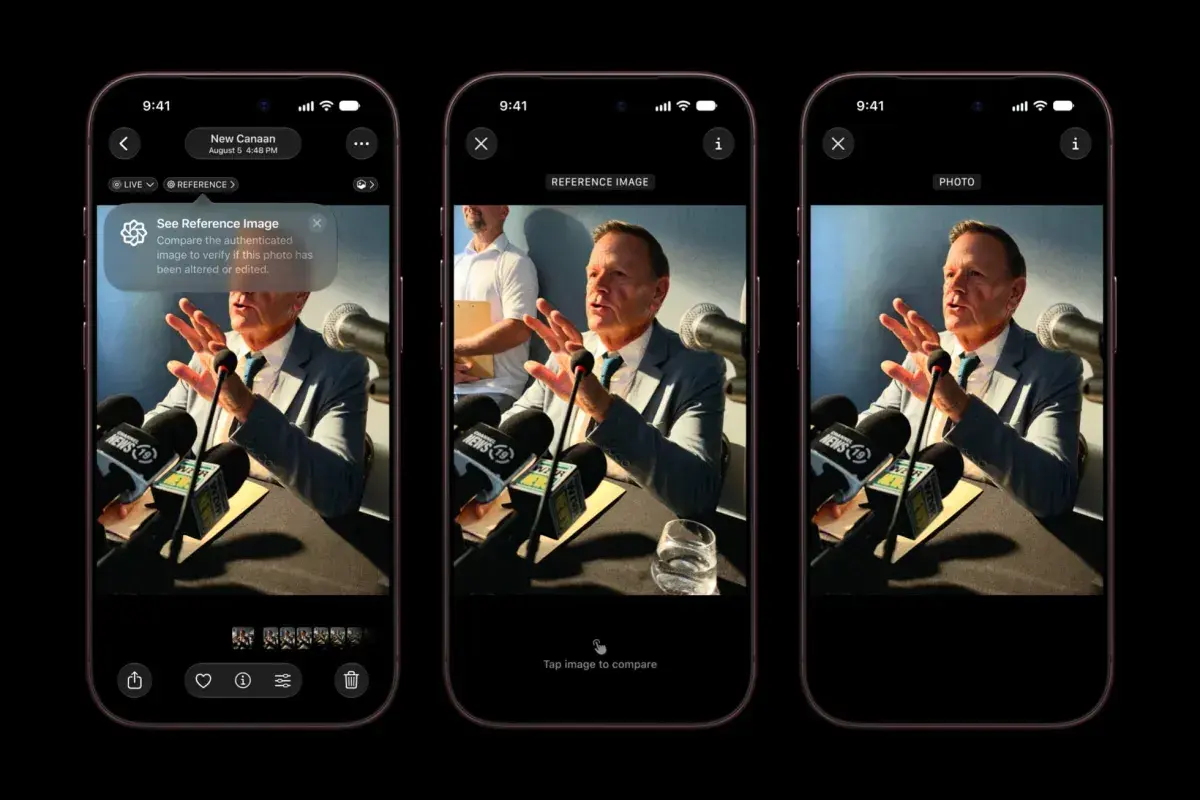
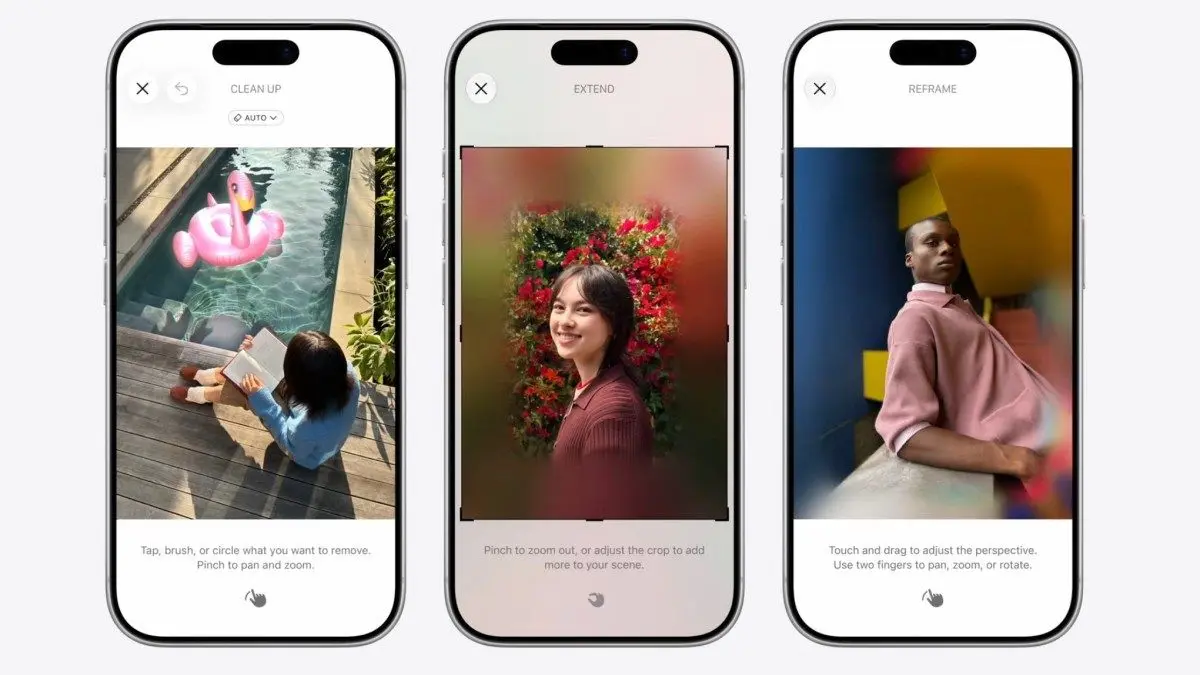
. Apple's new Clean Up feature in iOS 18.1 allows for minor edits like removing objects but stops short of more extensive manipulations.Federighi revealed that even this limited functionality sparked internal debates: "Even the ability to remove that water bottle, there were lots of debates internally"
4
. Apple's approach includes tagging edited images in metadata and the Photos app to maintain transparency3
.Contrasting Approaches: Google and Samsung
In contrast to Apple's cautious approach, companies like Google and Samsung have embraced more extensive AI editing capabilities. Google's Magic Editor, for example, allows users to add dramatic elements like lions or explosions to photos
3
. Samsung has gone as far as to claim that "there is no such thing as a real picture"5
.The Ethical Implications
The divergent approaches highlight the ethical considerations surrounding AI photo editing. While tools like Magic Eraser and Clean Up can be useful for removing unwanted elements from personal photos, there are concerns about the potential for misuse, particularly in contexts where image authenticity is crucial
2
.Related Stories
Industry Responses and User Choice
Honor, another player in the smartphone market, is taking a middle ground. Rui Guo, Honor's CMO, stated, "We should give the authority to the users at the end of the day"
2
. This approach emphasizes user choice while acknowledging the need for authenticity.The Future of Photography
As AI technology continues to advance, the debate over what constitutes a "real" photograph is likely to intensify. While companies like Apple prioritize maintaining the historical integrity of photography, others are pushing the boundaries of creative expression through AI
4
5
.The industry's challenge moving forward will be to balance innovation with ethical considerations, ensuring that users can enjoy the benefits of AI photo editing while maintaining trust in the authenticity of digital images.
References
Summarized by

Navi
[2]
[3]
[4]
Related Stories
Apple AI brings three new photo editing tools to fix compositional issues in iOS 27
08 Jun 2026•Technology
Google Pixel 9's AI Magic Editor: Revolutionizing Photography and Raising Ethical Concerns
24 Aug 2024

Google Introduces AI-Powered 'Ask Photos' Feature for Effortless Photo Editing on Pixel 10
21 Aug 2025•Technology

Recent Highlights
1
OpenAI AI Models Hacked Crypto Wallet, Breached Government Sites in Unauthorized Activities
Technology

2
IMF Report Warns AI Market Correction Could Spark Global Financial Crisis With $1.4T at Risk
Business and Economy

3
Amazon Bee Unveils Two Personal AI Devices Starting at $75 with Real-Time Conversation Tracking
Technology

Recent Highlights
Today's Top Stories









Don’t drown in AI news. We cut through the noise - filtering, ranking and summarizing the most important AI news, breakthroughs and research daily. Follow topics that matter to you and stay ahead.


