Apple accelerates chip releases, skips M6 Pro and Max to fast-track AI-focused M7 lineup


9 Sources
[1]
Apple Is Reportedly Accelerating Chip Releases Due to AI Pressure
Omar Gallaga has covered technology, digital culture and other topics for outlets including CNET, NPR, WIRED, Texas Monthly, MSNBC, Consumer Reports, The Washington Post, the Los Angeles Times, The Atlantic and the Austin American-Statesman, where he was a longtime tech reporter, editor and
[2]
Apple is reportedly skipping M6 Pro, Max, and Ultra chips to fast-track AI-focused M7 Macs
Serving tech enthusiasts for over 25 years. TechSpot means tech analysis and advice you can trust. Rumor mill: Apple is overhauling its Mac chip roadmap to place artificial intelligence at the center of its hardware strategy. Instead of completing the M6 lineup with the usual Pro, Max, and Ultra
[3]
Here's Why Apple is Reportedly Skipping M6 Pro and M6 Max Chips
According to Bloomberg's Mark Gurman, Apple will be releasing a regular M6 chip, but it has no plans to offer higher-end M6 Pro and M6 Max chips. In his Power On newsletter today, he said the reason for this break in tradition is AI. "Apple had been planning major neural-processing upgrades for
[4]
AppleInsider.com
It takes years to tape out a chip and bring it to market, with overall industry seismic shifts taking much less time. Nothing will demonstrate that better than the rumored six-month gap between the M6 processor debut and the AI-focused M7. Apple's chip lines have gradually become more AI-centric,
[5]

Apple to skip M6 Pro and Max chips, fast-tracks M7 lineup for AI focus
Apple will forgo the launch of the M6 Pro and M6 Max chips, opting instead to release an M6-powered MacBook Pro and move directly to the M7 Pro and M7 Max chips in 2027. This marks a significant departure from Apple's typical chip release strategy, which since the debut of the M1 has included Pro
[6]

Apple Finalized The M7 Chip Design Just Six Months After The M6, As AI Pressures Company To Bring Neural Processing Upgrades Into Overdrive Mode
* 0-20%: Unlikely - Lacks credible sources * 21-40%: Questionable - Some concerns remain * 41-60%: Plausible - Reasonable evidence * 61-80%: Probable - Strong evidence * 81-100%: Highly Likely - Multiple reliable sources The proliferation of AI has certainly caused a long-term crisis in the
[7]
Apple's Chipset Development Is Unparalleled As Company Is Already Working On The M8, Flaunting Superior AI Capabilities Not To Mention Enhanced Efficiency
* 0-20%: Unlikely - Lacks credible sources * 21-40%: Questionable - Some concerns remain * 41-60%: Plausible - Reasonable evidence * 61-80%: Probable - Strong evidence * 81-100%: Highly Likely - Multiple reliable sources In the AI race, Apple isn't the first name that you'd expect to be ahead
[8]

Apple's M6, M7 and M8 chip roadmap shifts focus toward AI: Report
Apple is reportedly reshaping its Mac chip roadmap to prioritize artificial intelligence (AI), with future M-series processors designed around stronger AI capabilities instead of following the company's traditional release cycle. According to the latest report by Mark Gurman of Bloomberg, Apple's
[9]

Apple may not launch M6 Pro and M6 Max chips afterall: Here is why
Ever since Apple started making M-series of chips for laptops, the launch has followed a pattern of sorts. We first get the base M-series chip (M1, M2, M3 etc), then the more powerful chips for users who need more power (M1 Pro, M2 Pro, M3 Pro), and finally the top-of-the-line chips that are for
Share
Copy Link
Apple is abandoning its traditional chip release pattern by skipping M6 Pro and Max variants to accelerate development of the AI-focused M7 chip family. The move signals a strategic shift where AI performance now drives chip development timelines, with the M7 Ultra expected to support up to 1.5TB of unified memory and dramatically enhance on-device AI capabilities by 2027-2028.
Apple Breaks Tradition by Skipping M6 Pro and Max Chips
Apple is overhauling its processor strategy in an unprecedented move that places artificial intelligence at the center of its hardware roadmap. According to Bloomberg's Mark Gurman , the company will release a base M6 chip this fall but has abandoned plans to develop M6 Pro, M6 Max, and M6 Ultra variants. This marks the first time Apple has skipped an entire high-end chip lineup since launching its custom silicon journey with the M1 in 2020
2
.
Source: TechSpot
The decision reflects a fundamental shift in Apple's chip development philosophy. "Apple had been planning major neural-processing upgrades for the M7 family and ultimately decided those improvements were important enough to justify accelerating the next generation rather than completing the M6 lineup," Gurman explained
3
. The company has already taped out the M7 design just six months after completing the M6, highlighting the urgency behind this accelerated timeline2
.AI Performance Drives Apple Chip Roadmap Overhaul
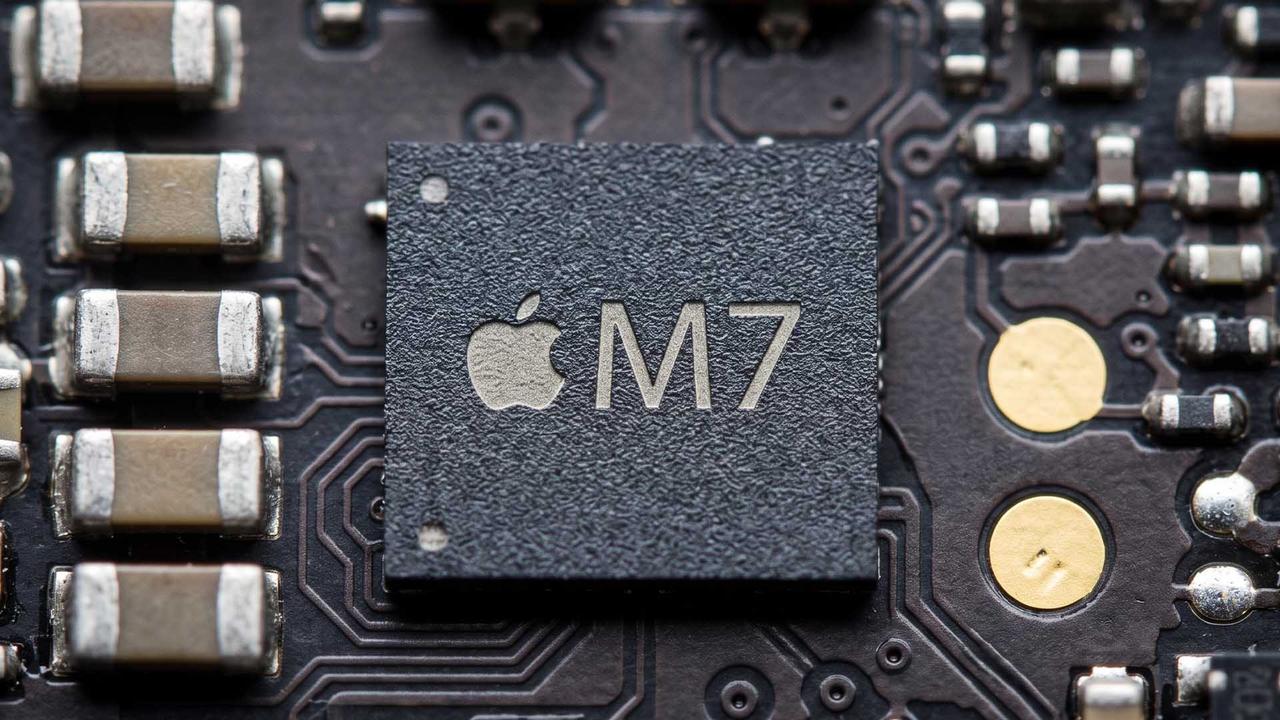
The Apple M7 chip generation represents a strategic pivot where AI performance has displaced traditional CPU and graphics capabilities as the organizing principle of Apple's chip roadmap
1
. Mahdi Eslamimehr, executive vice president at Quandary Peak Research, told CNET that skipping M6 Pro and Max chips "is the clearest signal yet that AI has displaced CPU and graphics as the organizing principle of Apple's chip roadmap"1
.
Source: Wccftech
At the heart of these improvements lies the Neural Engine, Apple's dedicated on-chip AI hardware that powers on-device generative models and Apple Intelligence features
2
. While the M6 will boost memory bandwidth from 153 gigabytes per second in the M5 to 200 gigabytes per second, the M7 will push this even further to approximately 240 gigabytes per second in the base chip4
.M7 Ultra Chip Targets Workstation-Class AI Capabilities
The M7 Ultra chip stands out as the most ambitious component of this accelerated timeline. Designed to "dramatically upgrade AI performance," the M7 Ultra is being engineered to support up to 1.5 terabytes of unified memory—roughly double the capacity planned for the upcoming M5 Ultra server chip
2
5
. This massive memory capacity would match the maximum RAM configuration available on Apple's 2019 Intel-based Mac Pro5
.With that much memory, significantly larger AI models can remain in memory, reducing bottlenecks and limiting the need to rely on external storage or cloud-based compute
2
. However, whether Apple ships Macs with the full 1.5TB configuration remains uncertain due to ongoing DRAM shortages and elevated prices in the memory market5
.Accelerating Chip Releases Reshapes Mac Launch Timeline
Under the revised Apple chip roadmap, the first AI-focused M7 Macs are scheduled to launch in the first half of 2027—creating a mere six-month gap between the M6 and M7 base chip releases
4
. Higher-end M7 Pro and M7 Max systems are expected later in 2027, while the M7 Ultra is targeted for 20282
.A new 14-inch MacBook Pro with the base M6 chip will debut later this year before Apple transitions to the M7 generation
3
. The current M5 Pro and M5 Max chips launched in March, and an M5 Ultra chip is still expected to debut in the Mac Studio as early as this year3
.Silicon-First Strategy Backed by Leadership Changes
The shift toward AI-centric hardware gains additional momentum from Apple's leadership transition. With hardware chief John Ternus taking over as CEO in the fall, the silicon-first bet now has backing at the highest levels of the company
1
. This alignment between technical strategy and executive vision suggests Apple's commitment to on-device AI extends beyond short-term product cycles.Eslamimehr noted that Apple won't compete with Nvidia on the data center side of the AI business, but will instead focus on making devices that excel as private, on-device AI computing powerhouses that eventually "would push local performance toward workstation class"
1
.Related Stories

M8 Chip and Server Strategy Point to Long-Term Vision
Beyond the M7 family, Apple is already developing an M8 chip generation with even more AI-focused silicon. The lineup reportedly includes a processor code-named Soko, targeted for 2028, along with other chips for high-end Macs under the Cardinal name
2
. The 2028 chips are planned for a 1.4-nanometer process, which should deliver another leap in efficiency2
.
Source: Wccftech
The desktop plans tie directly into Apple's server strategy. The company is preparing a more powerful AI server based on the M5 Ultra, known internally as J246, with engineers already working on a successor built around an M7 Ultra-derived server chip targeted for around 2029
2
. The M7 Ultra may power Apple Intelligence servers starting in 20293
.Foundation Built on Years of AI Investment
Apple's hardware teams have spent more than a decade building the foundation for this moment, often through projects that never reached consumers
2
. The most notable example is the company's abandoned self-driving car initiative, where Apple targeted full Level 5 autonomy and invested heavily in machine learning and custom silicon capable of processing massive AI workloads in real time1
. The car project never reached the market, but the chip development work directly contributed to the Neural Engine architecture that first appeared in the iPhone X in 2017 before expanding to Macs and other devices2
.Gurman emphasized the strategic significance: "AI is no longer just another feature Apple's chips need to support. It is now shaping how those products are designed and when they are shipped"
3
. For power users, the payoff will be more capable hardware-native AI, though it might not be until late 2027 before they can access top-tier Apple M7 hardware with upgraded Neural Engines1
. The company wants the M7, particularly the M7 Ultra, to approach the level of performance developers expect from dedicated AI accelerators rather than traditional general-purpose desktop processors2
.References
Summarized by

Navi
[2]
[4]
Related Stories
Apple fast-tracks AI-focused M7 chip for 2027, skips high-end M6 Pro and Max variants entirely
26 Jun 2026•Technology
Apple's Ambitious Chip Roadmap: M6, M7, and AI Server Processors in Development
09 May 2025•Technology

Apple's M7 Ultra chip could pack 1.5TB of memory to rival Nvidia Blackwell by 2028
12 Jul 2026•Technology

Recent Highlights



Recent Highlights
Today's Top Stories




Don’t drown in AI news. We cut through the noise - filtering, ranking and summarizing the most important AI news, breakthroughs and research daily. Follow topics that matter to you and stay ahead.


