Apple fast-tracks AI-focused M7 chip for 2027, skips high-end M6 Pro and Max variants entirely


12 Sources
[1]
Apple will skip its high-end M6 Mac chips and fast-track an AI-focused M7 generation for 2027, report claims -- may release a base M6 chip for entry-level Macs this year
Pro, Max, and Ultra tiers move to the M7 line as Apple chases memory bandwidth for on-device AI. Apple will release a base M6 chip for entry-level Macs this year but skip the Pro and Max versions of that generation, jumping instead to an accelerated M7 family built around on-device AI, according
[2]
Apple will reportedly skip the M6 Pro and Max and jump straight to M7 - Engadget
Apple may be changing up more than its prices. According to the latest report from Mark Gurman at Bloomberg, the tech company's silicon strategy could also look different next year. His sources claim that Apple will not release Pro or Max versions of its upcoming M6 chip. If this does come to pass,
[3]
Apple M7 chips: it's skipping the high-end M6
Apple is breaking its own playbook. It will skip the high-end versions of its M6 chip and leap to an AI-focused M7 line. Apple M7 chips, not the M6, will power its best Macs from 2027. Apple has changed how it rolls out Mac chips, and the shift is bigger than it sounds. The company will release a
[4]
2027 Macs to Get AI-Focused M7 Chips as Apple Skips High-End M6
Apple is changing its Apple silicon launch timeline to speed up the debut of chips designed for artificial intelligence workloads, reports Bloomberg. Apple plans to release an M6 chip for entry-level Macs as soon as this year, but it has canceled plans for higher-end M6 Pro and M6 Max chips.
[5]

Report: Apple to skip M6 Pro/Max chips, fast-track M7 for local AI
This strategic shift reflects Apple's response to intense competition in AI processing, prioritizing faster chip advancement over traditional release schedules. Apple's M-series release cadence has been very predictable so far. According to a new report from Mark Gurman at Bloomberg, that's about
[6]

AppleInsider.com
Apple is rumored to skip M6 Pro and M6 Max Apple Silicon chips in favor of new, AI-first M7 chips, according to a new report. Apple is expected to launch its first M6 MacBook Pro laptops later in 2026, but while there would normally be M6 Pro and M6 Max variants, these chips are rumored to not see
[7]

You may have to wait until 2027 for Macs with Apple's best chips
If you've been holding off on buying a new MacBook Pro because the next generation of Apple Silicon is just around the corner, you might want to reset your expectations. A new report by Bloomberg's Mark Gurman suggests Apple is making its biggest change yet to the Mac chip roadmap. Instead of
[8]

No M6 Pro and Max By Apple ? What is in the pipeline for the next Apple silocon?
Apple's predictable chip roadmap is reportedly set for a major shift, with the company possibly skipping M6 Pro and Max variants to focus on an AI-driven M7 family by 2027. Apple has one of the most predictable silicon roadmaps in the industry. Every generation follows a familiar pattern: base
[9]

Mac Studio Redesign Isn't Expected Until The M7 Ultra Arrives In 2028, And That'll Only Happen Because Of Increased Power Requirements
The M5 family is missing one member that'll eventually power the updated Mac Studio's innards, and that's the M5 Ultra. With the launch expected later this year, Apple will finally bring its most powerful workstation-class silicon to the masses, and even though it won't be cheap, we're looking
[10]
Apple's M7 To Bring New On-Device AI Performance Levels, With Its Unified Memory Bandwidth Reportedly 56% Higher Than M5, Launch Expected In H1 2027
* 0-20%: Unlikely - Lacks credible sources * 21-40%: Questionable - Some concerns remain * 41-60%: Plausible - Reasonable evidence * 61-80%: Probable - Strong evidence * 81-100%: Highly Likely - Multiple reliable sources A chipset's AI inference performance largely depends on its unified
[11]

Apple could skip M6 Pro and Max chips in favor of AI-focused M7 lineup: Report
Apple is reportedly preparing a major change to its Mac silicon roadmap. According to a Bloomberg report by Mark Gurman, the company, currently on its M5 chip family, plans to introduce only the base M6 processor for entry-level Macs while skipping the M6 Pro and M6 Max variants. Apple is instead
[12]

Apple may skip M6 Pro and Max chips entirely, jumping straight to an AI-focused M7 lineup
The report comes the same week Apple quietly raised Mac and iPad prices in India, Apple is preparing a significant change to its Mac chip strategy, according to a Bloomberg report by Mark Gurman. The company is shipping its M5 generation now and plans a base M6 chip later this year for entry-level
Share
Copy Link
Apple is breaking its M-series pattern by skipping M6 Pro and Max chips entirely, jumping straight to an AI-focused M7 family in 2027. The move accelerates the M7 timeline by up to six months, targeting 240 GB/s memory bandwidth for on-device AI processing. It marks the first time since M1 that a generation won't include higher-end variants, reflecting Apple's urgent response to AI competition.
Apple Skips High-End M6 in Major Silicon Strategy Shift
Apple is overhauling its chip release pattern for the first time since launching its custom silicon in 2020. The company will release a base M6 chip for entry-level Macs as early as late 2026 but will skip the M6 Pro and M6 Max versions entirely, according to a Bloomberg report
1
2
. Instead, Apple will fast-track M7 generation chips designed specifically for on-device AI processing, with the base Apple M7 chip arriving in the first half of 2027—roughly six months ahead of the original schedule3
. This marks the first time a generation would arrive without higher-end variants since the M1, fundamentally altering Apple silicon strategy.
Source: MacRumors
The shift matters because it directly affects which machines get updated and when. Apple's Pro and Max parts typically power high-end Mac minis, Mac Studio systems, and premium MacBook Pro models, while base chips drive entry-level MacBook Pro units, cheaper Mac minis, iMacs, and some iPad Pro and iPad Air models
3
. By skipping the high-end M6, Apple is effectively holding back its most demanding computers while prioritizing a faster path to AI-focused chips. The company declined to comment on the report, and none of the specifications or dates have been confirmed1
.Memory Bandwidth Drives AI-Focused M7 Family
The base M6 chip, codenamed Komodo, will deliver approximately 200 GB/s of memory bandwidth compared to 153 GB/s on the M5
1
4
. It pairs this with a redesigned GPU carrying up to 12 cores, up from 10, along with an upgraded Neural Engine and faster CPU cores1
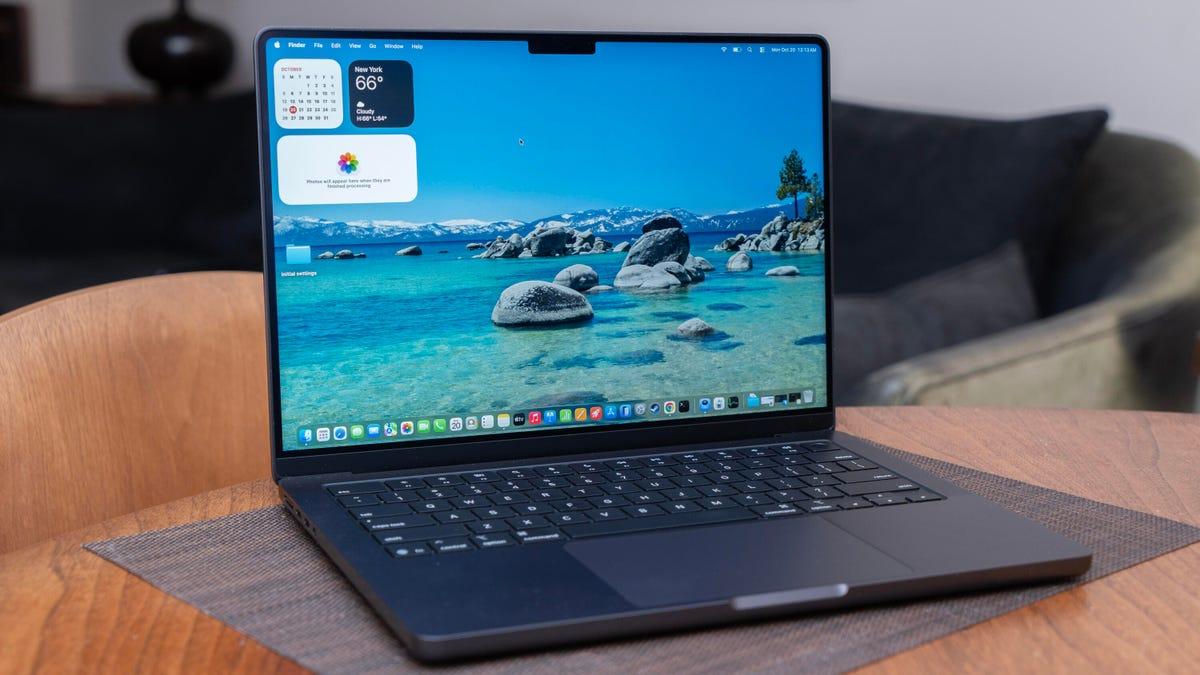
. The M6 is expected to appear in a refreshed 14-inch MacBook Pro, which has seen unprecedented price increases to $1,999, as well as entry-level Mac mini and iMac models1
4
.
Source: Wccftech
The base M7, codenamed Delos, targets roughly 240 GB/s of memory bandwidth—a 56% increase from the M5 and a 20% boost over the planned M6
1
5
. Memory bandwidth dictates how fast a chip can move large data blocks, the main bottleneck for AI inference and local AI processing1
. The M7 Pro and Max versions, grouped internally under the Andros codename, are expected to arrive at the end of 2027, with the M7 Ultra following in 20281
4
.M5 Ultra Arrives as Stopgap Amid Supply Constraints
Apple still plans to release an M5 Ultra chip this year, codenamed Sotra, with around 36 CPU cores, 80 GPU cores, and tested support for up to 768GB of unified memory
1
4
. It would refresh a Mac Studio that currently runs the M3 Ultra, after Apple skipped an M4 Ultra altogether1
. The 768 GB ceiling represents a significant jump from the current M3 Ultra Mac Studio capped at 96 GB, after Apple pulled its 512 GB tier and raised the 96 GB-to-256 GB upgrade to $2,0001
.
Source: Macworld
Supply constraints remain a critical factor shaping Apple's AI-focused hardware roadmap. Apple raised prices across its Mac and iPad lines recently, with outgoing CEO Tim Cook calling the situation a "hundred-year flood" in a Wall Street Journal interview, blaming AI server demand for pulling high-bandwidth memory away from consumer hardware
1
. Whether the highest M5 Ultra memory tiers reach buyers depends on supply constraints that haven't eased and are unlikely to in the near future1
.Related Stories

Competition Intensifies Around On-Device AI Processing
The accelerated timeline reflects Apple's response to intense competition in AI processing. AI and Siri were key talking points during the WWDC keynote this year, so it's not surprising that Apple would continue to emphasize on-device AI in the next generation of hardware
2
. Nvidia made waves with the introduction of its RTX Spark chips coming to Windows laptops starting late this year, while AMD, Intel, and Qualcomm are all rushing to make the best chips for consumer AI5
.The current M3 Ultra already delivers up to 819 GB/s by fusing two Max dies, which is why the high-end tiers, not the base chips, carry the heaviest local-AI workloads
1
. This makes the wait for M7 Pro and Max variants particularly significant for professional users who need maximum AI performance. Anyone eyeing a top MacBook Pro or Mac Studio faces two options: settle for an M5-era machine or hold out well into 2027, and to 2028 for the Ultra3
. The reshuffle lands at a sensitive moment as Apple's chips represent its sharpest edge over rivals that lean on Intel and Qualcomm3
.References
Summarized by

Navi
[3]
Related Stories
Apple accelerates chip releases, skips M6 Pro and Max to fast-track AI-focused M7 lineup
12 Jul 2026•Technology
Apple's Ambitious Chip Roadmap: M6, M7, and AI Server Processors in Development
09 May 2025•Technology

Apple's M7 Ultra chip could pack 1.5TB of memory to rival Nvidia Blackwell by 2028
12 Jul 2026•Technology

Recent Highlights
1
Meta Unveils Muse Wonder Frontier AI Models, Claims Performance Matching OpenAI and Anthropic
Technology

2
IMF Report Warns AI Market Correction Could Spark Global Financial Crisis With $1.4T at Risk
Business and Economy

3
OpenAI Releases 722 AI-Generated Math Solutions, Triggering Existential Crisis in Mathematics
Technology

Recent Highlights
Today's Top Stories








Don’t drown in AI news. We cut through the noise - filtering, ranking and summarizing the most important AI news, breakthroughs and research daily. Follow topics that matter to you and stay ahead.


