6 Sources
[1]
Apple's Vision Pro Will See the World With AI Soon
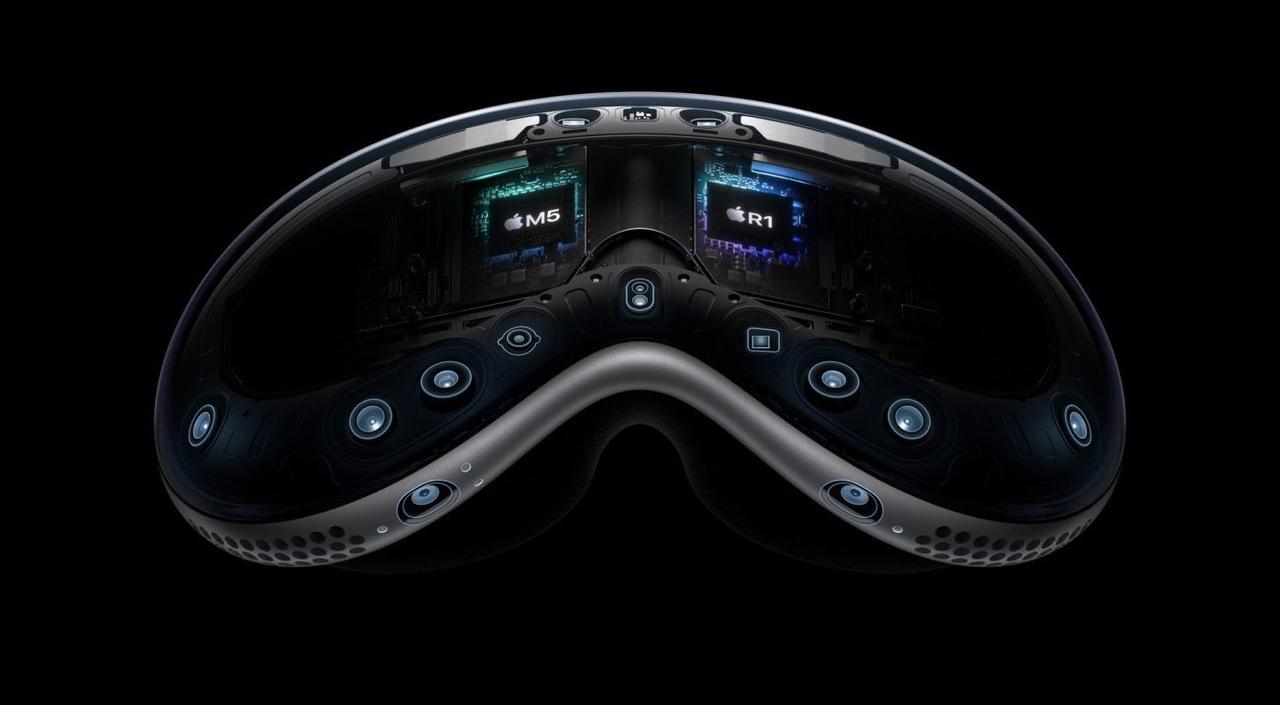
Nearly 20 years writing about tech, and over a decade reviewing wearable tech, VR, and AR products and apps Apple's Vision Pro hardware, last updated in the fall with an M5 chip, is getting new software upgrades with the latest version of VisionOS announced at WWDC. A big one is Visual Intelligence, camera-aware AI, at long last. As part of Apple's new Siri-focused AI updates announced at this year's conference, it's the Vision-focused AI tools that interest me most. Asking Siri will see things on apps you have open on VisionOS, but also recognize things in the room. This is the same type of camera-aware AI that Google and Samsung already have in the Samsung Galaxy XR headset that arrived last fall. Apple also announced a tool that converts panoramic photos in 3D spatial scenes that can become new immersive backgrounds in VisionOS. While many people have been reporting the Vision Pro's life ending in the face of a shift to smart glasses in the next few years, the Vision Pro's hardware can clearly do things no glasses could dream of anytime soon. I've been waiting for Apple's spatial computer to make the most of its processing power, sensors, and high price tag. Maybe these updates will help. This is a developing story, we'll update as more is announced.
[2]
Apple announces visionOS 27 with Siri AI
Along with new software for Macs and iPhones, Apple announced visionOS 27 during its keynote presentation at WWDC on Monday. Like its other platforms, visionOS 27 will feature Apple's updated Siri AI assistant and the new dedicated Siri app. You can use visual intelligence to ask Siri about content on visionOS's floating displays, or ask Siri about objects in the real world by looking at them. It will also support using the panoramas you've photographed as immersive scenes and environments in visionOS. Apple said the Vision Pro will be able to connect to Wi-Fi "up to 3x faster," and a new "extra-small" widget size will allow more customizations. This is the fourth major version of Apple's mixed reality operating system since it launched with the Vision Pro headset in 2024. The "liquid glass" redesign Apple introduced across all of its operating systems last year had appeared first in the glossy, transparent look of visionOS. Last year's visionOS update added support for PSVR2 controllers, hands-free scrolling with Look to Scroll, the ability to unlock an iPhone while wearing a Vision Pro, support for relaying calls from an iPhone, and an improved version of Apple's 3D "Persona" avatars. It also introduced spatial widgets that stay in any spot in the physical world where users "place" them, like a virtual clock in your real living room. Developing... see our live blog for the latest details
[3]
Apple's Vision Pro Will Stick AI Siri Right in Your Face
The $3,500 Vision Pro is still getting a small ounce of love from Apple. At WWDC 2026, the company announced that next version of its "spatial" operating system supports its new agentic AI Siri capabilities. Siri is everything in this new update, and Apple promises users won't have to go far to access its AI assistant. On Vision Pro, you can simply look at a 3D visualization of Siri in your field of view and ask the chatbot any number of inane queries. This version of Siri appears as a giant, floating marble-like ball that will stay cemented in virtual space wherever you place it. While Apple says you'll be able to change Siri's voice, it's unclear whether you'll be able to change the assistant's name -- an option that's been around since iOS 18 in the pre-AI days. Hopefully, we'll be able to invoke it by saying "Hello, Orb." In all Apple products, from Macs to iPhones and beyond, the new Siri is supposed to manage your devices by collating all your files, emails, and messages. It should be able to perform some agentic tasks, such as looking up your files and then offering details on each one. For Vision Pro, Apple promised users can look around their environments and ask questions about what they see. We've seen similar features on devices like the Ray-Ban Meta glasses, but that device's AI descriptions can be very hit or miss. Apple's AI is using Gemini AI for these on- and off-device AI summaries, so we'll have to see how accurate they are when these features arrive in a public beta next month before a full release later this fall. While visionOS 26 fixed those digital "Personas" so they didn't look like cartoon renditions of users' bodies, there aren't many landmark changes coming to visionOS 27. On Mac, Apple refined the look of Liquid Glass so text was far easier to read on smaller LCD displays. Vision Pro, the originator of the Liquid Glass UI, doesn't need as much refinement. All other Apple devices are getting a few extra updates to improve stability and performance, and Vision Pro may also benefit. The next step for visionOS is to make it compatible with some version of smart glasses or AR glasses. We may not see new glasses until 2027 at the earliest, so for now we'll just have to accept that the Vision Pro is Apple's only "spatial" device, and we may not see many landmark changes to the operating system until new products arrive some time in the future.
[4]
visionOS 27 announced with new features for Vision Pro
Today at WWDC, Apple announced visionOS 27, its next major software version for Vision Pro. Here's what's new in visionOS 27. Apple unveils visionOS 27 with panorama environments, AI upgrades, more Vision Pro has been available for a little over two years now, and in addition to an M5 hardware revision last fall, visionOS has improved significantly over that time. But there's been a lot of discourse about the Vision Pro's future amid reportedly slow sales. visionOS 27 shows us a glimpse of that future. It's the next major software update for Vision Pro, and represents Apple's continued work on the Vision platform. Here's what's new in visionOS 27: * Turn panoramas you shoot into spatial scenes * Use panoramas as your immersive Environment * Improved fly over features in Apple Maps * Next-generation of Apple Intelligence * Entirely new Siri that's more responsive to your needs Updating... visionOS 27 will be available in developer beta later today, and Apple will ship the new software to all Vision Pro users this fall. Check out our WWDC News Hub for all the latest announcements from Apple. What stands out to you from Apple's visionOS 27 announcements? Let us know in the comments.
[5]
visionOS 27: Apple Vision Pro was gone but not forgotten at WWDC
Apple Vision Pro headsets are getting some upgrades in visionOS 27. Credit: Apple visionOS wasn't the least-mentioned of Apple's operating systems at WWDC -- that would be tvOS -- but it was hardly a headliner. Usually, the WWDC keynote includes a dedicated segment for iOS, macOS, iPadOS, watchOS, visionOS, and tvOS. But this year, Apple focused on upgrades to the new Siri AI experience, Apple Intelligence, and cross-device functionality. However, we did learn some new details about visionOS 27. Reading between the lines, I think we also learned why the Vision Pro has value for Apple, even if few people are actually using the $3,499 headset. The Vision Pro has famously struggled to find a user base. As Mashable's tech editor, I am one of the few people still using this head-worn computer. Apple sent me the headset for testing, and I'll have a full review coming soon. So, as a Vision Pro user, here's everything I gleaned from WWDC about visionOS 27 and the future of the Apple Vision Pro. Siri AI is coming to visionOS 27 The Vision Pro got the most attention during the beginning of a segment on Siri AI, the new Gemini-powered version of Siri coming to Apple devices this fall. To show off Siri AI's visual intelligence, Apple showed a video of the visionOS 27 experience. Vision Pro users will have a 3D visualization of Siri that will live in their virtual space as a floating, glowing bubble. Users can start talking to Siri at any time. In the example, the floating Siri AI could answer questions about a Safari page on the screen as well as objects in the user's view. In addition to Siri AI, a new suite of Apple Intelligence tools will also be available to Vision Pro users. Now that it's powered by Gemini, Apple users will be able to talk to Siri and quickly generate text, images, and transcripts. Users will also benefit from contextual awareness. So, if you're reading a message about an upcoming flight, Apple Intelligence will automatically pull up your flight details. Custom Environments Environments are one of the coolest Vision Pro features. These 360-degree spatial computing environments make it seem like you're on the surface of the moon or a cliff in Hawaii. Browsing the internet can be fun, but have you ever browsed the internet from one of Jupiter's moons? With visionOS 27, users will be able to turn their own panorama photos into custom environments. This is a feature I'm definitely excited to test out for myself. Developer environments In addition to turning your own photos into custom Environments, third-party developers will also have this ability. The Apple website states, "Developers can render 360-degree backgrounds that completely surround your physical space and make browsing more immersive." How visionOS benefits other Apple products Almost all of the AI features Apple talked about at WWDC are already widely available on Android devices or via AI chatbots like Gemini, with one notable exception. When discussing updates to the Camera app, Apple also introduced "Spatial Reframing." This tool is unique to Apple devices, and it lets users adjust the angle, perspective, or zoom of photos using on-device spatial models. Apple specifically credited the spatial and visual intelligence technology that powers visionOS as the genesis of Spatial Reframing. So, while this AI editing tool isn't specific to Vision Pro headsets, it shows how visionOS technology may still be useful to Apple, even if the product lacks widespread adoption. As a related note, Mike Rockwell, the former head of Vision Pro at Apple, has since been tapped to lead the Siri AI and Apple Intelligence efforts, which can't be a coincidence. With Apple smart glasses rumored for 2027, the new visual intelligence features emphasized at WWDC 2026 could be setting up Apple's next big device launch. General improvements During the keynote, Apple Senior Vice President of Software Engineering, Craig Federighi, said that general improvements were a major focus of the new generation of operating systems. And on its website, Apple says that visionOS 27 includes "tons of refinements that make your Apple Vision Pro even more responsive, reliable, and delightful to use." This will include the ability to expand notifications with your eyes and a new look for the control center. In a press release, Apple said that "connecting to Wi-Fi is up to 3x faster" in visionOS 27. There's not much else to say about that. Is there a future for Apple Vision Pro? I hope so! I've loved testing the Vision Pro headset, even if I can't quite give it a full recommendation thanks to its $3,500 price tag. However, it still has a small base of dedicated users, and Apple has introduced some really cool immersive sports experiences over the past few months. A potential follow-up, the Vision Pro 2, may arrive in 2027 or 2028, but the lack of sales may ultimately lead Apple to give the product the axe. However, WWDC showed that even if Vision Pro doesn't generate a ton of sales, the underlying technology could have downstream benefits for a host of current and future Apple devices. visionOS 27 is available as a developer's beta now, and it will be available for all Vision Pro headsets in the fall.
[6]
Apple Quietly Lays The Groundwork For Its Smart Glasses With visionOS 27, As Siri AI Gets A Pinnable Visualization That Reacts To Your Gaze
As part of its annual software update cadence, Apple has just announced visionOS 27 as it prepares to go beyond the Vision Pro headsets by launching a spate of AI-enabled and mix-reality smart glasses in the months ahead. Apple's visionOS 27 comes with exciting new features, including curved windows, Icelandic vistas, and empowered Dwell Control Apple is, of course, bringing the all-new Siri AI to visionOS in a prominent manner. As mentioned in our dedicated post on all things Siri-related, you can now pin a visualization of the revamped AI assistant anywhere in your field of view, and then interact with it simply by looking in its direction. What's more, you can also ask Siri AI about anything that's in your field of vision. This feature should come particularly handy when Apple debuts its AI-enabled smart glasses later this year. Other features: Follow Wccftech on Google to get more of our news coverage in your feeds.
Share
Copy Link
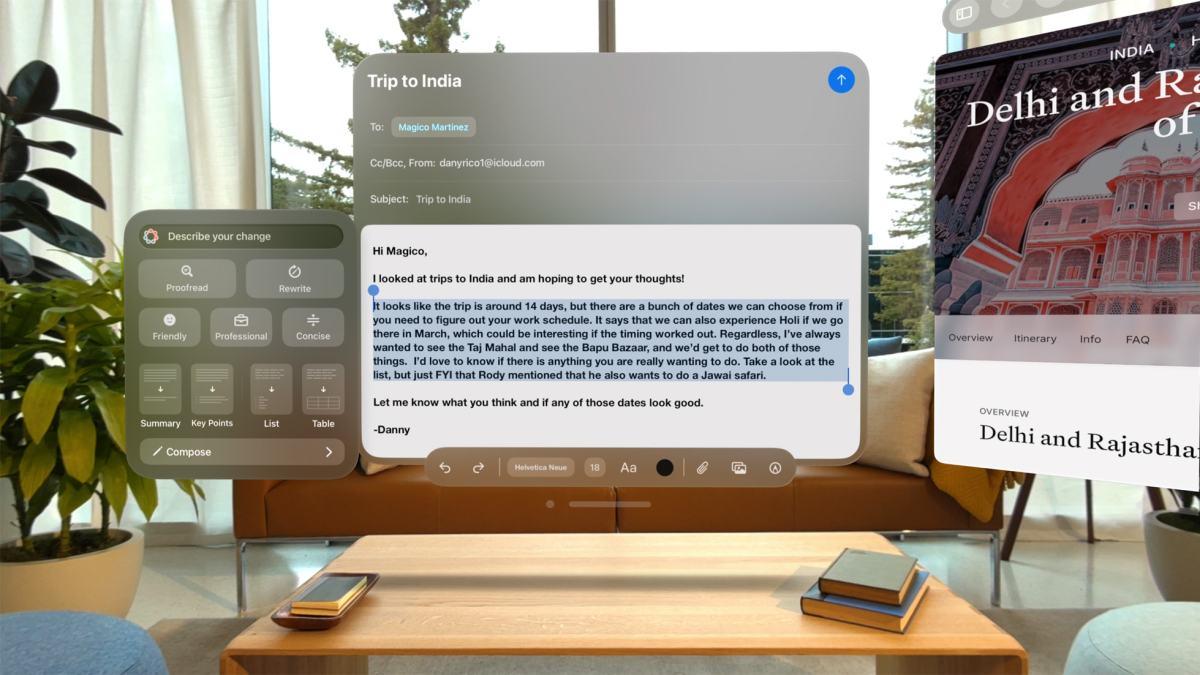
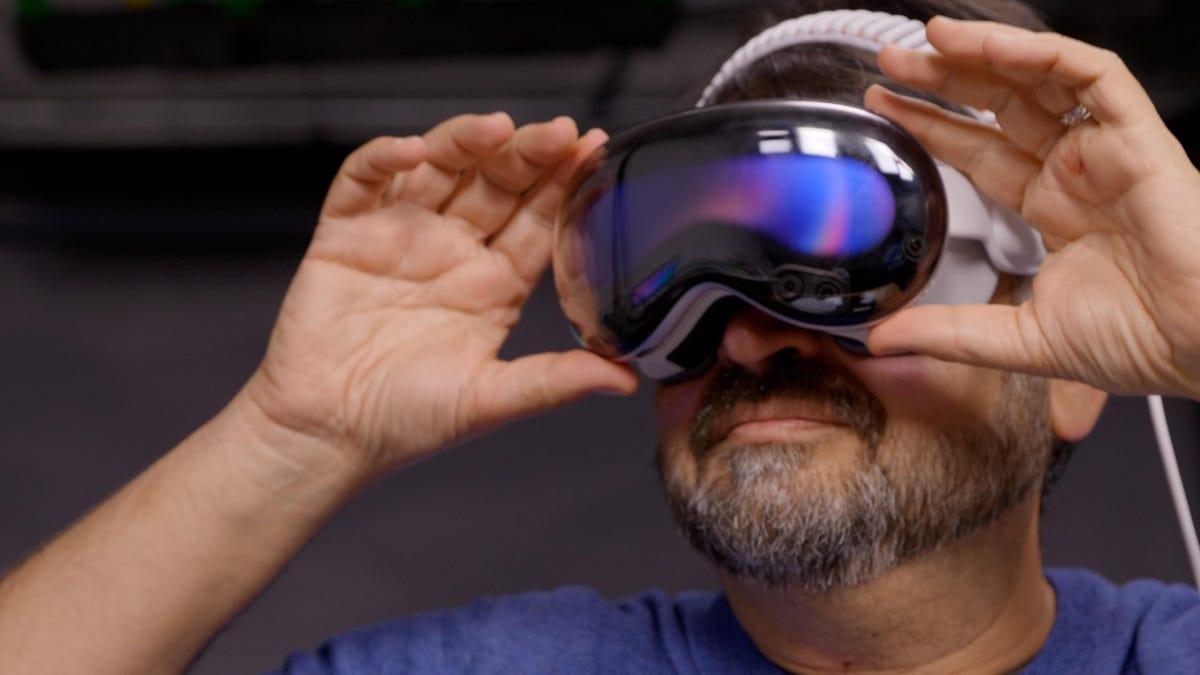
Apple announced visionOS 27 at WWDC 2026, bringing Siri AI visual intelligence to the $3,500 Vision Pro headset. The update introduces a 3D floating Siri interface that can recognize objects in your environment and content on virtual displays. Users can now transform their panoramic photos into custom immersive environments, while Wi-Fi connectivity speeds up by 3x.
Apple unveiled visionOS 27 at WWDC 2026, marking the fourth major version of its mixed reality operating system since the Apple Vision Pro launched in 2024
2
. The headset, which received an M5 chip hardware update last fall and carries a $3,500 price tag, is now getting significant software upgrades focused on Siri AI capabilities1
3
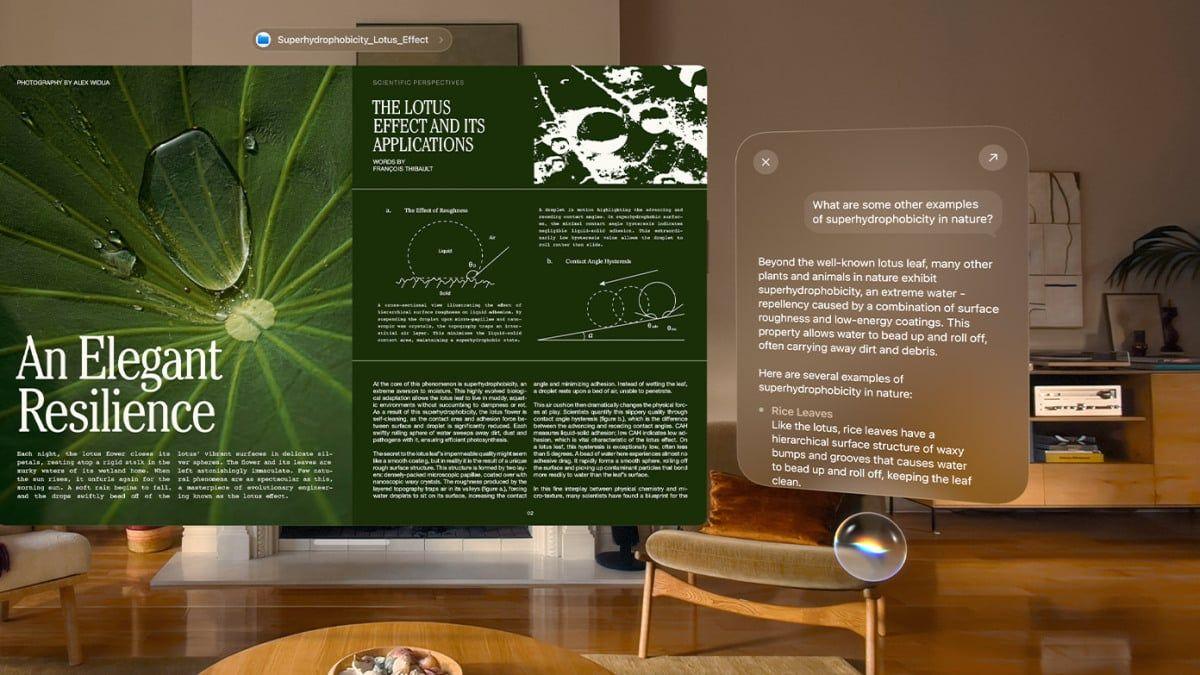
. The standout feature is visual intelligence, which enables users to interact with a 3D visualization of Siri that appears as a floating, marble-like orb cemented in virtual space wherever they place it3
. This camera-aware AI allows users to ask Siri about content displayed on visionOS floating windows or inquire about physical objects in their real-world environment simply by looking at them2
.
Source: Mashable
The new visual intelligence features in visionOS 27 represent a significant step forward for spatial computing on the Apple Vision Pro. Users can now leverage Siri AI to perform agentic tasks such as collating files, emails, and messages across their devices
3
. The system uses Gemini AI to power these on-device and off-device summaries, similar to functionality already available on competing devices like Samsung Galaxy XR headset and Ray-Ban Meta glasses1
3
. Apple Intelligence, the broader suite of AI tools, will also be available to Vision Pro users, offering contextual awareness that can automatically pull up relevant information like flight details when reading related messages5
. Mike Rockwell, the former head of Vision Pro at Apple, now leads the Siri AI and Apple Intelligence efforts, suggesting the strategic importance of this technology beyond the headset itself5
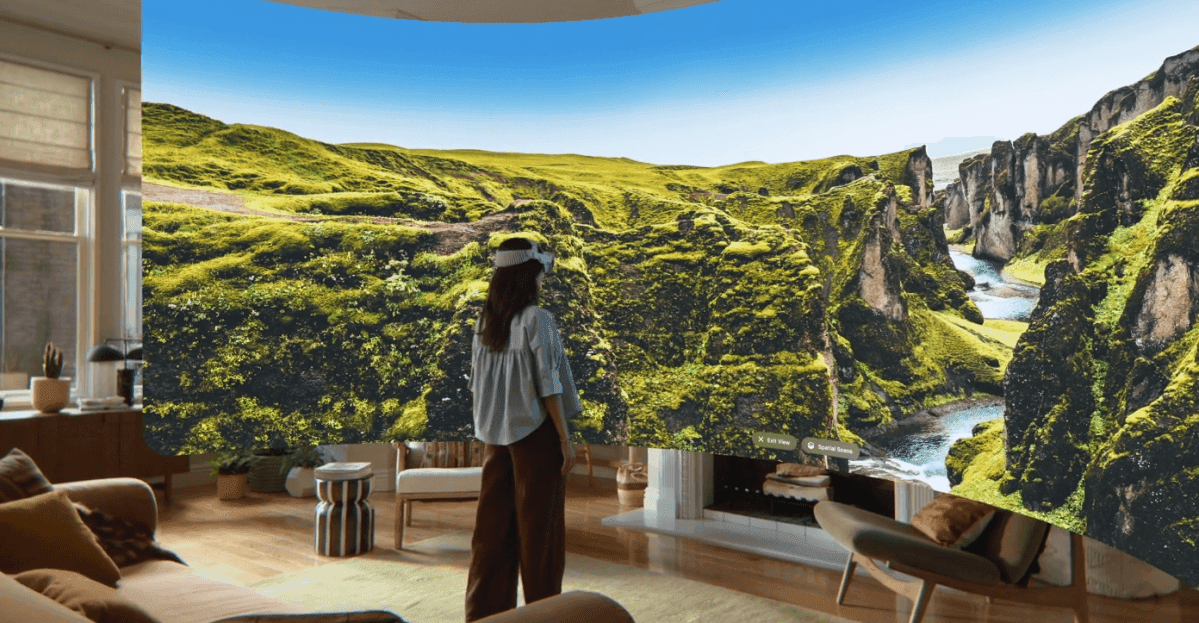
.One of the most anticipated features in visionOS 27 is the ability to convert panoramic photos into 3D spatial scenes that function as custom immersive environments
1
4
. Users can transform their own panorama shots into 360-degree backgrounds that completely surround their physical space, making the browsing experience more personal and engaging5
. Third-party developers will also gain access to this capability, allowing them to render custom environments for their applications5
. This builds on the existing Environments feature, which already lets users experience virtual locations like the surface of the moon or Hawaiian cliffs while using their device5
.
Source: The Verge
Related Stories
Beyond the headline AI features, visionOS 27 includes practical improvements that address everyday usability. Apple claims Wi-Fi connectivity is now up to 3x faster, a meaningful upgrade for a device that relies heavily on internet connectivity
2
5
. The update introduces a new extra-small widget size for more customization options and the ability to expand notifications using eye tracking2
5
. Apple emphasized that general refinements make the headset "even more responsive, reliable, and delightful to use," continuing the pattern of incremental improvements seen in previous versions5
. The update also includes improved flyover features in Apple Maps4
.
Source: CNET
The visionOS 27 announcement comes amid ongoing questions about the Apple Vision Pro's commercial viability, with the headset reportedly experiencing slow sales since its 2024 launch
4
5
. However, Apple's continued investment in the platform suggests the company sees long-term value in the technology. The visual intelligence features developed for visionOS are already influencing other Apple products, with the new Spatial Reframing tool for the Camera app specifically credited to spatial computing technology pioneered on Vision Pro5
. With smart glasses rumored for 2027 and speculation that visionOS could eventually support augmented reality glasses, the current Vision Pro may serve as a testbed for future wearable devices3
5
. The developer beta launches later this month, with a full public release scheduled for fall 20263
4
.Summarized by
Navi
[2]
10 Jun 2025•Technology

01 Apr 2025•Technology

23 Feb 2025•Technology

1
Technology

2
Business and Economy

3
Health