Asana Unveils 'AI Teammates': Collaborative Agents for Enhanced Team Productivity


3 Sources
[1]
Meet Asana's new 'AI Teammates,' designed to collaborate with you
Many tech companies are building agents, hoping to commercialize AI. More AI agents have arrived! This time, they're coming to project management platform Asana: a suite of helpers the company says are designed to collaborate with human workers. Also: Your coworkers are sick of your AI
[2]
AI agents should enable teams, not replace workers, says Asana
Work management vendor Asana has long been encouraging enterprises to think of AI agents as contributors to the work of teams, rather than assistants to -- or replacements for -- individual workers. Yesterday it followed through on this positioning with the launch in beta of AI Teammates, its take
[3]
Asana targets collaboration, not automation, as its AI teammates launch in beta - SiliconANGLE
Asana targets collaboration, not automation, as its AI teammates launch in beta Work management company Asana Inc. has spent over a year developing its long-awaited "AI Teammates" that promise to dramatically accelerate the productivity of enterprise workers, and they're finally rolling out in
Share
Copy Link
Asana introduces AI Teammates, a suite of AI agents designed to collaborate with human workers in project management. These agents aim to boost productivity while maintaining transparency and security.
Asana Introduces AI Teammates for Enhanced Collaboration
Asana, the popular project management platform, has unveiled its latest innovation in the form of 'AI Teammates,' a suite of AI agents designed to collaborate with human workers. Launched in public beta on Thursday, these agents aim to revolutionize team productivity by tapping into Asana's Work Graph, providing them with a comprehensive overview of an organization's project management data
1
2
.
Source: SiliconANGLE
Collaborative Approach to AI Integration
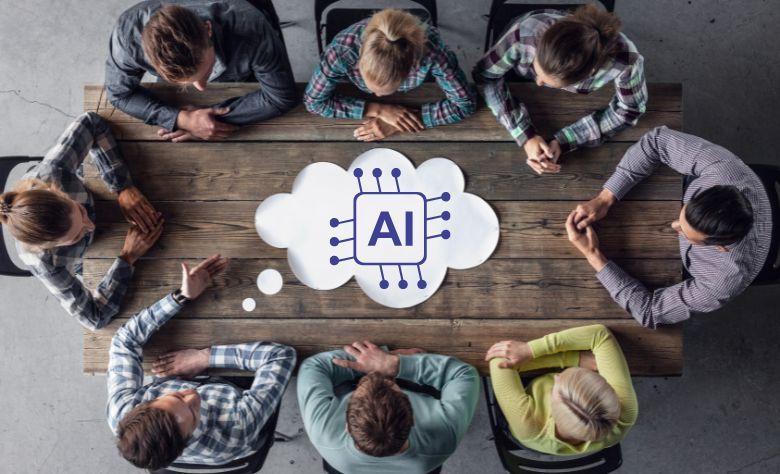
Unlike many tech companies focusing on autonomous AI agents, Asana has taken a different approach. Dan Rogers, Asana's CEO, emphasizes that 'autonomy is the wrong goal' and instead advocates for collaboration between AI and human workers
3
. This philosophy is reflected in the design of AI Teammates, which are meant to support teams rather than replace individual workers or act as personal assistants2
.
Source: diginomica
Contextual Understanding and Adaptability
One of the key features of AI Teammates is their ability to adapt to the specific needs of different teams. For instance, they can assist marketers in drafting campaign briefs or comparing marketing materials with brand guidelines. Software engineers might use these agents to assess reports of buggy code
1
. This adaptability is powered by Asana's Work Graph, which provides the AI with crucial context about the organization's workflows and objectives3
.
Source: ZDNet
Transparency and Security Measures
Addressing concerns about AI unpredictability and security risks, Asana has incorporated transparency features into AI Teammates. The agents display their step-by-step problem-solving process, allowing human workers to understand and course-correct when necessary
1
. Additionally, Asana has implemented governance controls that enable organizations to monitor and modify which internal data the agents can access and how it's being used1
3
.Combating 'Agent Sprawl'
Victoria Chin, Head of AI Strategy at Asana, highlights the problem of 'agent sprawl' in organizations where individual employees create and deploy their own AI agents without coordination. AI Teammates aim to address this issue by providing a centralized, team-level approach to AI integration, potentially reducing costs, security risks, and productivity waste
2
.Related Stories
Customization and Memory Editing
AI Teammates can be customized for specific roles and projects. Users can name their AI Teammate (e.g., 'Product Launch Teammate') and provide it with relevant context and access to project information. A notable feature is the ability to edit the agent's context memory, allowing teams to update or remove outdated information as projects evolve
2
.Use Cases and Potential Impact
Early use cases demonstrate the versatility of AI Teammates. They can assist in various tasks such as triaging incoming requests in advertising, intelligently assigning work based on skillsets and workload, and handling IT support tickets. By taking on mundane tasks, these AI agents aim to free up human workers for more complex and creative work
3
.As Asana's AI Teammates launch in beta, with a general public release expected in the first quarter of 2027, they represent a significant step in the integration of AI into project management and team collaboration
1
. The focus on context, transparency, and team-level deployment sets them apart in the rapidly evolving landscape of AI in the workplace.References
Summarized by

Navi
Related Stories
Asana Unveils AI Studio: Revolutionizing Workflow Management with Customizable AI Agents
22 Oct 2024•Technology

Asana bets $75M on Stack AI acquisition to transform into AI agents operating system
28 May 2026•Technology

Atlassian Unveils Agentic Multiplayer Protocol to Enable Humans and AI Agents Working Together
07 Oct 2026•Technology
Recent Highlights



Recent Highlights
Today's Top Stories






Don’t drown in AI news. We cut through the noise - filtering, ranking and summarizing the most important AI news, breakthroughs and research daily. Follow topics that matter to you and stay ahead.


