Asana bets $75M on Stack AI acquisition to transform into AI agents operating system


7 Sources
[1]
Asana acquires no-code agent-builder Stack AI
Asana has acquired the workflow automation company Stack AI, the company announced on Thursday after market closed, part of a larger effort to position itself as an AI-native workplace platform. Stack AI's founders, Tony Rosinol and Bernard Aceituno, will join Asana as part of the acquisition. The
[2]
Asana acquires Stack AI for $75M to build AI agent platform
Asana has acquired no-code AI agent builder Stack AI for a reported $75 million, adding cross-system workflow execution to its AI platform. The deal was announced alongside a Q1 earnings beat, with revenue up 9.5% to $205.1 million, as the stock trades 53% below its January level. Asana has
[3]
Asana was battered by the AI age. Now it's betting its future on a pivot to AI agents. | Fortune
Workplace management company Asana has lost roughly half of its market value since the AI boom began. Now, it's trying to find its way back by betting on a future where AI agents are fully immersed in the workplace. On Thursday, Asana announced that it had acquired Stack AI, a no-code AI agent
[4]
Asana launches AI-powered products to help organizations manage human and agent work
Asana launches AI-powered products to help organizations manage human and agent work Asana Inc. announced today during the company's Work Innovation Summit in London the launch of a new product suite that helps organizations manage work by humans and artificial intelligence agents using the same
[5]
Asana acquires StackAI to run AI agent workflows across enterprise systems
Asana acquires StackAI to run AI agent workflows across enterprise systems Work management software company Asana Inc. today said it has completed the acquisition of StackAI Inc., a no-code platform for building artificial intelligence agents, in a deal that adds the ability to run automated
[6]

Asana completes acquisition of workflow platform StackAI By Investing.com
SAN FRANCISCO - Asana, Inc. (NYSE:ASAN)(LTSE:ASAN) announced today it has completed the acquisition of StackAI, a no-code AI workflow platform, according to a press release statement. The $1.6 billion market cap company generated $791 million in revenue over the last twelve months despite posting a
[7]

Asana Launches AI Platform for Human-Agent Teamwork
Asana, Inc. is an enterprise work management software platform. It enables organizations to align work to goals, coordinate cross-functional work, gain visibility into progress, automate workflows across departments, and scale work securely. It offers two products within the Asana platform to meet
Share
Copy Link
Asana acquired Stack AI for $75 million in its first deal in 18 years, aiming to position itself as the operating system for human-agent teams. The acquisition adds cross-system workflow execution to Asana's AI platform, announced alongside Q1 earnings that beat expectations with revenue up 9.5% to $205.1 million. The move comes as Asana's stock has fallen 53% amid broader market concerns about seat-based SaaS models in the AI era.
Asana Acquires Stack AI for $75 Million to Power AI Agents Platform
Asana has completed its Stack AI acquisition for a reported $75 million, marking the work management company's first deal in 18 years and a significant pivot toward becoming an AI-native workplace platform[2](https://thenextweb.com/news/asana-acqui res-stack-ai-agent-builder-saas)
3
. The acquisition brings Stack AI's no-code AI agent builder technology into Asana's ecosystem, adding critical cross-system workflow execution capabilities that allow AI agents to operate across enterprise systems like Salesforce, Slack, and Google Workspace1
. Stack AI founders Tony Rosinol and Bernard Aceituno, both MIT PhDs, will join Asana along with the company's team of around 55 people3
. The deal was announced on May 28 after market close, strategically timed to coincide with Asana's Q1 earnings call2
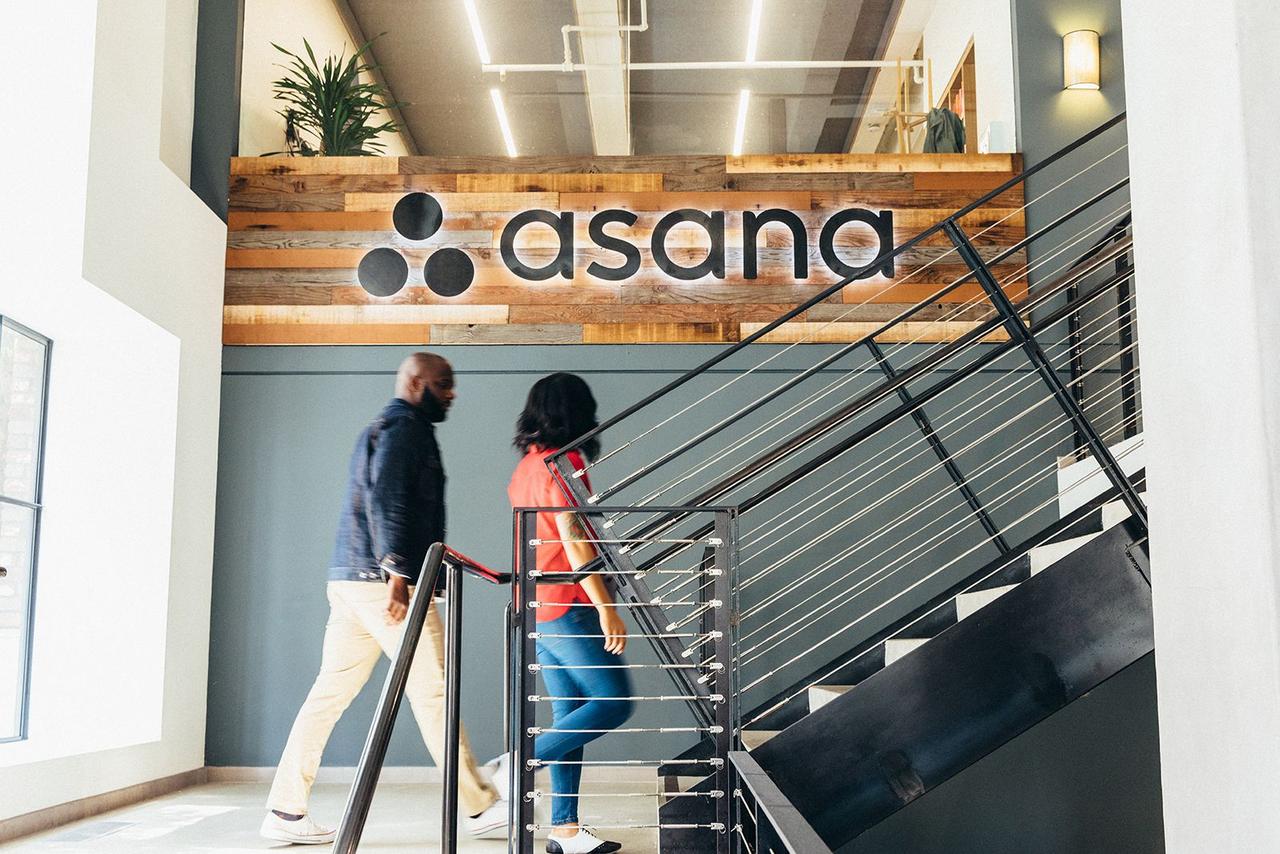
.
Source: SiliconANGLE
Building the Operating System for Human-Agent Teams
CEO Dan Rogers framed the acquisition as accelerating Asana's transformation into the operating system for human-agent teams, a phrase the company has deployed repeatedly since launching AI Teammates as a generally available product in April 2026
2
. While Asana's existing products, AI Studio and AI Teammates, operate within Asana's own work management environment, Stack AI adds the execution layer that carries workflows into external ERP, CRM, and IT service management systems2
. Rogers told Fortune that in two or three years, most workers will have agents augmenting their work, making the coordination challenge between humans and AI agents more urgent3
. The workflow automation capability enables agents to complete complex processes end-to-end, such as employee onboarding or marketing content quality control and publishing3
.
Source: SiliconANGLE
Q1 Earnings Beat Amid Broader Market Struggles
Asana reported Q1 earnings that exceeded expectations, with revenue reaching $205.1 million, up 9.5% year-over-year and beating the consensus estimate of $203.9 million
5
. Adjusted earnings per share came in at $0.10 against a $0.07 consensus, and the company posted record GAAP and non-GAAP operating margins2
. The company narrowed its net loss to $14.4 million from $40 million in the same quarter last year, with adjusted operating margin reaching a record 11.5%5
. Asana raised full-year revenue guidance to $855.5 million to $863.5 million, with the Stack AI deal expected to add about 50 basis points of growth5
. The earnings beat sent shares up more than 13% in after-hours trading3
.SaaS Models Under Pressure in the AI Era
Despite the positive earnings, Asana's market value has been battered by broader concerns about seat-based SaaS models in an era of agentic AI. The stock has fallen more than 53% since the start of 2026 and trades at roughly $1.5 billion in market capitalization, down from a peak of nearly $20 billion in 2021
2
. The so-called SaaSpocalypse erased more than $1 trillion in SaaS market capitalization in February 2026 alone, as investors began pricing in structural contraction across the sector3
. Companies like Asana face a fundamental challenge: AI agents can increasingly perform work that SaaS products were built to do, and they can handle tasks that previously required multiple human users, upending the per-seat pricing model that drove growth3
.New Agentic Work Management Suite Launches
At its Work Innovation Summit in London, Asana unveiled Agentic Work Management, a new product suite designed to help organizations manage human-agent work using a unified plan
4
. The suite includes Dash, an AI agent that acts as a chief of AI staff for every user, understanding goals, priorities and tracking work across teams and tools4
. Dash picks up meetings, Slack threads, emails and other unstructured messaging through the Work Graph automatically, ensuring decisions and follow-ups don't disappear into inboxes4
. The company also launched three specialized applications: Asana Service Management for IT and HR teams, Command for developer coordination, and Asana Client Management for agencies4
.Related Stories

AI Products Drive Growing Revenue Share
Asana's AI products are gaining traction with customers, now accounting for more than 17% of new annual recurring revenue according to Dan Rogers
3
. The number of customers spending more than $100,000 annually on AI Studio nearly doubled during the quarter3
. AI Teammates is priced at $15 per user per month and provides pre-built agents for roles in marketing, IT, and operations2
. The company has added more than 10 new integrations, including Gmail, Outlook, HubSpot, Figma and Canva, allowing AI Teammates to handle multistep work across the tools teams already use4
.Competitive Landscape and Strategic Position
Asana faces intense competition as the entire software industry restructures around AI agents. Zendesk acquired Forethought in its largest deal in two decades, while Google launched enterprise AI agent tools at Cloud Next 2026, and Salesforce positioned Agentforce as its core product strategy
2
. Stack AI itself faced fierce competition from automation platforms like Zapier and from AI labs like OpenAI and Anthropic before the acquisition1
. Rogers argues that Asana's horizontal footprint within companies, where it is already embedded across marketing, IT, operations, and planning in large enterprises, provides a natural coordination role that larger rivals cannot easily replicate3
. The company's Work Graph data model, which maps tasks, projects, goals and relationships across organizations, provides the context and governance layer that AI agents need to operate reliably3
.
Source: Fortune
References
Summarized by

Navi
[1]
[2]
[3]
[4]
Related Stories
Asana Unveils AI Studio: Revolutionizing Workflow Management with Customizable AI Agents
22 Oct 2024•Technology

Asana Unveils 'AI Teammates': Collaborative Agents for Enhanced Team Productivity
25 Sept 2025•Technology

Asana Releases Fiscal 2024 ESG Report: Highlighting Sustainability and Diversity Initiatives
02 Aug 2024

Recent Highlights



Recent Highlights
Today's Top Stories






Don’t drown in AI news. We cut through the noise - filtering, ranking and summarizing the most important AI news, breakthroughs and research daily. Follow topics that matter to you and stay ahead.


