Nvidia's Leadership Crisis Sends AI Stocks Tumbling as Asian Markets Struggle to Recover


6 Sources
[1]
Asian shares mostly slip as Nvidia's troubles weigh on AI stocks, despite a rally on Wall St
TOKYO (AP) -- Asian shares were mostly lower and U.S. futures were mixed Thursday as concerns over leadership at chipmaker Nvidia weighed on artificial intelligence -related stocks. In after-hours trading, Nvidia's shares fell 8.6% after reports said Nvidia's board was meeting late Wednesday to
[2]
Asian shares mostly rise on AI chip demand despite Wall Street's retreat on inflation data
HONG KONG (AP) -- Asian shares were mostly higher Wednesday, following a retreat on Wall Street as U.S. inflation rose higher than expected in October, while U.S. futures edged higher and oil prices rose. Taiwan led the regional markets as its benchmark's Taiex rose 2.1%. Taiwan Semiconductor
[3]
Asian stocks fluctuate as US rate worries temper tech bounce
Hong Kong (AFP) - Asian stocks diverged Wednesday as renewed optimism over the AI trade was offset by forecast-topping US inflation data and the prospect of a bumper interest rate hike next month. After last week's rout fuelled by fears that Democrats would ramp up regulation of artificial
[4]
Asian Shares Mostly Slip as Nvidia's Troubles Weigh on AI Stocks, Despite a Rally on Wall St
Asian shares are mixed, as concerns over leadership at chipmaker Nvidia weigh on artificial intelligence-related stocks TOKYO (AP) -- Asian shares were mostly lower and U.S. futures were mixed Thursday as concerns over leadership at chipmaker Nvidia weighed on artificial intelligence -related
[5]
World shares are mixed as Nvidia's troubles weigh on AI stocks
TOKYO -- World shares were mixed on Thursday as concerns over leadership at chipmaker Nvidia weighed on artificial intelligence-related stocks. In after-hours trading, Nvidia's shares fell 8.6 per cent after reports said Nvidia's board was meeting late Wednesday to discuss the situation
[6]

Asian Equities Fall as Markets Weigh Nvidia's Leadership Crisis -- Update
Asian equities were mostly lower on Thursday as the potential removal of Jensen Huang as Nvidia's chief executive triggered a stress test of the already-fragile AI trade. Nvidia's board is preparing to oust Huang after he had two extramarital affairs, including one with a suspected Chinese spy and
Share
Copy Link
Nvidia shares fell 8.6% in after-hours trading as the board met to discuss CEO Jensen Huang's affair with a Chinese businesswoman suspected of espionage. The controversy has sparked national security concerns and FBI investigation, weighing heavily on AI-related stocks across Asian markets despite strong AI chip demand from companies like TSMC and CoreWeave.
Nvidia's Leadership Crisis Triggers Market Turbulence
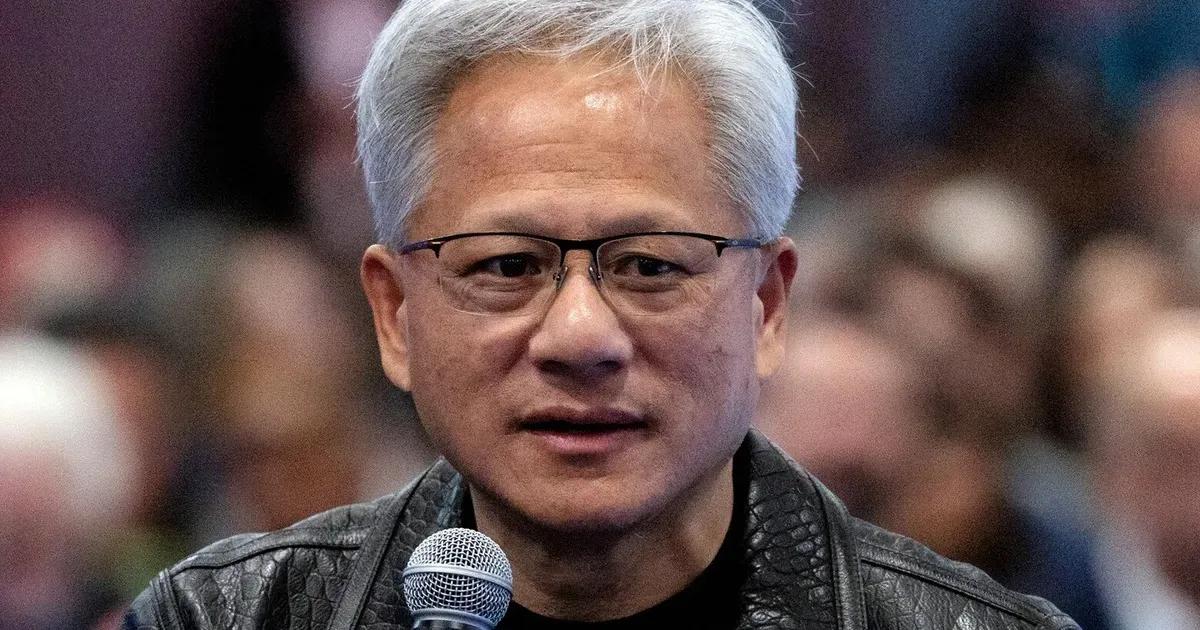
Nvidia shares plummeted 8.6% in after-hours trading Thursday as the company's board convened to address mounting national security concerns surrounding CEO Jensen Huang
1
4
. The chipmaker confirmed it was investigating Huang, who admitted to a relationship with a businesswoman allegedly involved in feeding intelligence and advanced chips to China2
. The FBI has now launched an investigation into the affair, which has raised serious questions about the company's leadership at a critical juncture for the AI industry3
.The revelation sent shockwaves through Asian stock markets, with AI stocks bearing the brunt of investor unease. Taiwan's Taiex lost 1.2% to 2.6% across different trading sessions, while Hong Kong's Hang Seng declined 0.9% to 1.3%
1
5
. Japan's Nikkei 225 fluctuated between modest gains and losses of 0.7%, reflecting the market's struggle to process the implications of Nvidia's troubles3
.
Source: AP
AI Chip Demand Remains Robust Despite Leadership Concerns
Despite the turmoil surrounding Nvidia, AI chip demand continues to show remarkable strength. TSMC reported October revenue nearly six-fold higher than a year earlier, demonstrating that appetite for AI chips remains solid
2
. The Taiwanese chipmaker's shares climbed 3.1% on this news, offering a counterpoint to the broader anxiety about AI-related stocks2
.CoreWeave emerged as another bright spot, with shares leaping 24.7% after the data center operator showed it lost less money during the summer than analysts expected
1
. The company projected sales of $13 billion to $13.3 billion for the year, beating estimates and soothing worries about its ability to finance its vast debt pile as borrowing costs rise3
.
Source: France 24
Anthropic filed documents showing plans to raise up to $64 billion in its upcoming initial public offering, valuing the Claude chatbot maker at as much as $1.4 trillion
3
. The filing revealed revenue soared to $17 billion in the third quarter, up from just $1.4 billion a year earlier, while OpenAI earned $10 billion in quarterly revenue for the first time in July-September, marking a nearly 50% increase from the previous quarter3
.Wall Street Recovery Meets Inflation Headwinds
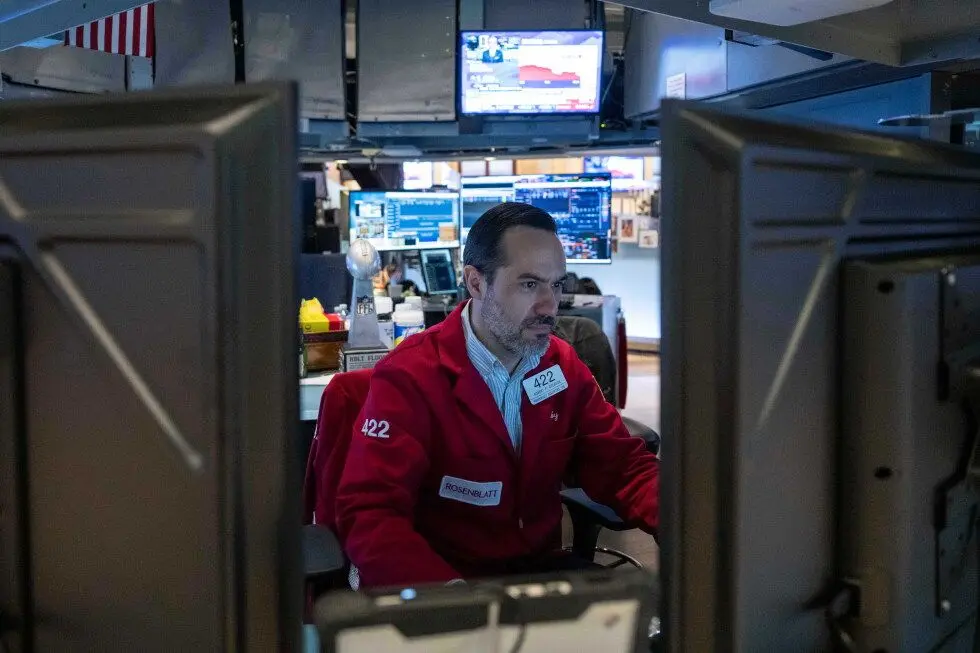
On Wednesday, the S&P 500 rose 1.3%, nearly recovering from last week's brutal sell-off triggered by worries about a potential slowdown for AI-related businesses
1
. The index pulled within 2.6% of its all-time high set last month, while the Nasdaq composite rallied 1.6%1
. However, this optimism was tempered by US inflation data showing consumer prices rose 0.4% month-over-month in October, exceeding the 0.3% forecast3
.Chicago Fed boss Austan Goolsbee called the inflation reading "another distressing report, borderline disturbing," while Fed Governor Christopher Waller suggested he could support a 50-basis-point interest rate hike in December
3
. The yield on the 10-year Treasury leaped to 4.99% from 4.88%, a notable move that helps set rates for mortgages and other loans to US households and businesses2
.
Source: AP
Related Stories

Profitability Questions Loom Over AI Industry
Investors are grappling with longstanding questions about whether the AI industry will prove profitable enough to justify massive investments in the technology
1
5
. Analysts at Swissquote noted there is "no credible way to put a precise revenue loss" on Huang's potential departure, suggesting customers buy Nvidia's computing power, software and networking ecosystem—advantages that wouldn't disappear with its CEO5
.Yet some market participants are taking risks by purchasing Nvidia shares at what appears to be a discount, betting the uncertainty over Huang's situation is temporary
5
. This divergence in investor sentiment reflects the broader challenge facing Asian markets and Wall Street: balancing genuine concerns about AI industry fundamentals against the fear of missing out on continued growth in AI-related stocks and chipmakers.References
Summarized by

Navi
[4]
Related Stories
AI Stocks Tumble as Investors Question Massive AI Infrastructure Spending and Valuations
13 Jul 2026•Business and Economy
Chip stocks crash despite Samsung's profit surge as AI demand expectations reset valuations
02 Jul 2026•Business and Economy

AI Stocks Crash as Asian Markets Plunge 7% Amid Growing Concerns Over AI Trade Sustainability
13 Oct 2026•Business and Economy

Recent Highlights


Recent Highlights
Today's Top Stories







Don’t drown in AI news. We cut through the noise - filtering, ranking and summarizing the most important AI news, breakthroughs and research daily. Follow topics that matter to you and stay ahead.


