Snapdragon X2 Elite finally lands in a mini PC as ASUS unveils compact desktop powerhouse


4 Sources
[1]
Snapdragon X2 Elite is finally coming to a mini PC
Rich is the Content Director of XDA, MakeUseOf, and How-To Geek, and I've been reporting on all things consumer tech since 2013. More recently, I've had more of a focus on Windows, and I've reviewed pretty much every mainstream laptop under the sun. If you see me somewhere, come say hello and let
[2]
Qualcomm's Snapdragon X2 Elite finally lands in a mini PC, and it looks like Windows' answer to the Mac mini
For the past two years, Qualcomm's Snapdragon X series has largely been confined to notebooks. The chips delivered impressive battery life and surprisingly competitive performance, but they never got the chance to challenge compact desktop machines like Apple's Mac mini or even the more powerful
[3]
Snapdragon X2 Elite Makes its Mini-PC Debut
Snapdragon X2 Elite is designed to meet the needs of today's demanding desktop users: For prosumers, it delivers power‑efficient performance that enables content creation, multitasking and creative workflows -- while seamlessly supporting both work and play, from productivity tasks to gaming and
[4]
ASUS Ascent QN10 powered by Snapdragon X2 Elite announced
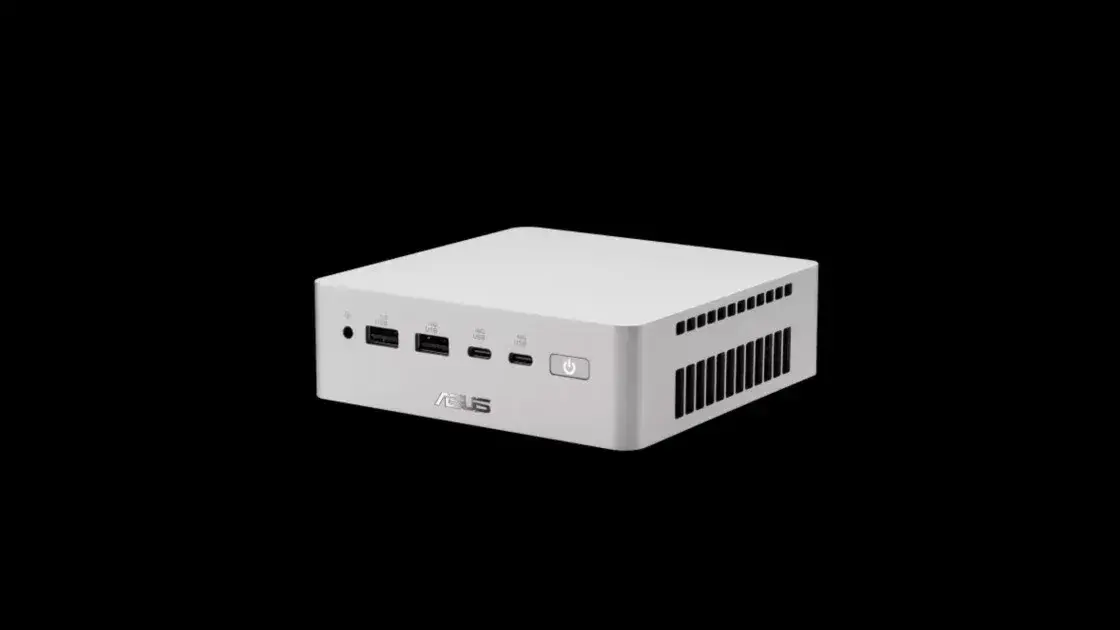
At Computex 2026, ASUS unveiled the ASUS Ascent QN10, marking the expansion of its artificial intelligence mini-PC lineup. Developed in collaboration with Qualcomm Technologies, the device represents the first mini-PC to integrate the Snapdragon® X2 Elite platform, shifting the Snapdragon X series
Share
Copy Link
ASUS has unveiled the Ascent QN10, the first mini PC powered by Qualcomm's Snapdragon X2 Elite processor. The compact desktop marks a shift for Qualcomm's flagship silicon beyond laptops, featuring an 18-core CPU, 80 TOPS AI performance, and positioning itself as Windows' answer to Apple's Mac mini in the emerging AI-focused desktop market.
Qualcomm Snapdragon X2 Elite Makes Desktop Debut in Compact Form
Qualcomm's flagship Snapdragon X2 Elite processor has finally escaped the confines of laptop chassis. At Computex, the chipmaker announced the ASUS Ascent QN10, marking the first time its most powerful PC silicon has entered the mini PC category
1
4
. The move positions Windows on Arm as a credible Mac mini competitor for the first time, bringing Qualcomm into direct comparison with Apple's compact desktop strategy2
.
Source: XDA-Developers
The ASUS Ascent QN10 packs an 18-core Qualcomm Oryon CPU alongside an integrated Qualcomm Adreno GPU within an ultra-compact 0.7-liter chassis—86% smaller than standard 5-liter mini-PC form factors
4
. This small form-factor desktop supports up to 32GB of LPDDR5X memory running at 9600MHz, promising sustained performance while maintaining cool, quiet operation2
. Connectivity options include seven USB ports: three USB4, three USB 3.2 Gen 2, and one USB 2.01
.80 TOPS Neural Processing Unit Drives On-Device AI Computing
The defining feature of this mini PC is its Neural Processing Unit delivering 80 TOPS of AI processing power, making it the world's first compact desktop to reach this performance threshold
2
. This NPU capability positions the device as a true agent computer, designed to handle AI workloads locally rather than relying on cloud infrastructure. At Microsoft Build, demonstrations showed the QN10 running developer tools like Visual Studio Code and GitHub Copilot while processing AI-assisted workflows entirely on-device2
.The system supports private large language models using LLMWare and AnythingLLM without external servers, offering advantages in privacy, security, and responsiveness
2
. The 80 TOPS acceleration natively supports local AI agents and orchestrators, including OpenClaw, Hermes, Cursor, Claude Desktop, OpenAI Codex, and OpenCode4
. As a Copilot+ PC, it integrates Microsoft's AI ecosystem directly into desktop computing for the first time.Enterprise Adoption and Diverse Use Cases Target Multiple Markets
Qualcomm and ASUS position the Ascent QN10 across several market segments. For developers, the platform delivers sustained productivity through smooth performance during long coding sessions and fast compile times, while advanced AI acceleration supports demanding workloads like agentic orchestration, local inferencing, and model experimentation
3
. The seven USB ports enable developers to connect essential peripherals for building and testing AI-powered experiences3
.For enterprise adoption, the system integrates Snapdragon Guardian Technology, providing chip-to-cloud security infrastructure that safeguards sensitive data at the hardware level while facilitating remote manageability and deployment
4
. Small businesses benefit from enterprise-grade security, quiet operation for distraction-free environments, and a platform built for easy deployment and modern management3
. Industrial applications like digital signage can leverage the system's ability to handle high-resolution content and real-time updates across quad 4K multi-display setups in always-on environments3
.Related Stories

Market Implications and Lingering Questions
The arrival of AI mini-PCs powered by Qualcomm's flagship silicon represents a strategic shift. Until now, comparing Snapdragon systems to Apple's Mac mini felt unfair—one operated within laptop constraints while the other delivered dedicated desktop performance
2
. The QN10 finally provides the hardware platform to make that comparison meaningful, though whether it can truly match Apple's compact desktops in real-world performance remains to be tested.Despite the announcement, critical details remain unclear. Pricing and availability have not been disclosed, and past attempts at Snapdragon desktop products have faced challenges—Geekom's announced Snapdragon X Elite mini PC turned out to be vaporware, while Qualcomm's own dev kit proved problematic
1
. Whether the Ascent QN10 will launch broadly in markets like the US with competitive SKUs remains uncertain. However, with Snapdragon X2 Elite PCs already shipping in laptop form, the desktop variant presumably isn't far behind1
. If Qualcomm wants Windows on Arm taken seriously as a long-term alternative to Apple's silicon strategy, compact desktops like this represent exactly the product category it needed to enter2
.References
Summarized by

Navi
[1]
[2]
Related Stories
Asus Launches Ascent QN10: World's First 80 TOPS Agentic AI Mini PC With Qualcomm X2 Elite
18 Sept 2026•Technology
Qualcomm's Snapdragon X2 Elite Extreme: A New Era of AI-Powered Computing
24 Sept 2025•Technology

CES 2024: Geekom and Lenovo Unveil Mini PCs with Advanced AI Processors
08 Jan 2025•Technology

Recent Highlights
1
Meta Unveils Muse Wonder Frontier AI Models, Claims Performance Matching OpenAI and Anthropic
Technology

2
IMF Report Warns AI Market Correction Could Spark Global Financial Crisis With $1.4T at Risk
Business and Economy

3
OpenAI Releases 722 AI-Generated Math Solutions, Triggering Existential Crisis in Mathematics
Technology

Recent Highlights
Today's Top Stories







Don’t drown in AI news. We cut through the noise - filtering, ranking and summarizing the most important AI news, breakthroughs and research daily. Follow topics that matter to you and stay ahead.


