Australia Bans AI-Generated Music From Charts After Madonna Cover Hits Top 10


14 Sources
[1]
Australia's record industry won't chart tunes recorded in the key of AI
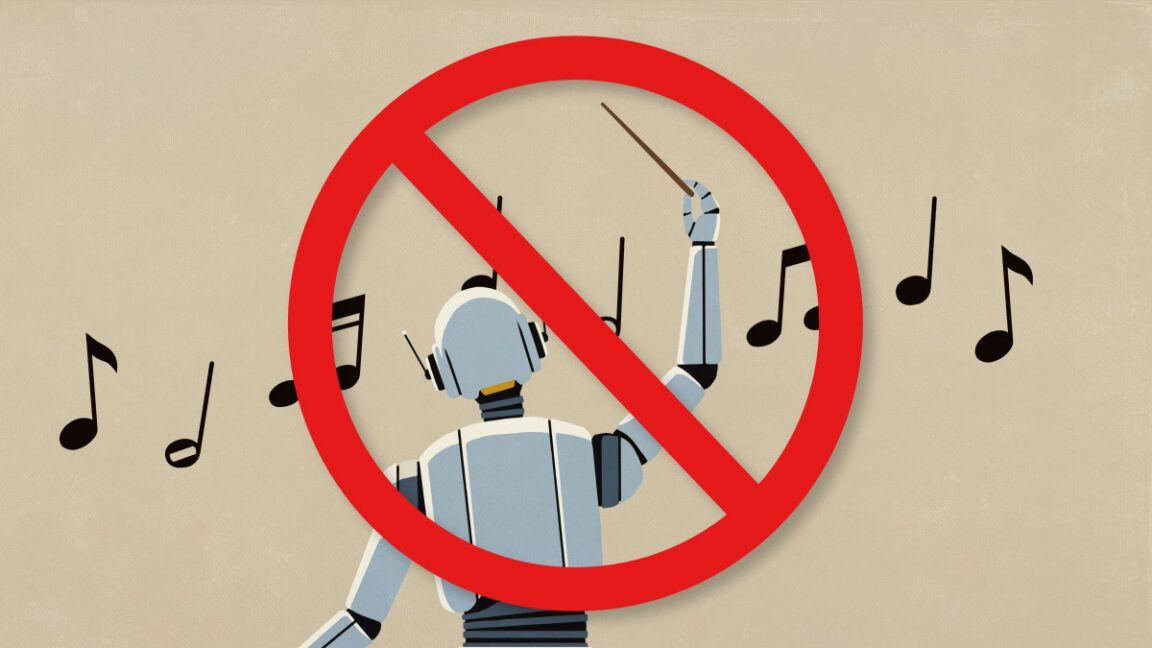
The Australian Recording Industry Association (ARIA) has decided it won't list AI-generated music on its charts of best-selling music. The decision comes into effect this week and follows two interesting musical moments of note. One came when an AI-assisted cover version of Madonna's Like a
[2]
AI-generated music barred from Australian charts after Madonna cover controversy
SYDNEY, Aug 26 (Reuters) - AI-generated music will be excluded from Australia's music charts starting this week, the country's peak music trade group said, following controversy over an Australian DJ's cover of Madonna's "Like a Prayer" topping local music charts. The Australian Recording Industry
[3]
Australia's recording association bans AI-made music from charts - Engadget
The Australian Recording Industry Association announced today that any tracks wholly generated with AI will not be eligible for inclusion on the nation's music charts. The Code of Practice for the charts will allow songs that use generative AI to be counted, but only if the track in question "is
[4]
Australia's music industry bans AI-generated tracks from official charts
MELBOURNE, Australia (AP) -- Australia's recorded music industry will bar tracks wholly generated by artificial intelligence from official charts as burgeoning generative technologies threaten artists' livelihoods, a representative said on Tuesday. The crackdown comes as a variation of Madonna's
[5]

Australia bans AI-made music from its charts unless humans wrote, performed, and created most of it
Serving tech enthusiasts for over 25 years. TechSpot means tech analysis and advice you can trust. What just happened? Like a lot of people, Australia isn't a fan of music that's been wholly generated using AI. With millions of these tracks appearing on streaming services, the country's
[6]

Australia bans songs heavily created by AI from its official music charts
Songs that are largely or wholly created by AI have been banned from Australia's music charts. From this week, all releases must be "substantially human made" to be eligible. The Australian Recording Industry Association (ARIA) said the new code would help "promote the human nature of
[7]

Australia bans AI-generated music -- only 'substantially human made' music is eligible to make the charts | Fortune
Australia's recorded music industry will bar tracks wholly generated by artificial intelligence from official charts as burgeoning generative technologies threaten artists' livelihoods, a representative said on Tuesday. The crackdown comes as a variation of Madonna's pop hit "Like a Prayer"
[8]

Australia's top music charts ban AI songs
Sydney (AFP) - Music made by artificial intelligence will be banned from Australia's top charts under new guidelines aimed at protecting "the human nature of artistry", an industry body said Tuesday. Under new rules in force from Friday, music must be "substantially human made" in order to be
[9]

Australia's Music Industry Bans AI-Generated Tracks From Official Charts
MELBOURNE, Australia (AP) -- Australia's recorded music industry will bar tracks wholly generated by artificial intelligence from official charts as burgeoning generative technologies threaten artists' livelihoods, a representative said on Tuesday. The crackdown comes as a variation of Madonna's
[10]

This Country's Music Industry Is Banning AI-Generated Tracks From Official Charts
Tracks can be eligible only if "humans wrote the song and performed the lead vocal and the primary instruments," among other requirements. MELBOURNE, Australia (AP) -- Australia's recorded music industry will bar tracks wholly generated by artificial intelligence from official charts as burgeoning
[11]

Australia's music industry bans AI-generated tracks from official charts
The crackdown comes as a variation of Madonna's pop hit "Like a Prayer" created by an Australian producer using AI-generated vocals and drums has spent 16 weeks in the Australian top 20, stoking debate about generative AI's place in music. It peaked at number two on the Australian Record Industry
[12]

AI created music banned by Australian Recording Industry Association
By taking this step, they hope to promote human made music instead. A major problem with today's world is that it's so hard to tell what is AI and what isn't. Fakes are spreading, and the concern that this will negatively impact art is a real fear, since AI relies so heavily on using pre-existing
[13]

Australia excludes AI-generated songs from charts: India next?
Australia's official music charts will exclude wholly AI-generated recordings from next week, while allowing recordings that use generative artificial intelligence (AI) in a supporting role. The change raises a question for India's music industry: should India's industry-recognised charts
[14]

Australia's music industry bans AI-generated tracks from official charts
Australia's recorded music industry will bar tracks wholly generated by artificial intelligence from official charts as burgeoning generative technologies threaten artists' livelihoods, a representative said on Tuesday. The crackdown comes as a variation of Madonna's pop hit "Like a Prayer"
Share
Copy Link
The Australian Recording Industry Association has barred wholly AI-generated tracks from its official music charts starting this week. The decision follows controversy over an AI-assisted Madonna cover reaching the top ten and aligns with new global industry principles requiring music to be substantially human-made.
ARIA Implements Ban on AI-Generated Tracks
The Australian Recording Industry Association has officially excluded AI-generated music from its charts, marking a significant shift in how the recorded music industry addresses artificial intelligence. The ban on AI-generated tracks takes effect this week, applying to charts dated August 31 and published on August 28
1
2
. Under the updated ARIA Charts Code of Practice, wholly AI-generated tracks will no longer qualify for chart positions or ARIA Awards eligibility3
.
Source: Engadget
ARIA CEO Annabelle Herd emphasized the organization's commitment to human artistry, stating that while the charts will evolve to accommodate AI tools artists already use, music generated wholesale by services built on artists' recordings presents a different challenge
1
. The ARIA Charts will continue measuring music consumption transparently, but rewarding unlicensed AI output would undermine the foundation of recorded music the organization represents2
.Madonna Like a Prayer Cover Sparks Industry Action
The policy shift follows significant controversy surrounding Queensland DJ Josh Fawaz's cover of Madonna's 1989 hit Like a Prayer. The track spent 16 weeks in the Australian top 20, peaking at number two on the ARIA top 20 Australian singles chart in May and reaching number four on two ARIA charts in July
4
2
. The cover became the most-played song on Australian radio and amassed more than 38 million Spotify streams5
.
Source: AP
Producers alleged that generative AI had been used for vocals and drums without initial disclosure. The credits were later updated to acknowledge AI-generated vocals and drums
5
. When confronted on Instagram in June, Fawaz defended his approach, saying he used AI as a tool and had been releasing music long before AI, focusing on providing listeners good music2
.Requirements for AI-Assisted Music Eligibility
While wholly AI-generated tracks face exclusion, AI-assisted music remains eligible under specific conditions. Recordings developed using generative AI must be substantially human-made and raise no stream or chart manipulation concerns
2
3
. Critically, humans must have written the song and performed the lead vocal and primary instruments4
.
Source: TechSpot
ARIA can refuse ineligible releases, remove them retrospectively, recalculate chart positions, withdraw accreditations, and demand the return of number-one awards. Excluded recordings are also barred from ARIA Awards, though artists can appeal and submit evidence
5
. Sydney Conservatorium of Music composer Alexis Weaver called the move a wonderful step forward that prioritizes human creativity while acknowledging that avoiding AI tools entirely is difficult in the current landscape4
.International Federation of the Phonographic Industry Sets Global Standards
The Australian policy aligns with principles released in July by the International Federation of the Phonographic Industry. The IFPI established criteria requiring that generative AI services used for recordings be properly authorized and lawful, that recordings be substantially human-made, and that they comply with applicable laws including those relating to copyright and personality rights
1
. The use of generative AI must be appropriately signaled to consumers on streaming platforms according to applicable legislation and industry labeling standards1
.Major record labels including Sony Music, Universal Music Group, and Warner Music Group participated in developing these principles
1
3
. ARIA became the first organization to adopt the IFPI principles1
. The international guidelines state that to qualify for official music charts, a track must be substantially human-made4
.Related Stories

Licensing Concerns Drive Industry Response
The IFPI's primary concern centers on AI services producing music without proper licensing. Tracks created using generative AI systems have been appearing on streaming platforms, but many were developed with tools trained on artists' music without authorization
1
. Record companies are driving the development and licensing of AI music services that respect the rights of music creators1
.Music appearing on streaming services had apparently been developed with AI tools trained on artists' music without authorization
4
. Major global record labels have been seeking new licensing arrangements to protect their vast catalogues as AI-generated music grows in popularity and consumers increasingly struggle to distinguish it from human-composed songs2
.Explosion of AI Music on Streaming Platforms
The volume of AI-made music has exploded recently across streaming platforms. Spotify removed 75 million low-effort AI tracks in 2025, while bots were uploading around 100,000 songs per day
5
. Deezer previously reported that about 20,000 AI-generated tracks were arriving on its service daily, with 70% of streams involving such music deemed fraudulent5
.This isn't the first time an AI act has caused controversy on music charts. AI country artist Breaking Rust reached number one on Billboard's Country Digital Song Sales chart last year with Walk My Walk, attracting more than two million monthly Spotify listeners despite the generic-sounding virtual cowboy persona
5
. The debate around AI in music remains exceptionally fraught and emotional for musicians, with everyone holding different opinions on its place in the industry4
.References
Summarized by

Navi
Related Stories
ARIA Bans Wholly AI-Generated Tracks From Charts as Industry Confronts Human Creativity Crisis
13 Sept 2026•Policy and Regulation

Major Record Labels Push to Disqualify AI Slop Songs from Global Charts Unless Substantially Human Made
29 Jul 2026•Policy and Regulation

Bandcamp bans AI music as first major platform to take a stand against synthetic content
14 Jan 2026•Entertainment and Society
Recent Highlights



Recent Highlights
Today's Top Stories






Don’t drown in AI news. We cut through the noise - filtering, ranking and summarizing the most important AI news, breakthroughs and research daily. Follow topics that matter to you and stay ahead.


