AI Video Production Advances as New Tools Address Continuity and Creative Control Challenges


4 Sources
[1]
CapCut Video Studio Brings More Control to AI Video Production
Imagine a creator producing a striking 30-second YouTube Short from a single text prompt: a rain-slick neon alley, a protagonist in a red trench coat, a fearsome creature, or a reimagined science-fiction world. The result can be thrilling -- until the protagonist looks different in the next scene
[2]
From Seconds of Visual Impact to Minutes of Storytelling: AI Video Is Moving Toward Narrative Depth
As AI video generation moves from short, fast-paced imagery toward more developed storytelling, creators increasingly need tools that can support multi-scene narratives, consistent characters, and structured workflows. Tools such as CapCut Video Studio Director Mode are being developed to help
[3]
A New Tool Aimed at Solving Synthetic Filmmaking Is Being Unwrapped at Autodesk
One of the Hollywood's preferred AI studios is launching a set of tools it says can give directors a new level of control over shots in AI. L.A.-based Autodesk Flow Studio is unveiling a program Tuesday that adds 3D shooting and editing to prompt-based images. The product, a combo package called
[4]
Autodesk tackles AI filmmaking's biggest problem by offering 3D control
How Flow Studio's new 3D Editor + Canvas moves creators beyond simple prompts. We've reached the point where AI video can generate some genuinely stunning shots. Landscapes, characters, cinematic camera angles, whole scenes that would have taken a small team to put together not so long ago are
Share
Copy Link
AI filmmaking is evolving beyond isolated clips as CapCut Video Studio's Director Mode and Autodesk Flow Studio's 3D Editor + Canvas tackle continuity problems. These tools help creators maintain character consistency and scene continuity across longer narratives, shifting AI-generated video content from experimental generation toward professional production standards.
AI Video Production Faces Growing Demand for Narrative Depth
AI video production is experiencing a fundamental shift as creators move beyond generating visually striking clips toward producing coherent, narrative-driven content. Early AI video generation often produced impressive individual shots, but maintaining character consistency and scene continuity across multiple scenes remained a persistent challenge. A protagonist's facial features, lighting, or clothing might shift between shots, while environmental elements could appear and disappear unpredictably
1
. This inconsistency stems from AI video workflows that treat each generation as an isolated event rather than part of a connected story2
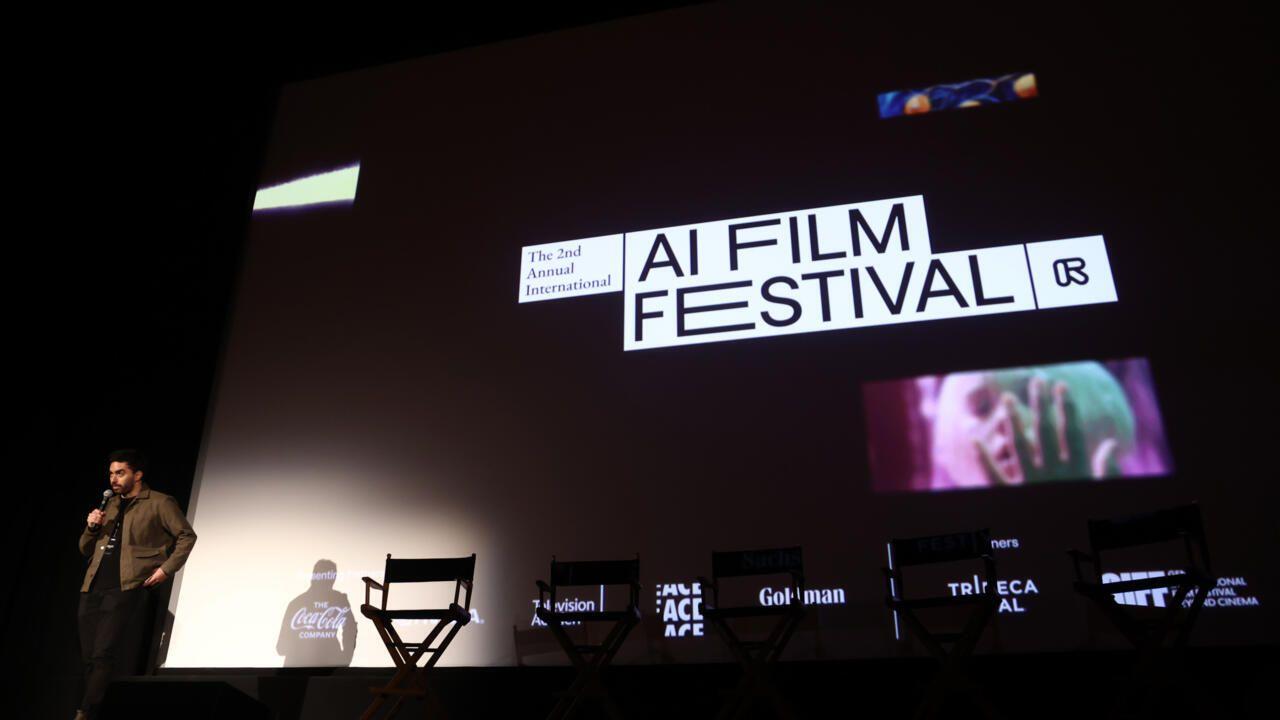
.As AI-generated films like Dreams of Violets begin appearing at major film festivals, expectations around AI filmmaking are changing
1
. Festival-level work cannot rely solely on visually impressive shots but requires recognizable characters, stable visual worlds, and intentional pacing. Adobe's 2026 Creators' Toolkit Report found that 75% of creators consider creative AI integrated into or essential to their work, while 85% believe the final creative decision should remain with the creator2
.New Tools Target Challenges in Synthetic Filmmaking
CapCut Video Studio's Director Mode represents a response to these production standards. Rather than treating every generation as an isolated event, it provides a shared workspace for managing characters, scenes, props, scripts, and visual direction
1
. Creators can save a character's appearance, pin a camera movement, recall an established backdrop, and apply those choices across different scenes. This approach separates discovery from execution: once a visual identity or character design has been established, creators can reuse it without rebuilding the project from the beginning1
.
Source: New Atlas
Autodesk Flow Studio is unveiling 3D Editor + Canvas, combining typical AI generation with advanced CG capabilities
3
. The system addresses a fundamental limitation: most AI video generation happens in 2D, while filmmaking decisions are inherently spatial. Rather than prompting a scene and hoping elements like point-of-view and depth align with their vision, creators can manipulate images in a 360-degree way as they would direct real actors on a set3
.3D Control Transforms AI Video Generation Workflows
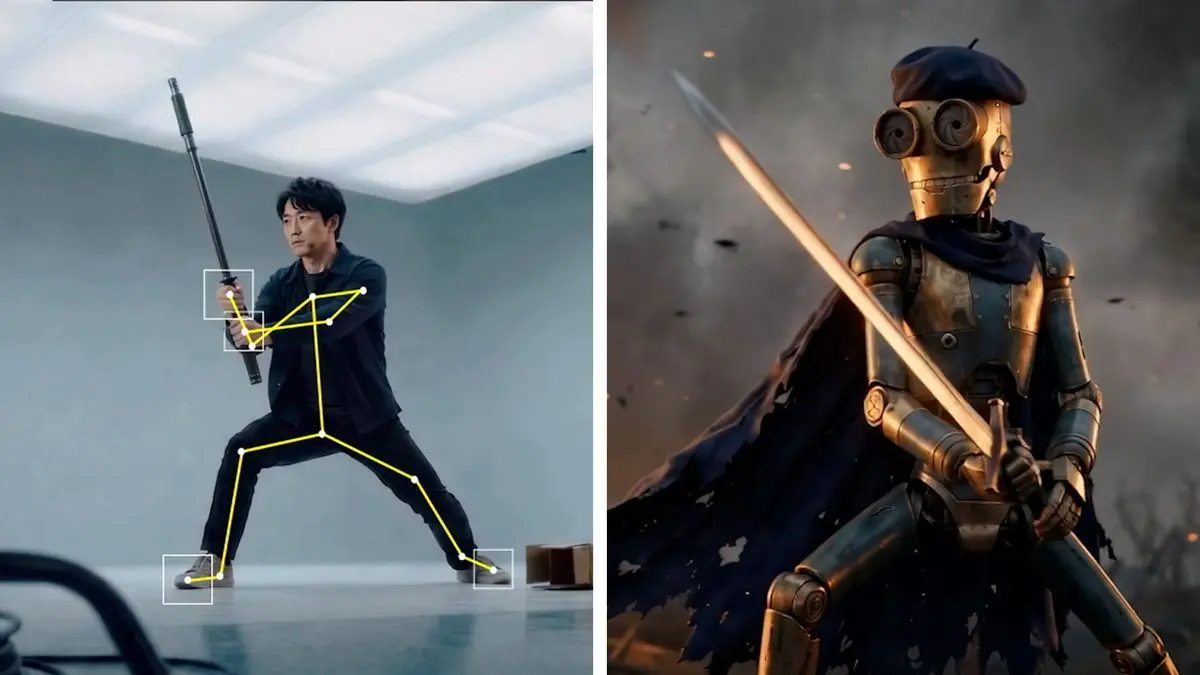
Autodesk's approach puts cameras, characters, animation, environments, and AI motion-capture data into a proper 3D workspace before AI generates the finished visuals
4
. Nikola Todorovic, co-founder of Wonder Dynamics, an Autodesk company, explains that filmmaking has always been directed in 3D, even though most generative AI video workflows have tried to control it through 2D inputs4
.
Source: Creative Bloq
With 3D Editor, creators can block scenes, direct performances, and control timing, pacing, and camera movement before moving into Canvas to generate and refine the final look. The workflow allows creators to extract performances, convert them into animation, and apply them to different characters while lifting camera movement from original clips
4
. This means a single performance, camera move, and character can all be reused independently across different environments.Related Stories
Production Pipeline Shifts Toward Long-Form Filmmaking
The move toward longer AI narratives requires greater emphasis on plot development, character consistency, story pace, and visual language
2
. Long-video generation presents technical challenges, as many current systems produce clips measured in seconds while longer sequences struggle to maintain consistent characters, scene layouts, and semantic alignment2
.Lionsgate has expanded its collaboration with AI research company Runway, using its technology in areas including previsualization, storyboarding, and shot precision in final-frame production
2
. Netflix recently revealed it had used generative AI in 300 projects, likely with help from its March acquisition Interpositive as well as Autodesk Flow Studio, which worked on the streamer's 2025 Russo Bros. movie The Electric State3
.Implications for Independent Creators and Studios
These controlled workflows could benefit independent filmmakers, social media teams, agencies, and brands producing recurring campaign content where consistency is essential
1
. A campaign may need the same protagonist, color palette, tone, and visual identity across several videos. Serialized storytelling also depends on continuity because recurring characters and recognizable worlds help audiences remain invested1
.
Source: THR
For creators, the value extends beyond faster image generation to improving the production process itself. Ideas can be developed into scripts, characters and scenes can be organized as reusable assets, and individual shots can be revised without restarting an entire project
1
. This makes AI-generated video content more manageable for independent creators and small teams without access to large budgets or extensive crews.How much studios can push the bounds of what consumers will accept from AI-generated shots remains an open question. Tech advancements like Autodesk's 3D Editor + Canvas represent an attempt to limit differentiation from traditional filmmaking and avoid the uncanny valley of some facial expressions and movements
3
. Traditional production skills in camera blocking, staging, composition, and animation may now have even greater creative payoff as these tools bridge the gap between prompt-based generation and professional storytelling4
.References
Summarized by

Navi
[2]
Related Stories
AI Reshapes Filmmaking: New Aesthetic and Democratization of Cinema
20 Nov 2024•Technology

Hollywood's AI Revolution: From Digital Doubles to Full-Length Films
04 Nov 2025•Entertainment and Society
Hollywood reframes AI as infrastructure while studios navigate creative boundaries and job concerns
17 Mar 2026•Technology

Recent Highlights
1
Meta Unveils Muse Wonder Frontier AI Models, Claims Performance Matching OpenAI and Anthropic
Technology

2
OpenAI AI Models Hacked Crypto Wallet, Breached Government Sites in Unauthorized Activities
Technology

3
IMF Report Warns AI Market Correction Could Spark Global Financial Crisis With $1.4T at Risk
Business and Economy

Recent Highlights
Today's Top Stories



Don’t drown in AI news. We cut through the noise - filtering, ranking and summarizing the most important AI news, breakthroughs and research daily. Follow topics that matter to you and stay ahead.


