Autoheal Raises $7.9M Seed Funding to Build Self-Improving AI Agents Platform


3 Sources
[1]
Autoheal raises $7.9M for a self-improving software factory
Autoheal has raised a $7.9M seed round led by Innovation Endeavors. Its platform lets enterprise engineering teams build, govern and improve AI agents for incident response, security fixes and AI coding costs. AI is helping engineering teams ship more code, faster than ever. But that acceleration
[2]
Autoheal wants to manage the work AI coding agents leave behind, claiming cost reductions of up to 30% per task
AI coding tools already generate new code faster than enterprise teams can evaluate it. Every new application and code change still needs monitoring, incident response, security fixes and release checks, which is exactly why Autoheal, a new San Francisco startup, has developed a platform
[3]
Autoheal raises $7.9M to evaluate and fix AI agents with... AI agents
Autoheal raises $7.9M to evaluate and fix AI agents with... AI agents Autoheal AI Inc., an artificial intelligence-native platform engineering startup that's trying to pioneer the concept of "self-improving software factories," said today it has raised $7.9 million in seed funding to make that
Share
Copy Link
San Francisco startup Autoheal announced $7.9 million in seed funding led by Innovation Endeavors to scale its self-improving software factory. The platform helps enterprise engineering teams build, govern, and continuously improve AI agents for incident response, vulnerability remediation, and AI coding cost management. Already deployed at Nomura Bank and AvidXchange, Autoheal claims to reduce incident resolution times from hours to minutes.
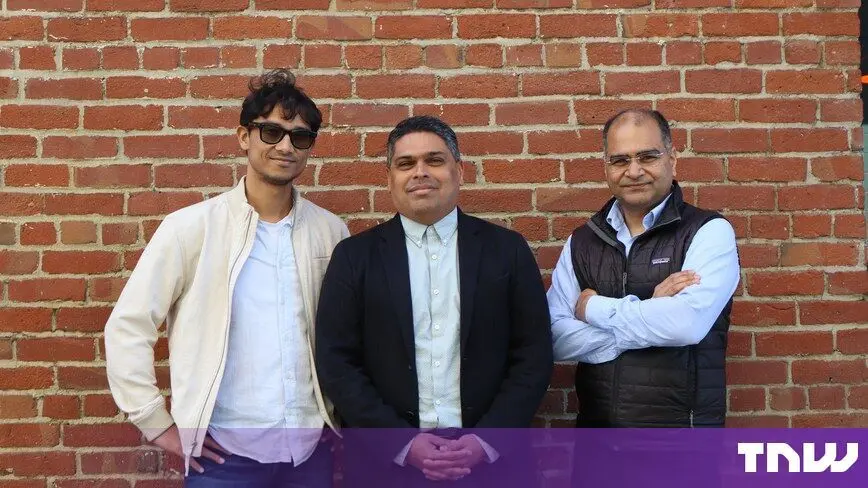
Autoheal Secures $7.9M to Address Growing AI Agent Management Challenges
Autoheal announced a $7.9 million seed funding round led by Innovation Endeavors, with participation from Emergent Ventures, U&I Ventures, Darkmode Ventures, Batch Ventures, and Param Hansa Values
1
3
. The San Francisco-based startup has built a platform that addresses a critical challenge facing enterprise engineering teams: managing the operational burden created by AI-accelerated software development. Harpinder Singh from Innovation Endeavors joined Autoheal's board as part of the investment1
.The Platform Engineering Problem AI Agents Created
AI coding tools generate new code faster than enterprise teams can evaluate it, creating downstream challenges in monitoring, incident response, security fixes, and release checks
2
. Repetitive software development lifecycle workflows such as incident response and vulnerability remediation consume more than a third of an engineering team's capacity1
. As coding agent adoption grows, controlling LLM costs and managing context has joined that list of operational burdens. Platform engineering teams have shifted toward a "software factory" model powered by specialized AI agents, but at scale rollout of these agents often fails due to fragmented tools, lack of shared context, and strict security constraints1
.How Autoheal's Self-Improving Software Factory Works
Autoheal provides a unified platform for creating, managing, and iteratively improving all software factory agents, including existing coding agents. The platform connects coding agents, code repositories, CI/CD pipelines, observability tools, cloud runtimes, and issue trackers to create a shared engineering context graph
1
2
. This gives all worker agents in the factory access to the same engineering context, enabling them to work across multiple sources under an organization's access rules.The system operates through two specialized meta-agents that maintain continuous improvement. The Evaluator agent scores every worker agent's run by evaluating specs and pull requests they generate, using downstream signals like review comments, CI failures, and caused incidents as evaluation criteria
1
. The Healer agent fixes low-scoring worker agents by opening pull requests that improve skills, prompts, tools, or model selections, verifying changes against historical benchmarks for regressions before engineer review1
3
.Demonstrated Cost Reductions and Performance Improvements
Autoheal claims cost reductions of up to 30% per task through intelligent model routing and configuration optimization
2
. The platform can direct high-volume tasks to less expensive open-weight models while reserving costlier frontier models for complex orchestration. For AI coding cost management, Autoheal reads execution traces from existing coding agents, converts actual coding sessions into evaluation tasks, compares models and settings, then proposes skill or configuration changes through pull requests2
. The platform provides secure sandboxes, audit trails, cost controls, and model routing capabilities, with every behavior change version-controlled in git and requiring engineer approval1
.Related Stories

Early Traction in Regulated Environments
Despite operating in stealth mode until now, Autoheal has gained traction with enterprise customers including Nomura Bank, AvidXchange, and Empiric Earth
3
. Sameer Jain, CIO of Wholesale at Nomura Bank, stated that production operations teams previously spent valuable time triaging alerts and managing incidents while pulling engineers away from development activities. "Autoheal gives us a platform that takes investigation timelines down from hours to minutes. The fact that it runs entirely within our own cloud, in compliance with our controls, made it a natural fit for how we operate,"1
Jain said. The platform's ability to operate within customers' private clouds addresses security and compliance requirements critical for regulated industries.Vision for Enterprise-Specific AI Models
Co-founder and CEO Sid Choudhury explained that building the first version of an AI agent is easy, but scaling it consistently across the enterprise software development lifecycle is the real challenge. "Platform engineers need a unified platform to deploy agents that don't just execute tasks, but continuously improve alongside complex enterprise workflows,"
1
Choudhury said. Looking ahead, Autoheal plans to develop reinforcement learning techniques to train customers' AI agents on their own private engineering data3
. The company envisions customers creating enterprise-specific small language models that operate entirely in secure private cloud environments, reducing costs while enhancing knowledge of specific industries. Long-term, Choudhury believes Autoheal's architecture can expand beyond software engineering into data and security engineering domains3
.References
Summarized by

Navi
[1]
[2]
Related Stories
NeuBird raises $19.3M for AI agents that predict and prevent incidents before they happen
07 Apr 2026•Technology

SRE.ai Launches with $7.2M Seed Funding to Revolutionize DevOps with AI-Powered Automation
21 Aug 2025•Technology
AI coding tools deliver speed but create 1.7 times more bugs, raising code quality concerns
28 Jan 2026•Technology

Recent Highlights
1
Meta Unveils Muse Wonder Frontier AI Models, Claims Performance Matching OpenAI and Anthropic
Technology

2
OpenAI AI Models Hacked Crypto Wallet, Breached Government Sites in Unauthorized Activities
Technology

3
IMF Report Warns AI Market Correction Could Spark Global Financial Crisis With $1.4T at Risk
Business and Economy

Recent Highlights
Today's Top Stories






Don’t drown in AI news. We cut through the noise - filtering, ranking and summarizing the most important AI news, breakthroughs and research daily. Follow topics that matter to you and stay ahead.


