ByteDance Plans AI Agent Similar to Meta's Muse, Eyes 2030 Frontier Competition


4 Sources
[1]
ByteDance reportedly plans a Muse-like AI agent within weeks
Zhang Yiming told staff that catching Anthropic and OpenAI at the frontier will take until at least 2029, Bloomberg reports. ByteDance plans to release an AI assistant similar to Meta's Muse in the coming weeks, Bloomberg reported on Wednesday, citing people familiar with a recent all-hands
[2]
ByteDance plans AI agent similar to Meta's Muse in coming weeks
Co-founder Zhang Yiming told AI staff that competing with Anthropic and OpenAI at the cutting edge will take at least until 2029 or 2030 ByteDance, the Chinese parent of TikTok, is preparing to launch an AI agent comparable to Meta $META Platforms' Muse within the next few weeks, according to
[3]
ByteDance prepares Muse-like agent in push to close AI gap
ByteDance is preparing to release an AI assistant similar to Muse by Meta Platforms soon. Co-founder Zhang Yiming has shared his vision of competing with companies like Anthropic and OpenAI by 2030. The company intends to invest up to $70 billion in developing the Seedance video AI
[4]
ByteDance Plans to Take on Meta's Muse, Eyes Rival AI Agent Launch In Coming Weeks: Report - Meta Platfor
ByteDance Ltd. reportedly plans the release of an AI assistant on the lines of Meta Platforms Inc. (NASDAQ:META) in the coming weeks to advance its lead in the AI race with the U.S. counterparts. Co-founder Zhang Yiming briefed researchers, engineers, as well as supporting staff about the plan in
Share
Copy Link
ByteDance will release an AI assistant similar to Meta's Muse within weeks, co-founder Zhang Yiming announced. While the TikTok owner aims to compete with Anthropic and OpenAI, Zhang warned staff it won't happen before 2029 due to significantly smaller training datasets and a refusal to use model distillation techniques.
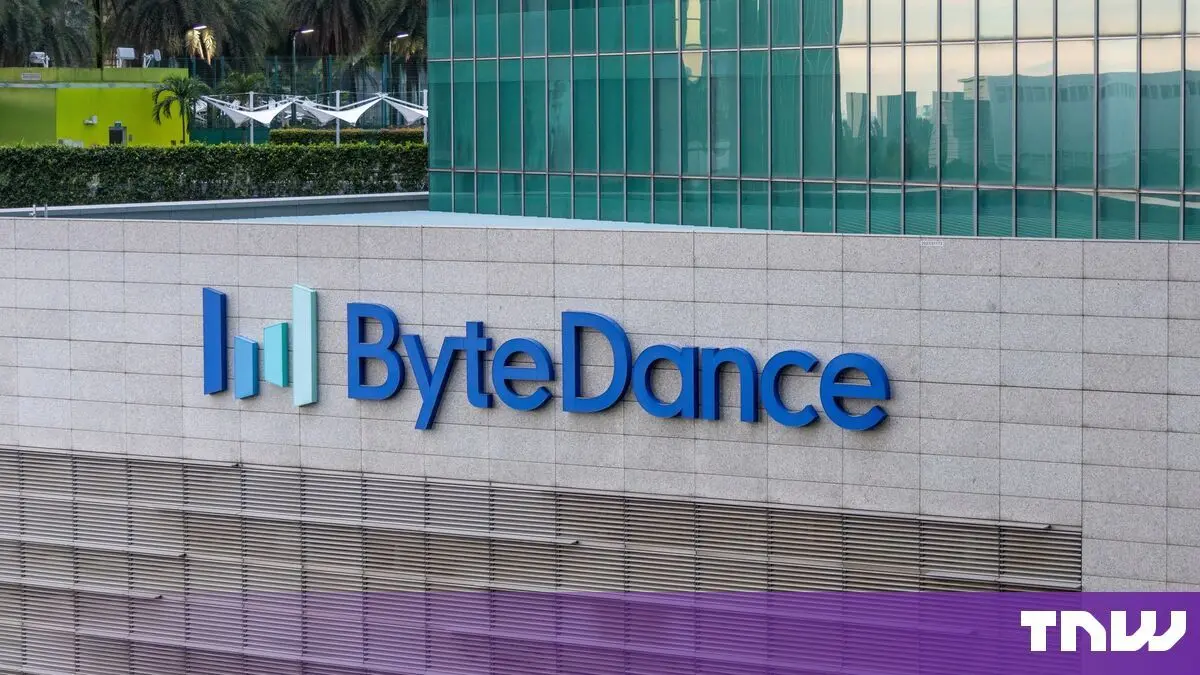
ByteDance Plans AI Agent Launch Within Weeks
ByteDance will release an AI assistant similar to Meta's Muse in the coming weeks, co-founder Zhang Yiming told staff during a recent all-hands meeting of the company's AI team
1
2
. The planned AI agent will serve a role comparable to Muse, which Meta introduced in September as a voice-based assistant with an animated avatar distributed across smart glasses and an upcoming Muse Charm device3
. Whether ByteDance plans hardware of its own remains unclear2
.The TikTok owner's rival AI agent launch represents a milestone event the company hopes will help close the gap with top US labs in as soon as three years
3
. Zhang Yiming, 43, laid out a sober timeline for staff, explaining that ByteDance can compete with Anthropic and OpenAI at the cutting edge, but not before 2029 or 20301
2
.Training Data Challenges Slow Frontier Progress
Zhang's primary concern centers on data availability. The ByteDance co-founder told staff that the company's Seed large language models are pre-trained on datasets orders of magnitude smaller than those used by frontier rivals
1
3
. This training data gap positions ByteDance at a significant disadvantage compared to leading American labs.Zhang reiterated that ByteDance should not lean on model distillation, the practice of training smaller models on outputs from bigger models
1
3
. This stance has drawn criticism of Chinese labs such as Alibaba, Moonshot AI, and Z.ai from White House officials and Anthropic CEO Dario Amodei2
. ByteDance's refusal to use distillation techniques leaves the company playing a long game from an unusual position.Seed Models Lag Behind Global Benchmarks
Seed stands alone among China's top AI players in having neither released a large language models touching the upper reaches of global benchmarks nor made its model weights available for developers to build on
1
3
. ByteDance's last major update, Seed 2.1, arrived in June1
. At the time, the Seed team acknowledged that "there remains room for improvement in the most challenging open-ended tasks and cutting-edge research problem-solving"3
.Despite these challenges, ByteDance built Doubao, China's most popular ChatGPT-style bot
1
. The Financial Times reported in August that the company was training a model with as many as 10 trillion parameters, comparable in scale to Claude Mythos, Anthropic's top-tier product3
.Related Stories

AI Video Generation Drives ByteDance's Competitive Edge
Where ByteDance does lead is video generation. The company leveraged its massive video pool to deliver and monetize a top-tier generation platform with its Seedance models
1
3
. Seedance filled the void left after OpenAI shuttered Sora2
. Central to ByteDance's strategy is a plan to spend as much as $70 billion and build Seedance into the country's preeminent video AI platform3
. The company is prepared to invest heavily in AI infrastructure to press this advantage1
.ByteDance secured a $29.6 billion loan in September from close to three dozen banks, with proceeds earmarked for AI initiatives outside China, including data centers under development in Southeast Asia
2
. The three-year facility had no collateral.Safety and Alignment Team Signals Commitment
The Seed unit employs roughly 1,000 researchers and engineers under Wu Yonghui, whom Zhang Yiming poached from Google DeepMind in 2025
1
2
. ByteDance offers Seed researchers and engineers preferential equity arrangements that set them apart from the rest of the company3
.In October, Seed became the first major Chinese AI lab to establish a standalone safety and alignment unit, hiring around 10 key researchers
1
3
. This notable move comes as Western rivals sign safety pledges of their own. Beyond large language models, AI video, and image models, the team is also developing AI for robotics, virtual reality and other hardware3
. A ByteDance spokesperson did not respond to requests for comment1
2
.References
Summarized by

Navi
[1]
Related Stories
ByteDance's $4B AI revenue leads China as it restructures Lark into Doubao chatbot division
30 Jul 2026•Business and Economy

ByteDance trains massive 10 trillion parameter AI model to rival Anthropic's Mythos
07 Aug 2026•Technology
Meta AI's Muse Spark API Delay Leaves Developers Waiting as Competition Intensifies
04 Jun 2026•Technology
Recent Highlights
1
Google's AI Policy Forces Schools to Accept AI Overviews or Lose Search Access Entirely
Technology

2
Jensen Huang's Affair with Suspected Chinese Spy Exposes $7 Billion AI Chip Smuggling Network
Policy and Regulation

3
Anthropic launches Fable 5.2 and Mythos 5.2 with 20% price cut and 30% faster output
Technology

Recent Highlights
Today's Top Stories







Don’t drown in AI news. We cut through the noise - filtering, ranking and summarizing the most important AI news, breakthroughs and research daily. Follow topics that matter to you and stay ahead.


