Autonomous Trucks Show Promise But Widespread Use Is a Long Way Down the Road


4 Sources
[1]
Driverless 18‑wheelers are on a few highways, but widespread use is a long way down the road
Fully automated trucks use a combination of AI, machine learning, computer vision, pattern recognition and adaptive decision-making. This article was originally featured on The Conversation. Driverless trucks with artificial intelligence on board could dramatically change the landscape of freight
[2]
Driverless 18-wheelers are on a few highways, but widespread use is a long way down the road
Driverless trucks with artificial intelligence on board could dramatically change the landscape of freight shipping. A few companies have begun testing early models on some limited routes in Texas and California. Simulations of automated fleets show the potential benefits of the technology: The
[3]
Driverless 18‑wheelers are on a few highways, but widespread use is a long way down the road
Driverless trucks with artificial intelligence on board could dramatically change the landscape of freight shipping. A few companies have begun testing early models on some limited routes in Texas and California. Simulations of automated fleets show the potential benefits of the technology: The
[4]
Why driverless trucks won't be taking over highways just yet
Driverless trucks with artificial intelligence on board could dramatically change the landscape of freight shipping. A few companies have begun testing early models on some limited routes in Texas and California. Simulations of automated fleets show the potential benefits of the technology: The
Share
Copy Link
AI-driven autonomous trucks from Aurora and Kodiak are testing on select Texas highways, showing potential for improved safety and fuel efficiency. But variable weather, construction zones, and the need for human-machine collaboration mean fully driverless 18-wheelers won't dominate freight shipping anytime soon.
Autonomous Trucks Begin Limited Testing on Select Routes
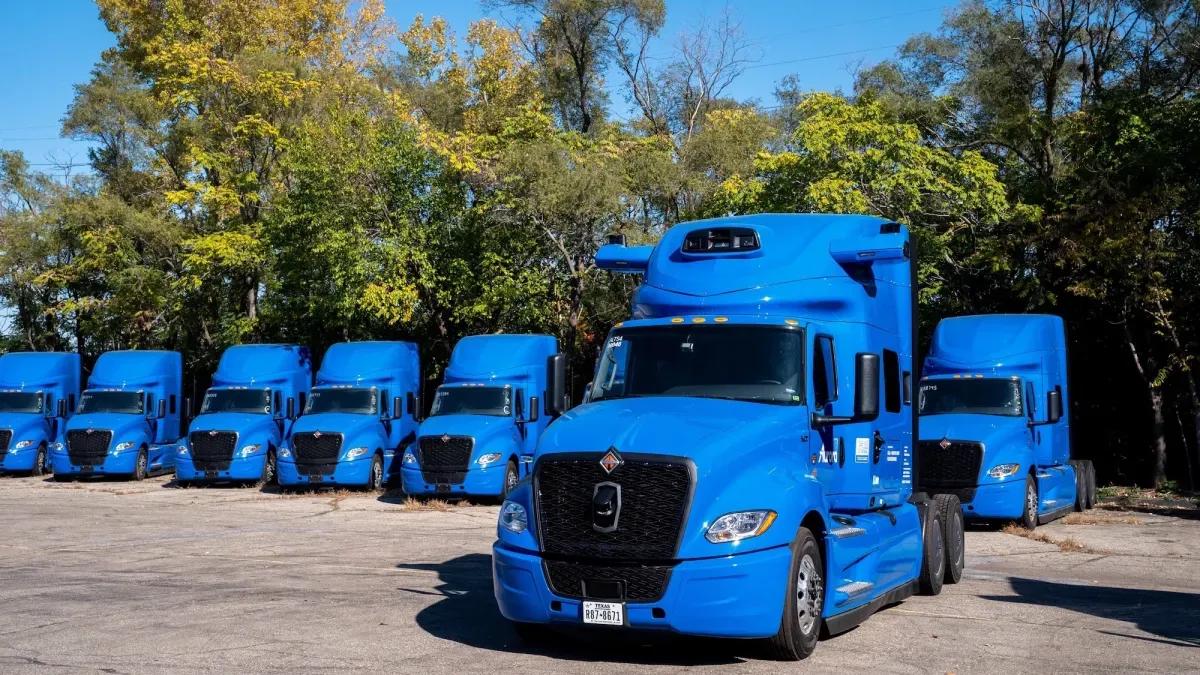
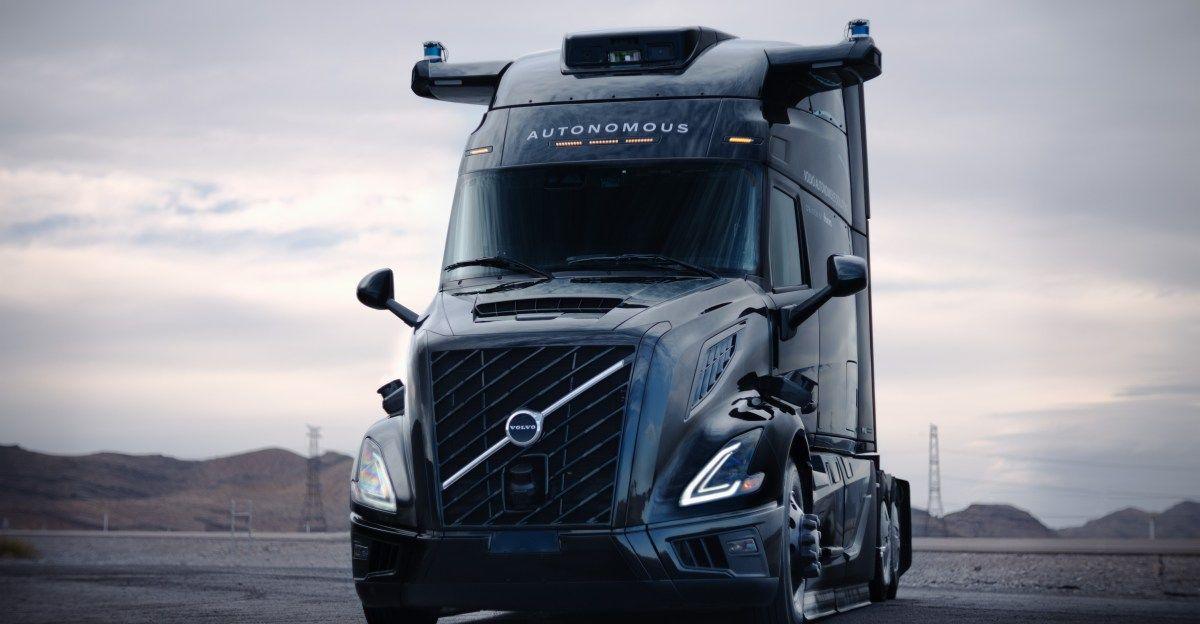
Driverless 18-wheelers powered by AI are making their debut on a handful of highways in Texas and California, but the technology faces significant hurdles before transforming freight shipping. Companies like Aurora and Kodiak are conducting early tests on carefully selected routes, with Aurora operating large freight trucks on Interstate 45 between Dallas and Houston, while Kodiak's robotrucks deliver sand to industrial sites over lightly-trafficked Texas roads.
1
3
These AI-driven autonomous trucks combine machine learning, computer vision, pattern recognition, and adaptive decision-making to navigate highways. Torc, another developer in this space, uses AI to merge data from multiple sensors and generate predictive models for truck performance.2
Source: Popular Science
Fuel Efficiency and Safety Benefits Drive Development
Simulations and early data suggest fully automated trucks could deliver substantial advantages for logistics operations. Vehicles equipped with automatic emergency braking and lane-keeping assistance systems indicate that driverless 18-wheelers could reduce both the frequency and severity of crashes.
1
Fuel efficiency improvements come from optimized acceleration and braking patterns, with additional savings possible through close-knit convoys or platoons that reduce wind resistance.4
The ability to operate nearly 24 hours a day could reduce parking needs and eliminate emissions from idling at truck stops, addressing both environmental and operational concerns.2
Autonomous trucks might also help ease ongoing driver shortages while making the profession less physically demanding and stressful, potentially improving job satisfaction for human operators who remain involved.3
Variable Weather and Road Conditions Remain Critical Barriers
The primary obstacle preventing widespread adoption is the technology's struggle with variable weather and changing road conditions. Snow and rain prevent sensors, radars, and cameras from properly "seeing" the roadway, which is why Waymo only operates driverless cars in areas without snow.
1
4
Construction zones with orange cones, narrow lanes, and missing lane markings create additional complications that current systems cannot reliably handle. Research shows automobile drivers crash into driverless cars at higher rates than human-piloted vehicles, adding another layer of complexity.2
These limitations explain why companies focus testing on relatively flat, straight highways with minimal complications rather than chaotic urban environments filled with pedestrians, bicyclists, and traffic signals.3
Related Stories

Industry Consolidation Signals Market Reality Check
The autonomous trucking sector experienced significant contraction in 2023 as companies confronted technical and commercial realities. Embark, TuSimple, and Locomotion shut down operations entirely, while Waymo pivoted to focus exclusively on passenger cars.
1
4
Surviving companies narrowed their ambitions, concentrating on dedicated routes between specific cities or manufacturing sites rather than pursuing broad deployment.2
This market consolidation reflects the substantial gap between controlled testing environments and real-world freight shipping demands.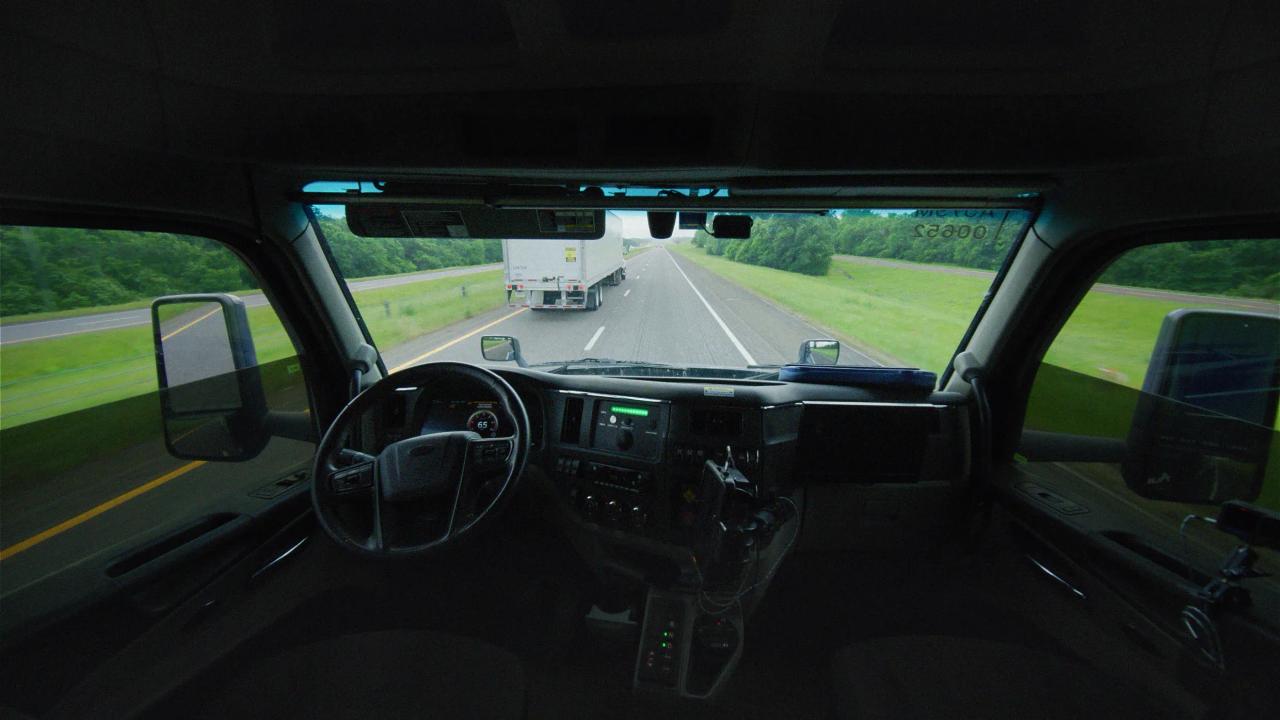
Source: Fast Company
Human-Machine Collaboration Emerges as Near-Term Solution
Experts predict autonomous trucks will require human drivers for years to come, with the most effective approach being human-machine collaboration where each handles what they do best. The envisioned model involves human drivers navigating the "first mile" through crowded warehouse grounds and local streets to reach highways, then transferring control to automation for long-haul segments.
3
4
Drivers would resume control for the "last mile" to final destinations. Research indicates that human-machine interfaces will prove critical for this partnership, with screens, heads-up displays, verbal messages, or vibrating seats communicating system status and alerting drivers when automation cannot handle developing situations.1
2
Developers must address automation bias, where drivers might over-rely on technology, as they design these collaborative systems for real-world deployment.References
Summarized by

Navi
[1]
[2]
[3]
[4]
Related Stories
Aurora triples driverless truck network with software update enabling 1,000-mile nonstop routes
12 Feb 2026•Technology
Kodiak AI Secures First Commercial Deal for 75 Autonomous Trucks on Public Highways Starting 2028
28 Oct 2026•Technology

AI Drives the Future of Automotive Technology in 2025
29 Dec 2024•Technology

Recent Highlights


Recent Highlights
Today's Top Stories









Don’t drown in AI news. We cut through the noise - filtering, ranking and summarizing the most important AI news, breakthroughs and research daily. Follow topics that matter to you and stay ahead.


