3 Sources
[1]
AWS Quick's knowledge graph creates an orchestration blind spot
Enterprise AI teams running centralized orchestration stacks now have a new variable to account for: AWS Quick, which expanded this week to a desktop-native agent that builds a persistent personal knowledge graph and executes actions across local files and SaaS tools -- outside the visibility of most control planes. Unlike chat-based copilots that reset with each session, Quick now maintains a continuously updated knowledge graph built from the user's local files, calendar, email and connected SaaS apps. It uses it to proactively trigger actions without waiting to be asked. AWS launched Quick in October last year as an alternative to AI workflow and productivity platforms coming from Google, OpenAI and Anthropic. It was a way for enterprise employees to access insights from connected applications, an agent builder, deep research, and workflow automation. Now, it's grown beyond a simple AI assistant and acts more as a proactive workflow agent with a stateful, real-time knowledge graph of the user. It integrates with third-party apps like Google Workspace, Microsoft 365, Zoom, Salesforce and Slack -- and now local files -- so the agent can gather context and take actions. "What we've been hearing is that many enterprises have not been happy with how difficult it is to get context from their legacy tools," Jigar Thakkar, vice president of Quick Suite at AWS, told VentureBeat in an interview. "Our vision is that Quick is a desktop experience that is the one place where people can go to get all their information and tasks." Governance blindspots Enterprises often put orchestration layers at the center to help guide and manage agents. Context is pulled in, decisions are made, and then actions are executed within defined system boundaries. Recent releases like Anthropic's Claude Managed Agents or updates to OpenAI's Agent SDK also push for more stateless, autonomous agents within enterprise workflows, but still operate within defined orchestration boundaries. Quick still operates under enterprise controls, something that AWS has always underscored with its AI products, so actions taken on Quick remain bound by permissions, identity and security. Integrations remain managed by either an API or an MCP connection. However, this evolution of Quick introduces a more subtle shift in the decision layer. AWS updated Quick to build a personal knowledge graph that learns more about the user the more they interact with the platform. It builds a profile based on how they use local files, calendar, email or third-party app integrations to proactively suggest actions such as reminding a team leader to set up check-ins. Enterprises should be wary that a kind of shadow orchestration could arise in a system like this. The personalized context means the decision layer focuses on implicit triggers rather than set workflows, user-specific interpretations, and different action timings. Practitioners are rightfully wary of this much autonomy, understanding that shadow orchestration may not be something completely under their control. Upal Saha, co-founder and CTO of Bem, told VentureBeat in an email that platforms like AWS Bedrock AgentCore, its managed agent runtime, and similar ones from Salesforce "maximize autonomy rather than accountability" so enterprises are not losing agent visibility by accident. "When you deploy an agent that reasons its way to a decision across multiple steps, you have already accepted that you will not be able to fully explain what happened after the fact," Saha said. "That is fine for a demo. It is not fine for a claims processing pipeline or a financial workflow where a regulator can ask you to produce a complete audit trail for every automated decision made in the last three years." AWS said the platform's governance model is designed to address these concerns. "Users can set up different agents and automated workflows tailored to their role -- things like monitoring tickets, pulling data from connected systems, or drafting docs -- all managed within a governed environment where IT retains control over what's connected and what data flows where. It's designed to give individual users flexibility while keeping enterprise-level oversight in place," an AWS spokesperson said. A possible blueprint Quick's evolution from an AI assistant to something more proactive represents a possible approach some enterprise software providers will take to deep AI agent integration into workflows. While what AWS wants to accomplish with Quick -- better context from apps and local files and a strong understanding of what its users actually want to do -- is not unique, it isn't focusing on traditional orchestration. Instead, it's relying on context-driven agent management. This market tension is growing, as evidenced by the release of similar platforms. Mistral, for example, announced Workflows the same day as the updates to Quick. That platform uses a more traditional orchestration framework. Stateful and personalized agents continue to evolve, and so do the questions around how enterprises govern them.
[2]
AWS reveals its own desktop AI agent to help get all your work done
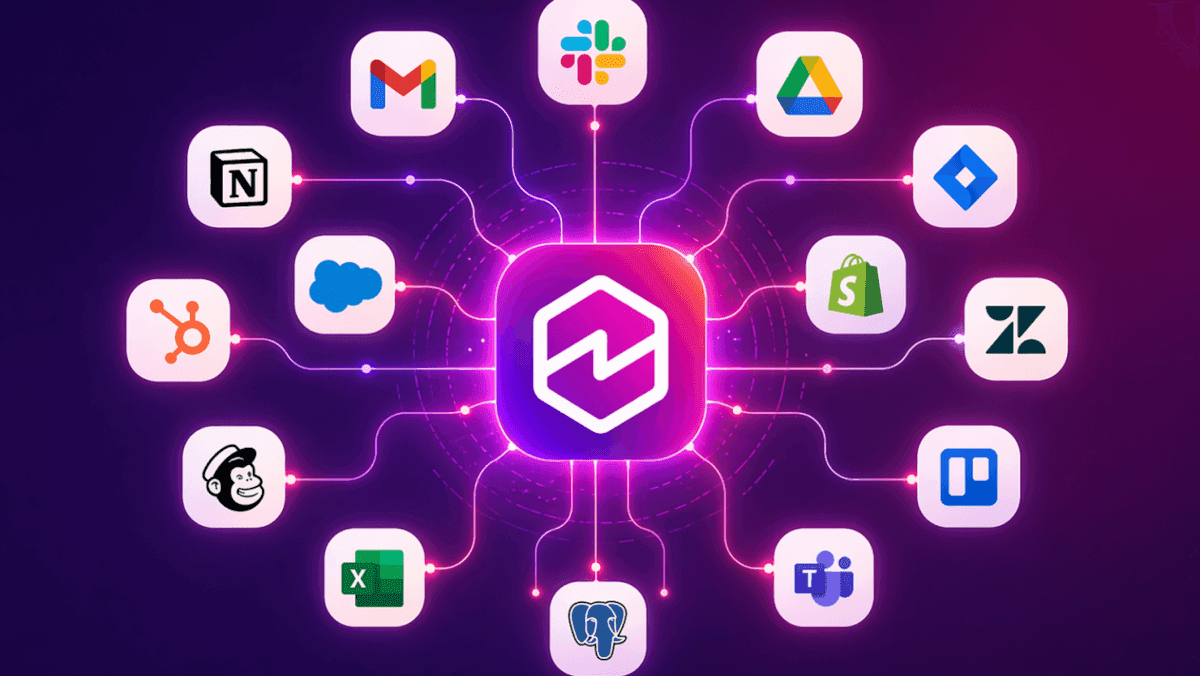
Amazon Quick is the latest in a growing number of local AI agents * Amazon Quick is the latest always-on, proactive AI agent from AWS * It'll connect across local files and third-party, online workplace tools * A constantly updated knowledge graph ensure maximum personalization Amazon Web Services (AWS) has launched its own desktop AI assistant designed to act as a personal work companion that runs continuously and in the background to build context over time. The new agent, Amazon Quick, has been built to connect across local files, emails, calendars and online workplace tools like Google Workspace, Microsoft 365, Slack, Zoom and Salesforce, for maximum context. It can then go about drafting emails, document and presentations, analyzing data, generating insights and automating some repetitive tasks automatically. AWS launches Amazon Quick desktop agent "Where most AI tools only work within their own vendor-specific ecosystem and can only help with a fraction of your work, Quick is built to break you free from those walled gardens," the company wrote in an announcement. Amazon also noted that Quick can automate browser-based workflows and connect to developer tools like Kiro CLI and Claude Code, proving its utility can go far beyond basic text drafting. On the personalization front, Quick is able to build a knowledge graph of any individual using the agent, spanning preferences, team contacts, and business context with access to the organization data you grant it access to. Separately, Amazon criticized most AI assistants for being reactive, only generating outputs when prompted for a response and sitting idle when not in use. This agent is one of a growing number of proactive assistants, "monitoring what's happening across your apps, information and data, and surfacing what needs attention." Early customers, including GoDaddy, AstraZeneca, BMW, Southwest Airlines and Amazon itself, say they're now able to complete hours-long tasks in minutes. The Amazon Quick web page shows current pricing across four subscription tiers - Free and Plus ($20/user/month) for smaller users, and Professional and Enterprise for larger users with an additional infrastructure fee per organization on top of the monthly fee. Follow TechRadar on Google News and add us as a preferred source to get our expert news, reviews, and opinion in your feeds. Make sure to click the Follow button! And of course you can also follow TechRadar on TikTok for news, reviews, unboxings in video form, and get regular updates from us on WhatsApp too.
[3]
Amazon revamps Quick as a proactive desktop app that gets work done - SiliconANGLE
Amazon revamps Quick as a proactive desktop app that gets work done Amazon.com Inc. is digging further into the artificial intelligence assistant game today with a major update to Amazon Quick. Whereas other chatbots offer tons of promise but often result in more work for the user, the revamped Amazon Quick is billed as a deeply personalized and proactive assistant that lives within user's desktops to get work done on their behalf. The company said Amazon Quick is designed to be fundamentally different from other intelligent AI companions because of its ability to move beyond the confines of its chat interface. Instead, it's a native application that anyone can download onto their desktop, even without an Amazon Web Services account. Amazon said the primary challenge it's addressing with the revamped Quick is the friction that comes with using AI tools. Though generative AI assistants promise to save users time, many lead to endless copy-pasting and switching between windows and tabs, with users required to come up with creative prompts to get the results they're looking for. As Amazon explains it, "most AI products have overpromised but created more work." Amazon Quick solves this because it lives exactly where people get their work done, and integrates with tools such as Google Workspace, Microsoft 365, Zoom and Salesforce. Whereas other tools sit idle, waiting for users to ask a question, Quick will monitor their work in order to take proactive action, surfacing information before it's requested. For instance, Amazon said, it can remind someone that they still need to reply to a priority email, or alert them to a deal that still needs to be updated in Salesforce, or tell them which documents still require their attention. The app doesn't just limit itself to nudges and answers, either. It can also provide help, such as drafting an email, editing documents and implementing feedback based on comments and replies in Slack. Furthermore, it can help users in managing tasks, such as sending a Slack back to someone's manager, updating a new document with fresh content or responding to a ticket in Jira. Amazon Quick is powered by a personal knowledge graph that's based on each user's desktop interactions. It connects their local files, their calendar, email inbox and important applications, and then it sits there and learns. The idea is that, over time, it will become smarter. Users can ask Amazon Quick, "What am I missing today?" or "What should I prioritize?" and it will respond based on the context of their work. In the long term, it seems that Amazon aspires for Quick to become more than just a simple utility tool. Ultimately, it sees Quick as becoming the connective tissue for enterprises, hoping to eliminate the burden of searching for information and setting reminders completely.
Share
Copy Link
AWS expanded Amazon Quick into a proactive desktop AI agent that builds a persistent personal knowledge graph from local files and SaaS apps. Unlike session-based copilots, Quick continuously learns user context to trigger actions autonomously, raising concerns about shadow orchestration and enterprise governance challenges as decisions happen outside traditional control planes.
AWS has transformed Amazon Quick from a simple AI assistant into a proactive desktop AI agent that fundamentally changes how enterprise AI operates
1
. Originally launched in October last year as an alternative to platforms from Google, OpenAI, and Anthropic, Amazon Quick now functions as a native desktop application that users can download even without an AWS account3
. The platform connects local files, email, and calendar data with integration with SaaS applications including Google Workspace and Microsoft 365, Slack, Zoom, and Salesforce to build comprehensive user context2
.

Source: SiliconANGLE
Unlike chat-based copilots that reset with each session, Amazon Quick maintains a continuously updated personal knowledge graph built from user interactions across their digital workspace
1
. This knowledge graph learns preferences, team contacts, and business context over time, enabling the AI agent to take proactive actions without waiting for prompts2
. The platform can remind team leaders to set up check-ins, alert users about priority emails requiring responses, flag deals needing updates in Salesforce, and surface documents requiring attention3
. Jigar Thakkar, vice president of Quick Suite at AWS, explained that enterprises have struggled with extracting context from legacy tools, positioning Quick as "a desktop experience that is the one place where people can go to get all their information and tasks"1
.The evolution of Amazon Quick introduces significant enterprise governance challenges as its decision-making layer operates outside the visibility of most control planes
1
. While AWS emphasizes that actions remain bound by permissions, identity, and security controls, the personalized context creates what experts warn could become shadow orchestration. Upal Saha, co-founder and CTO of Bem, cautioned that platforms maximizing autonomy over accountability pose risks for regulated workflows: "When you deploy an agent that reasons its way to a decision across multiple steps, you have already accepted that you will not be able to fully explain what happened after the fact. That is fine for a demo. It is not fine for a claims processing pipeline or a financial workflow where a regulator can ask you to produce a complete audit trail"1
.Related Stories
Amazon Quick addresses friction in existing Enterprise AI tools by eliminating the endless copy-pasting and window-switching that plague current generative AI assistants
3
. The platform automates repetitive tasks including drafting emails, editing documents, implementing feedback based on Slack comments, and managing tasks like sending updates to managers or responding to Jira tickets3
. It can also automate browser-based workflows and connect to developer tools like Kiro CLI and Claude Code2
. Early customers including GoDaddy, AstraZeneca, BMW, Southwest Airlines, and Amazon itself report completing hours-long tasks in minutes2
. The platform offers four subscription tiers: Free and Plus at $20 per user per month for smaller deployments, plus Professional and Enterprise tiers with additional infrastructure fees for larger organizations2
.
Source: TechRadar
Quick's approach represents a departure from traditional orchestration frameworks, instead relying on context-driven agent management
1
. While platforms like Anthropic's Claude Managed Agents or OpenAI's Agent SDK operate within defined orchestration boundaries, Amazon Quick focuses on implicit triggers, user-specific interpretations, and variable action timings based on its knowledge graph1
. AWS maintains that its governance model addresses oversight concerns, with a spokesperson stating that "IT retains control over what's connected and what data flows where" while giving individual users flexibility1
. This market tension is evident as competitors like Mistral announced traditional orchestration-based Workflows on the same day as Quick's updates1
.Summarized by
Navi
09 Oct 2025•Technology

28 Apr 2026•Technology

04 Dec 2024•Technology

1
Health

2
Technology

3
Technology