6 Sources
[1]
Amazon unveils a Copilot for all your apps
Retailer touts 'teammates' and always-on context as it muscles into an already crowded enterprise market Amazon has announced two AI services pitched with typical techbro hyperbole, aimed at changing the way you work. The first is "a new experience" for Amazon Quick, taking direct aim at Microsoft Copilot and its ilk, only across a wide variety of software. It requires an email address to get started and a new desktop app that, in Amazon's words, "lives on your computer and connects directly to your work." No AWS account is needed, though it will need authentication with other services to get the most out of it. Amazon notes that native integrations with Google Workspace, Microsoft 365, Zoom, and Salesforce are present. The suite, first unveiled in October 2025, was a web-based experience intended to simplify building agents. It includes proactive alerts and always-on context, and the tool can be used to create apps, such as an HR onboarding portal or a pipeline health monitor for the sales team. At an event in San Francisco on Tuesday, Amazon Quick VP Jigar Thakkar said, "Every day you lose hours to work that actually does not need you there ... Amazon Quick built to give you that time back." He gave an example of setting up a meeting for a project - instead of checking everybody's calendars and sending messages over email, Slack, and multiple other platforms, you just send one prompt via the Quick desktop app: Set up a meeting for project x. It knows who needs to be there, who's busy, who's free, figures out the time, and sends the invite automatically. It's able to do this because every time you use Quick, it studies what you're doing and stores that context, such as project deadlines, other participants, and so on. When quizzed about the security implications of having a model watching and storing your every move, Thakkar simply pointed to AWS's 20-year-plus history of providing secure cloud services. We're sure there'll be detailed documentation to clarify this hand-wave at some future point. The second service is a significant overhaul of Amazon Connect, which expands from a single product into four agentic AI components: Connect Decisions for supply chains, Connect Talent for hiring (the company demonstrated a job interview conducted by an AI chatbot, which is a depressing glimpse of the future of work), Connect Health for healthcare, and Connect Customer AI - a rebrand of the original service - focused on customer experience. Amazon Connect was launched by AWS in 2017 as a cloud-based contact center tech to let businesses establish and manage customer service ops themselves. "It began as the technology powering Amazon's retail customer service, and we've spent years learning how to run it at scale," the company said. Each solution comprises a set of AI agents, or "teammates," to take care of business, although Amazon insists it is the user who remains in control. The market for AI agents running business processes is crowded. Salesforce has staked out its agents everywhere vision, albeit while recovering from a now-patched vulnerability where Agentforce could be tricked into leaking sales data. Similarly, Google offers Gemini Enterprise for workflow automation. Microsoft has gone all in with a new Microsoft 365 tier with features including Agent 365, a dedicated control plane for AI agents. Amazon will need to work hard to pry customers away from vendors they're already embedded with. ®
[2]
Amazon Launches AI Productivity Software for Office Workers
Amazon.com Inc.'s cloud unit, best known for providing technology infrastructure to corporations, is looking to sell AI-powered productivity software for the office. Amazon Web Services on Tuesday announced a set of tools - aimed at logistics workers and recruiters - called Amazon Connect Decisions and Amazon Connect Talent. Together with a suite of health applications introduced last month, the products telegraph Amazon's determination to use its artificial intelligence technology to break into the business software market. Gartner, the technology researcher, estimates that companies spent roughly $300 billion on software-as-a-service products in 2025, a category that includes products to help track and manage sales, personnel and planning. Amazon, the largest seller of web infrastructure including rented data storage and processing power, barely registers in that market. But the advent of AI models has given the company an opportunity to offer something new, said AWS Chief Marketing Officer Julia White. The products announced this week rely on AI agents, the industry term for tools that can take action on a user's behalf, whether to conduct an automated interview with a job candidate or create a spreadsheet forecasting demand for a product. "We don't have a big legacy of SaaS or, frankly, a franchise to protect," White said in an interview ahead of the product announcement on Tuesday at an event in San Francisco. "It allows us to really embrace this agentic-first approach in a way that is going to be harder for other people." The new products put Amazon into deeper competition with cloud rivals like Microsoft Corp. and Oracle Corp., as well as some of its biggest customers, including Salesforce Inc. That's not a new position for Amazon, which has spent years assuring the likes of Netflix - built on AWS but a fierce rival of Amazon's Prime Video - that it's an ethical competitor. AWS has been reluctant to commit to building a broad suite of business applications, occasionally spooking rivals with one-off products like email server management tools or supply-chain software, but stopping short of the sort of concerted push announced this week. The company has said in the last few years that it would wind down document-sharing, email and video-calling services. AWS's biggest hit, Amazon Connect, a product for call center and support workers, last year was on track to reap $1 billion in sales over the course of a year. On Tuesday, Amazon renamed the product Amazon Customer Connect. "We already have deep relationships with many people in these industries, so it's a pretty natural fit," White said.
[3]
Amazon tried selling office software and failed. Now it is betting that office software itself is obsolete.
Amazon Web Services announced a set of AI-powered business applications on Tuesday that move the company from selling cloud infrastructure to selling the software that runs on it, a strategic shift that puts Amazon in direct competition with Microsoft, Oracle, and Salesforce in the $300 billion software-as-a-service market. The new products, Amazon Connect Decisions for supply chain management and Amazon Connect Talent for recruitment, join Amazon Connect Health, a healthcare agent platform launched in March, to form an expanding portfolio of AI-native business tools built on the same agentic architecture. AWS also renamed its flagship call centre product from Amazon Connect to Amazon Customer Connect, a rebranding that signals the company views its contact centre business, which hit a $1 billion annualised revenue run rate in 2025, as the foundation of a broader enterprise software strategy rather than a standalone product. "We don't have a big legacy of SaaS or, frankly, a franchise to protect," said Julia White, AWS's chief marketing officer. "It allows us to really embrace this agentic-first approach in a way that is going to be harder for other people." Amazon Connect Decisions is a supply chain optimisation platform that draws on more than 25 internal tools Amazon built for its own logistics operations, including the SCOT foundation models that power Amazon's demand forecasting. The product uses AI agents to generate and tune demand forecasts, triage supply chain alerts, perform root-cause analysis, and create scenario-planning spreadsheets. The target user is a supply chain planner, not a data scientist, and the product is designed to compress workflows that currently require multiple specialised applications into a single agent-driven interface. Amazon Connect Talent conducts autonomous voice-based job interviews around the clock, scoring candidates on skills rather than resumes, and is aimed at high-volume hiring in manufacturing, logistics, retail, and hospitality. The platform schedules, calls, and interviews candidates without human intervention, making it the first AWS offering where an AI agent autonomously initiates and conducts real-time voice conversations on the company's behalf. Amazon Connect Health, which became generally available on March 5, delivers five AI agents for patient identity verification, appointment scheduling, medical history summaries, clinical notes, and medical coding, priced at $99 per user per month. Together, the three Connect products share a common pattern: Amazon takes an operational capability it built for its own business, retail logistics, high-volume hiring, healthcare management through Amazon Clinic and One Medical, abstracts it into an AI-native product, and sells it to enterprises through AWS. The approach is not new for Amazon, which has spent decades turning internal infrastructure into cloud services, but the application layer is. The $285 billion SaaS market anxiety that rattled software stocks in February reflects a genuine uncertainty about whether AI agents will replace traditional per-seat software or simply augment it. Amazon is betting on replacement, but only in categories where it has operational expertise that incumbents lack. The new products put AWS into a competitive posture it has historically avoided. Amazon spent years assuring enterprise customers, including companies like Netflix that competed directly with Amazon's consumer businesses while running their infrastructure on AWS, that it would not use its cloud position to undercut their software. AWS had been reluctant to commit to a broad business application suite, occasionally launching one-off products like WorkMail for email, Chime for video conferencing, and WorkDocs for document sharing, only to wind all three down after they failed to gain traction. WorkDocs shut down in April 2025. Amazon Chime was discontinued in February 2026. WorkMail ends support in March 2027. The previous generation of AWS application products failed because they tried to compete with Microsoft on Microsoft's terms: generic productivity tools sold to knowledge workers. The new generation competes on Amazon's terms: specialised operational tools sold to frontline workers in categories where Amazon has built the best internal systems in the world. Microsoft's largest-ever enterprise Copilot deployment at Accenture, which rolled out to all 743,000 employees with an 89 per cent monthly active usage rate, demonstrates the scale of the incumbent advantage AWS must overcome in the knowledge worker market. Microsoft has 450 million enterprise Microsoft 365 users, each of whom represents a potential Copilot upsell. Oracle's Fusion Cloud applications and Salesforce's Agentforce platform both have deep enterprise installation bases and years of customer workflow data. AWS has none of that. What it has is the largest cloud infrastructure customer base in the world and the operational expertise of the company that runs the most complex logistics network on Earth. The strategic logic is that AI agents do not need an existing software install base the way traditional SaaS does, because the agent replaces the application rather than sitting inside it. If that logic holds, AWS's infrastructure relationships become the distribution channel and Amazon's operational IP becomes the competitive moat. If it does not hold, the Connect products become the next WorkMail: ambitious launches that fade when enterprise customers choose to add AI capabilities to the software they already use rather than replace it. AWS also announced Amazon Quick, a separate AI copilot that works across Google Workspace, Microsoft 365, Zoom, and Salesforce without requiring an AWS account, a product that takes direct aim at Microsoft Copilot's cross-application integration. The breadth of announcements at the "What's Next with AWS" event in San Francisco signals a coordinated strategy, not a collection of experiments. Anthropic's zero-commission Claude Marketplace for enterprise software demonstrates that even foundation model companies are now building their own enterprise app distribution platforms, modelling them on the marketplace architecture that AWS pioneered. The competitive landscape for enterprise AI is no longer a three-way fight between hyperscalers. It is a multi-front contest in which cloud providers, AI labs, and incumbent software companies are all attempting to own the layer between the model and the business workflow. Gartner estimates that companies spent roughly $300 billion on SaaS products in 2025. The symbolic death of SaaS as a category, marked by the retirement of Europe's largest SaaS conference brand in favour of an AI-focused successor, reflects the industry's belief that the per-seat, per-application model is giving way to an agent-driven model where value concentrates in the orchestration layer rather than the application itself. Amazon's bet is that the company best positioned to win that orchestration layer is the one that already runs the infrastructure underneath it. White's acknowledgement that AWS has no SaaS legacy to protect is both an admission of past failure and a claim of strategic advantage: the company that could not beat Microsoft at productivity software is arguing that productivity software itself is being replaced, and that the replacement favours the infrastructure provider with the best operational data and the broadest customer base. Google's full-stack agentic AI play at Cloud Next 2026, which rebranded Vertex AI into the Gemini Enterprise Agent Platform with a no-code agent builder, makes the same argument from a different direction. The three largest cloud providers have converged on the same thesis at the same moment: that AI agents will eat SaaS. The question is whether the enterprises writing the cheques agree, or whether they will do what enterprises have always done and add AI to their existing software rather than replace it.
[4]
AWS turns Amazon's hiring and supply chain expertise into new AI products for other businesses
SAN FRANCISCO -- Amazon manages more than 400 million products in its supply chain and hired 250,000 seasonal workers last peak season. Now its cloud division is packaging up what the company has learned and getting ready to sell it to other businesses. Amazon Web Services on Tuesday announced two new agentic AI products: Connect Decisions, which uses Amazon's own supply chain models to help companies forecast demand and manage disruptions; and Connect Talent, which conducts voice-based job interviews around the clock and scores candidates on skills rather than resumes. They're part of a growing lineup of AWS business applications, which started with the Amazon Connect contact-center platform in 2017, which has since become a billion-dollar business. The lineup expanded more to health care with Connect Health, announced last month. AWS event: Amazon is announcing the products at an event in San Francisco where AWS CEO Matt Garman is expected to detail the company's expanded work with OpenAI, following Monday's news that OpenAI's models will be available on Amazon Bedrock for the first time. That was made possible by a revamped deal between Microsoft and OpenAI, and builds on Amazon's earlier investment of up to $50 billion in the ChatGPT maker. Separately, AWS is releasing a major update to Amazon Quick, its AI assistant for business users, adding a desktop app, the ability to create custom dashboards and portals, and expanded integrations with Google Workspace, Microsoft 365, Zoom, and Salesforce. Expanded footprint: The new Connect apps push AWS further beyond cloud infrastructure and into direct competition with enterprise software companies, including some AWS customers. Colleen Aubrey, AWS senior vice president of Applied AI Solutions, acknowledged that selling applications that compete with AWS customers is "a newer dynamic" for the cloud business. However, she noted that it's familiar territory for Amazon overall. She compared it to the way the company sells its own products alongside third-party sellers on its marketplace, or produces original content for Prime Video while also distributing shows from other studios. Aubrey called the new apps "a day zero" moment for the AWS applications team after spending the past two years assembling the group and doing the work to determine where to focus. "If we're lucky, we'll have some hits in this collection of four," she said in an interview, acknowledging that building enterprise software products is inherently uncertain. Asked why companies wouldn't simply build these capabilities themselves using AWS tools like Bedrock, Aubrey said the complexity of transforming an entire business function, not just an individual task, calls for a purpose-built product that can be used across an organization. Amazon's new Connect apps: Connect Decisions draws on more than 25 specialized supply chain models and tools, including one of Amazon's own foundation models built by its Supply Chain Optimization Technologies (SCOT) team. When something goes wrong in a supply chain -- a supplier falls behind, or demand spikes unexpectedly -- it can figure out what happened, rank the problems that need human attention, and suggest what to do about them, along with the cost and trade-offs of each option. Connect Talent is aimed at high-volume hiring in industries like manufacturing, logistics, retail, and hospitality, rather than corporate recruiting. AI agents conduct voice interviews that candidates can take anytime, eliminating scheduling conflicts. The system strips names and resumes from the process; recruiters see anonymized competency scores and transcripts. One early customer has started bringing Connect Decisions into business meetings to run what-if scenarios in real time, Aubrey said. That company's procurement team has already asked to expand its use beyond supply chain planning, which AWS ultimately plans to do.
[5]
Amazon Connect's second act: From contact center to agentic AI suite - SiliconANGLE
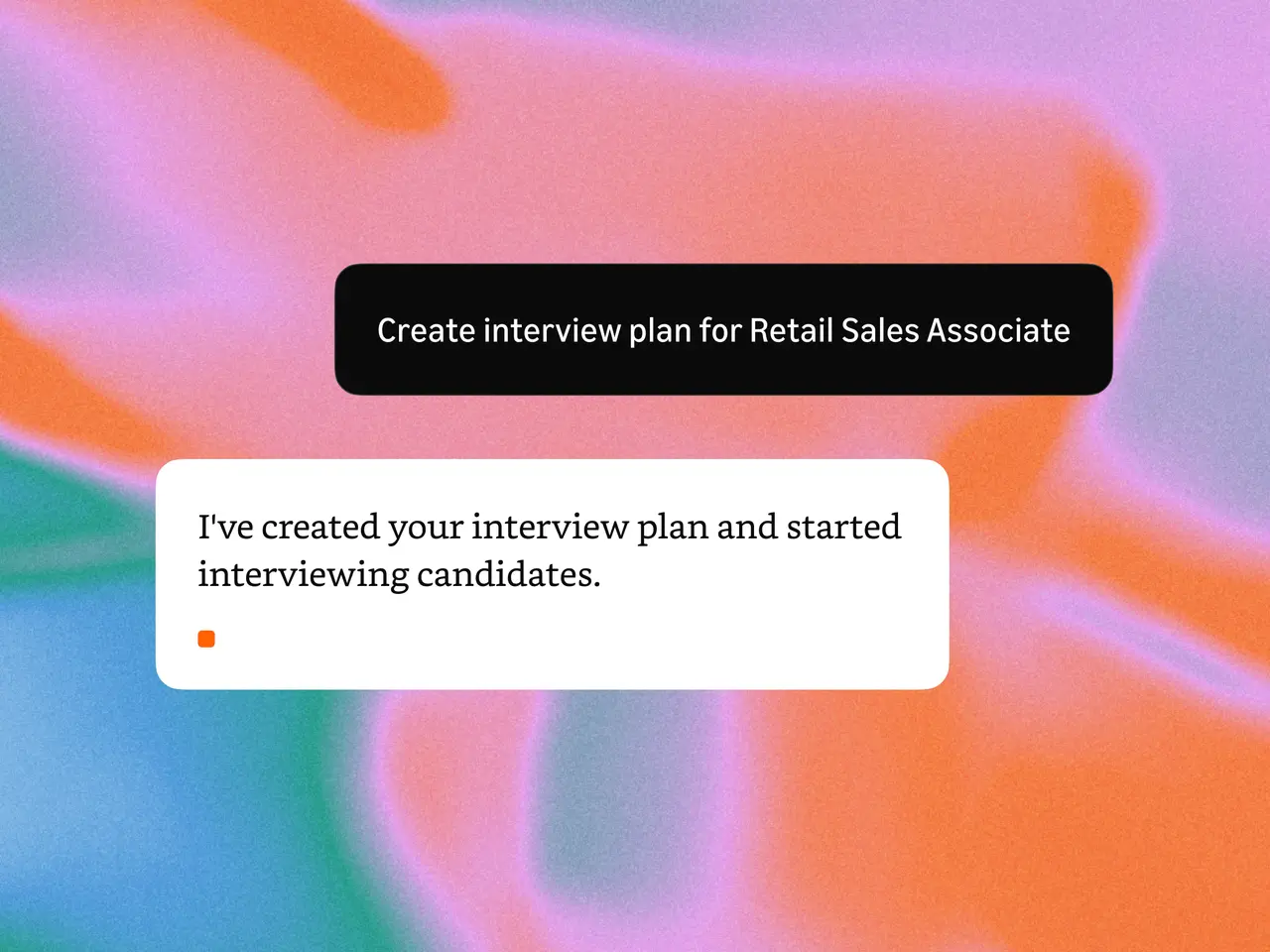
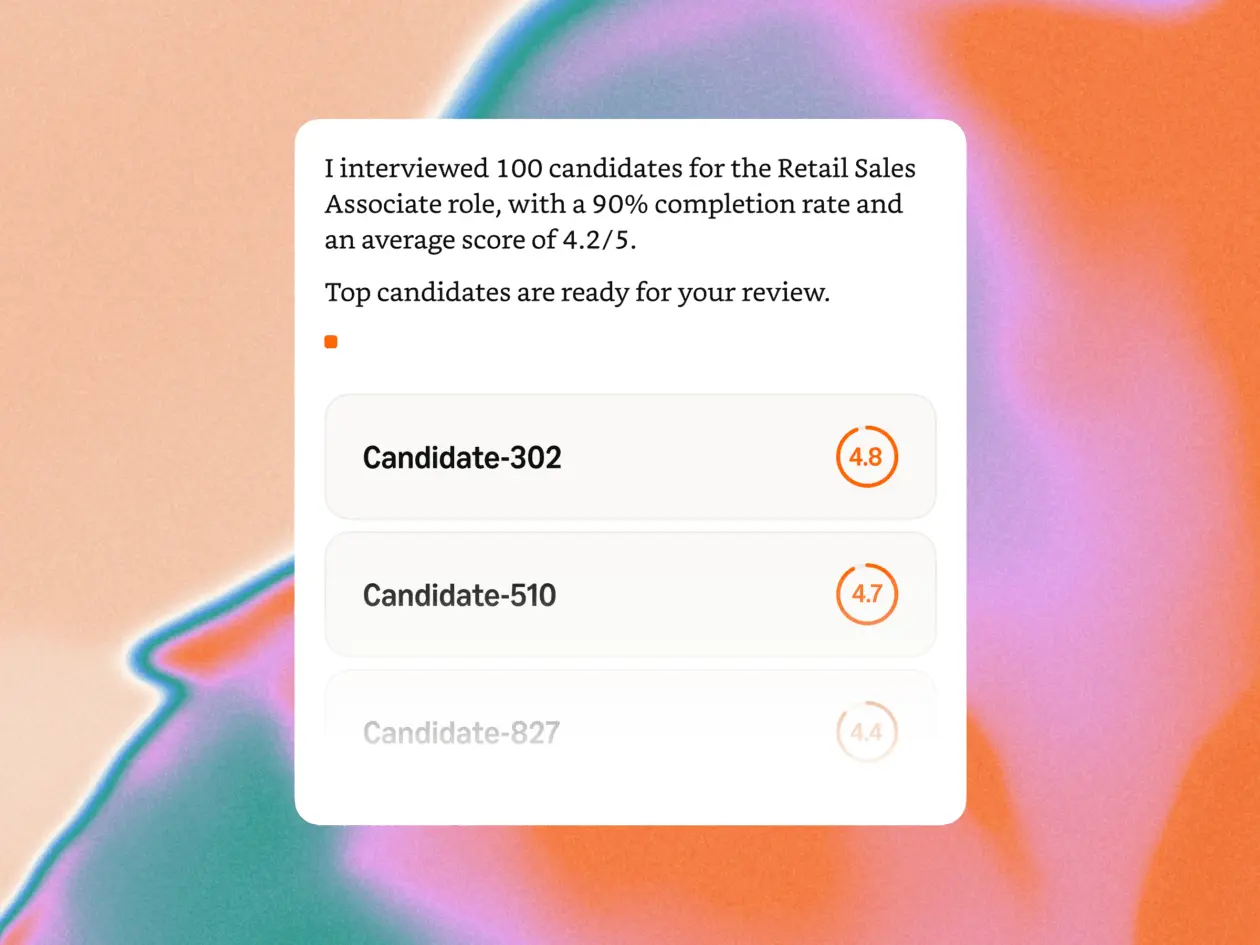
Amazon Connect's second act: From contact center to agentic AI suite It has been just under a decade since Amazon Web Services Inc. launched Amazon Connect, taking its own internal contact center-as-a-service solution and commercialized it. At the time, there were many doubts about whether it could succeed in a mature market with several established vendors. The company loaded Connect up with artificial intelligence features long before AI was cool, and a unique utilization-based pricing model to disrupt, and it rapidly gained traction. Today, it's the primary customer experience platform for many major brands, including Capital One, Hilton Hotels, State Farm and Air Canada. AWS is repositioning the Connect brand as a family of agentic AI solutions that integrate into business workflows, not just the contact center. The new portfolio comprises four products: Amazon Connect Decisions for supply chains, Amazon Connect Talent for high-volume hiring, Amazon Connect Customer for customer experience (the original Connect, rebranded), and Amazon Connect Health for healthcare delivery. As with Connect, these products are built on capabilities Amazon first used to run its own operations at massive scale, from optimizing a catalog of more than 400 million SKUs to hiring 250,000 seasonal workers in a single peak season. A key design tenet across the suite is what AWS calls "humorphism" - the idea that AI should behave like a teammate, not a traditional application with menus and forms. Instead of adding AI features to existing software, the Connect products are built from the ground up for agents that can reason, remember, and act while collaborating with humans. That shows up in patterns like agents proactively asking planners about upcoming promotions that could affect demand, or interviewing job candidates overnight and handing recruiters a curated brief in the morning. In our conversation, Pasquale DeMaio, vice president of Amazon Connect Customer and Talent, underscored that philosophy: The AI handles much of the screening and interviewing process, "but then moving forward after that, it hands off to a human recruiter," so people still make the final call. He was crystal clear on our call that the Amazon Connect portfolio isn't here to replace people but to let them work smarter and faster. Connect's evolution has been underway internally for some time. DeMaio told me it has "been over two years" since he last referred to Connect as a contact center, arguing that the market continued to pigeonhole the service as "just about pipes" even as Amazon shipped more AI-centric capabilities. Renaming the CX product Amazon Connect Customer is intended to make it unmistakable that "Connect is really an AI service." It's worth noting that this isn't about Amazon building speculative AI products and hoping customers will find a use for them. The company is productizing systems that already power core Amazon businesses: supply chain optimization powered by its SCOT foundation models, high-volume hiring tuned to its seasonal workforce, and healthcare workflows honed through One Medical and Amazon Pharmacy. As DeMaio put it, Amazon often "learns so much" and "does some amazing science" for internal tools, then spends time making them "enterprise-grade for a broader set of customers," which is the original Connect story. Amazon's history of taking internal platforms external is well-known -- AWS itself began as infrastructure for Amazon.com -- but the Connect family is a more targeted version of the same playbook. Internally, Amazon used its hiring science to quickly identify the right candidates, maintain a high performance bar and systematically reduce bias. The new Amazon Connect Talent essentially packages that operating model for customers. Because the tools are born in production, they start with clear outcome metrics: time-to-fill, offer-in-a-day targets, retention and evaluation consistency for Talent; forecast accuracy, exception resolution time and working capital impact for Decisions; and containment, handle time and NPS-style measures for Customer. DeMaio said the same science that lets Amazon "move very quick, but keep a very high bar for the hiring process" is what they're now offering to enterprises grappling with weeks-long hiring cycles. There's also a go-to-market benefit: each of these workloads can reach departments that historically would never buy a contact center, and then lead them back toward the broader Connect platform. DeMaio acknowledged this dynamic, telling me he believes Talent will be a "backdoor" into the customer experience side, even though it's intentionally sold as a standalone product that does not require adopting other parts of Connect. Among the new offerings, Amazon Connect Talent may be the clearest signal of how far Connect has moved from its contact center roots. Talent is aimed squarely at high-volume hiring, where organizations constantly trade off speed and quality. The workflow starts with an existing job description. AI agents generate a complete interview plan, including competencies, structured questions, and evaluation criteria, which recruiters can review and adjust. Candidates then interview on their own schedule, 24/7, via voice. The agent asks job-related questions, adapts to responses, and assembles a package of anonymized competency scores, transcripts, and notes for recruiters. DeMaio emphasized that this can compress hiring cycles from "a week or weeks" to "a day," driving "5x, 10x improvement" in time-to-offer for many high-volume roles. Equally important is the objectivity story. Candidate names and other identifying information are removed from recruiter dashboards, eliminating obvious bias vectors such as name, address, or accent. "You can never provably remove 100% of bias," DeMaio cautioned, but Amazon's goal is to give customers "good guardrails," visibility into where bias might be creeping in, and tools to "prevent it on the front end" while keeping hiring a "shared responsibility." For customers, the immediate benefit of Amazon Connect Talent is speed and scalability without surrendering control. Recruiters tune the experience up front, using prompts, job descriptions, or other data, and can adjust thresholds as they observe how competency scores translate into retention or performance for their specific roles. This also changes the recruiter's day. Instead of starting a week buried under unread applications, they begin with a curated pipeline, consistent scores, and full transcripts when detail is needed. DeMaio described it as a "fundamental sea shift" in which recruiters no longer need to be involved in every touchpoint, freeing them to focus on relationships rather than repetitive administrative work. Over time, customers can build a library of interview templates for different job types while letting the agentic layer handle execution. Even as Amazon expands into talent and healthcare, the rebranded Amazon Connect Customer remains the flagship for customer engagement. It now offers configuration tooling that enables business teams, not just developers, to stand up conversational experiences in weeks rather than months, covering identity verification, payments, recommendations and issue resolution. Enterprise customers like United Airlines have been able to go from concept to production in about three months, compared with six months or more with legacy stacks. Amazon Connect Decisions shows how Amazon is extending the same agentic pattern deeper into operations. Built on more than 25 specialized supply chain tools and SCOT-backed forecasting models, Decisions continuously generates and tunes demand forecasts, then triages thousands of alerts into a small set of prioritized exceptions, each with root-cause analysis and suggested resolutions. Customers such as Wells Vehicle Electronics and TVS Motors are already using it to shift from weeks-long planning cycles to adjustments measured in minutes. Taken together, the new Connect family is AWS' answer to a key enterprise question: how do you operationalize AI beyond pilots in the contact center? By anchoring each product in a real business function and Amazon's operational history, AWS is positioning Connect less as a channel-centric platform and more as a suite of AI teammates that sit wherever work actually happens. DeMaio told me this rebrand is about "resetting the idea of what Connect is," building on a decade-long brand that customers "trust and love," and using it to "bring AI to enable AI as teammates to help people be better, not to remove connection." If AWS executes, Connect may come to be known less as Amazon's contact center and more as Amazon's application layer for agentic AI across the enterprise.
[6]
Amazon Expands Connect Service to Cover Supply Chains and HR | PYMNTS.com
By completing this form, you agree to receive marketing communications from PYMNTS and to the sharing of your information with our sponsor, if applicable, in accordance with our Privacy Policy and Terms and Conditions. The new artificial intelligence (AI) tools, announced by the company's Amazon Web Services arm Tuesday (April 28), are aimed at logistics workers, human resources, customer service departments, along with a previously announced healthcare offering. "These new Connect solutions draw on our expertise incorporating agents throughout Amazon's operations," the company said, noting the breadth of its experience in supply chain, hiring, custom interactions and its health and pharmacy business. "We've built AI systems not just to think about these challenges but to solve them in the real world, at scale, every single day." A central component of this expansion is Amazon Connect Decisions, a tool designed to manage supply chain logistics and forecasting. The company notes that supply chain disruptions can take weeks to resolve due to fragmented data systems and manual spreadsheet coordination, while its solution uses more than 25 specialized supply chain tools and foundation models from Amazon's Supply Chain Optimization Technologies (SCOT) to automate these processes Amazon Connect Talent is modeled after the company's internal hiring processes, the release added, citing the company's annual recruitment of hundreds of thousands of workers for the holiday shopping season. Amazon Connect Customer -- previously known simply as Amazon Connect -- has been updated to include "new configuration capabilities that enable organizations to set up conversational AI in weeks, not months, and configure experiences without technical expertise." Amazon Connect Health was introduced in March to automate administrative tasks for healthcare providers. As covered here, this tool handles patient verification, scheduling, medical histories, documentation and coding. The new offerings come as AI agents play an increasingly prominent role in the workplace, as PYMNTS wrote earlier this week. Agentic AI "is starting to move from conference-room promise to operating-room reality in financial services, where banks, insurers and asset managers are testing software agents on the manual work that slows down decisions," the report said. The report cited recent findings from the likes of Snowflake, KPMG and The Economist based around the same theme: the first major gains are likely to be the result of assigning agents tightly controlled tasks like gathering data, checking documents, routing approvals and preparing recommendations. "The larger shift is not simply faster automation," PYMNTS wrote. "It is a new model for financial work, one in which firms use stronger data foundations, clearer governance and human oversight to turn fragmented processes into more continuous workflows."
Share
Copy Link
AWS announced an agentic AI suite built around Amazon Connect, introducing AI-powered business applications for supply chain management and recruitment. The move positions Amazon to compete directly with Microsoft Copilot, Salesforce, and Oracle in the $300 billion software-as-a-service market, leveraging operational expertise from managing 400 million products and hiring 250,000 seasonal workers.
AWS announced a significant expansion of Amazon Connect on Tuesday at an event in San Francisco, transforming its billion-dollar contact center platform into a family of AI-powered business applications
1
. The new agentic AI suite includes Amazon Connect Decisions for supply chain optimization, Amazon Connect Talent for high-volume hiring, Amazon Connect Health for healthcare delivery, and Amazon Connect Customer AI, a rebrand of the original service focused on customer experience1
. This strategic shift puts AWS into direct competition with Microsoft Copilot, Salesforce, Oracle, and other established players in the $300 billion enterprise software market2
.
Source: Bloomberg
Amazon Connect Decisions draws on more than 25 specialized supply chain models and tools, including Amazon's SCOT foundation models that power the company's own demand forecasting for over 400 million products
4
. The platform uses AI agents to generate and tune demand forecasts, triage supply chain alerts, perform root-cause analysis, and create scenario-planning spreadsheets3
. Amazon Connect Talent conducts autonomous voice-based job interviews around the clock, scoring candidates on skills rather than resumes, and is aimed at manufacturing, logistics workers, retail, and hospitality sectors3
. The system was built using hiring science developed when Amazon hired 250,000 seasonal workers last peak season4
.
Source: SiliconANGLE
AWS also unveiled a major update to Amazon Quick, introducing AI-powered productivity software that lives on users' computers and connects directly to their work
1
. The desktop app features native integrations with Google Workspace, Microsoft 365, Zoom, and Salesforce1
. Amazon Quick VP Jigar Thakkar explained that the tool includes proactive alerts and always-on context, studying user behavior to understand project deadlines, participants, and workflows1
. When asked about security implications of having a model watching and storing every user action, Thakkar pointed to AWS's 20-year-plus history of providing secure cloud services1
.Gartner estimates that companies spent roughly $300 billion on SaaS products in 2025, a category where Amazon barely registers
2
. AWS Chief Marketing Officer Julia White said the advent of AI models has given the company an opportunity to offer something new. "We don't have a big legacy of SaaS or, frankly, a franchise to protect," White stated. "It allows us to really embrace this agentic-first approach in a way that is going to be harder for other people"2
. The company is betting on AI agents replacing traditional per-seat software rather than simply augmenting it, but only in categories where it has operational expertise that incumbents lack3
.AWS has historically been reluctant to commit to building a broad suite of business applications, with previous attempts at generic productivity tools failing to gain traction
3
. Amazon wound down WorkDocs in April 2025, discontinued Chime in February 2026, and will end WorkMail support in March 20273
. The previous generation failed because they tried to compete with Microsoft on Microsoft's terms, while the new generation competes on Amazon's terms with specialized operational tools for frontline workers3
.Related Stories
The new products put AWS into deeper competition with cloud rivals like Microsoft and Oracle, as well as some of its biggest customers, including Salesforce
2
. Colleen Aubrey, AWS senior vice president of Applied AI Solutions, acknowledged that selling applications that compete with AWS customers is "a newer dynamic" for the cloud business4
. The market for AI agents running business processes is crowded, with Salesforce staking out its Agentforce vision, Google offering Gemini Enterprise for workflow automation, and Microsoft going all in with Agent 3651
.A key design principle across the suite is what AWS calls "humorphism"—the idea that AI agents should behave like teammates rather than traditional applications with menus and forms
5
. Pasquale DeMaio, vice president of Amazon Connect Customer and Talent, emphasized that the portfolio isn't designed to replace people but to let them work smarter and faster5
. Amazon Connect Health, which became generally available on March 5, delivers five AI agents for patient identity verification, appointment scheduling, medical history summaries, clinical notes, and medical coding, priced at $99 per user per month3
. Amazon Connect last year was on track to reap $1 billion in sales over the course of a year2
, providing a foundation for this broader enterprise software strategy targeting recruiters and supply chain planners rather than just contact center workers.
Source: GeekWire
Summarized by
Navi
[1]
[3]
[4]
02 Dec 2024•Technology

05 Mar 2026•Technology

05 Mar 2025•Technology