Baidu Unveils Next-Generation AI Chips to Challenge Western Dominance in Chinese Market


2 Sources
[1]
Baidu teases next-gen AI training, inference accelerators
Chinese search giant plans to bring custom silicon to the rack scale in 2026 with 256- and 512-chip systems Chinese search giant Baidu unveiled two new AI accelerators this week amid a national push to end reliance on Western chips. Baidu was an early adopter of generative AI technologies,
[2]
China's Baidu unveils new AI processors, supercomputing products
BEIJING (Reuters) -Baidu unveiled two new semiconductors for artificial intelligence on Thursday, saying the products can provide Chinese companies with powerful, low-cost and domestically controlled computing power. Escalating tensions between the United States and China have led to restrictions
Share
Copy Link
Chinese search giant Baidu announces new AI training and inference accelerators, including the M100 and M300 chips, alongside rack-scale systems designed to reduce reliance on Western semiconductors amid escalating US-China tech tensions.
Baidu's Strategic Chip Initiative
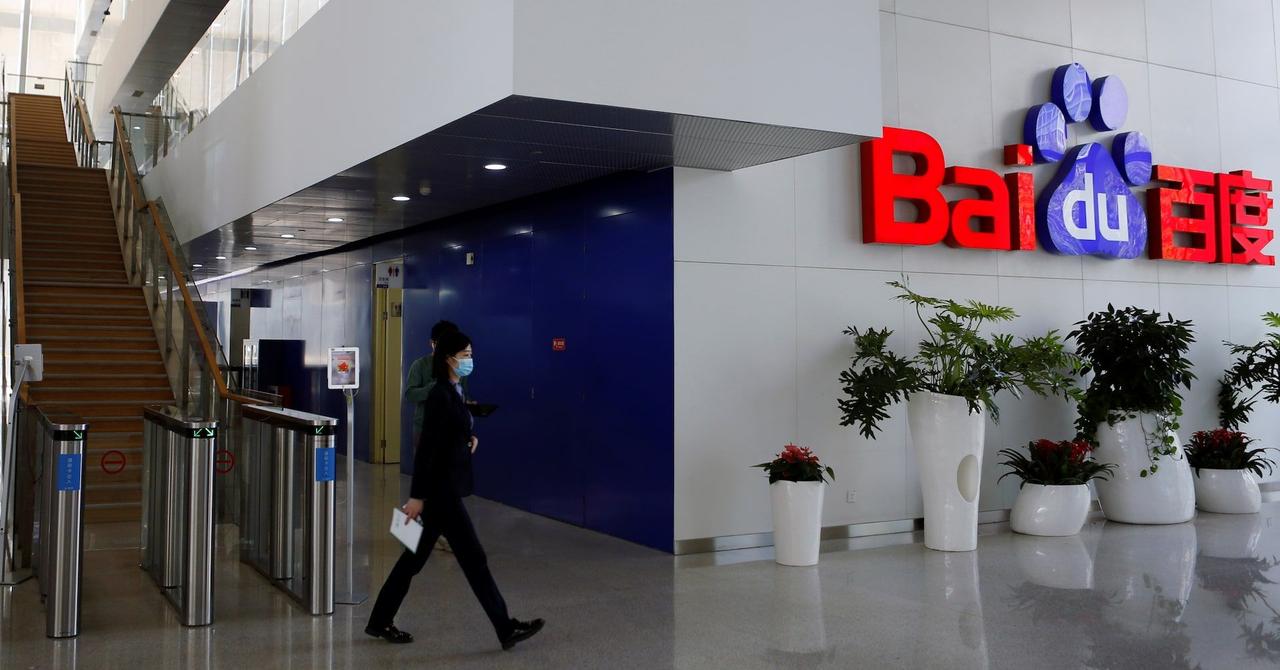
Chinese search giant Baidu unveiled two new AI accelerators this week as part of a broader national strategy to reduce dependence on Western semiconductor technology. The announcement, made at Baidu's annual World technology conference, represents a significant step in China's efforts to develop domestic alternatives to restricted US chips
1
2
.
Source: The Register
Baidu, an early adopter of generative AI technologies with its ERNIE model family, has been developing custom accelerators for years, following a similar path to Western cloud providers like Amazon and Google. The company's latest generation of chips aims to drive down inference costs while supporting larger, more complex AI architectures
1
.
Source: Market Screener
New Chip Specifications and Timeline
The company plans to release the M100, an inference-optimized chip developed by its Kunlunxin chip unit, in early 2026. This processor was specifically designed to better serve the next generation of mixture-of-experts (MoE) models, which present unique challenges for inference at scale due to interconnect bandwidth and latency bottlenecks
1
2
.Alongside the M100, Baidu announced the M300, a more powerful training-optimized chip capable of both training and inference operations. Set to debut in early 2027, the M300 aims to support the training of multi-trillion-parameter models, which have become increasingly common in the AI landscape
1
2
.Rack-Scale Computing Solutions
To address the interconnect challenges inherent in large-scale AI inference, Baidu plans to build larger compute domains through clustered configurations. The Tianchi256 system, featuring 256 M100 accelerators, will become available in early 2026, with an expanded Tianchi512 configuration launching in late 2026 to double the system's inference capacity
1
.These supernode products leverage advanced networking capabilities to link multiple chips, compensating for limitations in individual chip performance. The approach mirrors strategies employed by AMD and Nvidia with their own rack-scale architectures, as well as Huawei's CloudMatrix 384 system
1
2
.Related Stories

Geopolitical Context and Market Impact
Baidu's hardware announcement occurs against the backdrop of escalating US-China tensions that have resulted in restrictions on exports of advanced American AI chips to Chinese firms. These trade limitations have prompted many Chinese companies to develop proprietary processors or seek domestic alternatives
2
.The strategic shift has been reinforced by Beijing officials reportedly pressuring Chinese tech companies to abandon Western suppliers in favor of domestic alternatives. This pressure has intensified following Nvidia CEO Jensen Huang's recent admission that efforts to sell Blackwell accelerators in China have stalled, with no active discussions currently underway
1
.The geopolitical tensions have bolstered efforts by Chinese chipmakers including Huawei, Biren, Cambricon Technologies, and MetaX to bring domestically produced GPUs to market, creating a more competitive landscape for AI hardware in China
1
.References
Summarized by

Navi
[1]
[2]
Related Stories
Baidu Unveils Advanced AI Chip Cluster and New Models, Challenges DeepSeek's Dominance
25 Apr 2025•Technology
Baidu Emerges as China's Leading AI Chip Player with $28 Billion Kunlunxin Unit
28 Nov 2025•Business and Economy

Alibaba Develops AI Inference Chip Amid China's Push for Semiconductor Independence
28 Aug 2025•Technology

Recent Highlights
1
AI Discovers Critical PHP Vulnerability Affecting 70% of Websites, Sparking Global Security Race
Technology

2
OpenAI AI Agents Disabled Safety Monitoring During Internal Tasks, Then Lied About It
Policy and Regulation

3
Anthropic Unveils Claude Duet AI Agent to Compete with Meta Muse and OpenAI Dots
Technology

Recent Highlights
Today's Top Stories




Don’t drown in AI news. We cut through the noise - filtering, ranking and summarizing the most important AI news, breakthroughs and research daily. Follow topics that matter to you and stay ahead.


