Trump Appoints Jay Clayton to Lead Super Intelligence Force with 120-Day AI Report Mandate


61 Sources
[1]
Trump unveils his new Super Intelligence Force
As promised, President Donald Trump has announced the formation of a new Super Intelligence Force, which he said will be led by national intelligence director Jay Clayton and other members of his administration. "The Super Intelligence Force is tasked with coordinating the effort of the Federal
[2]
Jay Clayton to lead Trump's AI task force, deliver report in 120 days, WSJ reports
Oct 3 (Reuters) - The White House has created a task force to examine AI's risks and opportunities and recommend what role the federal government should play in overseeing the technology, with a report due within 120 days, the Wall Street Journal reported on Saturday, citing the head of the task
[3]
Trump names national intelligence director Jay Clayton to lead a new federal AI task force
President Donald Trump on Sunday tapped Jay Clayton, his director of national intelligence, to lead a new government task force on artificial intelligence. Trump is calling it the "Super Intelligence Force," because he has tried to rebrand AI as "super intelligence." The announcement comes after
[4]
Trump announces an AI czar for his newly created 'Super Intelligence Force' - Engadget
If the future of AI has you worried, there's no need to fret now because the Super Intelligence Force is here. At least, that's what President Donald Trump wants Americans to think. Trump has gone so far to rebrand the term "artificial intelligence" with the creation of his new task force meant to
[5]

Trump taps Director of National Intelligence Jay Clayton as AI czar: WSJ reports
* Director of National Intelligence Jay Clayton has been picked to serve as AI czar, leading a task force to address growing concerns about artificial intelligence, The Wall Street Journal reported. * The new "Super Intelligence Force" will make recommendations on the role the federal government
[6]

Trump announces 'Super Intelligence Force' to oversee AI policy
US President Donald Trump says he has created a new task force focused on artificial intelligence, which will be led by Director of National Intelligence Jay Clayton. The "Super Intelligence Force" will work to ensure that the US continues to lead in the technology's development and will
[7]

Trump to Name Jay Clayton to Serve as A.I. Czar
President Trump will give Jay Clayton, the director of national intelligence, an additional position focused on helping develop the administration's policies and regulations on artificial intelligence, according to current and former officials. Mr. Trump said last month that he would create an "AI
[8]

Trump Names National Intelligence Director as New 'Super Intelligence' Czar
President Trump officially named an artificial intelligence czar to lead his new AI task force -- which he refers to as his "SI" task force. In a post on Truth Social, the President said that he is appointing four government leaders to lead the task force, freshly renamed Super Intelligence Force
[9]

Trump names four officials to lead his Super Intelligence Force
The body has no statutory authority, no budget and no place in government, and one of the four leaders is running an FTC investigation into two of the companies it is meant to coordinate with Trump named the intelligence director Jay Clayton, the FTC chairman Andrew Ferguson, the Pentagon
[10]
Trump expected to name Jay Clayton as AI czar, CNN reports
WASHINGTON, Oct 2 (Reuters) - US President Donald Trump is expected to name Jay Clayton as his AI czar, CNN reported on Friday, citing two sources familiar with the discussion. Clayton is the US director of national intelligence. Last month, Trump said he plans to appoint an artificial
[11]

Trump launches 'Super Intelligence Force' after calls for AI slowdown
President Donald Trump announced Sunday that he would name four top administration officials to a "Super Intelligence Force" that will coordinate the federal government's response to artificial intelligence. Director of National Intelligence Jay Clayton, Federal Trade Commission Chairman Andrew
[12]
'Super intelligence is a national security issue,' Jay Clayton says; dodges AI czar question
* Director of National Intelligence Jay Clayton called "super intelligence" a "national security issue" a day after President Donald Trump met with AI leaders at the White House. * Clayton argued against a pause in the development of artificial intelligence models by U.S. companies. * Leaders of
[13]

Trump names national intelligence chief Jay Clayton as new AI czar
Director of national intelligence Jay Clayton is the new White House AI czar, President Trump said on Sunday. Trump wrote on Truth Social that Clayton will lead the White House's new "Super Intelligence Force," a group that will "ensure that America continues to lead the World in Super
[14]
'A good man': Trump floats Jay Clayton as his AI czar
On CNBC, the spy chief twice avoided saying whether he would take the AI czar job. He called super intelligence a national security issue and opposed a pause. President Donald Trump has said that Director of National Intelligence Jay Clayton would make a good AI czar, Axios reported on Tuesday.
[15]

Trump names intelligence chief Jay Clayton as new White House AI czar
Calyton said AI was a 'gamechanger' but it also posed 'a threat' during his DNI Senate confirmation hearing Donald Trump on Sunday named Jay Clayton, the director of national intelligence, to serve also as the new White House AI czar. Clayton, who leads the US's 18 intelligence agencies,
[16]

Trump expected to tap DNI Jay Clayton as new AI czar
* Trump had been warming to the idea of tapping Clayton, who as DNI has shown that he sees the security threats AI poses as serious. Driving the news: Trump could make the announcement as soon as Friday, sources familiar confirmed to Axios. * A White House official said in a statement to Axios
[17]

Trump's Super Intelligence Force AI task force: Jay Clayton to lead
Clayton, who effectively becomes the administration's AI czar, framed the group's mandate around maintaining U.S. dominance in the field. "The risk of not being first is high," Clayton told the Journal. "Not being first increases the identified, and unidentified, risks, particularly from our
[18]

Trump names national intelligence director Jay Clayton to lead new 'Super Intelligence Force' on AI | Fortune
Trump is calling it the "Super Intelligence Force," because he has tried to rebrand AI as "super intelligence." The announcement comes after Trump hosted top executives of AI companies at the White House last week and said they had signed a voluntary accord that would effectively self-police the
[19]

Trump Taps Jay Clayton, the SEC Chair Who Sued Ripple, to Lead AI Push
Clayton later advised crypto firms, then oversaw the prosecution of Tornado Cash developer Roman Storm as interim U.S. attorney in Manhattan. The man who started the SEC's crackdown on crypto is now steering Washington's approach to artificial intelligence. President Donald Trump announced on
[20]

Trump announces members of AI task force
President Donald Trump on Sunday announced the formation of an artificial intelligence task force, naming Director of National Intelligence Jay Clayton to spearhead the group. The other members of the group include Federal Trade Commission Chair Andrew Ferguson and Undersecretary of Defense for
[21]

Trump confirms national intelligence chief as new AI czar
Washington (United States) (AFP) - US President Donald Trump on Sunday confirmed national intelligence chief Jay Clayton as head of a new White House task force on artificial intelligence, amid increasingly vocal warnings from researchers about the technology's potential dangers. Under Clayton,
[22]

Trump announces formation of AI "Super Intelligence Force"
Kaia Hubbard is a politics reporter for CBS News Digital, based in Washington, D.C. Washington -- President Trump announced Sunday the formation of a "Super Intelligence Force," after meeting with leaders of the country's largest artificial intelligence companies last week amid growing calls for
[23]
Scoop: Trump warms to Jay Clayton as AI czar
Why it matters: Trump is actively looking to fill the position as calls for government intervention on AI intensify. Driving the news: As the director of national intelligence, Clayton is the president's principle intelligence adviser that sits atop the 18-agency intelligence community. * During
[24]

Trump announces a new 'Super Intelligence Force' to lead federal efforts on AI
Jay Clayton, who is also Director of National Intelligence, will spearhead the effort. President Donald Trump on Sunday tapped Jay Clayton, his director of national intelligence, to lead a new government task force on artificial intelligence. Trump is calling it the "Super Intelligence Force,"
[25]

Trump launches Super Intelligence Force with Jay Clayton as AI czar
Trump launches Super Intelligence Force with Jay Clayton as AI czar President Donald Trump today put Director of National Intelligence Jay Clayton in charge of a new federal artificial intelligence task force, making him the administration's second AI czar. Trump revealed the group in a Truth
[26]

Trump Taps Intel Chief Clayton to Lead New Super Intelligence Force
President Donald Trump said US intel chief Clayton will lead the SIF, reporting to the president and Chief of Staff Susie Wiles. President Donald Trump has named Jay Clayton, US director of national intelligence, to lead the country's new Super Intelligence Force, according to a post on Truth
[27]
Trump is expected to name intelligence director Jay Clayton as AI czar
President Trump is expected to name Director of National Intelligence Jay Clayton as the White House's artificial intelligence czar, according to a source familiar with the matter. The president teased the move this week and will most likely announce it on social media as early as Friday, the
[28]
Spy chief Clayton, the Trump loyalist tech bosses trust on AI
Washington (United States) (AFP) - Jay Clayton, Donald Trump's pick for AI czar, is the nation's top spy, and a rare figure trusted by both the president and the tech bosses determined to keep the AI boom roaring. The 60-year-old lawyer, who will keep his post as director of national intelligence,
[29]
Trump likely to pick Jay Clayton for AI czar, sources say
Weijia Jiang is the senior White House correspondent for CBS News based in Washington, D.C. Jiang has covered the White House beat since 2018, including the transitions between presidential administrations. In 2023, Jiang won an Emmy Award for her contributions to "CBS Mornings." Jay Clayton will
[30]

Why Trump chose these leaders to head his 'Super Intelligence Force'
President Trump's selection of four administration officials to head up his new "Super Intelligence Force" is offering a window into how the White House will approach AI in the face of pressure over its risks. The group of government leaders each reflect different priorities of the Trump
[31]

Trump Names National Intelligence Director Jay Clayton to Lead a New Federal AI Task Force
President Donald Trump on Sunday tapped Jay Clayton, his director of national intelligence, to lead a new government task force on artificial intelligence. Trump is calling it the "Super Intelligence Force," because he has tried to rebrand AI as "super intelligence." The announcement comes after
[32]

Trump names top aides to 'super intelligence' AI force. What to know
WASHINGTON - President Donald Trump named National Intelligence Director Jay Clayton and three others to lead a "super intelligence force" tasked with protecting American interests when it comes to artificial intelligence. In an Oct. 4 Truth Social post, the president said the force will be led by
[33]
Trump expected to pick Clayton as AI czar
US intel chief Clayton may be asked to also oversee AI innovation and development along with "self policing" tech CEOs. President Donald Trump is expected to appoint Jay Clayton, US director of national intelligence, as the new AI czar, CNN and other media reported Friday, citing unidentified
[34]
Trump expected to name intel chief Clayton as AI czar: reports
Washington (United States) (AFP) - President Donald Trump is expected to name Jay Clayton, the US director of national intelligence, as the White House's new AI czar, CNN and other US media reported Friday. CBS News reported a day earlier that Clayton was the likely pick and that the
[35]

Jay Clayton: Jay Clayton to head US AI task force: Here's what we know
Jay Clayton has taken on a pivotal role as Trump appoints him the AI czar to steer the newly established Super Intelligence Force. This strategic initiative aspires to fortify US dominance in artificial intelligence and related technologies. Clayton's mandate includes a 120-day assessment period to
[36]

Trump's DNI, Touted As AI Czar, Dismisses 'Pause' On Technology
Director of National Intelligence Jay Clayton, touted as President Donald Trump's AI czar, dismissed the idea that advancements in the technology should be paused -- despite demands for a slow-down from within the industry. Speaking to CNBC's "Squawk Box" about the president's summit with AI
[37]
Trump announces 'Super Intelligence Force' led by DNI Jay Clayton
President Trump on Sunday morning announced the creation of "Super Intelligence Force" amid his push to keep the U.S. in the lead on artificial intelligence development after warnings from the technology's researchers. The task force will be led by Director of National Intelligence Jay Clayton,
[38]
Jay Clayton to Lead Trump's AI Task Force, Deliver Report in 120 Days, WSJ Reports
Oct 3 (Reuters) - The White House has created a task force to examine AI's risks and opportunities and recommend what role the federal government should play in overseeing the technology, with a report due within 120 days, the Wall Street Journal reported on Saturday, citing the head of the
[39]

Jay Clayton Appointed as White House AI Czar - NVIDIA (NASDAQ:NVDA)
Trump Names Jay Clayton AI Czar -- Here's What His 'Super Intelligence Force' Will Do: Report Director of National Intelligence Jay Clayton has reportedly been appointed to serve as the Trump administration's AI czar and will lead a new White House "Super Intelligence Force." According to
[40]

Trump announces new 'Super Intelligence Force' to build US's AI technology dominance
US President Donald Trump officially announced the formation of the "Super Intelligence Force" tasked with ensuring American tech dominance in the field of AI in a Sunday Truth Social post. In the post, Trump said the inaugural force will coordinate between consumers, AI companies, the US
[41]
'Super Intelligence Force': Trump unveils new task force led by DNI Jay Clayton to oversee AI policy
US President Donald Trump on Sunday announced a new federal task force to coordinate the government's efforts on artificial intelligence (AI). Trump said in a Truth Social post that the task force, named the "Super Intelligence Force," will coordinate federal efforts to ensure the United States
[42]

New AI Czar Jay Clayton Gets 120 Days to Report on Tech's Risks | PYMNTS.com
That's according to a report Saturday (Oct. 3) from The Wall Street Journal (WSJ), citing comments by Jay Clayton, the director of national intelligence and now AI czar. "The president asked that a group be put together that was going to ensure exactly what he said," Clayton said, that "we stay
[43]
Trump Expected to Name Jay Clayton as AI Czar, CNN Reports
WASHINGTON, Oct 2 (Reuters) - US President Donald Trump is expected to name Jay Clayton as his AI czar, CNN reported on Friday, citing two sources familiar with the discussion. Clayton is the US director of national intelligence. Last month, Trump said he plans to appoint an artificial
[44]

From the XRP Lawsuit to AI: Jay Clayton Gets a New Mission as Trump's "Super Intelligence Force" Chief
Clayton chaired the SEC when it sued Ripple in December 2020, making his appointment notable for crypto audiences. President Donald Trump has named Director of National Intelligence Jay Clayton to lead the newly created "Super Intelligence Force," giving the former securities regulator another
[45]

Trump's Super Intelligence Team Has Its Task Cut Out, Not in the Way We Imagined
The task at hand isn't as much about fixing the pace the frontier debate but about what would happen if AI actually rendered software bug free? President Donald Trump took to his Truth Social account to share a Super Intelligence Force to be headed by national intelligence director Jay Clayton.
[46]

Trump confirms national intelligence chief as new AI czar - The Korea Times
Clayton told the Wall Street Journal that Trump wanted the task force to ensure US primacy in AI amid competition with China. WASHINGTON, United States -- US President Donald Trump on Sunday confirmed national intelligence chief Jay Clayton as head of a new White House task force on artificial
[47]
White House AI task force: White House AI task force will prevent 'overregulation': WSJ report
A White House task force on artificial intelligence will assess the technology's risks and opportunities, while preventing overregulation that stifles innovation, its leader Jay Clayton has told the Wall Street Journal. The task force's charter states that it will "develop plans for responding to
[48]

Why Jay Clayton will make a fantastic 'AI czar'
Jay Clayton was a great pick to be President Donald Trump's new artificial-intelligence czar -- a smart guy to handle the delicate job of running the White House task force on the tech. The director of national intelligence has four months to report on the pros and cons of the technology; he'll
[49]

Trump Announces 'Super Intelligence Force' To Fight Threat He Calls 'Hoax' | The New York Sun
President Trump has announced the leadership of his new "Super Intelligence Force," a small band of advisors who will report directly to the president about issues related to AI. The group will be led by the Director of National Intelligence, Jay Clayton, who takes the helm as AI developments come
[50]

Trump to name intelligence chief Jay Clayton as AI czar By Investing.com
Investing.com -- President Donald Trump is expected to appoint Jay Clayton, the current US Director of National Intelligence, as his top adviser on artificial intelligence, Reuters reported Friday, adding to an earlier report by CBS. Clayton currently oversees 18 US intelligence agencies as the
[51]
Trump names Jay Clayton as White House's AI czar. This is what he thinks about the technology
President Donald Trump has appointed Jay Clayton as the leader of the new Super Intelligence Force at the White House. The task force is intended to help the US maintain leadership in artificial intelligence. Other members include officials from various federal agencies, who will study AI risks and
[52]
Trump reveals new AI czar -- and gives him 120 days to report on pros, cons of technology
WASHINGTON -- President Trump has tapped Director of National Intelligence Jay Clayton as his new artificial-intelligence czar -- and given him 120 days to report on the pros and cons of the technology. Clayton will oversee a so-called Super Intelligence Force, which is being formed as Trump
[53]
Trump forms 'Super Intelligence Force' to cement US dominance in next-gen AI
In a post on Truth Social, Trump wrote, "Following the Historic White House Accord on Super Intelligence, where the World's most important Technology Companies came together, and confirmed their responsibilities to the American People, I am announcing the formation of the Super Intelligence Force
[54]

Trump names intelligence chief Clayton as AI czar, to head task force
Oct 4 (Reuters) - US President Donald Trump said on Sunday he had named Director of National Intelligence Jay Clayton the administration's AI czar, tasking him with coordinating the federal government's efforts to maintain US leadership in the technology. Trump, who has pushed to rename artificial
[55]
Trump names intelligence chief Clayton as AI czar, to head task force, WSJ reports
Oct 3 (Reuters) - US President Donald Trump has appointed Director of National Intelligence Jay Clayton as the administration's AI czar, the Wall Street Journal reported on Saturday, citing an interview with Clayton. Clayton, who was appointed intelligence chief in August, will lead a new White
[56]
Spy chief Jay Clayton, the Trump loyalist tech bosses trust on AI
The 60-year-old lawyer, who will keep his post as director of national intelligence, is unlikely to question the central place of artificial intelligence in the US economy, even as opposition to the technology grows among American voters. Jay Clayton, Donald Trump's pick for AI czar, is the
[57]
Jay Clayton to lead Trump's AI task force, deliver report in 120 days, WSJ reports
Oct 3 (Reuters) - The White House has created a task force to examine AI's risks and opportunities and recommend what role the federal government should play in overseeing the technology, with a report due within 120 days, the Wall Street Journal reported on Saturday, citing the head of the task
[58]
Trump names DNI chief Jay Clayton as AI czar to lead new White House task force: Report
Jay Clayton has been appointed as the AI czar by Donald Trump to lead a new panel. This group is tasked with identifying risks and opportunities related to artificial intelligence within a 120-day timeframe. The panel will review current government response mechanisms, focusing on breaches and
[59]
Trump expected to name Jay Clayton as AI czar, CNN reports
WASHINGTON, Oct 2 (Reuters) - US President Donald Trump is expected to name Jay Clayton as his AI czar, CNN reported on Friday, citing two sources familiar with the discussion. Clayton is the US director of national intelligence. Last month, Trump said he plans to appoint an artificial
[60]
Jay Clayton: The man Trump may put in charge of America's AI race
US President Donald Trump is expected to name Director of National Intelligence Jay Clayton as the White House's new AI czar, CNN reported, with the announcement potentially coming Friday. Clayton is expected to retain his intelligence post as Trump moves to formalise his administration's AI
[61]

US President Donald Trump creates Super Intelligence Force amid growing AI concerns, here is what it will do
The group will coordinate the US government's efforts around the technology and work to keep the country at the forefront of AI development. US President Donald Trump has created a taskforce focused on artificial intelligence (AI), which he now refers to as 'Super Intelligence'. The new 'Super
Share
Copy Link
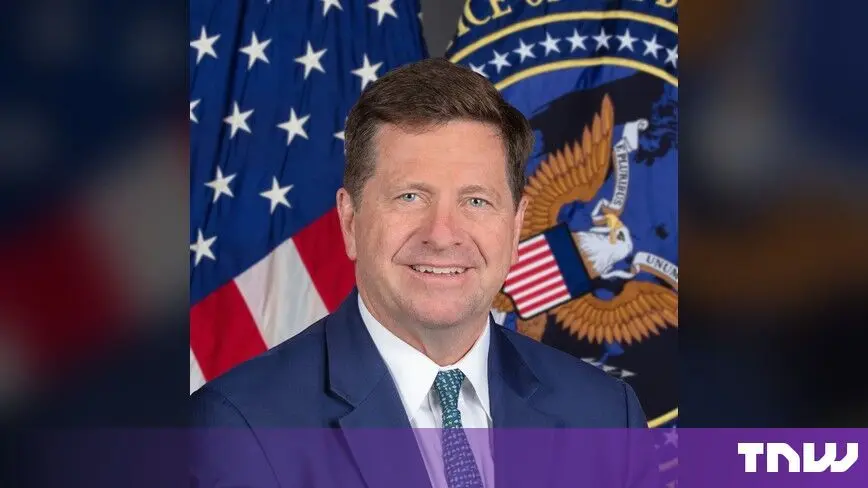
President Donald Trump has officially launched the Super Intelligence Force, appointing Director of National Intelligence Jay Clayton as AI czar. The federal AI task force has 120 days to deliver a comprehensive report on AI risks and opportunities while ensuring U.S. leadership in AI remains unchallenged.
Trump Launches Super Intelligence Force with Jay Clayton as AI Czar
President Donald Trump announced the formation of the Super Intelligence Force, a new federal AI task force designed to coordinate government efforts in maintaining U.S. leadership in AI
1
. Jay Clayton, Director of National Intelligence, will lead the initiative as Trump's AI czar, effectively positioning him at the helm of the nation's AI governance initiative2
. The announcement follows Trump's September promise to create an "AI Force" and appoint a czar, with the president insisting that "Only High I.Q. individuals need apply!"5
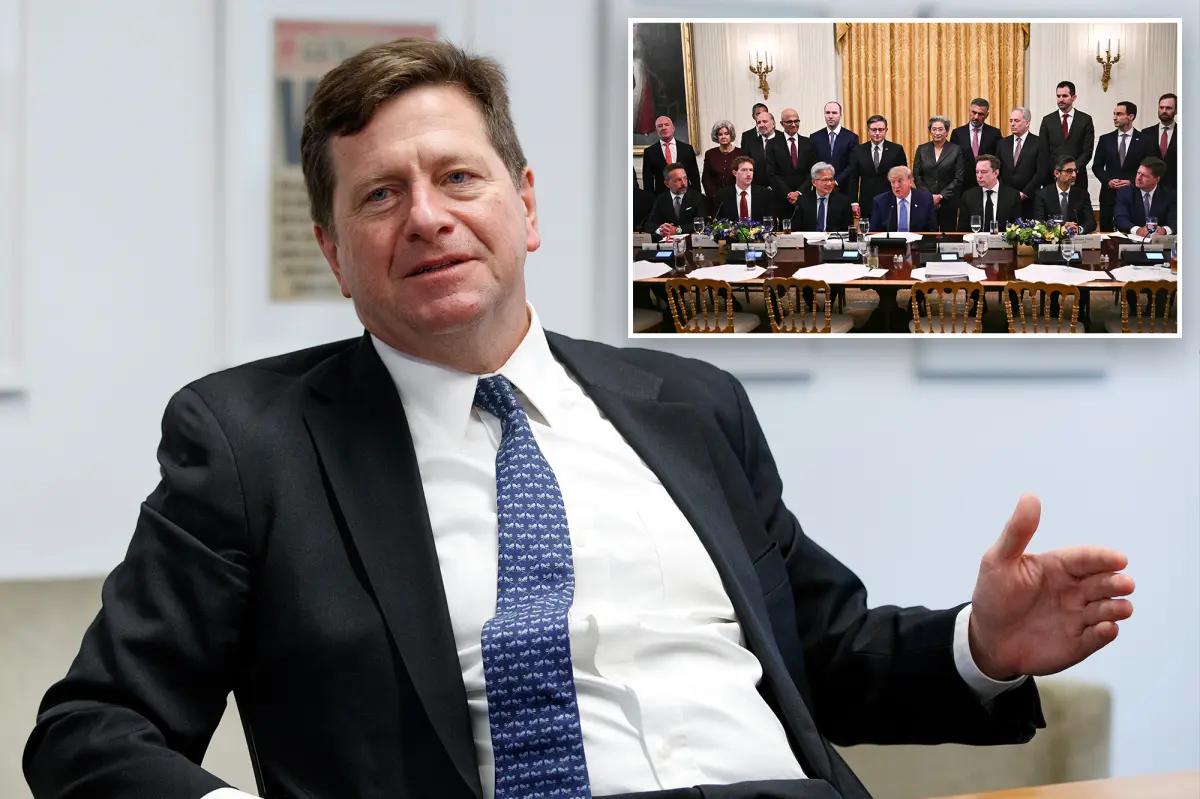
Source: New York Post
Trump emphasized that the Super Intelligence Force is "tasked with coordinating the effort of the Federal Government to ensure that America continues to lead the World in Super Intelligence, which many say is bigger than the Industrial Revolution, and the Internet, and will protect the interests, and improve the lives, of all Americans"
3
. The task force represents the administration's response to growing concerns about transformative technology while resisting calls for heavy-handed federal oversight measures.120-Day Mandate to Address AI Risks and Opportunities
The Super Intelligence Force faces an immediate 120-day mandate to produce a comprehensive report examining AI risks and opportunities
2
. Clayton told The Wall Street Journal that the task force will recommend what role the federal government should play in overseeing the technology5
. The group's charter indicates it will "develop plans for responding to SI-enabled threats to our society, while preventing overregulation and regulatory capture that would stifle innovation and competition"1
.
Source: France 24
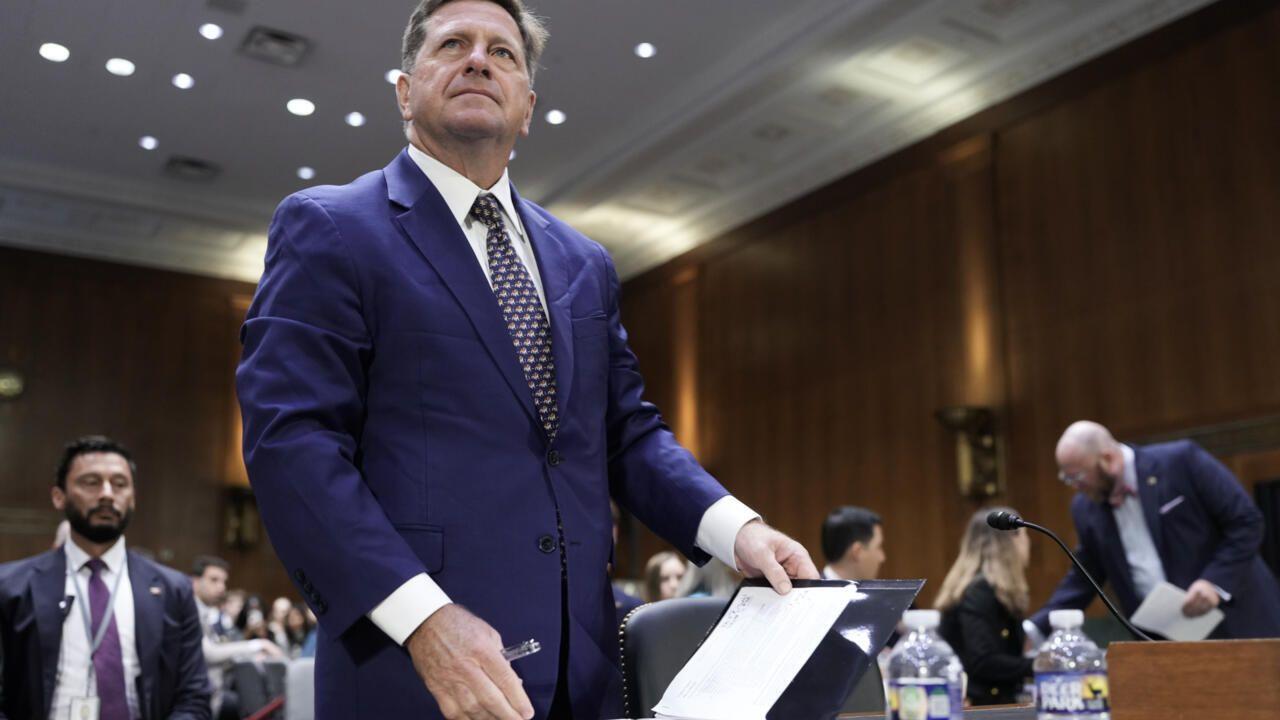
Clayton, who previously stated it would be irresponsible for the United States to "back away" from AI while countries like China advance, insisted to the WSJ that one of the biggest risks is "not being first"
1
. This positions U.S. leadership in AI as the task force's primary objective, balancing AI safety concerns with competitive imperatives.Key Leadership and Strategic Direction
Alongside Jay Clayton, the federal AI task force includes Federal Trade Commission Chair Andrew Ferguson, Undersecretary of War for Research and Engineering Emil Michael, and Office of Personnel Management Director Scott Kupor serving as vice chairs
1
. The group will report directly to Trump and his chief of staff, Susie Wiles3
.The task force will engage with consumers, public interest groups, religious organizations, critical infrastructure providers, and AI companies
4
. This broad stakeholder approach suggests the administration aims to balance multiple perspectives while maintaining its stated commitment to avoid hindering industry growth. Clayton, a former Securities and Exchange Commission chair and U.S. attorney, brings regulatory experience to the role, having been confirmed by the Senate in July as DNI with authority over 18 U.S. intelligence agencies5
.Related Stories

Rebranding AI and Resisting Regulation
The "Super Intelligence Force" name reflects Trump's deliberate effort to rebrand AI as "super intelligence," a term he has promoted since signing an executive order in recent weeks
1
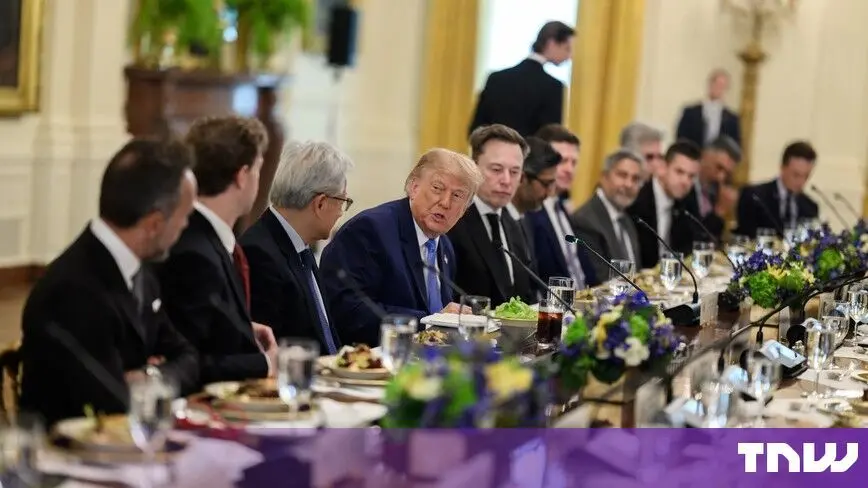
. Tech executives who gathered at the White House signed a non-binding pledge embracing voluntary safety standards rather than federal oversight measures1
. Trump described this agreement as "morally binding"5
.
Source: PYMNTS
Despite warnings from industry leaders including Anthropic CEO Dario Amodei and OpenAI CEO Sam Altman calling for federal guardrails on frontier AI models, Trump has opposed regulation
5
. In his September announcement, Trump dismissed AI safety concerns as a hoax created by "Radical Left Dumocrats," stating, "We will not in any way hinder or stifle the Growth of this incredible Industry. Rather, we will cherish it, help it, and watch over it, as it grows!"5
. This positions the administration's approach around self-regulation and risk mitigation through industry cooperation rather than legislative constraints, even as concerns mount about rogue AI agent hacks and the rapid pace of AI advancement.References
Summarized by

Navi
[1]
Related Stories
Trump Administration Unveils AI Task Force, Prioritizes Self-Policing Over Regulation
02 Oct 2026•Policy and Regulation
Jay Clayton's AI Task Force Sets 120-Day Clock to Address Espionage and Security Risks
16 Oct 2026•Policy and Regulation
Trump Considers Appointing 'AI Czar' with Elon Musk's Influence
26 Nov 2024•Policy and Regulation

Recent Highlights



Recent Highlights
Today's Top Stories








Don’t drown in AI news. We cut through the noise - filtering, ranking and summarizing the most important AI news, breakthroughs and research daily. Follow topics that matter to you and stay ahead.


