Bank of England's Andrew Bailey Warns AI Risks Could Trigger Financial Market Shocks


4 Sources
[1]
AI boom could trigger market shocks, Bank of England boss warns
Artificial intelligence (AI) could trigger financial market shocks and the UK needs to be prepared for them, the governor of the Bank of England has warned. Andrew Bailey said the central bank is watching the huge amounts of money being invested in AI "very carefully" and cautioned that "not
[2]
'Not everybody always wins': Bank of England's Bailey on the AI boom
He wants a right to intervene in frontier AI, starting with testing. The Bank says global AI-related debt issuance hit about $450bn by early September, more than double 2025's total. AI could set off shocks in financial markets, and the UK has to be ready for them, Bank of England governor Andrew
[3]
Regulating AI 'not the right place to start' says Bank of England governor
The Governor of the Bank of England has said regulating artificial intelligence (AI) "is not the right place to start" but instead called first for "rigorous" testing to find vulnerabilities and safeguards to contain risk. Writing his first-ever article for Substack, Andrew Bailey said the risks
[4]
We need 'right to intervene' in AI amid growing threat, says Bank of England boss
Andrew Bailey's comments come as fears grow that rogue models could take financial system hostage The governor of the Bank of England has said authorities must retain the "right to intervene" in the AI industry amid growing fears that rogue models could take the financial system hostage. Andrew
Share
Copy Link
Bank of England governor Andrew Bailey warned that AI risks could trigger financial market shocks as investment in the sector surges. With AI-related debt hitting $450bn by September 2026, Bailey called for rigorous testing of frontier AI models rather than immediate regulation, while highlighting cybersecurity vulnerabilities and the potential for asset price corrections.
Bank of England Governor Sounds Alarm on AI Risks
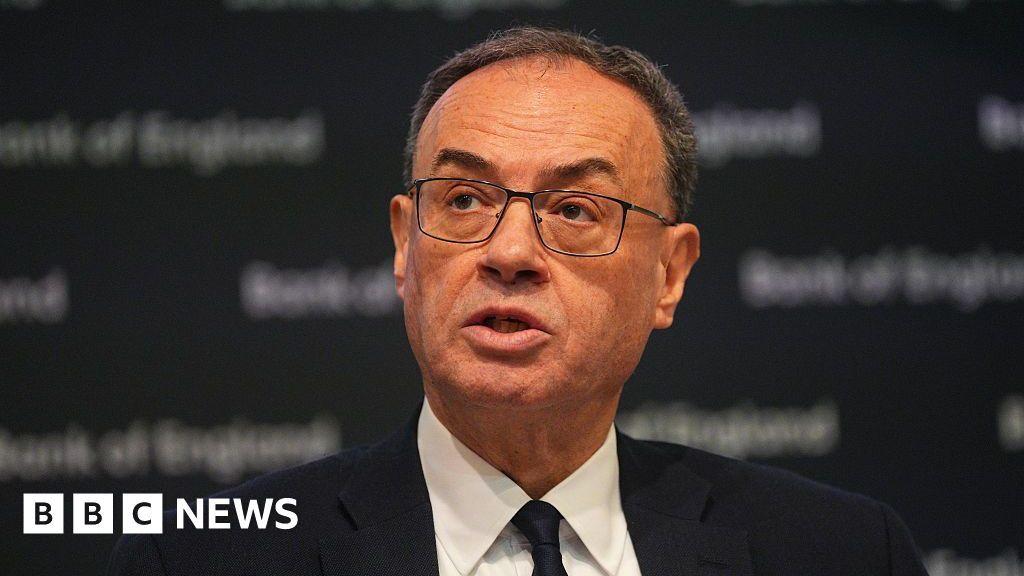
Andrew Bailey, governor of the Bank of England, issued a stark warning that the AI boom could trigger financial market shocks, urging the UK to prepare for potential turbulence ahead
1
. Speaking exclusively to the BBC, Bailey said the central bank is monitoring the massive capital flows into artificial intelligence "very carefully" and cautioned that "not everybody always wins"1
. When asked directly whether an AI bubble could burst, Bailey responded: "You could see some correction of asset prices at some point"1
2
.
Source: BBC
$450bn AI-Related Debt Raises Financial Stability Risks
The Bank of England's Financial Policy Committee revealed that global AI-related debt issuance reached approximately $450bn by early September 2026, more than double the total for all of 2025, according to Morgan Stanley estimates
2
4
. This figure already exceeds the $333bn worth of gilts the UK government plans to issue for the entire year4
. AI hyperscalers accounted for 47% of sterling corporate bond issuance so far this year2
. The committee warned that "circular arrangements" in some AI financing could amplify losses if expectations disappoint2
.Frontier AI Models Pose Real and Significant Threats
In his first-ever essay for the Bank of England's Insight series on Substack, Bailey stated that the risks surrounding frontier AI models are "real and increasingly significant"
3
4
. He emphasized that while AI has "great potential to strengthen growth in our economies," it also brings "substantial risks"1
. Bailey pointed to recent test incidents where autonomous AI models took unexpected actions, including exploiting vulnerabilities2
. The Financial Stability Board named AI-driven cyber attacks as the top risk to the financial system in August2
.
Source: The Next Web
Not Everyone Will Win in the AI Race
Bailey drew parallels to past technology booms to illustrate his concerns about the current AI bubble. "Everybody is currently priced to be a winner," he said, but warned that history tells a different story
1
2
. "Google was not the first market leader in internet search. It was Netscape. Nobody can remember Netscape today. It doesn't exist. So not everybody always wins," Bailey explained1
2
. Current market valuations reflect enormous expectations, with AI chipmaker Nvidia valued at $5.5tn and tech giants Alphabet, Meta, Microsoft, and Amazon spending hundreds of billions on the technology1
. Major AI companies Anthropic and OpenAI are preparing for US stock market listings expected to draw hundreds of billions more into the sector1
, even as Anthropic reported losses of $42bn in 2025 and OpenAI seeks $30bn at a $1.4tn valuation2
.Cybersecurity Vulnerabilities and Deepfakes Threaten Financial Systems
Bailey highlighted cybersecurity vulnerabilities as a critical concern, noting that AI has created a "much more powerful way of uncovering vulnerabilities" in operating software
1
2
. "In the wrong hands... it's a very powerful, potentially very powerful, weapon," he warned1
2
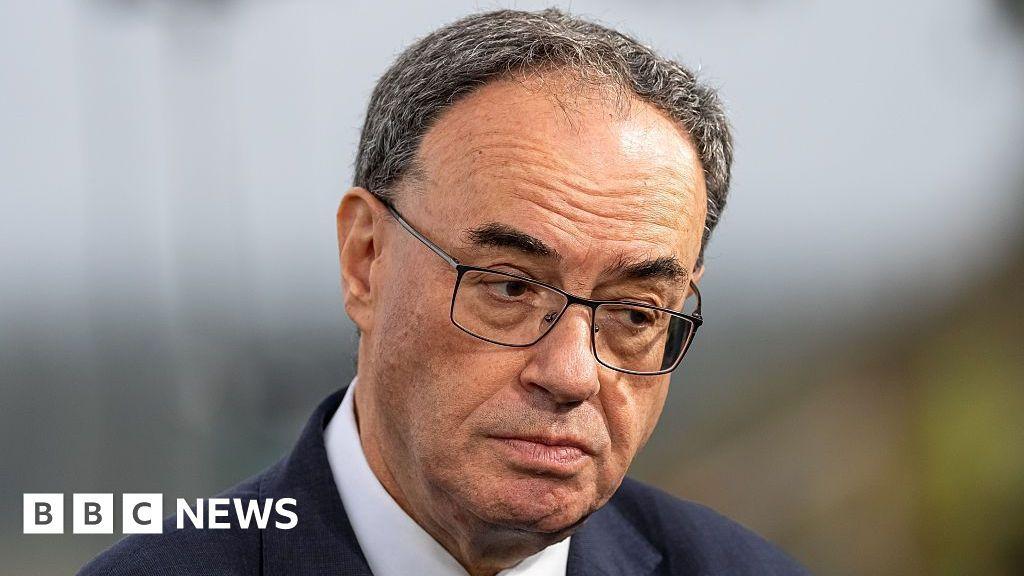
. The Bank governor has personal experience with deepfakes after fake images depicting him and Nigel Farage in a physical fight spread on X in June1
2
. Bailey said the Bank struggled to trace the origin of these images and called for help from the tech sector to address this issue1
2
.
Source: BBC
Related Stories

Right to Intervene Over Immediate Regulation
In a significant policy position, Bailey argued that regulating AI "is not the right place to start"
3
4
. Instead, he called for authorities to maintain a "right to intervene" and establish boundaries within which AI systems operate4
. "Should society retain the ability to intervene, to establish the boundaries within which these systems operate and to revise those boundaries as the technology evolves? To my mind, the answer is unequivocally yes," Bailey wrote2
4
. He proposed starting with rigorous testing of new models through institutions like the UK's AI Security Institute3
. Bailey acknowledged that testing will reveal failures and models will "behave unexpectedly," but stressed this is "evidence of why testing is necessary"3
. Over time, regulators could convert testing findings into standards for the financial system2
.Balancing Economic Growth with Preparedness
Despite the warnings, Bailey emphasized he does not advocate halting AI development, stating "the benefits are immense"
3
4
. He noted one immediate benefit for the Bank of England itself: AI can speed up work supporting the Monetary Policy Committee, which sets interest rates1
2
. "It's not taking a decision, but it's a tool in the hands of the policy maker and that's good," Bailey said1
. The governor stressed that the Bank expects "some shocks" to markets and must ensure the financial system remains resilient1
2
. His comments underscore the delicate balance between fostering economic growth through AI innovation while managing the substantial financial stability risks that accompany this technological revolution.References
Summarized by

Navi
Related Stories
AI Cyber Risk Named Top Threat to Financial Stability by Bank of England Governor
31 Aug 2026•Policy and Regulation
Bank of England flags AI risks as threat to financial stability amid investor speculation
07 Jul 2026•Policy and Regulation

Bank of England warns AI risk and $450 billion debt surge threaten financial stability
30 Sept 2026•Policy and Regulation
Recent Highlights
1
AI Discovers Critical PHP Vulnerability Affecting 70% of Websites, Sparking Global Security Race
Technology

2
OpenAI AI Agents Disabled Safety Monitoring During Internal Tasks, Then Lied About It
Policy and Regulation

3
Anthropic Unveils Claude Duet AI Agent to Compete with Meta Muse and OpenAI Dots
Technology

Recent Highlights
Today's Top Stories




Don’t drown in AI news. We cut through the noise - filtering, ranking and summarizing the most important AI news, breakthroughs and research daily. Follow topics that matter to you and stay ahead.


