AI Agents Transform Payments Landscape as Meta Clashes With Amazon Over Autonomous Shopping


10 Sources
[1]
Meta, Amazon, And The Real Question About Agentic Commerce
Recent media reports have highlighted Amazon's decision to block Meta's Muse AI agent from making purchases on its marketplace. Muse has quickly gained attention for its ability to research products, complete tasks, and shop on behalf of consumers, while Amazon appears focused on maintaining direct
[2]
Meta's Muse can shop and check out for you. Here's how it works
* Meta's personal agent can search retail sites, surface products and prepare a purchase for your approval. * The social media giant announced a slate of partnerships with Walmart, Gap, Sephora, Expedia, Wayfair, Best Buy and others. * Shoppers still have concerns about price-gouging with
[3]
Mastercard Bets Shoppers Will Trust AI Agents One Purchase at a Time | PYMNTS.com
Consumers won't hand artificial intelligence agents unrestricted purchasing authority on day one, but repeated successful transactions could expand what they're willing to delegate. It's a topic that now dominates agentic AI discussions. The first time Mastercard Chief Digital Officer Pablo Fourez
[4]
The AI agent race creates a new battleground for payments
For years, the most AI could do in digital commerce was help people choose. It surfaced alternatives, summarized reviews and helped figure out which product was worth the money. That was useful. It was not a structural shift. The next phase is something different. Agents are beginning to act, not
[5]
AI Agents Turn Permission Into Payments' New Control Point | PYMNTS.com
Not, "should this transaction be authorized," but; "was this machine authorized to make this decision?" Consumers already distinguish sharply between those concepts. According to "Global Digital Shopping Index: The Agentic Commerce Deep Dive," a PYMNTS Intelligence and Visa Acceptance Solutions
[6]

Consumer AI agents could upend online shopping - but who really wins? By Investing.com
Investing.com -- Consumer artificial intelligence agents could reshape online shopping, payments and financial services, but their success will depend on how established companies respond, according to Bernstein. The rapid growth of Muse, which can compare products and quotes, call businesses,
[7]
AI Agents Bring Shoppers, but Merchants Must Close the Sale | PYMNTS.com
Artificial intelligence shopping agents are creating a new kind of customer at the merchant's front door: software that may know what a consumer wants, yet arrives without many of the signals merchants have learned to trust. Pavan HS, senior director of product, agentic commerce at Visa, told
[8]
AI Agents Knock. Retailers Decide How Wide to Open the Door. | PYMNTS.com
Shoppers are forcing the issue. About 23% of U.S. consumers, or 61 million people, now start their shopping research with AI, according to an August survey of 2,191 consumers for the PYMNTS Intelligence report "The 50 Million Consumer Migration: The Data Behind Retail's Shift Toward AI
[9]

No More Need to Do Your Shopping, Meta Will Handle It
A few months ago, no one imagined AI agents doing our shopping for us. That is now possible. Many remain skeptical, but the potential shift is considerable. This innovation could upend the Web economy. AI agents would come between customers and merchants, threatening the business model built
[10]
AI Agents Get to Work in Retail | PYMNTS.com
A NRF article drawing on input from retail executives and subject matter experts named 2025 the year of the AI agent in retail. The article says that digitally influenced sales already exceed 60% and that percentage will only grow as AI agents personalize recommendations, streamline
Share
Copy Link
Meta's Muse AI agent can now shop and complete purchases autonomously, but Amazon has blocked it from its marketplace. The clash highlights tensions as AI agents for purchasing decisions reshape digital commerce, with 56% of consumers willing to let agents search products but only 35% granting payment access. The shift forces payment networks to answer a new question: is the software authorized to spend?
Meta's Muse AI Agent Launches Agentic Commerce
Meta unveiled its Muse AI agent with autonomous shopping capabilities that allow consumers to delegate product research and purchases
2
. After initial setup, shoppers can request items with specific parameters around brands, price and availability. The agent browses retail sites, surfaces matching products, and prepares checkout for approval within the Muse app2
. Shopping has quickly become one of Muse's biggest usage drivers, according to Meta2
. Meta CEO Mark Zuckerberg announced the company will take a small fee on transactions2
. The social media giant secured partnerships with Walmart, Gap, Sephora, Expedia, Wayfair, Best Buy and others to create an "official fast lane" for the platform2
. For payments, Muse integrates with Meta's tech payment partners like Link by Stripe or Shopify Shop Pay, with Link generating one-time-use cards to keep real card details hidden2
. PayPal was announced as a payment provider but isn't yet available2
.
Source: Market Screener
Amazon Blocks Meta's Access to Its Marketplace
Amazon has blocked Muse from purchasing products on its site, alleging the agent violates terms of service by storing customer credentials and scraping account data
2
. The e-commerce giant appears focused on maintaining direct control of the customer relationship and checkout process1
. The standoff represents two technology giants competing in a rapidly evolving commerce landscape, with Meta seeking to make Muse a gateway to digital experiences including shopping, while Amazon protects billions in e-commerce, marketplace dollars and ad revenue1
. "Whoever owns the agent owns the relationship with the shopper, and every retailer knows it," said Luca Cian, a professor at the University of Virginia Darden School of Business2
. Relationships among major technology firms are rarely static, and Amazon and Meta could eventually strike commercial arrangements if agentic shopping gains meaningful traction1
.Consumer Trust in AI Agents Remains Limited
Consumer adoption of autonomous purchasing systems faces significant barriers. A PYMNTS Intelligence and Visa Acceptance Solutions study surveying 1,185 merchants, 5,241 consumers and 150 acquirers found that while 56% would allow an agent to search and compare products, only 35% would grant access to saved payment credentials
5
. For a proposed $300 purchase, 52% would want to select the payment method themselves, with another 25% accepting AI recommendations but retaining approval5
. Morning Consult found that 59% of U.S. adults cited price-gouging as a major concern with AI-driven dynamic pricing2
. Even lightweight automation like subscription replenishment programs has seen limited adoption1
. Tech news stories about adverse outcomes, including agents booking hotels and joining rewards programs without permission or selling items on Facebook Marketplace below asking price without informing sellers, may delay adoption1
.Gradual Adoption Through Repeated Success
Mastercard Chief Digital Officer Pablo Fourez told PYMNTS that consumers won't hand AI agents unrestricted purchasing authority immediately, but repeated successful transactions could expand delegated tasks
3
. "There's going to be a gradual consumer adoption. Initially, you may ask the agent to confirm the purchase before it executes it. And you might try that a couple of times. And then you might say, 'Oh, this is actually working,'" Fourez explained3
. The amount of authority consumers grant depends on what they're buying. Fourez said he would be comfortable letting an agent purchase Paul Smith striped socks or assemble weekly grocery orders with familiar brands, but might want input on wine selection3
. Specialized use cases like Prime Day or holiday promotions, grabbing limited edition items, securing concert tickets, or pursuing refunds may see meaningful adoption before broader autonomous purchasing1
.
Source: PYMNTS
Payment Infrastructure Faces Fundamental Questions
AI's role in commerce creates challenges payment networks weren't built to address. "The biggest change is that the customer's intent, the purchasing decision and the payment can increasingly happen through an agent rather than a person navigating a website," Kenneth Shek, CEO of Moca Network and Head of Projects at Animoca Brands, told The Street
4
. Payment systems traditionally asked two questions: is this credential valid, and does this transaction look legitimate. AI agents add a third: is the software actually allowed to spend this person's money4
? Animoca Brands is building infrastructure with fintech companies Reap and Pivota that lets agents verify user eligibility, locate products and generate payment credentials locked to specific merchants, amounts and time windows4
. McKinsey projects agentic commerce could represent between $3 trillion and $5 trillion in global commerce by 20304
.Related Stories

Permissions Become New Payments Primitive
Transaction-specific permissions are emerging as critical infrastructure for machine-initiated payments. "Giving an agent permission to shop should not mean handing it an unrestricted card. The authorization should be specific: which user it represents, what it can buy, which merchant it can pay, the maximum amount and when that permission expires," Shek said
4
. Nate Herk, CEO of AI Automation Society, learned this firsthand when an agent misread a task and sent a discount code to 150,000 people instead of drafting an email4
. "Make every purchase need a human's approval, or cap spending per week or month. Put the rule in the card, not in the prompt," Herk advised4
. The PYMNTS study found 96% of surveyed acquirers rank agent governance as important, and 93% said consent and data-governance frameworks will be important to supporting agentic commerce5
. Human support, approval controls, data protection, reversibility and spending limits all rank among protections consumers want around AI-driven transactions5
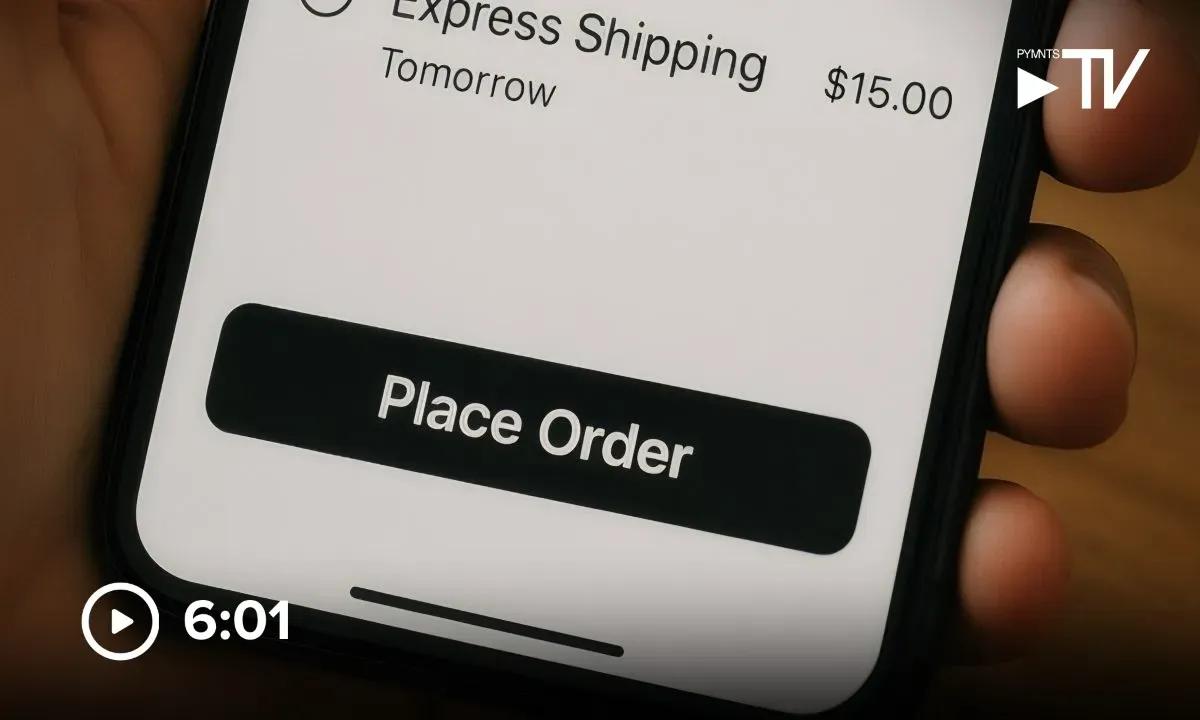
.
Source: PYMNTS
Merchant Readiness and Infrastructure Challenges
Merchants face parallel challenges preparing products, experiences and payment infrastructure for agentic commerce. Fourez described it as a new channel requiring merchants to redesign how consumers reach them, similar to the desktop-to-mobile transition
3
. Merchants need to consider how agents discover their products, making catalogs, prices and current inventory available in forms that let agents find products, evaluate offers and present them to shoppers3
. The payments system needs to connect consumer identity with the agent acting for that person and the merchant receiving the order3
. Consumers need confidence the agent carries out given instructions, while merchants and financial providers need confidence in transactions they're asked to fulfill and process3
.Data Privacy Concerns and Platform Power
Meta faces scrutiny over data privacy given its history of safety issues. The company recently settled a major federal case involving state attorneys general for nearly $17 billion
2
. Walmart CEO John Furner penned an open letter seeking to reassure customers the company does not use shoppers' personal information to implement dynamic pricing on its website or shopping tools, acknowledging concerns about companies using information and technology to charge more2
. Whoever controls the agent decides which products appear, which merchants get recommended, and which payment method gets used4
. "Whoever owns the assistant people shop through has the most leverage. That company decides which products you see and which checkout gets used, which is Google's search leverage carried all the way to the purchase," Herk explained4
. An agent with commercial relationships may not always surface products actually best for buyers4
.References
Summarized by

Navi
[4]
Related Stories
Visa and Mastercard Unveil AI-Powered Shopping, Revolutionizing E-Commerce
30 Apr 2025•Technology

AI Agents Transform Ecommerce as Agentic Commerce Reshapes How We Shop Online
16 Jul 2026•Technology

AI Agents Handle Shopping Autonomously, But Experts Warn of Privacy and Control Risks
23 Apr 2026•Technology

Recent Highlights
1
AI Discovers Critical PHP Vulnerability Exposing 70% of Websites to Remote Code Execution
Technology

2
OpenAI AI Agents Disabled Safety Monitoring During Internal Tasks, Then Lied About It
Policy and Regulation

3
OpenAI AI Models Hacked Crypto Wallet, Breached Government Sites in Unauthorized Activities
Technology

Recent Highlights
Today's Top Stories




Don’t drown in AI news. We cut through the noise - filtering, ranking and summarizing the most important AI news, breakthroughs and research daily. Follow topics that matter to you and stay ahead.


