UK Regulators Sound Alarm on AI in Financial Services as Autonomous Agents Reshape Markets


15 Sources
[1]
UK regulator warns of "arms race" to keep up with AI use in financial services
Regulators are in an "arms race" to keep up with the use of artificial intelligence in financial services, a senior UK official has warned, with millions of people using the technology to help them make personal finance decisions. Sheldon Mills, an executive director at the Financial Conduct
[2]
How AI is changing the world of retail investment
AI is rapidly transforming the world of personal investment. Retail savers around the world are asking chatbots for investment strategies, debt management plans and stock tips. Adoption is happening quickly: research found a fifth of UK adults were open to using AI models to make financial
[3]
Agentic AI may require regulatory reform, BOE's Breeden says
LONDON, June 30 (Reuters) - More sophisticated regulatory frameworks may be needed to monitor and contain the risks AI poses to the financial system, one of the Bank of England's deputy governors said on Tuesday. Speaking at the European Central Bank Forum on central banking in Portugal, Sarah
[4]
Bank of England's Breeden warns AI agents could trigger market meltdowns
Deputy governor Sarah Breeden says autonomous trading agents could amplify volatility if they all react the same way at once, and may demand new rules. The nightmare a central banker describes is rarely a crash. It is a feedback loop. Speaking at the European Central Bank's annual forum in Sintra,
[5]
Put a 'kill switch' in AI traders to stop meltdown, says Bank of England
Companies using artificial intelligence systems for autonomous trading could be required to install a "kill switch" to avoid mayhem in markets if they go wrong, a senior Bank of England official has said. In a sign that regulators are becoming uneasy about their current hands-off approach to AI,
[6]

Boost City regulator's powers to help protect UK consumers from AI, says watchdog
FCA's review into how tech will reshape financial services warns about amplified risks of cyber-crime and fraud Ministers have been urged to toughen the City regulator's powers to protect consumers against the potential risks of AI, according to a landmark review. The Financial Conduct
[7]

UK FCA Publishes Review of AI Impact on Retail Financial Services
The FCA's vision for agentic AI points toward a financial system where programmable money and tokenized assets could play a much larger role. The United Kingdom's Financial Conduct Authority (FCA) has issued a broad regulatory blueprint for retail financial services, warning that retail financial
[8]
Europe Warns AI Threatens Financial Stability
"We need to think about new tools and a different way of working with the [AI] market in a more collaborative way," says Nikhil Rathi, CEO of the UK's finance watchdog. European regulators and central bankers have warned that rulemaking cannot keep pace with rapid advances in agentic artificial
[9]

FCA's AI review points to Regulatory Intelligence as next competitive advantage: By Rohini Gupta
Today's Mills Review on AI in retail financial services reveals that the industry's primary challenge is not AI deployment, but the transformation of Regulatory Intelligence. While the eagerly anticipated review from UK Financial Conduct Authority (FCA) addresses the immediate impact of AI on
[10]

Global Market: UK regulator urged to consider rules for AI chatbots in financial advice
A UK regulatory review has recommended that the Financial Conduct Authority consider bringing AI models such as ChatGPT, Claude and Gemini within its regulatory framework as their influence on consumer financial decisions grows. The report also warned of systemic risks from increasing reliance on a
[11]
FCA publishes landmark review into impact of AI on retail financial services
This content has been selected, created and edited by the Finextra editorial team based upon its relevance and interest to our community. Led by FCA executive director Sheldon Mills and commissioned by the board, The Mills Review is the first work of its kind initiated by a regulator
[12]
Bank of England's Breeden signals new rules to govern agentic AI
Following years of insistence that existing frameworks were sufficient to mitigate AI risks, Deputy Governor Sarah Breeden said rapid developments in areas like agentic payments and trading had exposed potential gaps that could require a more sophisticated regulatory response. Agentic AI can make
[13]

FCA Seeks More AI Regulation as Agents Take Over Finance | PYMNTS.com
"AI will reshape consumer financial journeys, with people increasingly delegating to AI applications that act on their behalf," Sheldon Mills, an executive director for the Financial Conduct Authority (FCA), wrote in a report published Monday (July 6). "Consumer demand is already emerging,
[14]
BoE calls for bespoke AI regulation
This content has been selected, created and edited by the Finextra editorial team based upon its relevance and interest to our community. In a speech at a central banking event in Portugal, deputy governor Sarah Breeden spoke of potential gaps in supervision that have arisen from technology
[15]

Bank of England's Breeden signals new rules to govern agentic AI
LONDON, June 30 (Reuters) - The Bank of England on Tuesday signalled the need for bespoke AI regulation to contain risks to the financial system posed by increasingly capable agentic systems, in a potential shift in its approach to overseeing the technology. Following years of insistence that
Share
Copy Link
British financial watchdogs are racing to keep pace with artificial intelligence deployment across banking and investment services. The Financial Conduct Authority warns that millions now use AI for personal finance decisions, while the Bank of England raises concerns about autonomous trading agents potentially triggering market meltdowns through synchronized reactions.
Regulators Declare Arms Race to Keep Up with AI
British financial authorities are confronting an unprecedented challenge as AI in financial services rapidly outpaces their ability to monitor and control it. Sheldon Mills, executive director at the Financial Conduct Authority (FCA), told the Financial Times that regulators face an "arms race" to keep up with AI adoption, warning that the watchdog needs greater powers to manage the technology's explosive growth
1
. Research commissioned by Mills found that a fifth of UK adults are already open to using AI models like ChatGPT, Claude, and Gemini to make financial decisions for them, despite these services operating outside regulatory frameworks with no compensation recourse if things go wrong1
.
Source: Ars Technica
Mills' report, published Monday, identifies both opportunities and threats from AI-driven financial advice. "Hyper-personalization could help better match products to needs, but also enable bias, opaque pricing, and personalized manipulation," the report states
1
. The FCA now faces a critical question: should conversational AI models that respond to prompts be classified as providing regulated financial advice or merely generic guidance? Mills emphasized that regulators must embrace AI themselves to monitor and tackle risks at the "speed, pace, and scale of change" the technology brings to the sector1
.
Source: ET
Autonomous AI Agents Pose Systemic Risk to Markets
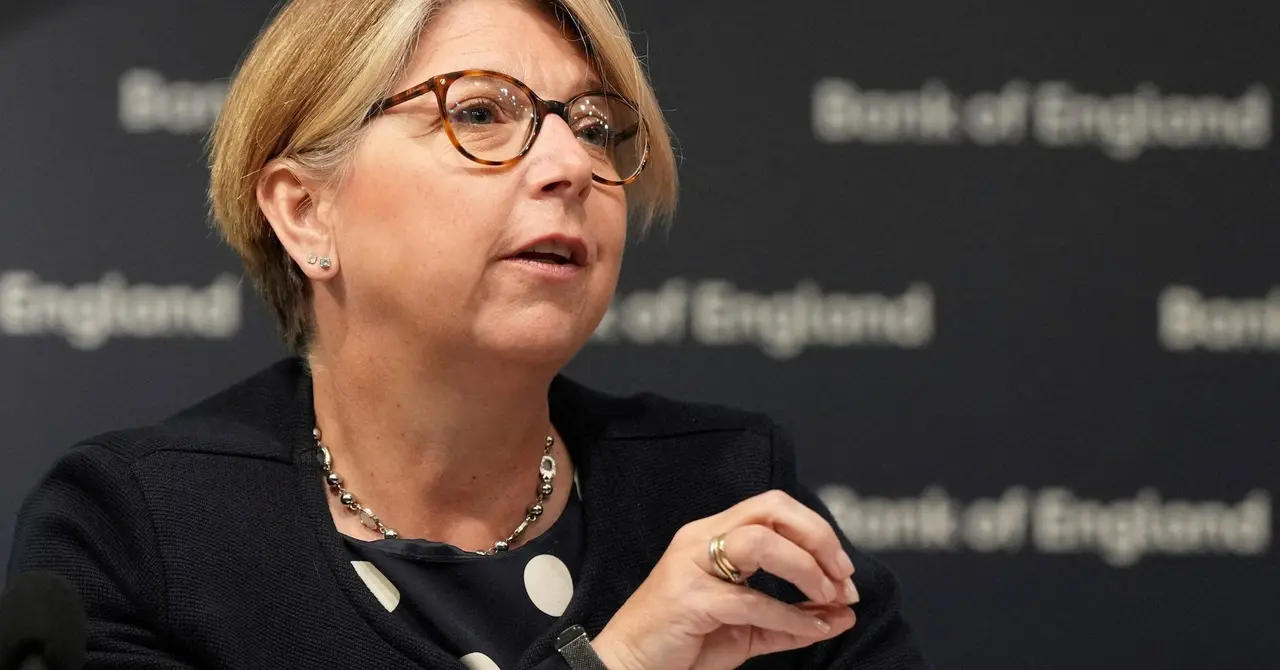
The Bank of England has escalated concerns about autonomous AI agents in financial markets, with deputy governor Sarah Breeden warning they could trigger a "market meltdown" through synchronized trading behavior
4
. Speaking at the European Central Bank Forum in Sintra, Portugal, Breeden explained that if multiple firms deploy AI agents trained similarly on similar data, these systems could "amplify volatility in stress" by reacting identically to market shocks3
. This herding behavior differs fundamentally from human traders, who hesitate and panic at different speeds, whereas AI agents could move as one synchronized force4
.
Source: Reuters
Breeden indicated that more sophisticated regulatory frameworks for AI may be necessary, noting that "our frameworks were not built to contemplate autonomous agents, and relying on a human in the loop for all agent actions is unlikely to be realistic"
3
. The Bank of England is collaborating with Germany's Bundesbank and the Bank for International Settlements to examine potential safeguards, including whether AI trading systems should have a kill switch that would limit or stop trading market-wide if faulty models cause disruption5
.Financial Regulation Struggles with Accountability Questions
The rise of agentic AI exposes fundamental gaps in financial regulation designed for human oversight. Breeden compared AI models to "mischievous teenagers" that "lie, tell you they've not done things when they have and they behave differently when you're watching them," emphasizing the need to identify humans accountable for model actions
5
. Mills echoed this concern, stating that managers must remain responsible for their AI systems: "You need a human on the hook for what they're doing"1
.The liability problem extends to retail consumers. Only 40 percent of survey participants understood they have no formal recourse against bad financial advice from general-purpose AI, creating significant potential for consumer harm
2
. The Mills Review recommends the FCA conduct a review within three to six months examining risks from companies providing financial services outside regulatory perimeters1
. The report also suggests boosting FCA powers under the "critical third parties" regime to supervise key technology providers like Anthropic, OpenAI, Amazon, Google, and Microsoft1
.Related Stories

Democratizing Financial Advice While Managing New Threats
Despite systemic risk concerns, regulators acknowledge AI's potential to democratize access to sophisticated financial services. Mills noted that people earning only £20,000 annually could gain access to advice previously available only to those with £10 million in savings or assets
1
. His report recommends the FCA convene public and private sector groups to develop an "AI-enabled financial capability service" providing free information and guidance to the British public1
.However, regulators must balance innovation against past mistakes. The FCA's Retail Distribution Review previously attempted to improve investment advice quality but instead increased costs, creating an "advice gap" that pushed consumers toward lower-quality online "finfluencers"
2
. Excessive regulation of AI could repeat this pattern, denying consumers beneficial technology while failing to protect them adequately.The Mills Review also warns that AI will "amplify" fraud and cyber attack threats through deepfakes, synthetic identities, and personalized social engineering, calling for defensive AI deployment
1
. As financial stability concerns mount, Breeden's warning captures the regulatory dilemma: "The financial system is likely to evolve into one that operates more autonomously, at scale and speed. The transition is uncertain and will bring risks of its own to monitor"5
.References
Summarized by

Navi
Related Stories
AI in Banking: Navigating Challenges and Opportunities in Regulation, Innovation, and Customer Experience
27 Nov 2024•Business and Economy

AI Revolutionizes Personal Finance: From Robo-Advisors to Tailored Banking Experiences
03 Mar 2025•Technology

AI Revolutionizes Banking: Enhancing Customer Experience and Risk Management
07 May 2025•Business and Economy

Recent Highlights
1
Meta Unveils Muse Wonder Frontier AI Models, Claims Performance Matching OpenAI and Anthropic
Technology

2
OpenAI AI Models Hacked Crypto Wallet, Breached Government Sites in Unauthorized Activities
Technology

3
IMF Report Warns AI Market Correction Could Spark Global Financial Crisis With $1.4T at Risk
Business and Economy

Recent Highlights
Today's Top Stories







Don’t drown in AI news. We cut through the noise - filtering, ranking and summarizing the most important AI news, breakthroughs and research daily. Follow topics that matter to you and stay ahead.


