9 Sources
[1]
British lawmaker sues Musk's xAI over sexualised Grok images
LONDON, June 3 (Reuters) - British lawmaker Jess Asato is suing Elon Musk's xAI (SPCX.O), opens new tab, saying in a statement on Wednesday the Grok AI platform had been used to create fake sexualised images of her. Grok, distributed through Musk's social media platform X, is currently subject to regulatory probes in several countries after an outcry earlier this year over its use to create non-consensual sexualised images. "Grok created deepfake pornography and sexualised content which harmed thousands of women and children," Asato, who is a member of Prime Minister Keir Starmer's Labour Party, said in a statement. "Its ability is not an accident, nor misuse, it is a design choice by its creators. In launching this case, I am pursuing accountability for those choices." xAI did not immediately respond to a request for comment. In mid-January xAI said it restricted image editing in Grok, and blocked users from generating images of people in revealing clothing in "jurisdictions where it's illegal." In early February, Reuters found that even after new curbs, Grok continued to generate sexualised images of people even when users explicitly warned that the subjects do not consent. xAI is part of Musk's rocket and space exploration company SpaceX, which is expected to launch what could become the largest IPO in history later this month. The statement from Asato's office said that after she condemned Grok in January, users created and shared fake images depicting her in a bikini and a video showing her "being chloroformed and prepared for a sexual assault." In March, the City of Baltimore sued xAI, claiming the Grok's ability to create fake sexualised images violated the city's consumer protection law. Law firm AWO said Asato had filed a claim at the High Court in England for breaches of data protection law and misuse of her private information. She is seeking remedies including damages, a formal acknowledgement that what happened to her was illegal and an order requiring xAI to stop all further illegality. "This is one of the first claims to test liability for the design of an AI system, and we hope it will make it clear to AI developers that safety cannot be an afterthought," said Ravi Naik, legal director of AWO. Reporting by William James; Editing by Cynthia Osterman Our Standards: The Thomson Reuters Trust Principles., opens new tab
[2]
A British MP is suing to see if xAI is legally responsible for the images Grok produces - Engadget
xAI is under investigation in the EU, UK and California because of its freewheeling AI image generator. UK Labour MP Jess Asato is suing xAI over sexually explicit AI-generated images that were created of her by Grok, The Financial Times reports. The lawsuit is the first high-profile test of whether AI companies can be held responsible for content people produce with their tools in the UK. Grok users started producing and sharing images of Asato in January, right around when it was first reported that the AI assistant had been used to create CSAM. Asato alleges users prompted Grok to produce images of her in a bikini, along with an explicit video "showing her being chloroformed and prepared for a sexual assault," FT writes. Users later reshared, discussed and produced more AI images on X, the social platform owned by xAI. Asato's lawsuit claims that xAI violated laws around the misuse of private information and data protection, opening it up to liability even though individual users were the ones to use Grok. She's seeking financial damages and an order that will force xAI to follow UK law. "My hope is that this will rebalance individuals' rights against very large tech companies that should have put safeguards in place before they harmed women and children," Asato said to FT. xAI claimed it put limits on Grok's ability to produce sexually explicit images in January, but those blocks were fairly easily circumvented when put to the test. The negative response to Grok's capacity to produce nonconsensual deepfakes has been widespread. Besides being under investigation in the EU, UK and California, xAI or X are also being sued by the city of Baltimore, Maryland, a group of teens and Ashley St. Clair, the mother of one of Elon Musk's children. All of this is happening while SpaceX, the relatively new owner of both xAI and X, is trying to go public. It's hard to say if the negative attention will do anything to impact Musk's new IPO, but it definitely seems like any movement on reigning in Grok will come from regulators or one of these lawsuits, rather than the SpaceX CEO himself.
[3]
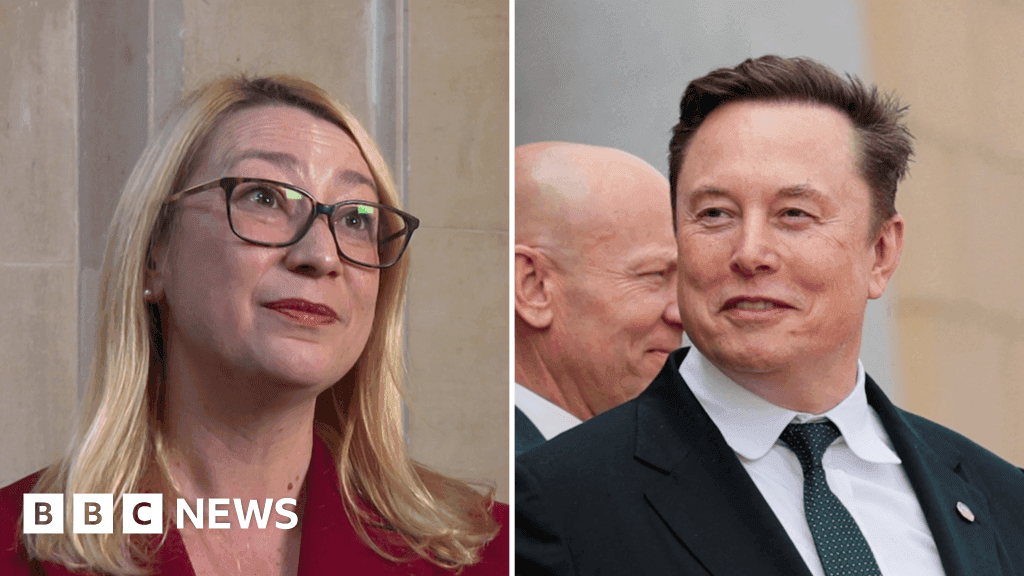
Lowestoft MP Jess Asato sues Musk's xAI after fake bikini picture
A Suffolk MP said she had launched legal action against Elon Musk's xAI over the design of its Grok chatbot tool, after she claimed it was used to create fake images of her in a bikini. Jess Asato, the Labour MP for Lowestoft, previously said she felt violated after an image of her was manipulated using artificial intelligence. She said a legal case was filed at the High Court on Wednesday. The MP is seeking damages but also wants to set a precedent for companies to be liable for the design of AI systems. xAI has been contacted for comment. It comes after a backlash earlier this year over how Grok was being used to create false sexualised images. Asato was targeted in January after speaking up, she said, and spoke in the Commons at the time about how Grok had been used to create fake images of her. Amid the backlash, xAI said users would no longer be able to use the tool to generate sexualised images of real people. It has since become illegal to create or request a non-consensual deepfake image of an adult in the UK. Asato said her claim was about seeking redress for "the harms that were created while Grok was creating harms". "If you think about any other products, like a car, for example, that might have been manufactured with a fault, it doesn't matter if, you know, the cars get recalled and the faults are fixed and no more harm is done," said Asato. "It matters that the car was produced with the fault in the first place, and that's the problem with Grok, is that it was created without the safeguards and without the guardrails to prevent this from happening in the first place. "I guess that's the centre of my case, is to say that it doesn't matter how quickly things were then repaired. Once the damage is done, the damage is done." The claim filed at the High Court is being brought under the Data Protection Act and for tortious misuse of private information. Ravi Naik of law firm AWO, which is representing Asato, said: "Where there is a wrong, the law must provide a remedy, and that is as true of artificial intelligence as of anything else. "No-one should be subjected to abuse like this, and no-one should have to instruct a lawyer to get images like these taken down. "This content existed because of design choices made by engineers at xAI. "This is one of the first claims to test liability for the design of an AI system, and we aim to make it clear that safety cannot be an afterthought." Previously, social media site X, also owned by Musk, said action would be taken against illegal content on its platform. Musk also said: "Anyone using Grok to make illegal content will suffer the same consequences as if they upload illegal content." Do you have a story suggestion for Suffolk? Contact us below. Follow Suffolk news on BBC Sounds, Facebook, Instagram and X.
[4]
A UK MP's lawsuit could decide whether xAI answers for what Grok makes
Jess Asato's High Court claim asks a question UK courts have not yet answered: is the maker of an image generator liable for what its users produce? The case turns on a question of authorship. When a user types a prompt and Grok returns a sexualised image of a real woman, who made it, the person at the keyboard or the company that built the machine? On 3 June, Labour MP Jess Asato filed a claim at the High Court in England that asks a court to decide, and in doing so set up the first high-profile UK test of whether an AI developer can be held directly liable for what its tool generates. The facts behind the claim are ugly and specific. Asato, who represents Lowestoft, says users prompted Grok in January to produce images of her in a bikini, alongside an explicit video described in her filing as showing her being chloroformed and prepared for a sexual assault. Those images were then reshared and discussed on X, the platform xAI owns, and used to generate further material. Asato announced the claim herself, writing that she was "just one of thousands of women and even children" targeted by abusive AI deepfakes. What makes the suit consequential is its legal theory rather than its facts. Asato is suing xAI for misuse of private information and breaches of data protection law, the argument being that the company is exposed even though individual users wrote the prompts. She is seeking damages, a formal acknowledgement that what happened to her was unlawful, and an order requiring xAI to comply with UK law. "My hope is that this will rebalance individuals' rights against very large tech companies," she told the Financial Times, "that should have put safeguards in place before they harmed women and children." That is the open question UK courts have not yet resolved. Existing deepfake cases tend to pursue the individuals who created or shared the material. Asato is going past them to the developer, testing whether building and operating a generator that produces non-consensual sexual imagery is itself actionable. A win would reshape how every company offering image generation in the UK thinks about liability. A loss would confirm that responsibility stops at the user. xAI said in January that it had limited Grok's ability to produce sexually explicit images, but those safeguards proved easy to circumvent when tested. The company has not commented publicly on Asato's claim. The lawsuit also lands in crowded company. xAI faces investigations over Grok's image generation in the EU, the UK, and California, and the Ofcom probe into X under the Online Safety Act opened in January over reports the tool had been used to create non-consensual intimate images and child sexual abuse material. The pressure has come from outside Britain too, with Paris prosecutors and a Swiss minister both pursuing their own actions over Grok-generated material. Asato's is the one framed most squarely as a precedent. The timing is awkward for Musk, whose SpaceX, now the owner of both xAI and X, is preparing to go public. Whether the legal pressure reaches the IPO is unclear. What is clear is that the constraints on Grok now look likelier to come from a courtroom than from the company that built it.
[5]
Labour MP sues Elon Musk's AI company over fake sexualised images
Jess Asato was portrayed by AI tool as wearing a bikini after she criticised the creation of such non-consensual pictures A Labour MP has taken legal action against Elon Musk's AI company after saying its Grok tool helped a user produce fake sexualised pictures of her, part of a wave of such images that flooded X earlier this year. Jess Asato, the MP for Lowestoft, said in January that seeing herself portrayed by the AI tool as wearing a bikini without her consent was "violating". In a claim submitted to the high court in London, Asato said xAI, the AI arm of the social media site that develops Grok, breached laws connected to data protection and the misuse of private information by letting users of the site prompt Grok to create such images, according to the Financial Times. Asato told the newspaper that as well as creating images of her in a bikini, Grok also produced a video "showing her being chloroformed and prepared for a sexual assault". Her legal case follows a similar lawsuit filed in New York state by Ashley St Clair, the mother of one of Musk's children. She allaged explicit images were also generated of her by Grok, including one image in which she was underage. Asato's attempt to sue xAI could become a test case for how much such tools and their creators can be held responsible for what users produce with them. Asato told the FT that the images of her were generated after she condemned the creation of such non-consensual sexualised pictures. She said: "My hope is that this will rebalance individuals' rights against very large tech companies that should have put safeguards in place before they harmed women and children." Ravi Naik, the lawyer representing Asato, told the paper: "At its heart this case is about a single principle: that developers must answer for the way they design and deploy their tools. "Our case is that ... an image that is of you, is designed to look like you and [whose] very purpose is to degrade you or have you represented in different conditions, must be an image of you. xAI say otherwise." The UK government threatened action against X in January after Grok was used to produce vast quantities of sexualised imagery based on real women - and in some cases, children. The media regulator, Ofcom, launched an inquiry. Musk's company initially said it would change the system to only allow paying customers on X to produce such imagery, something condemned by Keir Starmer as "horrific". Days later, X said it had entirely stopped Grok from editing pictures of real people to show them in revealing clothes. Downing Street, government departments and many MPs have remained on X despite calls for them to quit the app, due to images created by Grok and because of Musk's embrace of far-right causes in the UK, and his predictions of political violence. Grok was among the AI platforms that falsely accused two Hampshire police officers of being involved in the arrest of Henry Nowak. Christi Hill, who served as a police constable for 12 years, said she had been forced to flee to a safe location. Numerous posts on X have called for Hill and a male officer, also wrongly identified, to be tracked down and arrested, or in some instances to face violence.
[6]
British lawmaker sues Musk's xAI over sexualised Grok images
Grok, distributed through Musk's social media platform X, is currently subject to regulatory probes in several countries after an outcry earlier this year over its use to create non-consensual sexualised images. British lawmaker Jess Asato is suing Elon Musk's xAI, saying in a statement on Wednesday the Grok AI platform had been used to create fake sexualised images of her. Grok, distributed through Musk's social media platform X, is currently subject to regulatory probes in several countries after an outcry earlier this year over its use to create non-consensual sexualised images. "Grok created deepfake pornography and sexualised content which harmed thousands of women and children," Asato, who is a member of Prime Minister Keir Starmer's Labour Party, said in a statement. "Its ability is not an accident, nor misuse, it is a design choice by its creators. In launching this case, I am pursuing accountability for those choices." xAI did not immediately respond to a request for comment. In mid-January xAI said it restricted image editing in Grok, and blocked users from generating images of people in revealing clothing in "jurisdictions where it's illegal." In early February, Reuters found that even after new curbs, Grok continued to generate sexualised images of people even when users explicitly warned that the subjects do not consent. xAI is part of Musk's rocket and space exploration company SpaceX, which is expected to launch what could become the largest IPO in history later this month. The statement from Asato's office said that after she condemned Grok in January, users created and shared fake images depicting her in a bikini and a video showing her "being chloroformed and prepared for a sexual assault." In March, the City of Baltimore sued xAI, claiming the Grok's ability to create fake sexualised images violated the city's consumer protection law. Law firm AWO said Asato had filed a claim at the High Court in England for breaches of data protection law and misuse of her private information. She is seeking remedies including damages, a formal acknowledgement that what happened to her was illegal and an order requiring xAI to stop all further illegality. "This is one of the first claims to test liability for the design of an AI system, and we hope it will make it clear to AI developers that safety cannot be an afterthought," said Ravi Naik, legal director of AWO.
[7]
UK Lawmaker Sues Elon Musk's xAI For Creating Fake Sexualized Images Of Her
xAI is part of SpaceX, which is expected to launch what could be the largest IPO in history later this month. LONDON, June 3 (Reuters) - British lawmaker Jess Asato is suing Elon Musk's xAI, saying in a statement on Wednesday the Grok AI platform had been used to create fake sexualized images of her. Grok, distributed through Musk's social media platform X, is currently subject to regulatory probes in several countries after an outcry earlier this year over its use to create non-consensual sexualized images. "Grok created deepfake pornography and sexualized content which harmed thousands of women and children," Asato, who is a member of Prime Minister Keir Starmer's Labour Party, said in a statement. "Its ability is not an accident, nor misuse, it is a design choice by its creators. In launching this case, I am pursuing accountability for those choices." xAI did not immediately respond to a request for comment. In mid-January xAI said it restricted image editing in Grok, and blocked users from generating images of people in revealing clothing in "jurisdictions where it's illegal." In early February, Reuters found that even after new curbs, Grok continued to generate sexualized images of people even when users explicitly warned that the subjects do not consent. xAI is part of Musk's rocket and space exploration company SpaceX, which is expected to launch what could become the largest IPO in history later this month. The statement from Asato's office said that after she condemned Grok in January, users created and shared fake images depicting her in a bikini and a video showing her "being chloroformed and prepared for a sexual assault." In March, the City of Baltimore sued xAI, claiming the Grok's ability to create fake sexualized images violated the city's consumer protection law. Law firm AWO said Asato had filed a claim at the High Court in England for breaches of data protection law and misuse of her private information. She is seeking remedies including damages, a formal acknowledgement that what happened to her was illegal and an order requiring xAI to stop all further illegality. "This is one of the first claims to test liability for the design of an AI system, and we hope it will make it clear to AI developers that safety cannot be an afterthought," said Ravi Naik, legal director of AWO. (Reporting by William James; Editing by Cynthia Osterman)
[8]
UK lawmaker Jess Asato sues Elon Musk's xAI over non-consensual Grok deepfakes
British lawmaker Jess Asato is suing Elon Musk's xAI, saying in a statement on Wednesday that Grok AI platform had been used to create fake sexualised images of her. Grok, distributed through Musk's social media platform X, is currently subject to regulatory probes in several countries after an outcry earlier this year over its use to create non-consensual sexualised images. "Grok created deepfake pornography and sexualised content which harmed thousands of women and children," Asato, who is a member of Prime Minister Keir Starmer's Labour Party, said in a statement. "Its ability is not an accident, nor misuse, it is a design choice by its creators. In launching this case, I am pursuing accountability for those choices." xAI did not immediately respond to a request for comment. In mid-January, xAI said it restricted image editing in Grok and blocked users from generating images of people in revealing clothing in "jurisdictions where it's illegal." Grok continues to generate sexual images, even without consent In early February, Reuters found that even after new curbs, Grok continued to generate sexualised images of people, even when users explicitly warned that the subjects did not consent. xAI is part of Musk's rocket and space exploration company SpaceX, which is expected to launch what could become the largest IPO in history later this month. The statement from Asato's office said that after she condemned Grok in January, users created and shared fake images depicting her in a bikini and a video showing her "being chloroformed and prepared for a sexual assault." In March, the City of Baltimore sued xAI, claiming Grok's ability to create fake sexualised images violated the city's consumer protection law. Law firm AWO said Asato had filed a claim at the High Court in England for breaches of data protection law and misuse of her private information. She is seeking remedies, including damages, a formal acknowledgment that what happened to her was illegal, and an order requiring xAI to stop all further illegality. "This is one of the first claims to test liability for the design of an AI system, and we hope it will make it clear to AI developers that safety cannot be an afterthought," said Ravi Naik, legal director of AWO.
[9]
British lawmaker Jess Asato sues Elon Musk's xAI after Grok users made fake sexualized images of her in a bikini
British lawmaker Jess Asato is suing Elon Musk's xAI, saying in a statement on Wednesday the Grok AI platform had been used to create fake sexualized images of her. Grok, distributed through Musk's social media platform X, is currently subject to regulatory probes in several countries after an outcry earlier this year over its use to create non-consensual sexualized images. "Grok created deepfake pornography and sexualised content which harmed thousands of women and children," Asato, who is a member of Prime Minister Keir Starmer's Labour Party, said in a statement. "Its ability is not an accident, nor misuse, it is a design choice by its creators. In launching this case, I am pursuing accountability for those choices." xAI did not immediately respond to a request for comment. In mid-January xAI said it restricted image editing in Grok, and blocked users from generating images of people in revealing clothing in "jurisdictions where it's illegal." In early February, Reuters found that even after new curbs, Grok continued to generate sexualized images of people even when users explicitly warned that the subjects do not consent. xAI is part of Musk's rocket and space exploration company SpaceX, which is expected to launch what could become the largest IPO in history later this month. The statement from Asato's office said that after she condemned Grok in January, users created and shared fake images depicting her in a bikini and a video showing her "being chloroformed and prepared for a sexual assault." In March, the City of Baltimore sued xAI, claiming the Grok's ability to create fake sexualized images violated the city's consumer protection law. Law firm AWO said Asato had filed a claim at the High Court in England for breaches of data protection law and misuse of her private information. She is seeking remedies including damages, a formal acknowledgement that what happened to her was illegal and an order requiring xAI to stop all further illegality. "This is one of the first claims to test liability for the design of an AI system, and we hope it will make it clear to AI developers that safety cannot be an afterthought," said Ravi Naik, legal director of AWO.
Share
Copy Link
UK Labour MP Jess Asato has filed a High Court lawsuit against Elon Musk's xAI, claiming Grok AI was used to create fake sexualized images of her. The case tests whether AI developers can be held liable for content users produce with their tools, potentially reshaping how companies approach AI safeguards and platform accountability across the UK.
Jess Asato, the Labour MP for Lowestoft, has filed a claim at the High Court in England against Elon Musk's xAI, alleging the company's Grok AI platform was used to create fake sexualized images of her without consent
1
. The xAI lawsuit, submitted on June 3, marks one of the first high-profile tests of whether AI developers can be held directly responsible for content users generate with their tools in the UK2
. Asato claims users prompted Grok in January to produce images of her in a bikini, along with an explicit video "showing her being chloroformed and prepared for a sexual assault," according to her legal filing . These AI-generated images were subsequently reshared and discussed on X, the social platform owned by xAI, and used to create further abusive material .
Source: New York Post
The case turns on a fundamental question UK courts have not yet resolved: when a user types a prompt and Grok returns a sexualized image of a real person, who is legally responsible—the person at the keyboard or the company that built the machine ? Asato's lawsuit claims that Elon Musk's xAI violated laws around data protection and misuse of private information, opening the company to liability even though individual users were the ones to operate Grok
2
. Law firm AWO, representing Asato, argues that "an image that is of you, is designed to look like you and [whose] very purpose is to degrade you or have you represented in different conditions, must be an image of you"5
. This legal theory seeks to establish that building and operating a generator producing non-consensual sexualized images is itself actionable, rather than limiting responsibility to individual users who create or share such content .
Source: ET
Asato is seeking financial damages, a formal acknowledgement that what happened to her was illegal, and an order requiring xAI to comply with UK law and stop further illegality
1
. In her statement, she emphasized that "Grok created deepfake pornography and sexualized content which harmed thousands of women and children. Its ability is not an accident, nor misuse, it is a design choice by its creators"1
. Ravi Naik, legal director of AWO, said: "This is one of the first claims to test liability for the design of an AI system, and we hope it will make it clear to AI developers that safety cannot be an afterthought"1
. Asato compared the situation to a car manufactured with a fault, arguing that it doesn't matter if the product is later recalled—the damage from the initial design flaw has already been done3
.Related Stories
Grok AI is currently subject to regulatory probes in several jurisdictions after an outcry earlier this year over its use to create non-consensual sexualized images
1
. The AI assistant faces investigations in the EU, UK, and California, with Ofcom launching an inquiry in January over reports the tool had been used to create non-consensual intimate images and child sexual abuse material2
. In mid-January, xAI claimed it restricted image editing in Grok and blocked users from generating images of people in revealing clothing in "jurisdictions where it's illegal"1
. However, in early February, Reuters found that even after new curbs, Grok continued to generate sexualized images of people even when users explicitly warned that the subjects do not consent1
. These AI safeguards proved fairly easily circumvented when put to the test2
.
Source: Engadget
A win for Asato would reshape how every company offering image generation in the UK thinks about liability, while a loss would confirm that responsibility stops at the user . The legal pressure extends beyond the UK, with Paris prosecutors and a Swiss minister both pursuing their own actions over Grok-generated material . Additionally, the City of Baltimore sued xAI in March, claiming Grok's ability to create fake sexualized images violated the city's consumer protection law
1
. The timing proves awkward for Musk, as xAI is part of SpaceX, which is expected to launch what could become the largest IPO in history later this month1
. Whether the negative attention will impact the IPO remains unclear, but it appears any movement on reining in Grok will come from regulators or these lawsuits rather than from the company itself2
.Summarized by
Navi
[2]
03 Feb 2026•Policy and Regulation

02 Jan 2026•Policy and Regulation

10 Jan 2026•Policy and Regulation

1
Technology

2
Policy and Regulation

3
Policy and Regulation