Tesla's Self-Driving Ambitions Face Hurdles in China Amid US-China Trade Tensions and Rising Competition

3 Sources
[1]
Tesla's Self-Driving Ambitions In China At Risk As US-China Trade War Heats Up: 'It's A Bit Of A Quandary,' Says Elon Musk - Tesla (NASDAQ:TSLA), BYD (OTC:BYDDY)
Tesla Inc. TSLA is reportedly experiencing a delay in obtaining approval for its autonomous driving technology in China, a setback attributed to the ongoing trade war between the US and China. What Happened: Chinese authorities might leverage the approval of Tesla's self-driving license as a
[2]
Tesla Stock Is Tumbling Tuesday: What's Driving The Action? - Tesla (NASDAQ:TSLA)
Tesla Inc TSLA shares are trading lower Tuesday after competitor BYD Co BYDDF announced plans to include self-driving technology in its vehicles. What To Know: At a China-based launch event late Monday, BYD founder and chairman Wang Chuanfu announced that advanced smart driving will become a
[3]
BYD's 'God's Eye' And Huawei's Autonomous Driving Progress Spark Concerns For Tesla: Ross Gerber Points Out, 'All Use LIDAR' - Alphabet (NASDAQ:GOOGL), BYD (OTC:BYDDY)
Prominent Tesla Inc. TSLA investors are weighing in on the increasingly competitive autonomous driving landscape as Chinese rivals BYD Co. Ltd. BYDDY and Huawei advance their driver assistance systems, challenging Tesla's vision-only approach. What Happened: Ross Gerber, CEO of Gerber Kawasaki
Share
Copy Link
Tesla encounters delays in obtaining approval for its autonomous driving technology in China, while competitors like BYD and Huawei make significant advancements in the field. The situation highlights the complexities of international trade relations and the evolving landscape of self-driving technology.

Tesla's Self-Driving Ambitions Hit Roadblocks in China
Tesla's efforts to introduce its Full Self-Driving (FSD) technology in China have encountered significant obstacles, primarily due to the ongoing trade tensions between the United States and China. The company, which had anticipated receiving a license for extensive FSD Beta training in China by the second quarter of 2025, now faces an indefinite timeline for approval
1
.Elon Musk, Tesla's CEO, expressed concerns about the situation during a recent earnings call, highlighting the challenges posed by data transfer restrictions between the two nations. "They won't currently allow us to transfer training video outside of China. And then the U.S. government won't let us do training in China. It's a bit of a quandary," Musk stated
1
.Rising Competition in the Chinese Market
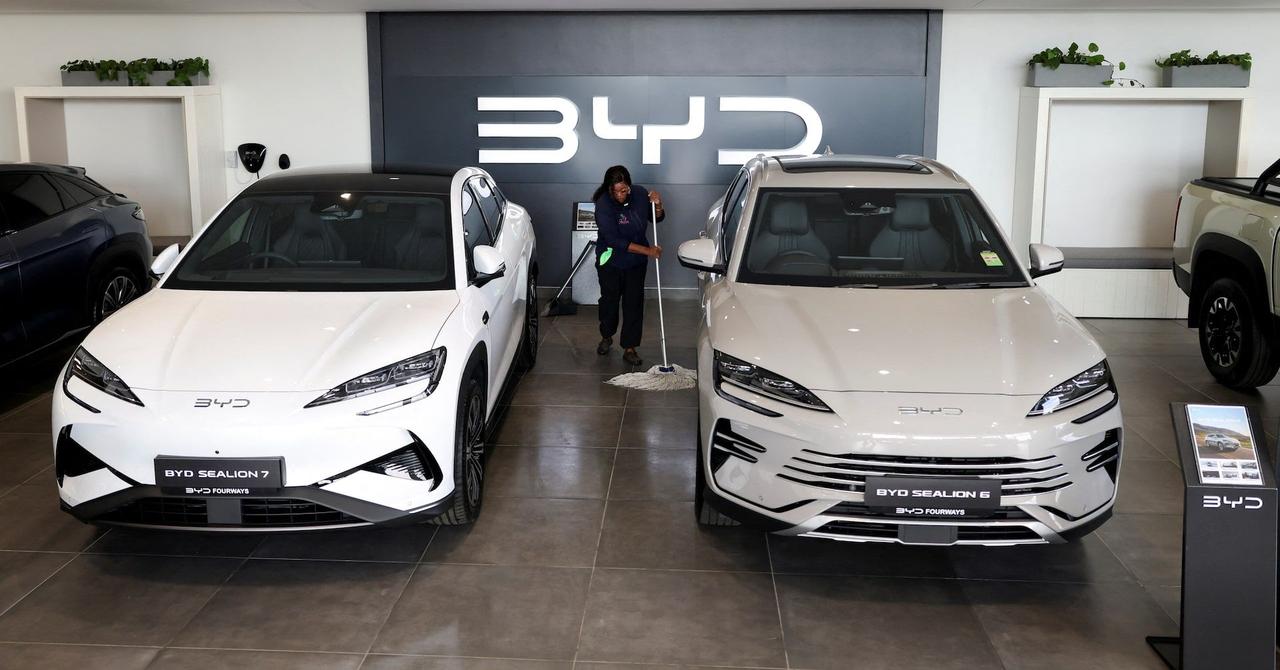
While Tesla grapples with regulatory hurdles, Chinese competitors are making significant strides in autonomous driving technology. BYD Co. Ltd., which recently overtook Tesla as the world's largest battery electric vehicle seller in the fourth quarter, has announced plans to include advanced smart driving as a standard feature across its entire vehicle lineup
2
.BYD's "DiPilot" assisted driving system will be available even in its low-cost vehicles, with the company becoming the first automaker in China to offer self-driving technology for a vehicle priced below 70,000 yuan ($9,555)
2
. This move has put pressure on Tesla's stock, which has seen a significant drop in recent weeks.Technological Approaches and Market Implications
A key point of differentiation in the autonomous driving race is the use of LiDAR technology. Ross Gerber, CEO of Gerber Kawasaki Wealth and Investment Management, noted that major competitors like BYD and Huawei "use LIDAR" technology, in contrast to Tesla's camera-only system
3
.This technological divide has sparked debates about the efficacy and safety of different approaches to autonomous driving. Tesla's vision-only system has faced scrutiny, particularly regarding its vulnerability to environmental factors such as dust, ash, and sun glare
3
.Related Stories


Future Outlook and Market Dynamics
Despite the challenges in China, Tesla remains optimistic about its global autonomous driving ambitions. The company announced that it's "still on track" to launch autonomous ride-hailing services in Austin in June, with plans to expand to "many cities" across the U.S. later this year
2
.However, some industry observers, like Gary Black of The Future Fund LLC, suggest that autonomous driving is becoming "commoditized" rather than a winner-take-all market. This perspective implies that multiple players could coexist in the autonomous driving space, potentially reshaping the competitive landscape in the coming years
3
.References
Summarized by

Navi
Related Stories
Recent Highlights



Recent Highlights
Today's Top Stories





Don’t drown in AI news. We cut through the noise - filtering, ranking and summarizing the most important AI news, breakthroughs and research daily. Follow topics that matter to you and stay ahead.


