8 Sources
[1]
Developers Are Still Waiting for Access to Meta's Latest AI Model
The company reportedly keeps delaying the release of developer tools for its latest AI model. In the race to release AI models and ways for developers to use them, Meta appears to be lagging behind. The Wall Street Journal reported Wednesday that, according to those familiar with Meta's plans, there's no firm release date for an API, which stands for application programming interface, for Muse Spark, an advanced AI large-language model the company released in April. At the time, the company said a release of the API, which allows developers to use the closed-source, proprietary model, was coming soon. That still hasn't happened two months later. A Meta spokesperson said in an email to CNET that the API should be available in June. "We know people want the API, and we're excited to get it into their hands," the representative said in the email. "We're already testing with some early partners and look forward to releasing it this month." The spokesperson also pointed to an April 10 X post where Meta's chief AI officer, Alexandr Wang, said, "the muse spark API will be coming soon!" Like other major tech companies that have shifted their attention to AI, including Microsoft, Google and Apple, Meta is under intense pressure to profit from the enormous investment it's made in AI as soon as possible. (Disclosure: Ziff Davis, CNET's parent company, in 2025 filed a lawsuit against OpenAI, alleging it infringed Ziff Davis copyrights in training and operating its AI systems.) Over the last year, Meta has cut jobs as it has increased AI spending. It focused on introducing AI features across its products, such as Instagram, WhatsApp and Facebook, and on launching AI-powered hardware like its Meta Glasses. Muse Spark is the first Meta AI model that isn't open source. It cannot be freely built upon or used as previous models were. It's unclear whether that change is contributing to delays. As the WSJ story points out, delays in AI technology releases can be attributed to many factors, but pushing back the timeline can create the perception that the company is struggling to make good on its AI plans.
[2]
Meta repeatedly pushes back new AI model release for developers, WSJ says
June 3 (Reuters) - Meta (META.O), opens new tab has repeatedly pushed back plans to release its new Muse Spark AI model API to developers, and as of Tuesday, had no scheduled launch date, the Wall Street Journal reported, citing people familiar with the matter. A Meta spokesperson told Reuters on Wednesday that the company is already testing the Application Programming Interface (API) with some early partners and is looking forward to releasing it this month. An API is a type of software interface that determines how two software systems will interact. "The muse spark API will be coming soon," Meta AI Chief Alexandr Wang announced in a post on X in April. Meta unveiled Muse Spark in April as the first model built to close the gap with rivals. Muse Spark is the first in a new series of models created by the company's Superintelligence Labs. Earlier on Wednesday, Meta unveiled an AI agent aimed at helping businesses carry out day-to-day operations, hinting at the company's ambitions to compete with rivals such as OpenAI, Anthropic and Alphabet's (GOOGL.O), opens new tab Google. Reporting by Ruchika Khanna in Bengaluru; additional reporting by Angela Christy, Editing by Sherry Jacob-Phillips Our Standards: The Thomson Reuters Trust Principles., opens new tab
[3]
Meta keeps delaying the Muse Spark API developers were promised
The model shipped in April. The interface developers need to build on it has slipped repeatedly, with no firm date until Meta said this week it would arrive this month. A model without an API is a demo, not a platform. That is the awkward position Meta's Muse Spark has occupied since April, when the company launched the model but held back the application programming interface that outside developers need to build on it. According to the Wall Street Journal, Meta has pushed that release back repeatedly and, as of Tuesday, had no scheduled launch date. The gap has now stretched close to two months. Meta's AI chief told developers to expect the API "soon" after the April launch, the Journal reported, citing people familiar with the matter, and soon has kept receding. For developers who have built product plans around Muse Spark, an indefinite delay on the interface is the part that actually bites; the model exists, but the means of using it at scale does not. Meta's account is more upbeat. A company spokesperson told Reuters on Wednesday that Meta is already testing the API with some early partners and expects to release it this month. The two versions are not flatly contradictory. A limited private test running while a public launch date stays unset is exactly the situation the Journal described, read from the optimistic end. The delay is small in isolation and larger in context. Meta has committed to AI spending on a scale that reshaped the company this spring, including thousands of job cuts justified explicitly as a shift of payroll into AI infrastructure. Against capital expenditure measured in the tens of billions, a developer interface that ships two months late is a rounding error. It is also exactly the kind of operational detail that signals whether the spending is translating into shippable product on schedule. Neither Meta nor the Journal's sources gave a reason for the slips. There was no stated performance problem, no safety hold, no named technical blocker, only a date that kept moving and a model sitting in front of developers who could not yet plug into it. The API is the difference between a model people can admire and one they can build businesses on. Without it, third-party developers cannot integrate Muse Spark into their own products, cannot call it programmatically at scale, and cannot ship anything that depends on it. A consumer can use the model where Meta surfaces it; a developer building a product around it is left waiting. For a company that has framed its AI strategy partly around becoming a platform others build on, that is the part of the delay with the longest reach. The slip also lands against a competitive backdrop in which rivals have shipped developer access alongside their models rather than after them. OpenAI, Anthropic, and Google have made programmatic access a launch-day feature, and the gap between a model announcement and a usable API has become a rough proxy for how production-ready an effort actually is. Meta launching the model first and the interface months later inverts the order its competitors have set. What comes next is narrow and testable. Meta has put itself on record that the API arrives this month. If it does, the episode is a footnote. If June ends the way April, and May did, with the model live and the interface still in private testing, the question stops being about a schedule and starts being about why one of the best-funded AI efforts in the industry cannot ship the front door to its own model.
[4]
Don't hold your breath for Meta's Muse Spark AI to pop up in your phone apps anytime soon
Meta's next big AI model may not be arriving as quickly as the company originally hoped. According to a report from The Wall Street Journal, Meta has repeatedly delayed the release of its upcoming flagship AI model, internally known as "Muse Spark," raising fresh questions about the company's AI ambitions and readiness. The delays reportedly stem from concerns around performance, reliability, and internal disagreements over whether the model is competitive enough against rapidly advancing rivals like OpenAI, Google, and Anthropic. Recommended Videos That matters because Meta has spent the last two years aggressively positioning itself as one of the biggest challengers in the generative AI race. The company has integrated AI assistants across Facebook, Instagram, WhatsApp, Messenger, and even hardware products like Ray-Ban smart glasses. But despite the aggressive rollout strategy, the next major leap in Meta's AI ecosystem now appears to be slipping further behind schedule. Meta's AI ambitions are running into reality According to the report, Meta originally intended Muse Spark to become a more advanced multimodal AI system capable of handling text, images, reasoning, and app-level interactions at a much higher level than current Meta AI offerings. The company reportedly planned to release the model to developers so third-party apps and services could build AI-powered tools around it. However, engineers and executives inside Meta are said to be increasingly concerned that the model still falls short of competitors in key areas, including reasoning quality and overall performance consistency. The delays highlight just how brutally competitive the AI race has become. Companies are no longer simply trying to build functional chatbots. They are competing to create AI systems capable of replacing search engines, powering operating systems, automating workflows, and eventually becoming full digital assistants. Meta CEO Mark Zuckerberg has repeatedly emphasized AI as one of the company's biggest long-term priorities. The company is reportedly spending tens of billions of dollars on AI infrastructure, chips, and data centers to support future models. Yet despite that spending, Meta still faces pressure from rivals moving extremely quickly. OpenAI continues expanding ChatGPT's ecosystem, Google is deeply integrating Gemini into Android and Workspace, while companies like Anthropic are increasingly attracting enterprise customers. Why this delay matters For everyday users, the delay means the more advanced AI experiences Meta hinted at may take longer to appear across apps like Instagram, WhatsApp, and Facebook. That is important because Meta's ecosystem gives it something few competitors have: billions of active users already using its platforms daily. A successful AI rollout inside Meta apps could dramatically reshape how people search, message, create content, shop, and interact online. At the same time, the delays reveal a broader reality about the AI industry right now. Building large AI models is one thing. Shipping reliable, scalable, consumer-ready AI products is something entirely different. What happens next Meta has not officially confirmed a release timeline for Muse Spark, and the company may continue refining the model before exposing it to external developers. The bigger risk for Meta is timing. AI competition is moving at an unusually aggressive pace, and every delay gives rivals more time to strengthen their ecosystems and user habits. For now, Meta's AI ambitions remain massive. But if the reports are accurate, the company is learning the same lesson facing much of the tech industry right now: in AI, hype moves faster than products.
[5]
Alexandr Wang Defends Meta's Muse Spark as an 'Appetizer' in Bigger A.I. Push
Meta's A.I. chief says Muse Spark is not frontier-level yet, but future releases will be stronger as the company scales up. In early April, Meta unveiled Muse Spark, its latest A.I. model and the first major release under Chief A.I. Officer Alexandr Wang. The model performs competitively on some benchmarks but still trails OpenAI's GPT-5.4 Pro and Google's Gemini 3.1 Pro, fueling questions about whether Meta has fallen behind. Wang believes that framing misses the point. Sign Up For Our Daily Newsletter Sign Up Thank you for signing up! By clicking submit, you agree to our <a href="http://observermedia.com/terms">terms of service</a> and acknowledge we may use your information to send you emails, product samples, and promotions on this website and other properties. You can opt out anytime. See all of our newsletters "The new Muse Spark model that we released is not at the tier of the leading frontier models," Wang said during an onstage interview at Bloomberg Tech Summit in San Francisco yesterday (June 4). "But we believe it's a very exciting data point on the trajectory, and we expect the upcoming models we release to be quite competitive with the leading models in the world." He described Muse Spark as an "appetizer." Asked when the entrée would arrive, Wang replied: "We're cooking it. We're seeing very exciting and promising results in the process of training it right now." Muse Spark marks a shift for Meta. It is the company's first proprietary model and is deployed only in Meta's products, rather than being released openly as prior systems were. The model is designed to handle text, images, video and audio, and to support more complex, multi-step tasks, including shopping features tied to Instagram and Facebook content. The release follows a difficult stretch for Meta's A.I. efforts. Llama 4, launched in April 2025, was widely criticized. Two months later, Mark Zuckerberg hired Wang to lead its newly formed Superintelligence Labs and reset its strategy. Wang said the group is focused on scaling: expanding data, computing power and research to drive improvements. And Muse Spark sits early in that process. The barrier to the frontier isn't money, Wang said. "It's about continuing to scale the data, the compute ... as well as continuing to scale with research. All of the labs are dramatically scaling up their models, and we're on a much faster trajectory because we've been doing all this work over the past year." Meta is backing that approach with heavy spending. The company expects capital expenditures of $125 billion to $145 billion in 2026, up from $72.2 billion in 2025, and is targeting more than 1.3 million GPUs and roughly one gigawatt of A.I. computing capacity. The shift to a closed model also reflects safety concerns. During development, Muse Spark triggered internal alerts, including around potential biological risks. "When the company launches a model in a product, we have a lot of ways to mitigate some of these risks," he said. "It's much harder to do that when you open-source the model." Meta hasn't abandoned open-source A.I. entirely and continues to develop models it considers safe to release. Whether its Llama brand will continue remains undecided. "We have exciting debates about branding internally," Wang said, "and nothing to share right now." Wang said Muse Spark's strengths are in multimodal capabilities, health-related applications and creative coding -- such as generating simple games or digital tools. Those areas underpin Meta's broader push into A.I. agents. The company is "doubling down" on agents, aiming to build what Wang called "the best personal agents for everybody around the world." He said he uses such tools himself to manage his health and stay in touch with friends. The push comes alongside major internal changes. In May, Meta notified roughly 8,000 employees of layoffs and reassigned about 7,000 others to A.I.-focused roles as part of a broader reorganization. "It's incredibly difficult to say goodbye to teammates," Wang said. "We don't take any of it lightly."
[6]
Meta repeatedly pushes back new AI model release for developers
Meta's new Muse Spark AI model API launch is nearing. While plans were pushed back, the company is now testing with early partners. Meta AI Chief Alexandr Wang confirmed the API is coming soon. This move signals Meta's strong ambition to compete with AI leaders like OpenAI and Google. The release is anticipated this month. Meta has repeatedly pushed back plans to release its new Muse Spark AI model API to developers, and as of Tuesday, had no scheduled launch date, the Wall Street Journal reported, citing people familiar with the matter. A Meta spokesperson told Reuters on Wednesday that the company is already testing the Application Programming Interface (API) with some early partners and is looking forward to releasing it this month. An API is a type of software interface that determines how two software systems will interact. "The muse spark API will be coming soon," Meta AI Chief Alexandr Wang announced in a post on X in April. Meta unveiled Muse Spark in April as the first model built to close the gap with rivals. Muse Spark is the first in a new series of models created by the company's Superintelligence Labs. Earlier on Wednesday, Meta unveiled an AI agent aimed at helping businesses carry out day-to-day operations, hinting at the company's ambitions to compete with rivals such as OpenAI, Anthropic and Alphabet's Google.
[7]
Meta's New AI Model in Limbo 2 Months After Release Pledge | PYMNTS.com
As of Tuesday (June 2), the tech giant had no plans to release the new model, according to the report, which cited unnamed sources. The delay, which has lasted nearly two months since Meta told developers a release would happen "soon," is prompting questions about how fast the company can monetize its vast spending on AI development, the report said. Meta has been working on an API that would allow apps created for computers or mobile phones to be based on its own AI, per the report. The company is testing the API with partners and plans to release it this month, a Meta spokesperson said, according to the report. "We know people want the API, and we're excited to get it into their hands," the spokesman said, per the report. Meta initially planned to release the API around the same time it introduced its Muse Spark AI model in April, the report said. "The Muse Spark API will be coming soon," Meta Chief AI Officer Alexandr Wang wrote in a post on social platform X two days after Muse Spark's debut. "We have been thrilled with the amount of excitement amongst developers who want to try Muse Spark inside their agentic harnesses. Stay tuned!" April turned into May, and the API never came out. The delay was due to bugs that became obvious in testing and the need to develop new infrastructure. The API was then pushed back again to June, according to the report. Meta plans to spend up to $145 billion this year in capital expenditures, primarily to build out its AI infrastructure. The company has the goal of creating personal and business agents for its billions of users and is working on AI models to reach that target, the report said. Meta released one of those agents Tuesday for its WhatsApp, Instagram and Messenger platforms. CEO Mark Zuckerberg said the tool will "eventually help you run your whole business." For all PYMNTS AI coverage, subscribe to the daily AI Newsletter.
[8]
Meta delays release of new AI model to devs- WSJ By Investing.com
Investing.com-- Meta Platforms Inc (NASDAQ:META) has delayed plans to release its newest artificial intelligence model to developers multiple times and has no planned date to release it, the Wall Street Journal reported on Wednesday. The delay has now stretched into nearly two months after Meta's AI chief told developers to expect a release "soon," the WSJ reported, citing people familiar with the matter. Get more breaking news on the top AI stocks by subscribing to InvestingPro The company is developing an application programming interface for its AI and told the WSJ it was testing the API with partners, with plans to release it this month. Meta had initially planned to release the API when it launched its latest AI model, Muse Spark, in April, the WSJ report said.
Share
Copy Link
Meta AI has repeatedly delayed the release of its Muse Spark API, leaving developers without access to the closed-source AI model two months after its April launch. While Meta promises the API for developers will arrive in June, the delay raises questions about the company's ability to compete with OpenAI and Google in the generative AI race.
Meta AI has repeatedly postponed the release of the application programming interface for Muse Spark, its first closed-source AI model, leaving developers without the tools they need to build applications nearly two months after the April launch
1
. The Wall Street Journal reported that as of early June, Meta had no firm release date for the API for developers, despite Chief AI Officer Alexandr Wang announcing in April that it would be "coming soon"2
. A Meta spokesperson told CNET and Reuters that the company is testing with early partners and expects to release the API in June, though the repeated delays have created uncertainty around Meta's AI model release timeline1
.
Source: Reuters
The API delay matters because without it, third-party developers cannot integrate Muse Spark into their products, call it programmatically at scale, or ship anything that depends on it
3
. As one analysis noted, "a model without an API is a demo, not a platform"3
. This gap becomes particularly significant in the AI competitive landscape, where rivals like OpenAI, Anthropic, and Google have made programmatic access a launch-day feature rather than an afterthought3
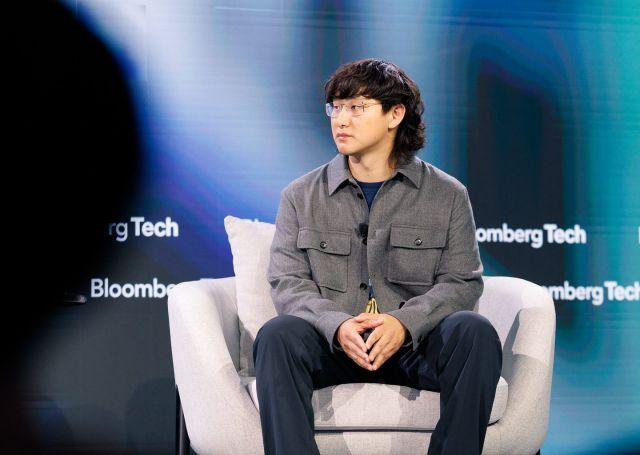
.Alexandr Wang defended the positioning of Muse Spark during a Bloomberg Tech Summit appearance, describing it as an "appetizer" rather than a frontier-level model
5
. "The new Muse Spark model that we released is not at the tier of the leading frontier models," Wang acknowledged, while expressing confidence that upcoming models would be "quite competitive with the leading models in the world"5
. The model currently trails OpenAI's GPT-5.4 Pro and Google's Gemini 3.1 Pro on benchmarks, fueling questions about whether Meta has fallen behind in generative AI development5
.
Source: Observer
Muse Spark represents a strategic shift as Meta's first closed-source AI model, departing from the company's previous open-source approach with its Llama series
1
. The model was built by Superintelligence Labs, formed after Meta hired Wang in mid-2025 following criticism of Llama 4's performance5
. Wang indicated the closed approach reflects safety concerns, noting that "when the company launches a model in a product, we have a lot of ways to mitigate some of these risks" compared to open-source releases5
.Related Stories
The API delay arrives amid massive AI investments from Meta, with the company expecting capital expenditures of $125 billion to $145 billion in 2026, up from $72.2 billion in 2025
5
. Meta is targeting more than 1.3 million GPUs and roughly one gigawatt of AI computing capacity to support its ambitions5
. The company has also restructured aggressively, notifying roughly 8,000 employees of layoffs in May while reassigning about 7,000 others to AI-focused roles5
.Despite these investments, the delay signals potential execution challenges as Meta attempts to position itself as an AI platform provider. The company has integrated AI assistants across Facebook, Instagram, WhatsApp, and Messenger, and launched AI-powered hardware like Ray-Ban smart glasses
4
. However, the gap between model announcement and usable API has become "a rough proxy for how production-ready an effort actually is" in an industry where competitors ship developer access on launch day3
.
Source: PYMNTS
Wang emphasized that Muse Spark's strengths lie in multimodal tasks, health-related applications, and creative coding capabilities
5
. The company is "doubling down" on AI agents, aiming to build what Wang called "the best personal agents for everybody around the world"5
. Whether Meta can deliver on these promises while competing against rapidly advancing rivals remains the critical question as June progresses and developers continue waiting for access to build on Muse Spark.Summarized by
Navi
[3]
[4]
08 Apr 2026•Technology

13 Mar 2026•Technology

08 Apr 2026•Technology

1
Technology

2
Business and Economy

3
Health