2 Sources
[1]
Caira's AI mirrorless camera is getting 'Nano Banana for video editing' -- but it only works on footage you've actually shot
This AI camera can turn an ordinary shot into a drone-style sweep and its limitations might be its smartest feature * Caira is adding generative video editing powered by Google's Gemini Omni 1.1 Flash and Runway's Aleph 2.0 * The feature can relight, reframe and extend captured footage or add simulated camera movements using natural-language instructions * Every edit must start with footage shot on Caira, while AI-generated results are saved separately and marked using Google's SynthID Camera Intelligence, the AI camera startup that created Caira, an AI-native Micro Four Thirds mirrorless camera, today announced Generative Video Editing is being added to the existing Caira camera system. Camera Intelligence claims it is the first company to integrate video-generation models into a mirrorless camera system. Generative Video Editing works through the Caira app with footage captured on the existing Caira device -- it can't generate its own AI video. A private beta opens for current Caira customers, before becoming part of the paid Caira Studio software package in Autumn 2026. Pricing hasn't been announced. "Last year we were the first mirrorless camera to edit photographs with generative AI, and we learned a great deal from the conversation that followed," said Vishal Kumar, CEO and co-founder of Camera Intelligence. "This year, after shipping Caira a large majority of our surveyed backers said generative editing for video would be useful to them - a clear impetus to bring these ideas to life." Powered by Google's Gemini Omni and Runway's Aleph 2.0 Powered by Google's Gemini Omni 1.1 Flash and Runway's Aleph 2.0, Camera Intelligence is the first company to embed video generation models directly into a mirrorless camera system. Through the Caira app, you can apply visual and camera-motion effects in-the-moment to footage you have already captured with Caira via a series of templates guided by natural language. We first reviewed the Caira camera last year. It combined a proper Micro Four Thirds hardware with the simplicity of a smartphone (the Caira snaps onto your iPhone using MagSafe) into a weird but impressive hybrid. Under the hood it's running a proper Micro Four Thirds sensor, powered by Qualcomm and Google silicon but its real party trick is Google's 'Nano Banana' generative AI -- a powerful on-device editor paywalled for $7p/m, which also unleashes smart voice control, and edits are rapid and impressive, meaning you can edit on the camera, without ever needing to open a laptop. Staying rooted in photography Video editing will work through a curated library of templates which can perform color grading or simulate drone-style sweeps and other complex camera paths. At launch the new system will contain Relight, Reframe, Camera Motion and Set Extension template. You can further refine them with conversational editing. Output will be in 720p and 1080p with it taking one to three minutes to generate depending on the resolution. Since there is no text-to-video functionality every edit has to begin with footage you've captured with Caira. When you generate a video it is saved as a separate file from the original and watermarked with Google's SynthID so it is clearly marked as AI-generated content. This new Generative Video Editing feature forms part of the Caira Studio app, launching in Autumn 2026. The app will contain the already existing Image Editing feature together with one more, as yet unannounced feature. The private beta opens today and existing Caira customers can register their interest to join. With the new Generative Video Editing features if feels like Camera Intelligence wants to put generative AI as close as possible to the act of filming while reassuring filmmakers that it isn't trying to make filming unnecessary. That requirement keeps Caira rooted in photography: whatever the AI adds afterwards, the creative process begins with someone behind a camera choosing what to shoot. Follow TechRadar on Google News and add us as a preferred source to get our expert news, reviews, and opinion in your feeds.
[2]
Caira Is the First Mirrorless Camera System With Built-In AI Video Editing
Camera Intelligence is bringing generative video editing to its AI-native Micro Four Thirds camera, Caira. It is the first mirrorless camera system to incorporate built-in generative video editing capabilities. Caira launched its camera on Kickstarter last year and quickly gained notoriety for a heavy emphasis on generative AI, which the company reined in due to feedback, focusing more on generative AI as a photo editing tool rather than a full-blown generative creation feature. Caira surveyed over 100 backers, and nearly 80 percent said they would like to see generative AI-based video editing inside the camera to go along with the photo editing features. The company is basically promising "Nano Banana for video editing," and is using Google's Gemini Omni 1.1 Flash, an "any-to-any" generative model Google unveiled at I/O 2026, and Runway's Aleph 2.0 system. Caira relies on a connected smartphone to work, and the new generative video editing tools will be used in the accompanying Caira app. "Last year we were the first mirrorless camera to edit photographs with generative AI, and we learned a great deal from the conversation that followed," says Vishal Kumar, CEO and co-founder of Camera Intelligence. "This year, after shipping Caira a large majority of our surveyed backers said generative editing for video would be useful to them -- a clear impetus to bring these ideas to life," Kumar continues. Kumar says Camera Intelligence appreciates the ongoing conversation about artificial intelligence in photography and filmmaking and is working hard to be respectful toward artists. Nonetheless, these features are in demand among the company's customer base. "Traditional filmmakers and VFX artists may prefer their existing workflows, yet our solutions are aimed squarely at solo creators and marketers who may not have the budget to commission this work and who are often overwhelmed by pro editing tools -- but who are excited by these technologies and what they make possible. We will work with our community and early-career filmmakers to build features that genuinely support our mission to make high-quality content creation fun and accessible for anyone," Kumar says. Generative video technology is rapidly evolving, and the latest tools, like those from Google, include a greater understanding of the scene and situation. Earlier models edited video one frame at a time, which could lead to some very poor results. However, newer models can analyze an entire clip, making it possible to create natural-looking edits that persist across a scene. These include things like relighting, reframing, and AI-generated camera movements. Caira can also use AI to perform color grading. All AI-edited results are saved as separate files with Google SynthID watermarks. Further, the camera cannot generate video from scratch, but only edit real clips that the user captures. "By placing this technology at the point of capture rather than confining it to post-production software, Camera Intelligence closes the gap between capture devices and editing tools - enabling rapid previsualization and prototyping in pre-production, so creators and brand owners can illustrate what is in their head, or filmmakers can evaluate options before committing to specialized VFX work," Camera Intelligence promises. Pricing and Availability Generative Video Editing, alongside Generative Image Editing and a still-unannounced new feature, will be part of Caira Studio. This new premium software offering launches this fall for an undisclosed price. A private beta for existing Caira customers is launching today. The company will also invite five working filmmakers to test the generative video editing features, and interested people can apply now. The Caira camera itself started shipping to backers earlier this year. The fifth batch of units is available to preorder now for $999 and is expected to ship this month.
Share
Copy Link
Camera Intelligence unveiled generative video editing for its AI-native Caira mirrorless camera, powered by Google Gemini Omni 1.1 Flash and Runway Aleph 2.0. The feature enables relighting, reframing and simulated camera movements through natural-language instructions but requires footage shot on Caira. All AI-edited results are watermarked with Google SynthID and saved separately from originals.
Camera Intelligence announced it is bringing generative video editing capabilities to its Caira camera, making it the first mirrorless camera system to integrate video-generation models directly into the hardware
1
2
. The AI-native mirrorless camera now leverages Google Gemini Omni 1.1 Flash and Runway Aleph 2.0 to enable users to apply visual and camera-motion effects through the Caira Studio app using natural-language instructions1
. This development comes after nearly 80 percent of surveyed backers expressed interest in AI video editing features following the camera's Kickstarter launch last year2
.
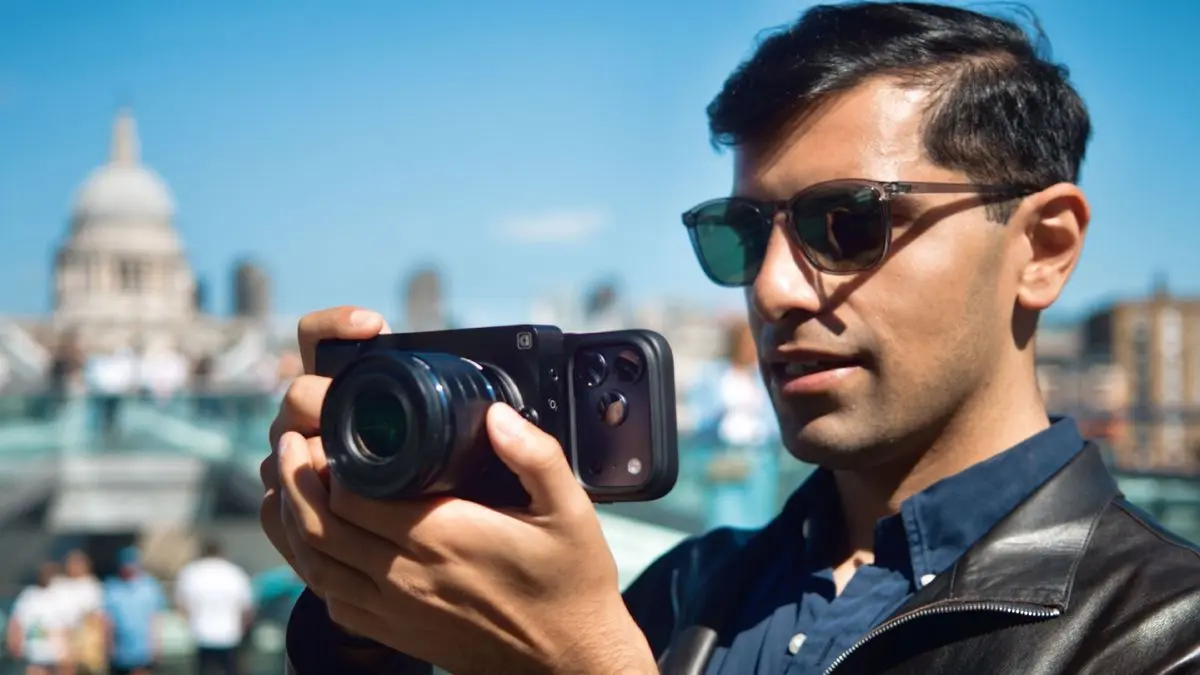
Source: TechRadar
The generative video editing feature operates through a curated library of templates that perform tasks like relighting, reframing, color grading, and simulating drone-style sweeps and complex camera paths
1
. At launch, Camera Intelligence will offer Relight, Reframe, Camera Motion and Set Extension templates, which users can refine through conversational editing1
. The system outputs video in 720p and 1080p resolutions, taking one to three minutes to generate depending on resolution1
. Unlike earlier frame-by-frame models, newer systems like Google Gemini Omni 1.1 Flash can analyze entire clips, creating natural-looking edits that persist across scenes2
.Camera Intelligence built critical limitations into the first mirrorless camera with AI editing capabilities. Every edit must begin with footage captured on the Caira camera—there is no text-to-video functionality that generates content from scratch
1
2
. When users generate a video, it saves as a separate file from the original and gets watermarked with Google SynthID, clearly marking it as AI-generated content1
2
. This approach keeps the creative process anchored in photography, ensuring someone behind the camera chooses what to shoot before AI enhancement begins1
.Related Stories
Vishal Kumar, CEO and co-founder of Camera Intelligence, emphasized the company's focus on solo creators and marketers who may lack budgets for commissioned VFX work or feel overwhelmed by professional editing tools
2
. By placing generative video editing at the point of capture rather than confining it to post-production software, Camera Intelligence closes the gap between capture devices and editing tools2
. This enables rapid previsualization and prototyping in pre-production, allowing creators to illustrate concepts or evaluate options before committing to specialized work2
. Kumar acknowledged that traditional filmmakers may prefer existing workflows, but noted the features address clear demand from Caira's customer base2
.A private beta for generative video editing opens today for existing Caira camera customers, with Camera Intelligence also inviting five working filmmakers to test the features
2
. The capability will become part of the paid Caira Studio software package launching in Autumn 2026, though pricing hasn't been announced1
. The Caira Studio app will bundle generative video editing alongside the existing Image Editing feature and one additional unannounced feature1
2
. The Caira camera itself, a Micro Four Thirds system that snaps onto iPhones using MagSafe, started shipping to Kickstarter backers earlier this year, with the fifth batch available for preorder at $999 and expected to ship this month2
.Summarized by
Navi
1
Policy and Regulation

2
Technology

3
Technology