5 Sources
[1]
Cerebras targets Europe with multibillion-dollar AI expansion
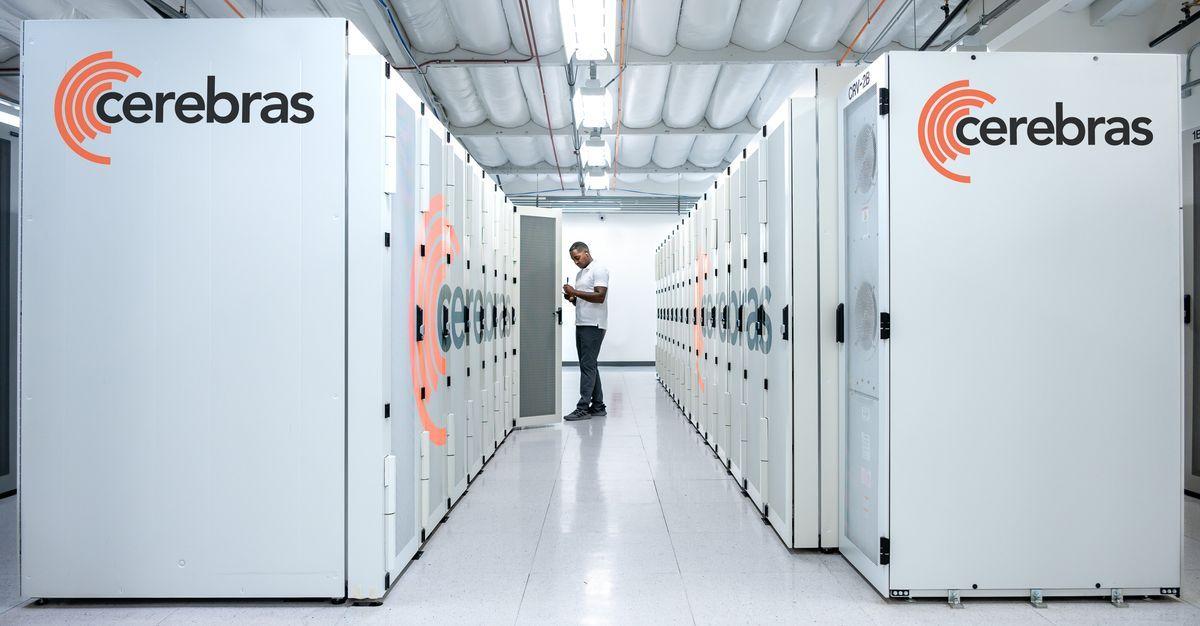
American AI chip startup Cerebras accelerates its European expansion with 200MW of AI compute capacity by the end of 2027, challenging sector behemoth Nvidia as it highlights "extraordinary" demand across the continent. US-based artificial intelligence chip maker Cerebras said on Thursday that it plans to bring its first European data centre capacity online by the end of 2026, followed by a rapid expansion across France and the Nordics, boosting its AI computing capacity in Europe. Cerebras said in a statement that demand for local, low-latency AI infrastructure has surged across European businesses, research institutions and governments seeking alternatives to compute capacity concentrated in the US and Asia. The company plans to build a network of AI data centres across Europe by the end of 2027, with a combined power capacity of 200 MW. Power capacity is the main yardstick for AI data centres because electricity has become the key constraint on expanding AI computing. For comparison, smaller enterprise data centres typically consume between 1 and 20 MW, whereas hyperscale facilities operated by cloud providers can draw 100 MW or more. Cerebras said that part of its planned data centre capacity is expected to support OpenAI workloads under the companies' existing partnership. "These are massive expansions" worth several billion dollars, chief executive Andrew Feldman told AFP on the sidelines of the RAISE Summit in Paris. The expansion comes as AI infrastructure investment accelerates across Europe, where Nvidia says its technology powers more than 90% of the continent's announced AI factory projects. Cerebras' expansion is expected to provide high-speed AI inference infrastructure to European users, helping deliver faster response times for increasingly complex AI workloads. "These deployments will enable us to move decisively on what our customers have been asking for: fast, high-performance AI compute located in Europe," Feldman said in the company statement. Founded in 2015, Cerebras has focused on chips dedicated to AI inference. The process, through which AI models provide responses to users' everyday prompts, has different requirements from the intensive process of "training" a new AI system. Appetite for inference-specific chips has exploded as more people use AI agents, a new type of interface that can carry out tasks autonomously on behalf of users. Agents require vastly expanded computing resources from companies such as Cerebras, Nvidia and AMD. But transatlantic tensions have made many governments and firms wary of overreliance on US providers. In Europe, demand for computing power to run generative AI is "extraordinary... growing very, very quickly", Feldman told AFP, adding that the sector's growth is "faster than we can keep up". "By putting data centres across Europe... we think that we can meet all the unique European requirements" on issues such as data sovereignty, he added. The AI infrastructure boom helped Cerebras raise $5.5bn in its initial public offering (IPO) in the US in May, making it one of the 15 largest IPOs in Wall Street history.
[2]
Global Market: Cerebras bets big on Europe with AI infrastructure expansion amid soaring demand
Cerebras is significantly increasing its European AI computing capacity. The company plans to reach 200 megawatts by next year. This expansion addresses rising AI demand and data sovereignty concerns. American artificial intelligence chip startup Cerebras is accelerating its expansion in Europe, planning to significantly increase its computing capacity across the region as it seeks to challenge AI hardware leader Nvidia. According to Reuters, the company is responding to rapidly rising demand for AI computing while addressing Europe's growing emphasis on data sovereignty. The California-based company currently operates three AI data centres powered by its proprietary chips in France, Finland and Norway. It plans to expand its European infrastructure to 200 megawatts of computing capacity by next year, representing investments worth several billion dollars, Reuters reported, citing comments from Chief Executive Andrew Feldman at the Raise Summit AI conference in Paris. US MarketsPowered By As on 09 Jul 2026, 01:30 AM IST S&P 500 Top Gainers Akamai Technologies126.57(10.67%) Arista Networks181.05(8.76%) Super Micro Computer28.17(7.31%) Valero Energy282.88(6.26%) Gainers" S&P 500 Top Losers Synchrony Financial68.26(-9.61%) Coterra Energy32.56(-8.62%) Moderna73.80(-7.48%) Smurfit WestRock42.08(-6.49%) Losers" Feldman said the company is expanding its network of data centres across Europe to better serve regional requirements, including greater control over data and compliance with local regulations. The move comes as governments and enterprises across Europe seek to reduce dependence on overseas technology providers amid ongoing geopolitical and trade tensions, according to Reuters. The executive also highlighted exceptionally strong demand for AI computing infrastructure, noting that adoption of generative AI continues to accelerate faster than the industry's ability to build sufficient capacity, Reuters reported. Founded in 2015, Cerebras has carved out a niche in AI inference chips, which are designed to process user queries and generate responses from trained AI models. Unlike AI training, which requires enormous computational resources to build models, inference focuses on delivering real-time responses to users and has emerged as one of the fastest-growing segments of the AI market. Demand for inference-focused processors has surged alongside the rapid adoption of AI agents -- autonomous systems capable of performing tasks on behalf of users. This trend has intensified competition among major AI chipmakers, including Nvidia and Advanced Micro Devices (AMD), as enterprises scale their AI deployments. Reuters reported that investor enthusiasm surrounding AI infrastructure helped propel Cerebras to a $5.5 billion U.S. stock market debut in May, making it one of Wall Street's largest listings. The company employs around 900 people and has a market capitalisation of roughly $40 billion. Its signature technology is its wafer-scale processor, an oversized chip that is substantially larger than conventional semiconductor designs. According to Reuters, the architecture enables faster AI processing while reducing communication delays that can occur when multiple smaller chips are linked together. Cerebras has already secured several high-profile customers across Europe, including British pharmaceutical company GSK, operators of high-performance computing facilities in Scotland and Germany, and software developers. Reuters also reported that Cerebras signed a major multi-year agreement with OpenAI during the first quarter, under which it will provide computing capacity for the ChatGPT developer through at least 2028. The company has also entered into a partnership with Amazon Web Services to expand its cloud-based AI offerings. Despite growing concerns that massive investments in AI could create a technology bubble, Feldman argued that current market dynamics are fundamentally different because customer demand continues to outpace available computing supply, Reuters reported. He added that the broader economic benefits of artificial intelligence are only beginning to emerge.
[3]
Cerebras Boosts AI Capacity With 200 MW European Expansion Plan - Cerebras Systems (NASDAQ:CBRS)
The company is set to bring its first European data center capacity online by the end of 2026. Expands European AI Data Center Footprint Cerebras plans to expand total capacity to 200 MW by the end of 2027, responding to growing demand for local AI infrastructure. The expansion reflects the company's confidence in Europe as a long-term growth market, with a portion of the new capacity expected to support OpenAI workloads. The company is actively building data centers in Norway and Finland, aiming to meet customer demands for fast, high-performance AI compute located closer to home. OpenAI & AWS Deals Recently, the company disclosed a multi-year deal with OpenAI valued at more than $20 billion, covering 750 megawatts of high-speed inference compute. The company also launched a multi-year partnership with AWS to bring fast inference to global distribution for startups, AI-native companies, and enterprises, combining AWS's Trainium 3 chips with Cerebras CS-3 systems in a disaggregated inference strategy. Recent Earnings Release Last month, Cerebras reported an adjusted loss of 4 cents per share, beating the consensus estimate of a 16-cent loss. In addition, it reported revenue of $193.40 million, beating the consensus estimate of $181.59 million. Cerebras sees second-quarter revenue of $194.00 million, versus the consensus estimate of $174.34 million. The company anticipates fiscal-year revenue between $855.00 million and $865.00 million, versus the consensus estimate of $823.89 million. Analyst Consensus & Recent Actions: The stock carries a Buy rating with an average price forecast of $291.09. Recent analyst moves include: * Freedom Capital Markets: Initiated with Hold (Target $209.00) (June 30) * UBS: Buy (Raises Target to $320.00) (June 24) * Rosenblatt: Buy (Maintains Target to $300.00) (June 24) CBRS Technical Outlook: Momentum And Key Support Currently, Cerebras Systems is trading at $190.60, which places it about 7.7% below its 20-day simple moving average (SMA) of $209.03. The moving average convergence divergence (MACD) is below its signal line, indicating that momentum is fading, suggesting that the stock may face challenges in sustaining upward price movement unless it can reclaim that baseline. * Key Support: $161.00 -- a nearby level where buyers previously stepped in. CBRS Price Action: Cerebras Systems shares were up 7.09% at $188.93 at the time of publication on Thursday, according to Benzinga Pro data. Photo via Shutterstock This content was partially produced with the help of AI tools and was reviewed and published by Benzinga editors. Market News and Data brought to you by Benzinga APIs To add Benzinga News as your preferred source on Google, click here.
[4]
Cerebras says to invest billions in Europe
The Californian company operates three data centres in France, Finland and Norway, which are to be expanded to reach 200MW of computing capacity by 2027. US chip maker Cerebras, a US rival of Nvidia, told AFP on Thursday it will invest "several billion dollars" in Europe to boost the computing capacity of its AI data centres on the continent. "This is a massive expansion" to meet the "rapidly growing" needs of European customers, chief executive Andrew Feldman told AFP in an interview on the sidelines of a Paris artificial intelligence conference. The Californian company operates three data centres in France, Finland and Norway, which are to be expanded to reach 200MW of computing capacity by 2027.
[5]
Cerebras stock surges on European data center expansion plans By Investing.com
Investing.com -- Cerebras Systems Inc (NASDAQ:CBRS) shares rose 5.3% in premarket trading Thursday following the company's announcement of plans to build 200MW of AI data center capacity across Europe by the end of 2027. The company said it will bring its first European data center capacity online by the end of 2026, with rapid build-out across France and the Nordics. A portion of that capacity is expected to support OpenAI workloads as part of the companies' existing partnership. "We are contracting significant capacity for 2027, with data centers slated for Norway and Finland as we actively build across Europe," said CEO Andrew Feldman at the RAISE Summit in Paris on Wednesday. The expansion aims to bring Cerebras' high-speed AI inference infrastructure closer to European users, helping deliver faster response times for AI workloads. The company said demand for local, low-latency AI infrastructure has surged across European enterprises, research institutions, and governments seeking alternatives to compute capacity concentrated in the U.S. and Asia. Cerebras also announced an expanded manufacturing partnership with Flex to scale production of its CS-3 AI accelerator systems at facilities in Milpitas, California. The expanded operation is expected to increase CS-3 production capacity by approximately 7x through 2026, supported by new production lines, expanded floor space, and additional skilled manufacturing talent. "The CS-3 is unlike any computer system ever built, and scaling its production requires an extraordinary manufacturing partner," said Dhiraj Mallick, COO of Cerebras. The gains came amid a broader rebound for chip stocks on Thursday. This article was generated with the support of AI and reviewed by an editor. For more information see our T&C.
Share
Copy Link
AI chip startup Cerebras accelerates its European expansion with plans to deploy 200MW of AI data center capacity by 2027 across France and the Nordics. The multibillion-dollar investment responds to soaring demand for local AI infrastructure and data sovereignty concerns, positioning the company to challenge Nvidia's dominance in the region.
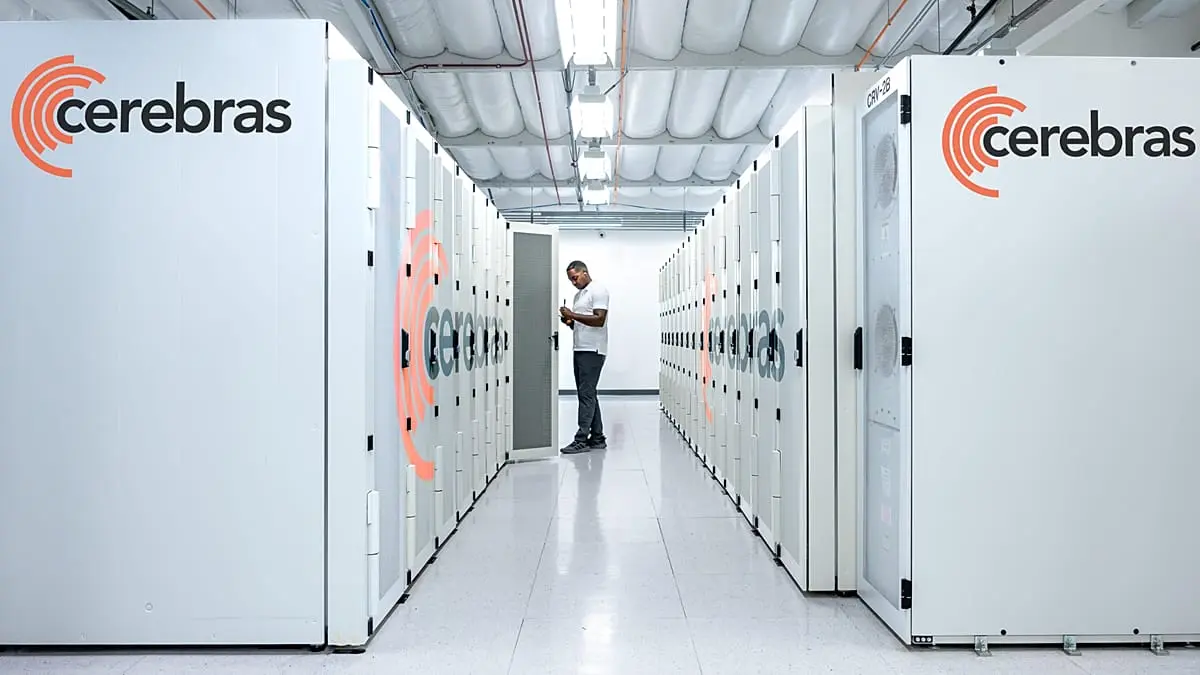
AI chip startup Cerebras announced an aggressive European expansion strategy that will bring 200MW of AI data center capacity to the continent by the end of 2027, marking a multibillion-dollar investment to challenge sector leader Nvidia
1
. The California-based company, which currently operates three AI data centers in France, Finland, and Norway, plans to bring its first expanded European capacity online by the end of 2026, followed by rapid deployment across the Nordics2
. CEO Andrew Feldman described the initiative as "massive expansions" worth several billion dollars during the RAISE Summit in Paris1
.

Source: ET
The European expansion addresses soaring demand for AI compute capacity as businesses, research institutions, and governments seek alternatives to infrastructure concentrated in the US and Asia
1
. Data sovereignty concerns have intensified amid transatlantic tensions, making European organizations wary of overreliance on US providers1
. Feldman told AFP that demand for computing power to run generative AI in Europe is "extraordinary... growing very, very quickly," with growth "faster than we can keep up"1
. The company's strategic positioning aims to meet unique European requirements around data control and compliance with local regulations2
.
Source: ET
Cerebras specializes in AI inference chips designed to process user queries and generate responses from trained AI models, a segment experiencing explosive growth alongside the adoption of AI agents
2
. The company's wafer-scale processor architecture enables faster AI processing while reducing communication delays that occur when multiple smaller chips are linked together2
. Part of the planned AI data center capacity is expected to support OpenAI workloads under the companies' existing partnership3
. Cerebras recently disclosed a multi-year deal with OpenAI valued at more than $20 billion, covering 750 megawatts of high-speed inference compute through at least 20283
.Related Stories

To support its expansion, Cerebras announced an expanded manufacturing partnership with Flex to scale production of its CS-3 systems at facilities in Milpitas, California, with production capacity expected to increase approximately 7x through 2026
5
. The move positions Cerebras to challenge Nvidia, whose technology powers more than 90% of Europe's announced AI factory projects1
. The AI infrastructure boom helped Cerebras raise $5.5 billion in its initial public offering in May, making it one of the 15 largest IPOs in Wall Street history and giving the company a market capitalization of roughly $40 billion1
2
. The company also launched a multi-year partnership with AWS to bring fast inference to global distribution, combining AWS's Trainium 3 chips with Cerebras CS-3 systems3
. Recent financial results showed revenue of $193.40 million, beating consensus estimates, with the company projecting fiscal-year revenue between $855 million and $865 million3
. Feldman argued that concerns about an AI bubble are misplaced because customer demand continues to outpace available computing supply, with broader economic benefits of artificial intelligence only beginning to emerge2
.
Source: Euronews
Summarized by
Navi
[2]
[3]
12 Mar 2025•Technology

02 Oct 2024

18 Apr 2026•Business and Economy

1
Technology

2
Policy and Regulation

3
Technology