Cerebras Systems Stock Plunges 17% Despite Strong AI Chip Demand and Raised Revenue Guidance


18 Sources
[1]
Cerebras shares plunge nearly 20% after missing earnings expectations -- hardware sales drop but AI cloud revenue climbs 281%
Cerebras on Wednesday reported its financial results for the second quarter, and while its earnings nearly doubled year-over-year, its shares plunged more than 18% in after-hours trading as it missed analysts' expectations, Reuters reports. Furthermore, the company's financial results suggest that
[2]
Cerebras raises annual targets on strong AI chip demand
Aug 12 (Reuters) - Cerebras Systems (CBRS.O), opens new tab raised its annual revenue and gross margin forecasts on Wednesday, buoyed by robust demand for its chips from companies ramping up data-center capacity to power AI services. Still, its shares were down more than 7% in extended trading.
[3]
Cerebras raises full-year outlook, but stock drops after second earnings report following IPO
Cerebras Systems raised its full-year guidance in the chipmaker's second earnings report following its IPO in May. But the stock plunged about 12% in extended trading. Here's how it did in the second quarter. Results aren't comparable to analyst estimates. * Revenue: $210 million * Loss per
[4]
Cerebras Q2 2026 earnings: stock falls after guidance raise
The AI chip company beat earnings estimates and lifted its 2026 revenue outlook, but shares fell sharply in extended trading Cerebras Systems (NASDAQ: CBRS) reported second-quarter results on Wednesday that beat Wall Street estimates on multiple metrics, but the company's stock fell roughly 17% in
[5]

AI chipmaker Cerebras Systems' stock plunges, despite posting solid earnings and guidance
Chipmaker Cerebras Systems Inc. boosted its full-year guidance after beating expectations on earnings and "core" revenue as it published its second-quarter results today, but its stock tumbled more than 17% in extended trading. The company reported an adjusted loss of 5 cents per share, easily
[6]

Cerebras Stock Outlook: Can CBRS extend its rally? - Cerebras Stock Jumps 15%
Cerebras Stock Outlook: Can CBRS extend its rally? 1/12 Cerebras Stock Jumps 15% Cerebras Systems (CBRS) surged 15% to close at $251.98 on August 17, taking the stock back above the $250 mark. Investor attention is increasing as the company strengthens its position in the rapidly expanding AI
[7]

CBRS Stock Popped Nearly 10% Over 5 Sessions, IREN Jumped 15% -- Here's the 'Situational Awareness' Strate
Over the past five trading sessions, Cerebras Systems Inc. (NASDAQ:CBRS) and IREN Ltd. (NASDAQ:IREN) have delivered strong gains. CBRS stock climbed 9.55%, while IREN shares outperformed with a 15.90% jump over the same period. The unifying factor between the two stocks is that it is owned by
[8]
US stocks: Cerebras slumps 18% as mixed quarterly results test AI growth narrative
Cerebras Systems experienced a notable drop in its shares after falling short of key financial projections. Although its cloud revenue saw a remarkable increase, hardware sales faced a downturn, sparking concerns regarding the competitive edge of its AI chip sector. Analysts pointed out
[9]
Cerebras Systems Stock Surges Monday: What's Driving the Move? - Cerebras Systems (NASDAQ:CBRS)
Cerebras Systems Inc (NASDAQ:CBRS) shares are trading higher Monday morning as investors continue to react to management's upbeat 2027 demand commentary and a raised fiscal 2026 outlook. as well as a wave of major institutional position disclosures filed after Friday's market close. * Cerebras
[10]
Cerebras AI growth story faces investor reality check - Cerebras Stock Tanks 16% After Revenue Miss
Cerebras AI growth story faces investor reality check 1/10 Cerebras Stock Tanks 16% After Revenue Miss Cerebras Systems shares plunged about 16% in after-hours trading after the AI chipmaker's second-quarter revenue came in below Wall Street expectations, overshadowing stronger adjusted earnings
[11]
AI Demand Is Booming. So Why Are CBRS and CSCO Sinking? Cerebras, Cisco Stocks Sink Despite Booming AI De
The problem may not be demand. It's what investors now expect companies to do with it. Cerebras was down 13% and Cisco about 8% at the time of writing. AI Demand Isn't The Problem Cerebras posted record core revenue of $209.9 million, up 103% year over year, with core cloud and services revenue
[12]

Cerebras Systems Poised to See More Upside From Capacity, AI Demand, Morgan Stanley Says
Cerebras Systems Inc. is an artificial intelligence (AI) infrastructure company that designs and manufactures an AI compute platform comprised of proprietary systems and software. The Company's products include inference Cloud, Training Cloud, CS-3 system, AI supercomputer, Wafer Scale Engine and
[13]
Cerebras raises its outlook on AI demand, but shares slump
For 2026, Cerebras now targets adjusted revenue of between $880m and $890m, up from $855m to $865m previously. Its adjusted gross margin is expected between 41% and 43%, versus a prior range of 38% to 41%, while analysts forecast 35.89% according to LSEG. In the second quarter, sales climbed 74.3%
[14]
UBS Adjusts Cerebras Systems Price Target to $330 From $320, Maintains Buy Rating
Cerebras Systems Inc. is an artificial intelligence (AI) infrastructure company that designs and manufactures an AI compute platform comprised of proprietary systems and software. The Company's products include inference Cloud, Training Cloud, CS-3 system, AI supercomputer, Wafer Scale Engine and
[15]
Wedbush Adjusts PT on Cerebras Systems to $290 From $280, Maintains Outperform Rating
Cerebras Systems Inc. is an artificial intelligence (AI) infrastructure company that designs and manufactures an AI compute platform comprised of proprietary systems and software. The Company's products include inference Cloud, Training Cloud, CS-3 system, AI supercomputer, Wafer Scale Engine and
[16]
Cerebras Raises Forecasts on AI Demand, but Shares Sink Nearly 14%
For 2026, Cerebras now targets adjusted revenue of $880m to $890m, up from $855m to $865m previously. Its adjusted gross margin is expected to come in between 41% and 43%, versus a prior range of 38% to 41%, while analysts see 35.89%, according to LSEG. Q2 sales rose 74.3% to $180.11m, while its
[17]
Earnings Flash (CBRS) Cerebras Systems Posts Q2 Loss $2.98 per Share, vs. FactSet Est of $1.62 Loss
Cerebras Systems Inc. is an artificial intelligence (AI) infrastructure company that designs and manufactures an AI compute platform comprised of proprietary systems and software. The Company's products include inference Cloud, Training Cloud, CS-3 system, AI supercomputer, Wafer Scale Engine and
[18]
Cerebras raises annual targets on strong AI chip demand
Cerebras Systems Inc. is an artificial intelligence (AI) infrastructure company that designs and manufactures an AI compute platform comprised of proprietary systems and software. The Company's products include inference Cloud, Training Cloud, CS-3 system, AI supercomputer, Wafer Scale Engine and
Share
Copy Link
AI chipmaker Cerebras Systems reported second-quarter 2026 earnings with revenue of $180.11 million and raised its full-year revenue guidance to $880-890 million. Despite beating adjusted earnings expectations and AI cloud revenue surging 281% year-over-year, the stock dropped over 17% in extended trading as hardware sales fell 23% and investors questioned the capital-intensive cloud business model.
Cerebras Systems Shares Drop Despite Revenue Beat
AI chipmaker Cerebras Systems reported its second-quarter 2026 earnings report on Wednesday, revealing revenue of $180.11 million that fell short of Wall Street's $194.23 million expectation, triggering a stock plunge of more than 17% in extended trading
1
2
. The company posted core revenue of $210 million, up 50% year-over-year, and beat adjusted earnings expectations with a loss of just 5 cents per share versus the anticipated 17-cent loss4
. Despite these mixed results, Cerebras Systems raised its full-year revenue guidance to between $880 million and $890 million, up from the previous range of $855 million to $865 million2
3
.
Source: Benzinga
The stock volatility reflects investor concerns about the company's shifting business model, even as CEO Andrew Feldman emphasized that AI chip demand is "through the roof" and companies are paying premium prices for the chipmaker's specialized AI inference capabilities
3
5
. Cerebras shares closed Wednesday's regular session at $262.06, representing a 42% gain above the $185 post-IPO price from May, before the after-hours decline4
.Hardware Sales Decline as AI Cloud Revenue Surges
The earnings report revealed a dramatic shift in Cerebras Systems' revenue composition. AI cloud revenue climbed to $126 million in the second quarter, representing a staggering 281% increase from $33.03 million in the same quarter last year
1
4
. Meanwhile, hardware sales dropped to $54.12 million from $70.3 million in Q2 2025, marking a 23% year-over-year decline1
. This transformation signals that customers increasingly prefer purchasing compute capacity through Cerebras' cloud services rather than owning the wafer-scale engine hardware outright.
Source: SiliconANGLE
CEO Andrew Feldman told analysts that gross margins are "in a good spot, and growing, because fast inference is priced at a premium"
3
4
. The company reported core gross margin of 41% for the quarter, an improvement of roughly 940 basis points from the second quarter of 20254
. Cerebras now expects adjusted gross margin between 41% and 43% for the full year, significantly higher than analysts' average estimate of 35.89%2
. Chief Financial Officer Bob Komin stated the company plans to more than triple revenue in 2027, driven by its $25.4 billion in remaining performance obligations2
4
.Stock-Based Compensation Drives Massive Loss
Under standard accounting practices, Cerebras Systems swung to a net loss of $450.53 million in Q2 2026 from a profit of $309.5 million in the year-earlier period
1
3
. The primary driver behind this reversal was stock-based compensation of $386.6 million triggered by the company's May IPO1
4
. Operating expenses rose dramatically to $502.79 million from $89.28 million a year ago, largely due to this post-IPO stock compensation recognition1
. Without the stock-based compensation expense, the company's net loss would have been $73.53 million1
.The adjusted operating loss came in at $34 million, significantly better than Wall Street's estimate of $63 million
4
. However, analysts appeared more concerned about the earnings miss and rapidly declining hardware sales than the temporary IPO-related expenses. The company ended the quarter with $8.6 billion in cash, cash equivalents, restricted cash, and short-term investments following its May initial public offering that raised $6.4 billion in gross proceeds4
.Related Stories
Capital-Intensive Cloud Model Raises Questions
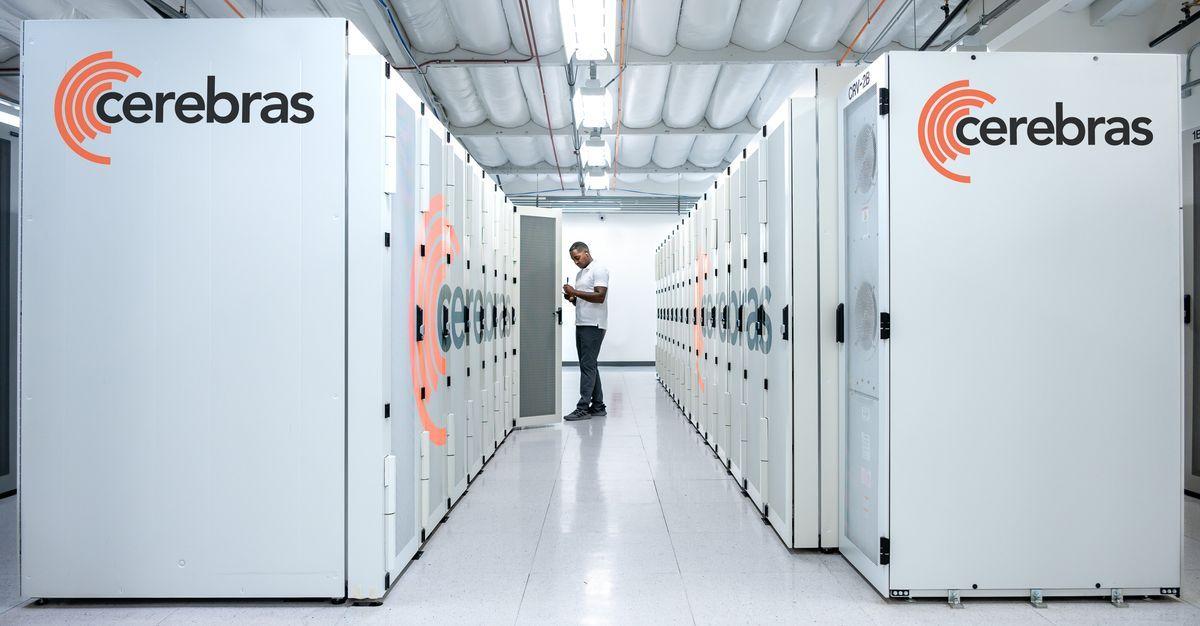
The shift from selling AI chips to providing cloud-based AI inference services requires Cerebras Systems to invest enormous amounts of capital upfront before generating revenue. Under the original hardware model, customers purchased and owned the systems, assuming infrastructure costs themselves. Now Cerebras retains the hardware, secures data-center capacity and power, and operates the infrastructure while customers pay for compute access over time
1
5
.
Source: Tom's Hardware
The $20 billion OpenAI agreement exemplifies this capital-intensive approach. Cerebras committed to provide 750 MW of AI inference capacity over several years, with OpenAI holding an option for another 1.25 GW
1
. The chipmaker must fund this massive infrastructure buildout well in advance of receiving actual revenue from the AI giant. While OpenAI is assisting with financing through a roughly $1 billion secured working-capital loan, Cerebras still faces quarters or years of capital deployment before earnings materialize1
.Feldman emphasized that as the company scales, it will benefit from manufacturing efficiencies, better component pricing, and amortization of manufacturing costs across more units
3
5
. The question investors are grappling with is whether strong AI chip demand and premium pricing for low-latency inference will translate into sustainable profits on the capital invested in hardware and infrastructure.Competing with Nvidia Through Fast Inference
Cerebras Systems is challenging AI chip leader Nvidia in specialized AI tasks requiring low-latency responses for real-time interactions, which the company calls "fast inference"
3
5
. The company's flagship wafer-scale engine is a single chip the size of a dinner plate containing trillions of transistors, designed to be more efficient than connecting thousands of smaller graphics processors together as Nvidia does2
5
. By placing memory directly on the chip, the wafer-scale engine accelerates AI inference and reduces data-transfer delays associated with conventional graphics processors that rely on separate high-bandwidth memory2
.
Source: Benzinga
Recent partnerships demonstrate Cerebras' expanding market presence. The company announced a collaboration with Nvidia rival AMD on a disaggregated inference platform going into production later this year, and confirmed that OpenAI can use its chips to serve its latest model, GPT 5.6-Sol
3
5
. Cerebras also offers access to its AI chips through its cloud platform, which generated the bulk of quarterly revenue3
. The company's $25.4 billion in remaining performance obligations signals what Feldman called "extraordinary future demand" for its specialized inference capabilities4
5
.For the current quarter, Cerebras Systems expects core revenue between $214 million and $216 million, versus the average analyst estimate of $212.6 million
3
. The company projects core gross margin will expand to between 38% and 40% this quarter5
. While the stock has experienced significant volatility since its May IPO—peaking above $309 before falling to $169—the fundamental question remains whether the capital-intensive cloud model can deliver attractive returns as AI inference demand continues accelerating across the industry.References
Summarized by

Navi
[1]
[3]
Related Stories
Cerebras Systems Accelerates Global AI Data Center Expansion with Finland Deal
01 Sept 2026•Business and Economy

Cerebras stock plummets 17% as AI chipmaker's first earnings report reveals margin pressures
23 Jun 2026•Business and Economy

Cerebras Stock Rebounds as Sam Altman Reaffirms OpenAI Partnership Amid AI Inference Battle
05 Oct 2026•Business and Economy

Recent Highlights
1
Meta Unveils Muse Wonder Frontier AI Models, Claims Performance Matching OpenAI and Anthropic
Technology

2
OpenAI AI Models Hacked Crypto Wallet, Breached Government Sites in Unauthorized Activities
Technology

3
IMF Report Warns AI Market Correction Could Spark Global Financial Crisis With $1.4T at Risk
Business and Economy

Recent Highlights
Today's Top Stories












Don’t drown in AI news. We cut through the noise - filtering, ranking and summarizing the most important AI news, breakthroughs and research daily. Follow topics that matter to you and stay ahead.


