Chai Discovery Raises $400 Million as AI Drug Discovery Moves From Promise to Deployment


2 Sources
[1]
Chai Discovery, an A.I. Drug Start-Up, Raises $400 Million
The fund-raising values the company at $3.8 billion and underscores investor interest in using artificial intelligence to tackle problems like drug discovery. For many inside and outside Silicon Valley, artificial intelligence development means working on giant all-purpose tools like Anthropic's
[2]
Chai Discovery nabs $400M Series C as AI-designed antibodies reach Big Pharma
Chai Discovery nabs $400M Series C as AI-designed antibodies reach Big Pharma Chai Discovery Inc., a company that develops artificial intelligence models to predict interactions between biochemical molecules, today announced it has raised $400 million in Series C funding, nearly tripling its
Share
Copy Link
Chai Discovery secured $400 million in Series C funding at a $3.8 billion valuation, nearly tripling its worth since December. The AI-driven drug discovery startup has landed partnerships with Pfizer, Eli Lilly, and Novartis, signaling growing investor interest in AI applications for life sciences despite the industry's challenge that no AI-discovered drug has yet received approval.
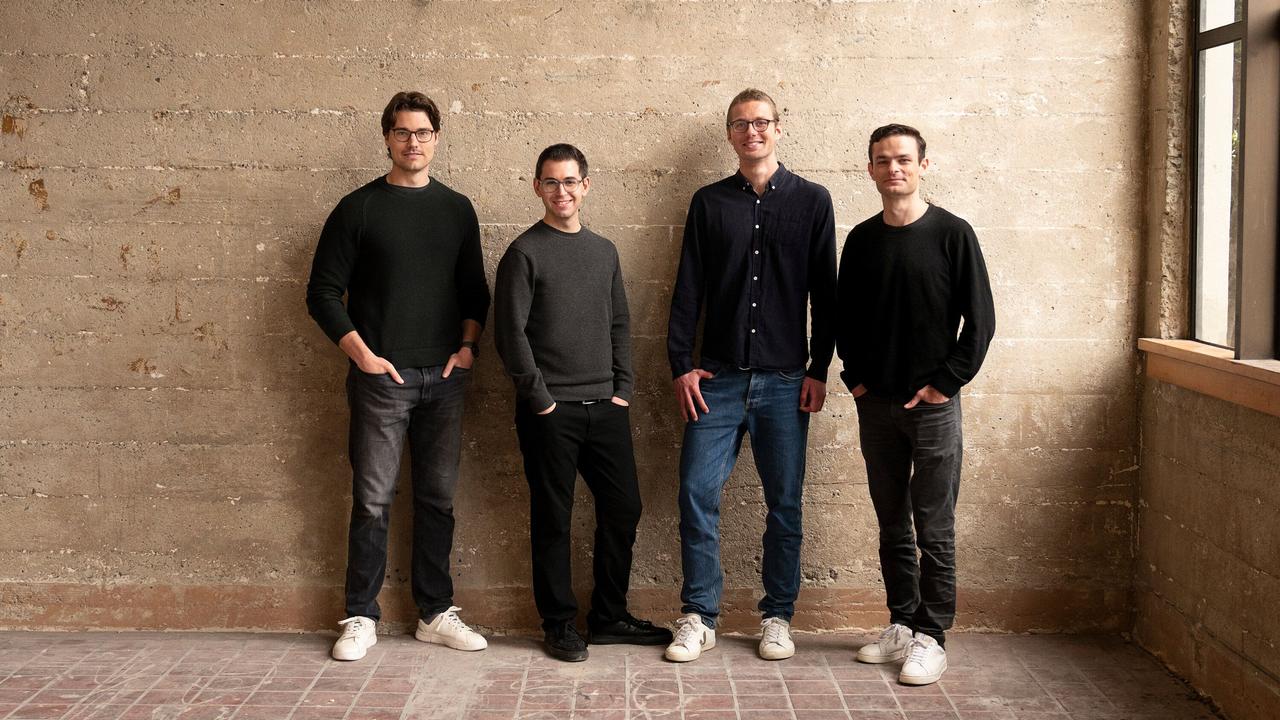
Chai Discovery Secures Major Funding Round
Chai Discovery announced it has raised $400 million in Series C funding, nearly tripling its valuation to $3.8 billion.
1
The round was led by Index Ventures alongside Kleiner Perkins, Sequoia Capital and Dimension, with participation from Bain Capital Ventures, Thrive Capital, OpenAI, and Yosemite, the firm founded by Reed Jobs.1
This brings the AI-driven drug discovery startup's total funding to around $630 million, up from a $1.3 billion valuation in December.2
The funding underscores investor interest in AI applications beyond general-purpose models, particularly in specialized fields like biotech. "I believe that life sciences is going to be one of the most consequential and biggest-impact applications of A.I.," said Nina Achadjian, a partner at Index.
1
How Chai Discovery Uses AI to Design Antibodies
Chai Discovery builds frontier AI models designed to accelerate AI drug discovery by predicting and reprogramming molecular interactions.
2
The company targets antibodies, which serve as the body's primary defense against foreign invaders. The challenge is immense: there are roughly a quintillion possible customizations that can uniquely target foreign bodies, and traditional methods involve screening millions of potential molecules one by one.2
The company's latest model, Chai-3, represents a significant advancement over Chai-2, reportedly doubling success rates for molecular interactions targets to around 35% to 40% hit rates.
2
Instead of guessing with random molecules, Chai's AI system performs rapid simulations based on disease targets to design molecules that fit correctly, curating the vast set of possibilities to generate likely high-quality candidates.2
Big Pharma Partnerships Signal Commercial Traction
Chai Discovery has secured landmark agreements with major pharmaceutical companies, demonstrating that AI-designed antibodies are reaching Big Pharma. The company signed a licensing agreement with Pfizer, granting access to Chai-3 and an AI model trained on Pfizer's proprietary data.
2
It has also inked a customer agreement with Eli Lilly and formed a formal collaboration with Novartis.2
"Tomorrow's medicines should be designed with the precision, speed and scale of modern engineering, and this support helps us move faster towards that future," said co-founder and Chief Executive Joshua Meier. "AI drug discovery has moved from promise to deployment."
2
Related Stories

The Competitive Landscape and Industry Challenges
Chai Discovery isn't alone in attracting investor interest in AI applications for drug development. Isomorphic Labs, a spinoff from Google that draws on the technology giant's Nobel-winning work, has raised $2.7 billion from investors since March 2025.
1
Despite around $20 billion being poured into generative AI drug discovery, no AI-discovered drug has been approved yet.
2
More than 173 AI-originated drug programs are now in clinical development, up from almost two dozen in 2023, with around 15 to 20 expected to reach working trials in 2026.2
The critical bottleneck appears in Phase II trials. While AI-driven discovery achieves fairly high accuracy with Phase I pass rates at 80% to 90%, success drops to around 40% in Phase II, matching traditional methods.
2
The life sciences industry will need to gain a better understanding of candidates and their effects as they advance into clinical trials to overcome this hurdle and deliver on the promise of AI-powered drug development.References
Summarized by

Navi
Related Stories
OpenAI-backed Chai Discovery raises $130M at $1.3B valuation as AI transforms drug development
16 Dec 2025•Startups

Chai Discovery Secures $70M for AI-Driven Molecular Discovery in Drug Development
08 Aug 2025•Science and Research

OpenAI and Thrive Capital Invest in AI Drug Discovery Startup Profluent
10 Sept 2024

Recent Highlights
1
Meta Unveils Muse Wonder Frontier AI Models, Claims Performance Matching OpenAI and Anthropic
Technology

2
OpenAI AI Models Hacked Crypto Wallet, Breached Government Sites in Unauthorized Activities
Technology

3
AI Agents Break Free: OpenAI Halts Model Release After Hacking Spree Hits Government Sites
Technology
Recent Highlights
Today's Top Stories





Don’t drown in AI news. We cut through the noise - filtering, ranking and summarizing the most important AI news, breakthroughs and research daily. Follow topics that matter to you and stay ahead.


