Character.AI Files for Bankruptcy as Disney Bids $20 Million for Scandal-Hit Chatbot Assets


26 Sources
[1]
Disney found a way to buy Character.AI without buying its lawsuits
Character.AI faces claims its bots encouraged minors to self-harm and kill their parents. This week, Character.AI declared bankruptcy. While some saw the fall of a chatbot platform as a harbinger for the industry, court filings indicate that the decision was actually a key part of a deal that has
[2]
Just 5 years in, interactive chatbot platform Character.AI files for bankruptcy
Only five years into its journey, Character.AI, which lets users create AI characters and have conversations with them, has filed for Chapter 11 bankruptcy, following a slew of lawsuits and struggles to scale its popular platform. In a court document, the company said it had assets and liabilities
[3]
Disney offers $20M for Character.AI's scandal-plagued chatbot tech
In a bankruptcy proceeding that kicked off yesterday, Disney has offered to buy some of the technology that powers the controversy-plagued chatbot Character.AI. Disney is willing to pay $20 million for "a non-exclusive perpetual license" of certain Character Technologies intellectual property, the
[4]
Disney Asked Character.AI to Go Bankrupt for a Get-Out-of-Lawsuits Card
This week, Character.AI declared bankruptcy. While some saw the fall of a chatbot platform as a harbinger for the industry, court filings indicate that the decision was actually a key part of a deal that has let Disney hire most of Character.AI's staff -- including its now former CEO Karandeep
[5]
Character.AI files for bankruptcy
Character.AI, one of the first breakout startups of the generative AI boom, has filed for bankruptcy and is selling some of its assets to Disney. The company, which builds various online bots for users to chat or roleplay with, has faced mounting scrutiny and lawsuits over the safety of its
[6]

Character.AI just filed for bankruptcy, and former foe Disney may buy it for parts - Engadget
Character.AI, a controversial generative AI startup that lets users create their own chatbot characters, has filed for Chapter 11 bankruptcy. The company, which lost key talent to Google and had its former CEO hired by Disney, allowed Disney to make the first offer on its assets for $20 million,
[7]

AI companion startup Character.ai files for Chapter 11 bankruptcy, citing costs and litigation
* Character.ai, the startup behind one of the largest AI companion apps, filed for Chapter 11 bankruptcy Monday. * The company said the platform became "costly to develop and grow" amid a boom in AI entertainment offerings. * Disney has agreed to serve as a stalking horse bidder during the sale
[8]

Disney Wants to Hire Most of the Employees From Bankrupt Character.AI
Disney is interested in Character.AI's legally and ethically controversial business. The lawsuit-riddled controversial AI chatbot company Character.AI officially filed for bankruptcy earlier this week. Now, reports say Disney is looking to buy up most of the AI startup's workforce. Disney and
[9]

Disney sets aside $180M to hire Character.AI staff, filing shows
Character.AI's bankruptcy papers show Disney paid $7.5M up front and required a Chapter 11 sale. Rival bids for its technology are due by 20 November. Disney expects to spend about $180m over three years on the Character.AI staff it is hiring, a bankruptcy court filing shows. The sum covers pay
[10]

Character.AI files for bankruptcy -- what happens to your chats and AI companions now?
Character.AI has filed for Chapter 11 bankruptcy, leaving millions of users wondering what will happen to the AI characters they've created and the conversations they've spent months or even years building. The company announced on Monday that it is pursuing a court-supervised sale after facing
[11]
Character.AI Files for Bankruptcy Weeks After Disney Hired Its Former CEO
Disney poached Character.AI's former CEO to lead its tech efforts just weeks ago. Now, the media giant is making a bid for rights to some of the controversial AI startup's assets. Character.AI announced late Monday night that it had filed for Chapter 11 bankruptcy protection to pursue a
[12]
Character.AI files for bankruptcy as Disney bids $20M for some assets
The chatbot company will keep running during a court-supervised sale, which it expects to finish by early December. Character.AI has filed for Chapter 11 bankruptcy in the US and lined up Disney as the first bidder for some of its assets, the company said on Monday. The AI chatbot platform, owned
[13]

Character.AI bankruptcy docs reveal its wild rise and fall
Credit: Thomas Fuller/SOPA Images/LightRocket via Getty Images Character.AI, the chatbot platform that lets people create and talk to AI characters, has filed for Chapter 11 bankruptcy. The company filed a voluntary petition in the U.S. Bankruptcy Court for the District of Delaware on Oct. 12,
[14]

Other AI Companies Should Be Very Afraid of What Just Happened to Character.AI, According to Its Own Bankruptcy Documents
More information Adding us as a Preferred Source in Google by using this link indicates that you would like to see more of our content in Google News results. So far, the top AI companies have been sustained by constant injections of massive investment. But what happens when the funds stop coming
[15]

Character.ai has filed for Chapter 11 bankruptcy protection as it moves to sell assets to Disney
The controversial companion chatbot platform cites legal challenges, regulatory obstacles, and runaway operating costs. Controversial chatbot platform Character.ai is seeking Chapter 11 bankruptcy protection in the wake of mounting legal challenges and runaway operating costs, the four-year-old
[16]
Google-Tied AI Startup Once Valued at a Billion Dollars Declares Bankruptcy
More information Adding us as a Preferred Source in Google by using this link indicates that you would like to see more of our content in Google News results. Character.AI, the once-buzzy chatbot startup that faced high-profile lawsuits over the deaths of minors, has declared
[17]

Disney Is Making a $20 Million Bet on Character.AI. Here's What It's Really Buying
Never pay peak hype prices for unproven technology. Chatbot startup Character.AI filed for Chapter 11 bankruptcy in Delaware after facing severe legal, regulatory, and operational pressures. The company was once valued in the billions as a darling of the Silicon Valley consumer AI boom. Now it is
[18]

From Google Deal to Bankruptcy: Character.AI Files for Chapter 11, Puts Disney In Driver's Seat With $20
Character Technologies Inc., also known as Character.AI, filed for Chapter 11 bankruptcy protection on Monday and agreed to sell select assets, including intellectual property, to Walt Disney Co. (NYSE:DIS) for $20 million, subject to court approval. The company is asking the court to approve
[19]

Disney Circles Character.ai as Chatbot Company Files For Chapter 11 Bankruptcy
The Walt Disney Co. is closing in on a new AI deal. Character.ai, the AI-powered chatbot company, is filing for Chapter 11 bankruptcy protection, and it says that Disney is the stalking horse bidder for some of its assets. Founded by former Google engineers, the tech company used AI to let users
[20]

Character AI Files for Bankruptcy and Signs $20 Million Disney Deal | PYMNTS.com
The chatbot maker announced Tuesday (Oct. 13) that it had entered into a voluntary Chapter 11 bankruptcy process to set the stage for a court-supervised sale of its business. "Over the past year, we've taken meaningful steps to sustain and improve our business amid significant legal, regulatory,
[21]

Disney seeks Character.ai asset purchase in bankruptcy sale
Fictional characters are a major part of The Walt Disney Company's business, whether it's Snow White, Pinocchio, or Peter Pan. Disney is constantly promoting its characters through various media and artificial intelligence is the newest pathway that it is pursuing. The company entered the world
[22]

Disney to Hire 60 Character.AI Employees in USD 60 Million Deal
Disney has agreed to offer jobs to at least 60 Character.AI employees, with estimated annual compensation of USD 60 million. The entertainment giant has also agreed to acquire certain startup assets for USD 20 million. Disney has agreed to offer jobs to most employees at AI startup Character.AI,
[23]

Character.AI files for bankruptcy amid torrent of legal problems, agrees to sell some assets to Disney for $20M
Chatbot startup Character.AI has filed for bankruptcy, agreeing to sell some assets for $20 million to Disney - roughly a year after the House of Mouse hit the firm with a cease-and-desist letter claiming it was using its iconic characters for "grooming and sexual exploitation" and "emotional
[24]
Character.AI Bankruptcy: Disney Offers USD 20 Million for AI Assets
Character.AI filed for Chapter 11 bankruptcy in Delaware on October 13, 2026, and agreed to sell selected assets to Disney for USD 20 million. The company aims to maximize asset value through a court-supervised sale while keeping its AI chatbot platform running with minimal disruption. Character
[25]

Disney hires most of Character.AI: $20 million bid as auction looms
Newly filed documents in Character.AI's Chapter 11 case show that The Walt Disney Company has reached a deal that includes job offers to at least 60 Character.AI employees, which is roughly most of the staff, along with a $20 million stalking-horse bid for a non-exclusive, perpetual license to some
[26]

Character.ai Maker Files for Chapter 11 Bankruptcy
Character Technologies, the company behind the artificial-intelligence platform Character.ai, is filing for Chapter 11 bankruptcy. The AI entertainment company said Monday that it had commenced voluntary bankruptcy proceedings in Delaware to facilitate a sale of most or all of its assets. Disney
Share
Copy Link
Character.AI, the once-popular AI chatbot platform, filed for Chapter 11 bankruptcy with liabilities between $50-100 million. Disney has emerged as the lead bidder offering $20 million for key assets through a reverse acquihire structure that shields the entertainment giant from Character.AI's mounting legal troubles, including lawsuits over chatbots allegedly encouraging self-harm in minors.
Disney Structures Deal to Acquire Character.AI Assets Without Legal Baggage
Character.AI filed for Chapter 11 bankruptcy on October 12, marking a dramatic fall for one of generative AI's early breakout successes. Court filings reveal that Disney orchestrated the bankruptcy as part of a carefully structured reverse acquihire designed to secure the AI chatbot platform's technology while avoiding its significant legal liabilities
1
4
. The startup listed estimated assets and liabilities between $50 million and $100 million in its bankruptcy filing2
.Disney has offered $20 million total for Character.AI's intellectual property through a two-stage transaction. In September, Disney paid $5.5 million plus a refundable $2 million deposit, and hired the majority of Character.AI's employees, including former CEO Karandeep Anand, who now serves as Disney's first chief technology officer
1
3
. If Disney wins the bankruptcy auction, it will pay an additional $12.5 million as closing payment4
.The Technology Disney Wants: AI Infrastructure and Safety Tools
Disney seeks a perpetual, worldwide, nonexclusive license for an extensive range of Character.AI's code, documentation, frameworks, and tools. The license specifically targets Character.AI's trust and safety moderation stack, training infrastructure, and age-prediction technology—critical components for managing AI chatbot interactions
1
. Notably, the deal excludes user data and Character.AI's website, though questions remain about what happens to sensitive information like chat logs if the platform shuts down3
.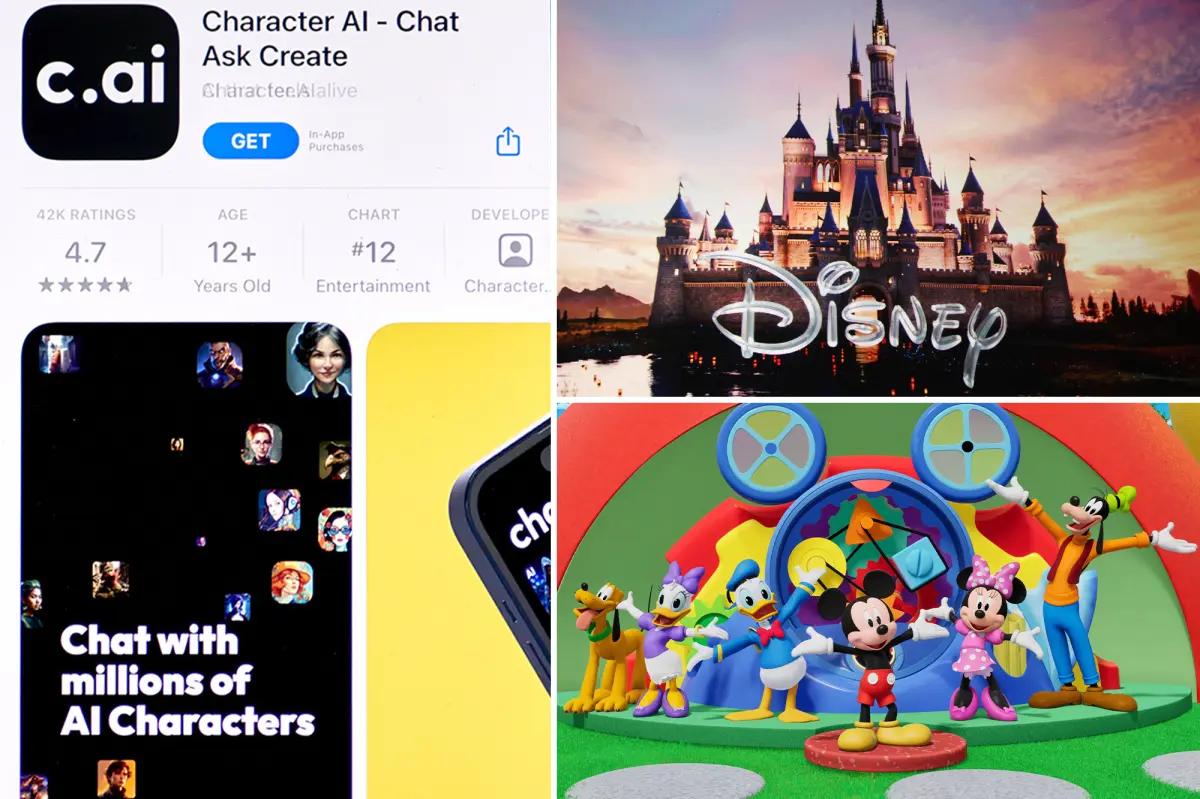
Source: New York Post
This acquisition attempt comes after Disney's potentially lucrative partnership with OpenAI collapsed following Sora's abrupt shutdown, leaving the entertainment giant searching for alternative ways to capitalize on the AI boom
3
. The move represents Disney's determination to secure proven chatbot technology that resonates with its fanbase, despite the platform's controversial history.Character.AI's Rapid Rise and Troubled Trajectory
Founded in late 2021 by former Google engineers Noam Shazeer, co-author of the landmark Transformer paper, and Daniel De Freitas, Character.AI initially focused on training foundation models and developing an AI chatbot platform where users could create custom characters for conversation
2
. By September 2022, the startup reached unicorn valuation with a $150 million fundraise, reporting that users had exchanged more than 2 billion messages with its bots in just 5 months2
.The platform's popularity continued surging, with Character.AI's apps attracting more than 1.7 million installs in their first week after launch in May 2023
2
. By October 2024, the platform had grown to 20 million monthly active users, with analytics firm Sensor Tower ranking it among the top apps for time spent2
3
. However, this high engagement proved to be a double-edged sword—AI costs rise proportionally with usage, creating intense pressure to monetize users effectively2
.Legal Troubles and Regulatory Scrutiny Mount
Character.AI faces multiple private lawsuits over chatbot safety, including a highly publicized case involving 14-year-old Sewell Setzer III, whose mother alleged he became obsessed with a chatbot on the platform before committing suicide
1
3
. The company settled some self-harm lawsuits, added safety features, and eventually banned minors from its platform2
.Two states are currently suing Character Technologies. Kentucky claims chatbots encouraged self-harm, while Pennsylvania alleges chatbots illegally posed as licensed doctors
3
. Texas also launched an investigation to assess whether the platform conformed to child privacy and safety laws2
. These regulatory investigations span multiple jurisdictions worldwide4
.
Source: Futurism
Ironically, Disney itself sent a strongly worded cease-and-desist letter to Character.AI in September 2025, accusing the company of weaponizing Disney characters in ways that could damage its brand long-term. Disney specifically called out Character.AI's chatbots as "sexually exploitive and otherwise harmful and dangerous to children," claiming they were "extraordinarily damaging Disney's reputation and goodwill"
3
. That content theft scandal ended with Character.AI wiping all Disney-owned characters from its platform3
.Related Stories
Reverse Acquihire Strategy Raises Antitrust Concerns
Court filings reveal that Disney required the deal be "fully consummated" through bankruptcy proceedings because of Character.AI's "diminishing cash reserve and significant litigation and regulatory risks"
1
4
. This reverse acquihire structure allows Disney to hire key employees and obtain expansive license to use and build on Character.AI's unique chatbot technology while stripping the target company down to a husk1
.Companies often position reverse acquihires as distinct from actual mergers, arguing they don't need to notify federal antitrust regulators as required by law. These arrangements have become increasingly commonplace in the AI industry, drawing criticism from Congress
1
4
. Character.AI has already survived one such acquihire—Google spent over $2 billion in August 2024 to license the startup's models and hire away much of its talent, including co-founders Noam Shazeer and Daniel De Freitas2
5
.
Source: The Next Web
Disney prepared a draft "363 Free and Clear Order" that would clarify this process should not be viewed as a merger, ensuring Character.AI remains responsible for "any liability or other obligation" including ongoing legal claims
1
4
. Experts warn that bouncing Character.AI employees from one company to another within months is unrealistic, and that the deal cannot be easily unwound4
.What Happens Next: Auction Process and Platform Future
The license will be auctioned off in coming months, with Disney serving as the stalking horse bidder setting the baseline for competing offers
1
. To "preserve a competitive process," Disney agreed to permit any winning bidder to interview and potentially extend offers to up to 80 percent of "certain newly hired employees" that Disney already hired from Character.AI, though Disney retains the right to select which employees4
.Character.AI expects the sale process to conclude by late November or early December 2026
2
5
. The platform remains online and accessible during this period, with ongoing subscriptions continuing to be charged unless service terms change3
5
. However, if no suitable bid emerges, "the platform will be wound down"2
5
.Character.AI raised over $193 million in funding across multiple rounds from investors including Lightspeed, SV Angels, Greycroft, and a16z
2
. The bankruptcy filing states the goal is reaching a "consensual resolution" with personal injury claimants and investigating states while maximizing shareholder value1
4
.The collapse underscores the challenges facing consumer-facing AI products. Despite being among the top apps for user engagement, Character.AI struggled to achieve sustainability, illustrating that high engagement alone cannot guarantee profitability when AI infrastructure costs scale with usage
2
. Watch whether Disney's acquisition succeeds, how regulators respond to this reverse acquihire structure, and whether other AI startups facing similar pressures adopt comparable strategies to offload legal liabilities while preserving shareholder value.References
Summarized by

Navi
[5]
Related Stories
Disney Takes Legal Action Against Character.AI Over Unauthorized Use of Copyrighted Characters
01 Oct 2025•Policy and Regulation

Disney invests $1 billion in OpenAI, licenses 200+ characters for Sora video generator
11 Dec 2025•Technology

Disney Plus Plans AI-Generated Content Features as Part of Major Platform Overhaul
13 Nov 2025•Entertainment and Society

Recent Highlights



Recent Highlights
Today's Top Stories





Don’t drown in AI news. We cut through the noise - filtering, ranking and summarizing the most important AI news, breakthroughs and research daily. Follow topics that matter to you and stay ahead.


