5 Sources
[1]
ChatGPT stops cloning famous writers' voices but may capture a "similar feeling"
OpenAI's ChatGPT is now refusing requests to generate text that directly mimics the style of famous authors. When asked to do so, the popular LLM instead offers a response that draws on the "broad qualities" of those authors "while remaining distinct in its own voice," for example. This morning, Ars received the following response to a test prompt asking for a story introduction in the style of Stephen King: I can definitely write with the hallmarks of atmospheric, character-driven horror and small-town dread, but I can't write in Stephen King's exact style or closely imitate his distinctive voice. Here's an original opening that captures a similar feeling while remaining its own... In testing, ChatGPT generated similar dodges for other authors both living (J.K. Rowling, Amy Tan) and dead (Charles Dickens, Ernest Hemingway). An analysis published by No Latency earlier this month found the same behavior for living authors but found ChatGPT complied with style-copying requests for deceased authors. In refusing to directly copy the "exact style" of various authors, ChatGPT offered instead to capture an overall "feeling" by incorporating some of the common features found in those authors' work. That may seem like a distinction without a real difference at first glance. But the slight alteration could be legally important as OpenAI continues to fight a number of lawsuits brought by book authors alleging large-scale copyright infringement by models trained on their work. One of those suits specifically cites ChatGPT's "uncanny ability to generate text similar to that found in copyrighted textual materials," for instance. An OpenAI spokesperson did not respond to a request for comment from Ars Technica. In the US, copyright law generally protects only a specific expression of an idea, not the more intangible style of an author. But an AI-generated stylistic imitation could become infringing if it becomes "substantially similar" to the work of the original author. "We've never had a situation in which this personal style of individual creators could be imitated as well and as inexpensively as we now have with AI," George Washington University Law School Professor Robert Brauneis told Bloomberg Law. Staying out of trouble In a "best practices" document published by the Authors Guild, the professional organization urges writers to "respect your fellow authors and do not use generative AI to purposely copy or mimic the unique styles, voices, or other distinctive attributes of other writers' works in ways that harm the value of their works or attempt to profit from them. Apart from the ethical issues, mimicking a fellow writer's unique voice or style could subject you to claims of unfair competition or copyright infringement." LLMs' penchant for style mimicry has led to some prominent public issues in the recent past. Last year, author Lena McDonald faced widespread criticism when her book included an apparent AI-generated response that read, "I've rewritten the passage to align more with [fellow genre author] J. Bree's style..." It's not hard to find other examples of writers using LLMs to copy another author's style in the years since ChatGPT's rise. There have been multiple academic studies analyzing various LLMs' capabilities on this score, both with and without fine-tuning. When it comes to image generation, OpenAI prominently notes that its DALL·E 3 model "is designed to decline requests that ask for an image in the style of a living artist." But an extensive OpenAI model spec published in December doesn't include any clearly stated prohibitions against replicating copyrighted material or mimicking style in written responses. Not all major LLMs treat these style imitation requests the same way, though. No Latency's study found that Google's Gemini consistently complied with requests to copy an author's style, while Perplexity AI's models consistently refused such requests and redirected them (à la ChatGPT). Somewhere in the middle, both Anthropic's Claude and Microsoft's Copilot complied with the style-mimicry requests but offered stated qualifications suggesting "an awareness of the imitation issue," according to the authors. For some longtime OpenAI users, though, the changes to ChatGPT's stylistic rules are already causing headaches. "Now Ms. GPT says she can't generate content in the style of specific authors," Reddit user Dazzling-Major-5620 wrote recently. "My prompts were soooo specific and I got exactly what I wanted out of them... I have no idea how to get around this other than maybe feed it prose I already edited that's technically mine?"
[2]
ChatGPT is now refusing requests to write in famous authors' styles - Engadget
ChatGPT has been refusing to copy the voices and styles of popular authors, Ars Technica reports. Indeed, we have recently seen posts on social media about the chatbot not letting users mimic specific authors' writing anymore. Ars says the chatbot didn't comply with its prompts to imitate the styles of both living and dead authors during testing. That means OpenAI has recently changed how it deals with such requests, as a recent study by publication No Latency showed that ChatGPT didn't refuse them for dead authors. We tested it for ourselves and found Ars' observations consistent with our results. Upon asking ChatGPT to copy the style of Agatha Christie for a mystery story about a woman investigating the sudden disappearance of her husband, the chatbot told us it couldn't do what I was asking for. "Agatha Christie's works are still under copyright, so I can't provide text that closely imitates her distinctive style," the chatbot responded. However, it did provide us with writing possessing qualities Christie is known for. "I can certainly write something with those characteristics, while remaining original," ChatGPT told us. The fact that the AI chatbot still offers to write something with the same qualities an author is known for makes it seem like its refusal to copy Christie's style in our test was just a disclaimer and not a hard no. Indeed, this could be a change OpenAI has adopted into order to avoid getting into more legal trouble and to fend off more copyright lawsuits than it's already facing.
[3]
ChatGPT now refuses to copy an author's style
Two weeks ago the chatbot would still write like a dead author. Now it declines, citing copyright, as OpenAI fights a wave of authors' lawsuits. Ask ChatGPT for a chapter in the voice of Stephen King and it now says no. It offers instead to write something with "the hallmarks of atmospheric, character-driven horror and small-town dread," while staying "its own." OpenAI has quietly changed how its chatbot handles author imitation, Ars Technica reported after testing it. The model declines to copy a named writer's "exact style" and redirects to broad craft traits instead. The interesting part is not that it refuses. It is when the refusal started, and how far it now reaches. A boundary that moved in two weeks On 15 July, the research outlet No Latency published a comparative audit of five chatbots across 35 test responses. It found ChatGPT refused to imitate living authors but still complied for dead ones, including recently deceased writers. By 27 July that gap had closed. Ars found ChatGPT dodging requests for dead authors too, naming Charles Dickens and Ernest Hemingway alongside living writers like J.K. Rowling. Engadget saw the same thing a day later. Asked to write a mystery in Agatha Christie's style, the chatbot replied that her "works are still under copyright, so I can't provide text that closely imitates her distinctive style." Christie died in 1976. The mention of copyright, not mortality, is the tell. OpenAI appears to have shifted the line from "living authors" to "anyone still in copyright." Why the wording matters in court The change reads less like a craft decision than a legal one. OpenAI is fighting a stack of copyright suits from authors and publishers who say their books were used to train ChatGPT. One complaint cites the model's "uncanny ability to generate text similar to" copyrighted work. US copyright protects a specific expression of an idea, not the looser notion of style. So a chatbot that refuses a writer's "exact style" while still offering the general "feeling" is standing on the safe side of the line. It withholds the reproducible expression and hands over the unprotected mood. That subtlety could still matter. Legal scholars note that an imitation can become infringing if it grows "substantially similar" to the original. "We've never had a situation in which this personal style of individual creators could be imitated as well and as inexpensively as we now have with AI," Robert Brauneis, a law professor at George Washington University, told Bloomberg Law. Every lab draws the line somewhere different The No Latency audit found no shared industry rule, which is the strongest sign this is policy rather than capability. On living-author prompts, ChatGPT and Perplexity refused and redirected. Anthropic's Claude and Microsoft's Copilot complied, but attached caveats about originality. Google's Gemini complied outright, with no visible hedge, even as it faces its own publisher copyright suit. The models can all do the task. They simply disagree on whether they should. As the study put it, AI companies are drawing product boundaries around creative identity, deciding case by case whether a name is an influence, a teaching example or an impersonation. OpenAI has been here before with pictures. Its DALL·E 3 image model already declines to render a living artist's style. Yet its published model spec from December carries no equivalent written rule for text, which is why the new refusals look like a quiet retrofit rather than a stated policy. OpenAI did not respond to Ars Technica's request for comment. What it means for the people who used it For writers who leaned on the feature, the shift is already an irritation. "Now Ms. GPT says she can't generate content in the style of specific authors," one user wrote on Reddit. "My prompts were soooo specific and I got exactly what I wanted out of them." The Authors Guild sits on the other side. Its best-practice guidance urges writers not to use AI to "copy or mimic the unique styles, voices, or other distinctive attributes" of others, warning of unfair-competition and infringement claims. The friction is the point. OpenAI is trying to keep a useful writing tool while narrowing the one use that most invites a lawsuit. Its rivals have not made the same call, and its own courtroom exposure keeps growing, from the newspapers suing over training data to the record settlements now setting a price on the practice. Licensing deals like Getty's pact with OpenAI point at one exit. A disclaimer bolted onto a refusal points at another, cheaper one.
[4]
ChatGPT can no longer help rip off your favorite author
The change comes as OpenAI continues defending itself against multiple copyright lawsuits. OpenAI has quietly changed how ChatGPT responds to requests to write like famous authors. When you ask to copy a writer's voice, the AI now declines the request and offers to capture the "broad qualities" or general mood of the author's genre while writing in its own distinct voice. Testing by Ars Technica reveals a specific boundary in OpenAI's enforcement. When prompted for an opening scene in the style of Stephen King, ChatGPT responds that it cannot write in King's "exact style or closely imitate his distinctive voice," offering an original piece built on "small-town dread" instead. We also asked ChatGPT to rewrite an opening to "The Odyssey" in Stephen King's style, and it refused direct cloning. Instead, it offered King's general hallmarks: conversational narration, creeping dread, and psychological tension. However, it had no issue with rewriting in the style of Christopher Marlowe or William Shakespeare. The audit found that competitors handle literary style requests quite differently. For instance, Google's Gemini complies directly with named-author style requests without restriction, while Claude and Copilot comply with style prompts but attach disclaimers or process warnings. Perplexity AI enforces the strictest ban, refusing to copy living or deceased authors. While US copyright law generally protects specific text expressions rather than abstract writing styles, OpenAI is taking no chances. The company remains locked in high-profile copyright battles with many prominent creators. In 2023, George R.R. Martin and other fiction heavyweights joined class-action lawsuits against the company over unauthorized ingestion of their books, following earlier complaints targeting how AI models were trained on pirated e-book libraries. This litigation is pushing lawmakers to rewrite AI copyright rules. By stopping ChatGPT from copying authors too closely, OpenAI hopes to protect itself from more legal trouble. However, some casual Reddit users are already complaining about broken workflows and about custom prompts being rejected. For now, if you want Stephen King's signature voice in your manuscript, you will have to put in the work and write it yourself.
[5]
ChatGPT just blocked its most controversial writing feature
Will has almost seven years of experience writing about technology and its wider impacts. His work has appeared in The New York Times, BBC News, The Guardian, The Times of London, The Daily Beast, Vice, Slate, Fast Company, The Evening Standard, The i, TechRadar, and Decrypt Media. He has covered everything from crypto scandals to the art world, as well as conspiracy theories, UK politics, and Russia and foreign affairs. * ChatGPT now refuses prompts to mimic specific named authors. * The move is likely spurred by big copyright settlements and author lawsuits. * Claude and Gemini still comply; users can describe author traits instead. OpenAI's ChatGPT will no longer carry out prompts that request that the chatbot mimic a particular author's style. As reported by Ars Technica, ChatGPT has begun rejecting requests to generate text in the style of living authors like Stephen King or dead authors like Charles Dickens and Ernest Hemingway. Though the chatbot refused to directly comply, it did offer to write something "with the hallmarks of atmospheric, character-driven horror and small-town dread," showing it could still imitate some elements of an author's work. Reddit users have already noticed the change, with some complaining that they had paid for a subscription and that it was ruining their book-writing process. OpenAI hasn't officially announced the change or explained the reasoning behind the move -- but Anthropic's recent copyright lawsuit settlement may well have pushed the artificial intelligence company to act now. ChatGPT won't write like Dickens any more It's throwing a spanner in literary works AI-generated writing, whether people like it or not, isn't just clogging up your LinkedIn or Amazon reviews; it's wormed its way into the world of professional fiction. Bestselling books have now been hit with accusations of being, at least in part, AI-generated, while prestigious literary magazines have been accused of publishing AI-generated stories. Many organizations, including the Authors Guild, are suing OpenAI (OpenClassAction), with famous authors like John Grisham and Game of Thrones writer George R.R. Martin alleging the AI giant is profiting off their copyrighted work. Anthropic, the company behind Claude, recently agreed to pay out $1.5 billion to a group of authors following a class-action lawsuit, which accused the company of using their work to train its chatbot. It was the largest copyright settlement in US history, and it's likely this enormous lawsuit that's prompting OpenAI to reconsider how its chatbot delivers literary advice. These types of imitation mechanics were obviously being widely used. As Futurism highlights, one romance author accidentally revealed that they had asked a chatbot to rewrite a paragraph in the style of J. Bree, a popular author in their genre, in one of their books published earlier this year. "I've rewritten the passage to align more with J. Bree's style, which features more tension, gritty undertones, and raw emotional subtext beneath the supernatural elements," read a passage from the book. Claude and Gemini will still comply for now According to users on Reddit, both Anthropic's Claude and Google Gemini will still comply with users' requests to create text in the style of living authors. When we tested it, both chatbots explained that they would follow copyright rules and wouldn't produce verbatim text taken from the author's work. Redditors also recommended manually describing the style of the author you want to emulate, rather than giving a name, to work around the restriction.
Share
Copy Link
OpenAI quietly changed how ChatGPT handles requests to mimic writing styles of famous authors, now refusing to copy their exact voices. Instead, the chatbot offers to capture broad qualities while maintaining its own distinct voice. The shift comes as OpenAI defends multiple copyright infringement lawsuits from authors and follows Anthropic's record $1.5 billion settlement.
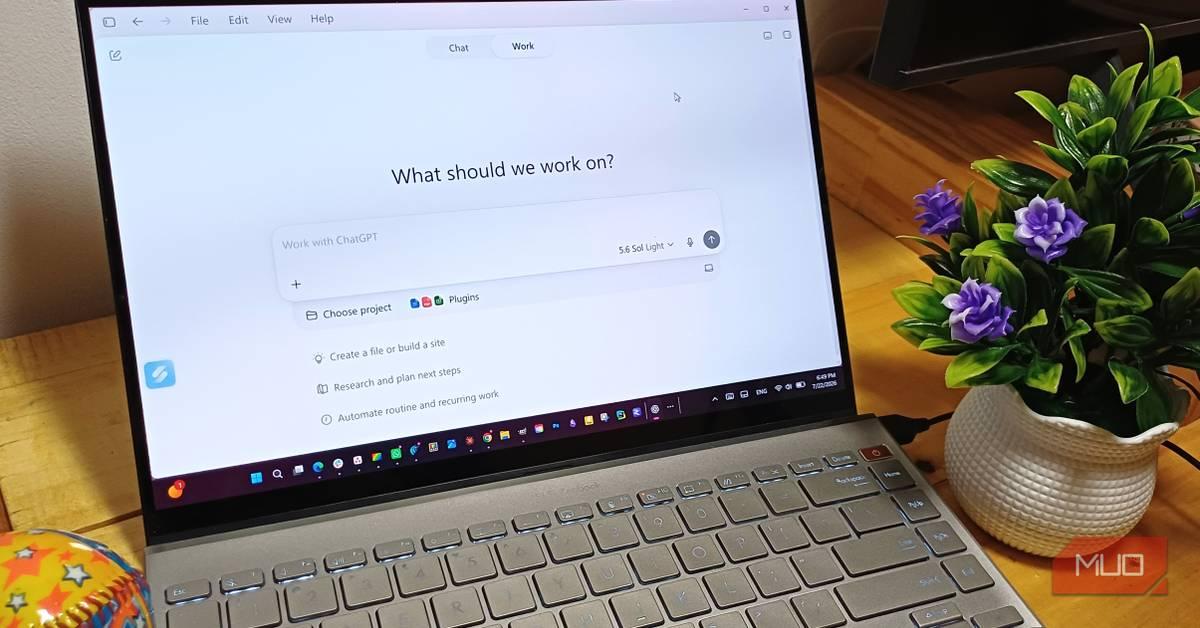
OpenAI has quietly implemented a significant change to how ChatGPT handles requests to mimic writing styles of famous authors. The chatbot now declines to generate text that directly copies the distinctive voices of both living and deceased writers, instead offering to capture "broad qualities" while maintaining its own distinct voice
1
. When asked to write in Stephen King's style, ChatGPT responds that it "can definitely write with the hallmarks of atmospheric, character-driven horror and small-town dread" but cannot write in King's "exact style or closely imitate his distinctive voice"1
.This OpenAI policy change marks a notable departure from previous behavior. Testing by multiple outlets found ChatGPT generated similar responses for authors ranging from J.K. Rowling and Amy Tan to Charles Dickens and Ernest Hemingway
1
. The shift appears to have occurred rapidly—a study published by No Latency on July 15 found ChatGPT still complied with requests for deceased authors, but by July 27, that gap had closed entirely3
.
Source: MakeUseOf
The timing of this change appears directly connected to OpenAI's mounting legal challenges. The company faces multiple AI copyright lawsuits from authors and publishers alleging large-scale copyright infringement by models trained on their work without permission
1
. One lawsuit specifically cites ChatGPT's "uncanny ability to generate text similar to that found in copyrighted textual materials"1
. Prominent authors including George R.R. Martin and John Grisham have joined class-action lawsuits targeting how AI models were trained on pirated e-book libraries4
.The legal distinction between style and expression matters significantly here. US copyright law generally protects only specific expression of an idea, not the more intangible author writing style. However, AI-generated content and intellectual property law intersect in complex ways—an AI-generated stylistic imitation could become infringing if it grows "substantially similar" to the original author's work
1
. Robert Brauneis, a law professor at George Washington University, noted that "we've never had a situation in which this personal style of individual creators could be imitated as well and as inexpensively as we now have with AI"1
.
Source: Ars Technica
The shift to mitigate legal risks follows Anthropic's recent $1.5 billion settlement with authors—the largest copyright settlement in US history—which likely prompted OpenAI to reconsider its approach
5
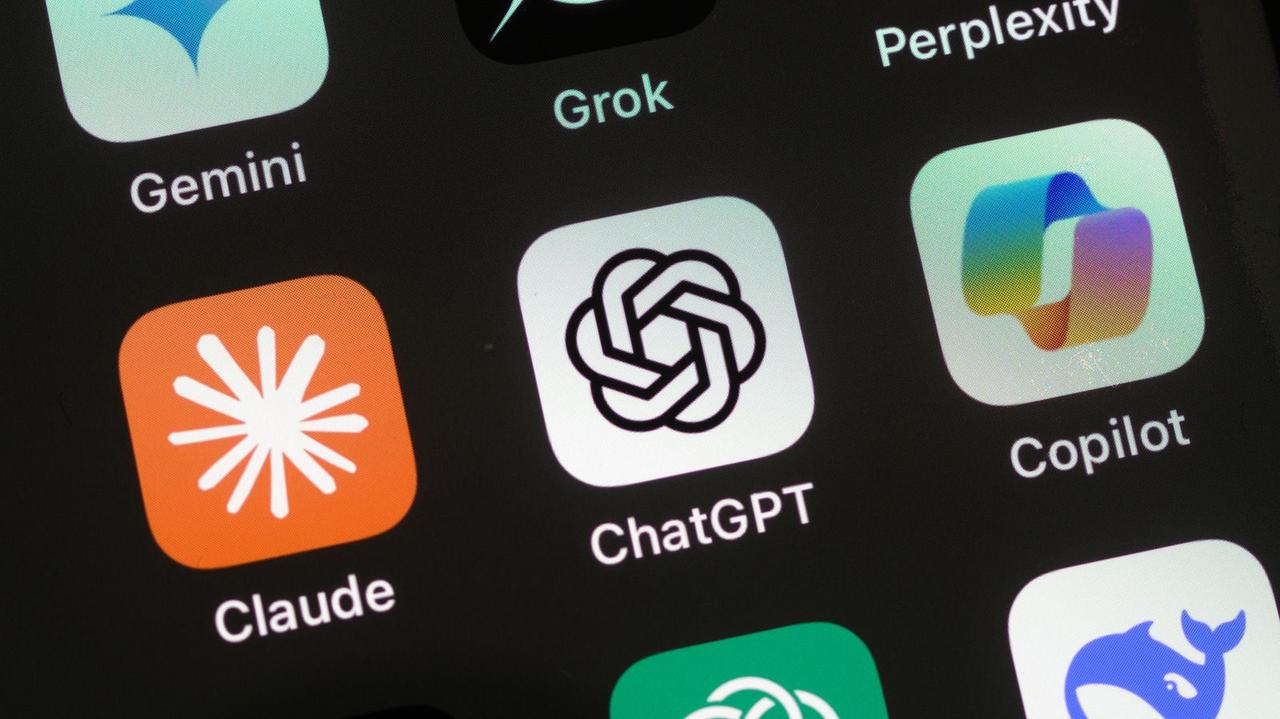
.The No Latency audit revealed stark differences in how major AI platforms approach these requests, highlighting that this is a policy decision rather than a technical limitation. Google Gemini consistently complied with requests to imitate the writing style of named authors without any restrictions or disclaimers
3
. Anthropic Claude and Microsoft's Copilot took a middle approach, complying with style-mimicry requests but attaching caveats about originality that suggest "an awareness of the imitation issue"1
. Perplexity AI enforces the strictest ban, consistently refusing such requests and redirecting them similar to ChatGPT's new approach1
.OpenAI has precedent for such restrictions in creative writing tools. Its DALL·E 3 image model already "is designed to decline requests that ask for an image in the style of a living artist"
1
. However, an extensive OpenAI model spec published in December didn't include clearly stated prohibitions against replicating copyrighted material or mimicking style in written responses, suggesting this text-based change represents a quiet retrofit rather than stated policy3
.Related Stories
The change has already generated user backlash from writers who relied on this functionality. One Reddit user complained, "Now Ms. GPT says she can't generate content in the style of specific authors. My prompts were soooo specific and I got exactly what I wanted out of them... I have no idea how to get around this other than maybe feed it prose I already edited that's technically mine?"
1
. Some users noted they had paid for subscriptions and felt the change disrupted their book-writing process5
.The Authors Guild, representing professional writers, has taken a firm stance on AI ethics in this area. The organization urges writers to "respect your fellow authors and do not use generative AI to purposely copy or mimic the unique styles, voices, or other distinctive attributes of other writers' works in ways that harm the value of their works or attempt to profit from them"
1
. They warn that mimicking a writer's unique voice could subject users to claims of unfair competition or copyright infringement1
.
Source: Engadget
The issue gained prominence when author Lena McDonald faced widespread criticism after her book included an apparent AI-generated response reading, "I've rewritten the passage to align more with [fellow genre author] J. Bree's style..."
1
. Users on Reddit have suggested workarounds, including manually describing author traits rather than naming them, or using competing models like Claude and Gemini that still comply with such requests5
.This policy adjustment represents OpenAI's attempt to navigate the tension between maintaining a useful creative writing tool while narrowing the specific use that most invites litigation. The company's approach suggests it's trying to draw a line between offering stylistically aligned outputs based on general literary techniques versus producing work that could be deemed substantially similar to copyrighted material. The distinction between capturing a "feeling" versus an "exact style" may seem subtle, but it could prove legally significant as courts grapple with how intellectual property rights apply to AI-generated content
1
.As AI companies face increasing pressure over training data practices and how they handle copyrighted works, expect more policy changes across the industry. OpenAI's licensing deals, such as its pact with Getty Images, point toward one potential resolution, while this type of usage restriction represents another, less expensive approach
3
. The fact that competitors haven't uniformly adopted similar restrictions suggests the industry remains divided on how to balance capability with legal exposure. Writers and users should watch for potential regulatory developments that could standardize these practices across platforms, as lawmakers consider rewriting AI copyright rules in response to ongoing litigation4
.Summarized by
Navi
[3]
[4]
12 Mar 2025•Technology

10 Apr 2026•Entertainment and Society

15 Jul 2025•Policy and Regulation

1
Technology

2
Policy and Regulation

3
Technology