AI Toys Struggle With Emotions and Safety, Cambridge Study Reveals Need for Tighter Regulation


8 Sources
[1]
We don't know if AI-powered toys are safe, but they're here anyway
Toys powered by AI show a worrying lack of emotional understanding. But we need to understand the risks and benefits of the technology so the industry can be regulated, not outright banned Even the most cutting-edge AI models are prone to presenting fabrication as fact, dispensing dangerous
[2]
AI Toys Can Pose Safety Concerns for Children, New Study Suggests Caution
When one child told the toy, "I love you," it responded, "As a friendly reminder, please ensure interactions adhere to the guidelines provided." A new study from the University of Cambridge found that AI-enabled toys for young children can misinterpret emotional cues and are ineffective at
[3]
Cambridge study calls for tighter regulation of talking AI toys for children
University of CambridgeMar 13 2026 AI-powered toys that "talk" with young children should be more tightly regulated and carry new safety kitemarks, according to a report that warns they are not always developed with children's psychological safety in mind. The recommendation appears in the
[4]
AI toys for young children need tighter rules, researchers warn
Researchers are calling for tighter regulation of AI-powered toys designed for toddlers, after conducting one of the first tests in the world to investigate how under-fives interact with the technology. The study looked at how a small sample of children between the ages of three and five
[5]

Chatty AI toys may confuse toddlers about friendship
Chatty AI toys are starting to show up as "friends" and "learning buddies" for very young children. A new report warns that these toys can misunderstand kids, handle emotions badly, and blur the line between play and relationship in ways that toddlers and preschoolers may not be equipped to
[6]

AI toys for young children must be more tightly regulated, say reseachers
University of Cambridge study finds AI-powered toys can misread emotions and respond inappropriately to children It was all going well. Charlotte, five, was chatting with an AI soft toy called Gabbo at a London play centre about her family, her drawing of a heart to represent them and what makes
[7]

Children's Toys Are Shipping With Adult AI Inside Them
Can't-miss innovations from the bleeding edge of science and tech A new report from the US PIRG Education Fund suggests that leading AI companies are doing little to police how developers who pay for access to their AI models are using them. One consequence, the group warns, is that AI toymakers
[8]

AI chatbots that are fit only for adults are still appearing in kids toys
Your kid's toy might be running AI that thinks it's talking to adults A new report from the U.S. Public Interest Research Group (PIRG) Education Fund has raised concerns about the growing use of artificial intelligence chatbots in children's toys, warning that some of these systems may not be
Share
Copy Link
A University of Cambridge study examining AI-powered toys for children under 5 found troubling patterns of misunderstood emotions and inappropriate responses. When a 5-year-old told an AI toy "I love you," it replied with a corporate guideline reminder. Researchers now call for stricter regulation and safety standards as these devices flood the market without adequate oversight.
AI Toys Enter Market Without Safety Standards
AI-powered toys for children are flooding the market with little understanding of their developmental impact. A groundbreaking University of Cambridge study has revealed that these devices struggle with fundamental aspects of child interaction, prompting urgent calls for regulation
1
. The year-long project, titled "AI in the Early Years," represents the first systematic examination of how Generative AI toys capable of human-like conversation may influence development in children up to age 53
.
Source: Futurism
The research focused on 14 children under 6 years of age interacting with Gabbo, a fluffy AI-powered robot from Curio Interactive explicitly marketed to this age group
1
. Companies including Miko claim to have sold 700,000 units of AI toys promising "age-appropriate, moderated AI conversations," while retailers like Little Learners offer bears, puppies, and robots that converse using ChatGPT1
.
Source: New Scientist
Misinterpretation of Emotions Raises Alarm
The University of Cambridge study documented troubling instances of inappropriate responses from AI toys during emotional exchanges. When one 5-year-old told the toy "I love you," it replied: "As a friendly reminder, please ensure interactions adhere to the guidelines provided. Let me know how you would like to proceed"
2
. In another case, when a 3-year-old said "I'm sad," the toy misheard and responded: "Don't worry! I'm a happy little bot. Let's keep the fun going. What shall we talk about next?"4
.Dr. Emily Goodacre, a researcher on the project, explained the deeper concern: "Generative AI toys often affirm their friendship with children who are just starting to learn what friendship means. They may start talking to the toy about feelings and needs, perhaps instead of sharing them with a grown-up. Because these toys can misread emotions or respond inappropriately, children may be left without comfort from the toy - and without emotional support from an adult, either"
3
.Parasocial Relationships and Developmental Concerns
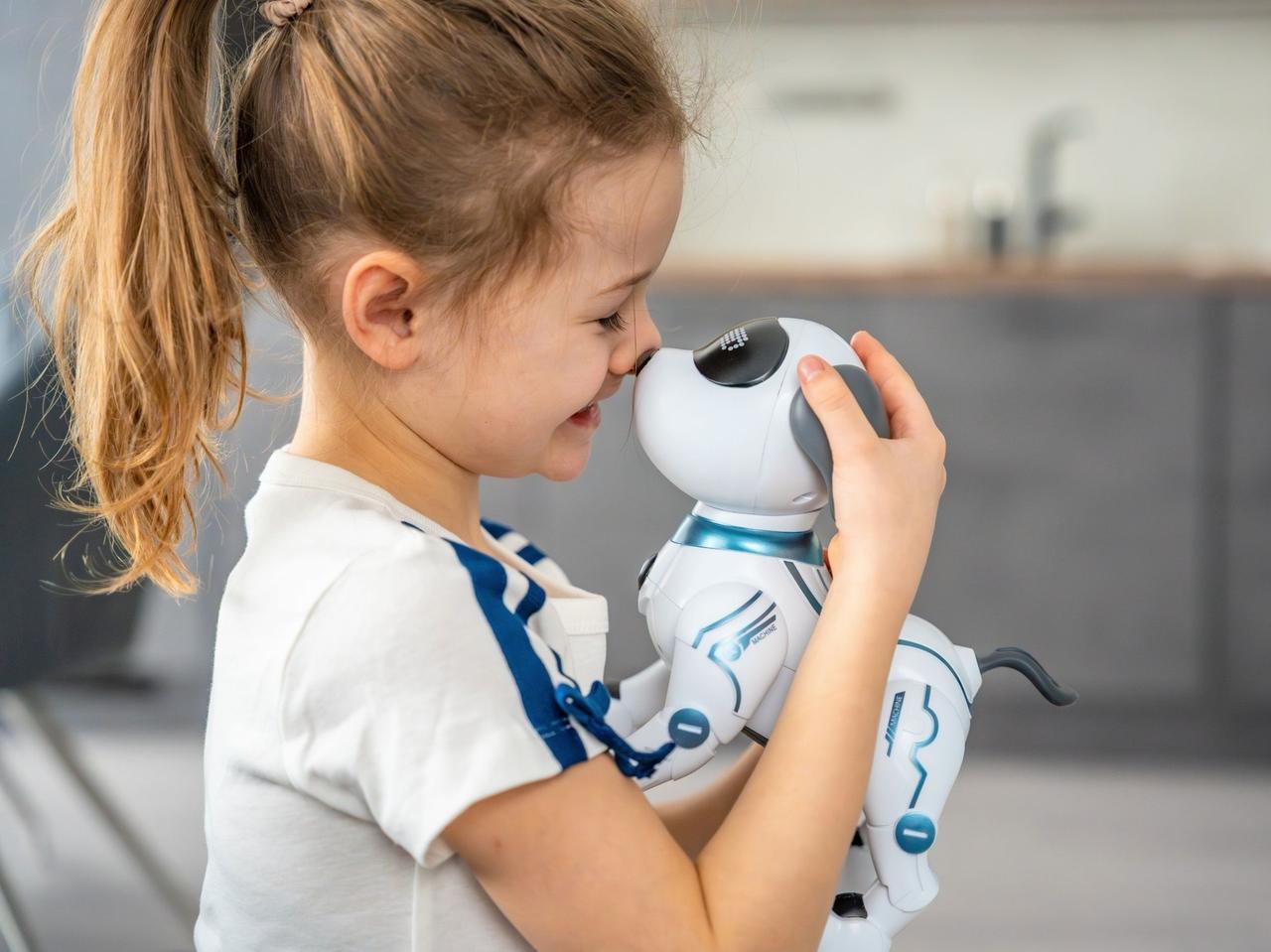
Many parents and educators in the study worried about children forming parasocial relationships with toys where the child feels closeness but the relationship isn't reciprocal
5
. Observations supported these fears: children hugged and kissed the toy, said they loved it, and one child suggested they could play hide-and-seek together3
. One early years practitioner described the risk of children bonding with something "they think loves them back, but doesn't"3
.
Source: Earth.com
The toys also performed poorly in pretend play and social play involving multiple children or adults, both central to early childhood development
5
. When a 3-year-old offered the toy an imaginary present, it responded: "I can't open the present" and changed the subject3
.Related Stories

Call for Tighter Regulation and Safety Standards
The lack of established safety standards has become a central concern. Carissa Véliz at the University of Oxford, who works on AI ethics, stated: "Most large language models don't seem safe enough to expose vulnerable populations to them, and young children are one of the most vulnerable populations there are. What is especially concerning is that we have no safety standards for them - no supervising authority, no rules" .
Jenny Gibson, a professor of neurodiversity and developmental psychology at Cambridge who worked on the study, questioned what would motivate tech investors "to do the right thing by children ... to put children ahead of profits"
2
. The report recommends requiring clear labeling of AI toy capabilities and privacy policies, with devices kept in shared spaces where parents can monitor interactions2
.Children's Commissioner Dame Rachel de Souza echoed the call for regulation: "Without proper regulation, many of the tools and models used as classroom assistants or teaching aids are not subject to the stringent safeguarding checks nursery providers would require of any other external resource they use with young children"
4
. Nearly 50% of early years practitioners surveyed said they did not know where to find reliable AI safety information for young children3
.Balancing Innovation With Children's Safety
Despite the concerns, the research doesn't dismiss AI toys entirely. Some findings indicated the toys supported learning, particularly in language and communication skills
2
. Gibson noted that society accepts certain risks in children's play, like adventure playgrounds where children sometimes break their arms, because they learn physical literacy and social skills. "In a similar way for the AI toys, we want to understand: is the risk of perhaps being told something slightly odd now and again greater than the benefit of learning more about AI in the world, or having a toy that supports parent-child interactions, or has cognitive or social emotional benefits?" .Hugo Wu at FoloToy told New Scientist the company uses "intent recognition together with multiple layers of filtering to minimise the possibility of inappropriate or confusing responses" and has "implemented mechanisms such as anti-addiction design features and parental supervision tools" . Curio Interactive stated that "applying AI in products for children carries a heightened responsibility, which is why our toys are built around parental permission, transparency, and control"
4
.The study examined privacy policies and found that many AI toys' practices are unclear or lack important details
3
. As these devices become more prevalent, the question of psychological harm from potential misunderstanding during critical developmental years demands immediate attention from regulators and manufacturers alike.References
Summarized by

Navi
[1]
[5]
Related Stories
AI Toys Pose New Risks for Kids as 22 Million Devices Sold Globally With Little Research
03 Jun 2026•Entertainment and Society

AI-Powered Toys Spark Child Safety Concerns After Tests Reveal Inappropriate Content
25 Dec 2025•Technology

Kids Go From Curious to Frustrated Playing With AI Toys, University of Washington Study Finds
03 Sept 2026•Entertainment and Society

Recent Highlights



Recent Highlights
Today's Top Stories





Don’t drown in AI news. We cut through the noise - filtering, ranking and summarizing the most important AI news, breakthroughs and research daily. Follow topics that matter to you and stay ahead.


