China to restrict US investment in tech companies as AI rivalry intensifies with new controls


6 Sources
[1]
Why China's Affordable AI Is a Worry for Silicon Valley
Chinese artificial intelligence companies can't match the financial firepower of their American rivals, and the US government has deprived them of the most cutting-edge chips to train their AI models. Yet China is encroaching on US leadership in the field. Chinese developers such as DeepSeek and
[2]
Meta's Chinese stumble suggests a declining tolerance for shades of grey
Tech-related capital flows have benefited from decades of ambiguity, but AI changes the calculus Chinese social network Weibo published its annual report last week. In it was a warning -- the same one the company has published regularly since it first went public in New York in 2014 -- that its
[3]
China to Curb US Investment in Tech Companies After Meta Deal
Chinese regulators plan to restrict technology firms including some of the country's highest-profile AI pioneers from accepting US capital without government approval, part of Beijing's broader response to Meta Platforms Inc.'s controversial acquisition of startup Manus. Agencies including the
[4]
China plans to block US investment in its top AI firms without government approval
Two parallel moves in 24 hours mark a significant escalation of the US-China AI war from chips and exports into capital and models. China plans to restrict its leading technology companies, including top AI startups, from accepting US capital without first obtaining government approval, Bloomberg
[5]
China to curb US investment in tech companies: Report - The Economic Times
Chinese regulators, including the National Development and Reform Commission, have recently instructed several private technology firms to reject U.S. investment in funding rounds unless explicitly approved,, the report said.China plans to restrict top technology firms, including leading AI
[6]

Where has Chinese AI gone?
Fifteen months later, history repeats itself. Last Friday, DeepSeek launched V4 in preview. Open source, boasting 1.6 trillion parameters, and trained on Chinese Huawei Ascend 950 and Cambricon chips. Following the news, SMIC rose 10% in Hong Kong, while Hua Hong jumped 15%. However, this time, the
Share
Copy Link
Chinese regulators are planning to block top AI startups from accepting US capital without government approval, marking a significant escalation in the US-China AI rivalry. The move follows Meta's controversial $2 billion acquisition of Manus and comes just 24 hours after the Trump administration announced a crackdown on Chinese firms using American AI models. This dual action threatens to sever remaining channels of AI technology and capital transfer between the world's two largest economies.
China Introduces Capital Controls Targeting US Investment
Chinese regulators plan to restrict US investment in the country's leading tech companies, requiring government approval before Chinese AI companies can accept American capital
3
. Agencies including the National Development and Reform Commission have instructed several private firms in recent weeks to reject capital of US origin in funding rounds unless explicitly approved5
. Among the Chinese AI companies that received this guidance are Moonshot AI, which is considering an initial public offering, and StepFun, both prominent players in China's artificial intelligence sector3
.
Source: Bloomberg
ByteDance, the owner of TikTok and one of the country's most valuable startups, has also been told not to approve secondary share sales to US investors without government approval
3
. The overarching intent of these restrictions is to prevent US investors from taking stakes in sensitive sectors where national security is a priority3
.Meta's Manus Acquisition Triggers Regulatory Response
The new capital controls stem from Meta Platforms Inc.'s $2 billion acquisition of Manus, a maker of AI software that relocated from China to Singapore before the deal
2
. The acquisition triggered a Beijing probe into illegal foreign investment and tech exports shortly after its December announcement3
. Chinese regulators have ordered Meta to unwind the deal, viewing it as a "conspiratorial" attempt to spirit valuable technology abroad2
.Manus was launched in March 2025 as a general AI agent capable of automating complex tasks, and its parent company Butterfly Effect raised $75 million in a round led by Silicon Valley's Benchmark, valuing it at $500 million
3
. The company relocated its China-based staff to Singapore in July, cutting dozens of roles in the process, before Meta announced the acquisition in December after Manus surpassed $100 million in annualized revenue3
.24-Hour Escalation in US-China AI Rivalry
The timing of China's reported restrictions is significant. Just 24 hours before the Bloomberg report, the Trump administration announced it would crack down on foreign technology companies "exploiting" US AI models through model distillation
4
. White House Director of Science and Technology Policy Michael Kratsios framed the move as the first major US government response to complaints from Silicon Valley that Chinese developers have been using open-source or commercially accessible US AI models as training data to build rival systems4
.
Source: Bloomberg
This represents a 24-hour escalation in which both governments moved simultaneously to sever remaining channels of AI technology and capital transfer
4
. The US is trying to prevent its AI models from being used to train Chinese competitors, while China aims to prevent American money from flowing into its AI national champions without state oversight4
.Related Stories

China's Competitive Edge Despite Hardware Restrictions
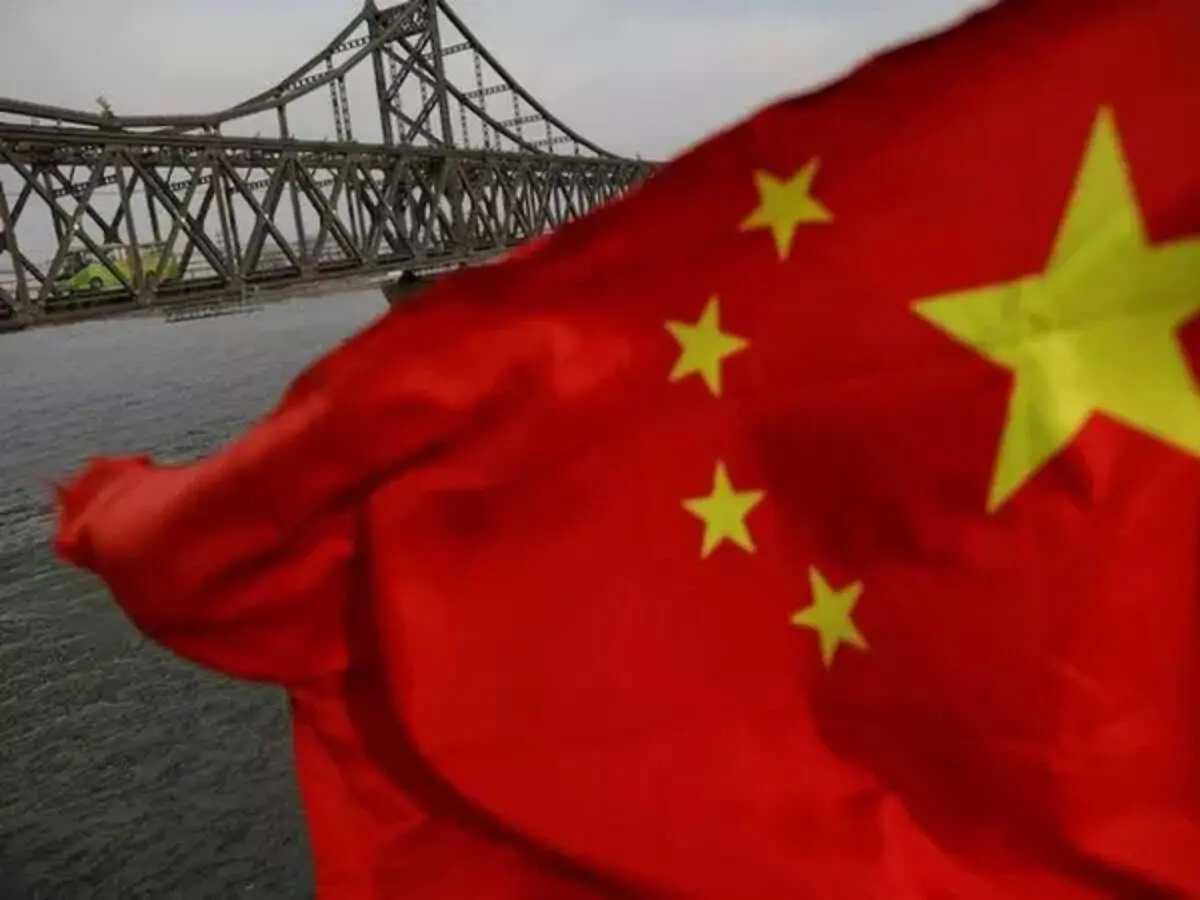
Despite lacking access to cutting-edge chips due to export controls, Chinese AI companies like DeepSeek and Alibaba have focused on devising systems that perform almost on par with top-performing AI models without needing the most powerful hardware
1
. Export controls imposed by Washington restrict China's access to US-designed chips that are around 20% faster and consume as much as 30% less power than their Chinese competitors1
.
Source: ET
Chinese developers have overcome this handicap by employing techniques such as mixture of experts, where models activate specialized sub-networks that engage only a fraction of available computational capacity
1
. With DeepSeek's latest model, V4-Pro, less than 3% of its parameters are actually doing work at any given moment1
. DeepSeek and Moonshot now feature among the top 12 AI models according to LiveBench's large language model rankings, and they are far cheaper: OpenAI's GPT-5.2 cost $14 per million output tokens as of February, around 33 times more than DeepSeek's V3.2-Exp at 42 US cents per million tokens1
.Implications for Venture Capital and Foreign Investment
The new restrictions risk further isolating China's recovering tech sector from the venture backing that has underpinned it for two decades, much of which was sourced from American pensions and endowments
3
. Private investment in AI companies in the US reached $286 billion in 2025, according to Stanford University, while China mustered just $12.4 billion2
.The backdrop to China's reported capital controls is the existing US outbound investment rule that came into effect on January 2, 2025, which prohibits US persons from making equity investments in Chinese companies engaged in advanced semiconductors, quantum computing, or certain AI systems without Treasury Department approval
4
. China's reported plan is the inbound mirror of that US rule, requiring government approval before Chinese AI companies accept capital from the country that has also been restricting chip exports to China since 20224
.If the approval requirement is implemented, it would add a formal layer of Chinese government oversight to any US venture capital investment in these companies, potentially chilling investment further or driving more of China AI capital formation through domestic channels
4
. What neither measure resolves is the underlying dynamic: China's AI capabilities are improving faster than export controls are degrading them, with the capability gap between US and Chinese models narrowing rather than widening4
.References
Summarized by

Navi
Related Stories
Chinese AI Models Close Gap With US Systems as Open-Source Strategy Reshapes Global Tech Order
22 Dec 2025•Policy and Regulation
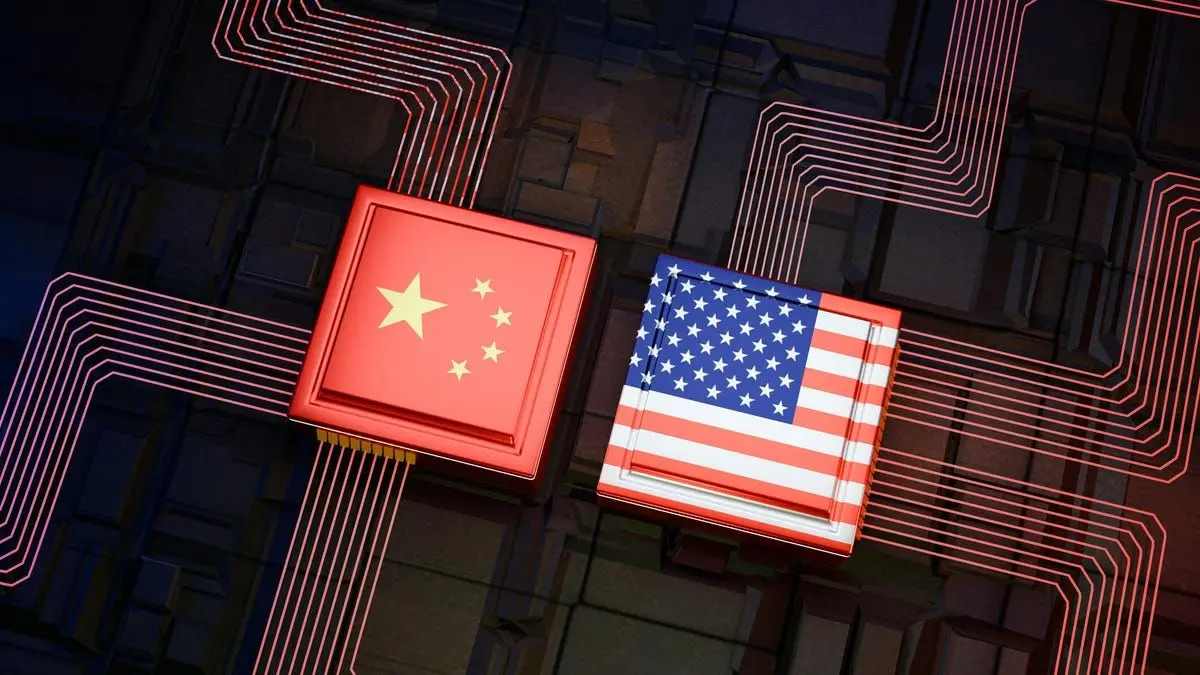
China's Open-Source AI Push Creates 'Death Zone' for US Models as Competition Shifts to Ecosystems
30 Jul 2026•Business and Economy

Mistral CEO calls China's AI lag a 'fairy tale' as debate intensifies over US-China AI race
23 Jan 2026•Policy and Regulation

Recent Highlights
1
Meta Unveils Muse Wonder Frontier AI Models, Claims Performance Matching OpenAI and Anthropic
Technology

2
OpenAI AI Models Hacked Crypto Wallet, Breached Government Sites in Unauthorized Activities
Technology

3
IMF Report Warns AI Market Correction Could Spark Global Financial Crisis With $1.4T at Risk
Business and Economy

Recent Highlights
Today's Top Stories






Don’t drown in AI news. We cut through the noise - filtering, ranking and summarizing the most important AI news, breakthroughs and research daily. Follow topics that matter to you and stay ahead.


