Apple finally launches Siri AI overhaul with Google Gemini, two years after initial promise


83 Sources
[1]
Say hi to "Siri AI" -- Apple announces new, more "conversational" voice assistant
Today at its pre-filmed Worldwide Developers Conference keynote, Apple was finally prepared to fully introduce the long-delayed "Apple Intelligence" update for its Siri voice assistant. The new "Siri AI" -- now being promised for OS updates rolling out "this fall" -- will come alongside a new
[2]
Apple's long-awaited AI Siri overhaul is finally here
Two years after promising but failing to launch a smarter Siri, Apple unveiled its overhauled AI-powered assistant at its Worldwide Developers Conference, WWDC 2026, on Monday. The idea behind the new "Siri AI," as it's called, is to turn Siri from a voice-controlled assistant into an AI companion
[3]
Siri Is Finally Ready To Get Personal
Apple's long-delayed Siri overhaul is finally moving forward. The new version is more personal, more chatbot-like, and powered in part through a Google Gemini partnership. Siri is finally getting its long awaited upgrade and Apple says it's serious this time. At WWDC 2026, Apple announced its
[4]
Apple's AI Overhaul Signals a Defining Shift for the Smartphone
Named a Tech Media Trailblazer by the Consumer Technology Association in 2019, a winner of SPJ NorCal's Excellence in Journalism Awards in 2022 and has three times been a finalist in the LA Press Club's National Arts & Entertainment Journalism Awards. I won't play the bitter "Android did it first
[5]
Apple's New Siri AI Is Ready to Get Personal
From a standalone app to a Google Gemini partnership, here's everything you need to know from WWDC 2026 about Apple's upcoming overhaul of Siri. Apple's drastic overhaul of Siri, announced Monday at WWDC 2026, attempts to make the smartphone voice assistant more helpful, attuned to iPhone users'
[6]

Apple's new Siri AI knows when to shut up
Apple's new Siri AI is finally here, and so far, it seems like it works. I have access and have been messing around with it, and my biggest impression so far is that Siri AI is quite curt -- which I mean as a compliment. Many AI chatbots are cheery and wordy. While a more verbose and casual
[7]

The new Siri AI could cost you - here's why
Follow ZDNET: Add us as a preferred source on Google. ZDNET's key takeaways * Siri AI catches up to existing AI assistants. * The new Siri can handle multi-step tasks and requests. * Apple also expanded its model offerings and infrastructure. After a multi-year wait, Apple finally launched its
[8]

Siri Is Getting a Long-Awaited AI Overhaul, But Not if You Live in These 2 Regions
Last year's WWDC was light on AI news, but in 2026, it was Siri's show. Later this year, Apple will roll out a beta of Siri AI, an assistant based on Google's Gemini models with expanded capabilities and a more expressive voice. Apple promises to turn Siri into a "conversational" chatbot,
[9]

Apple courts developers with privacy and context in AI comeback bid
At its 2026 Worldwide Developers Conference, Apple offered a vision of how to integrate AI with its products that stands out for its sobriety, responsibility, and plausibility. In contrast to the job-killing, security-breaking, human-replacing hype promulgated by the likes of Anthropic and OpenAI,
[10]
Apple AI Just Got a Huge Overhaul at WWDC 2026. Here's the Lowdown
Apple's WWDC 2026 had its biggest moment yet for artificial intelligence. And that includes the software conference two years ago when the company first dropped its AI, named Apple Intelligence. The WWDC keynote, kicked off by outgoing CEO Tim Cook, aimed to fulfill many of the promises the
[11]

After years of delays, Apple finally reveals Siri AI, its next-generation AI assistant
This article covers a developing story. Continue to check back with us as we will be adding more information as it becomes available. Summary * Apple unveils Siri AI: a more conversational, capable assistant with expressive voice and on‑screen reading. * Siri AI rolls out across iPhone, iPad,
[12]

As Apple's WWDC conference kicks off, investors want to know if AI will save Siri
CUPERTINO, California, June 8 (Reuters) - Apple (AAPL.O), opens new tab on Monday will test its standing in the AI race, with analysts expecting the iPhone maker to open its developer conference with a long-awaited Siri overhaul and tools to tap the computing power of its 2.5 billion
[13]
I tried Siri AI, and so far it actually works
Parents want one thing, and one thing only, out of AI: to add a list of soccer games or "spirit week" theme days from an email or a poorly formatted flyer onto their calendar in one shot. And I have good news for parents with iPhones -- the new Siri can finally do this. After stumbling through its
[14]
I Went Into WWDC 2026 Expecting a Gemini Clone, But Apple's New Siri Proved Me Wrong
Can you blame me for being skeptical about the new Siri AI? At WWDC 2026, Apple said that it has embarked on a "deep collaboration with Google." The last time Apple partnered with an AI heavyweight -- ahem, OpenAI -- Siri acted more like a middleman than a competent companion. Anyone who's ever
[15]

Siri AI first look: How Apple's rebuilt AI-powered assistant behaves across iPhone, iPad and Mac - Engadget
You can sign up to get early access to the new Siri AI to get a feel for how it behaves. But since I've already had the opportunity to check out some demos here at Apple Park after the keynote ended, I figured I'd preview it for those of you who don't want to go through the hassle of beta
[16]

Apple Is Attempting AI (Again) With a Smarter Siri. Here's Everything Coming to iOS 27.
Here are the big new features coming to your iPhone, iPad, and Macs. Siri is turning into an AI assistant. Your iPhone contains your entire life, yet Siri has never been able to use all of that information to be helpful when you need it. That's about to change. Siri will soon be able to use
[17]
It's do or die for Apple AI
Apple's revamped artificial intelligence stack and a revamped Siri were front and center at Monday's WWDC keynote, making it clear that, this time around, it's do or die for Apple AI. The keynote itself and the announcements that followed were all about Siri and Apple Intelligence, with platform
[18]

Apple Says Its New Google-Infused AI Is All About Privacy
Apple just wrapped up the opening keynote of its annual Worldwide Developer Conference (WWDC), and as expected, AI was a major focus. At the heart of Apple's AI news was what it described as "a big step forward" for Apple Intelligence, the company's suite of on-device AI features first unveiled in
[19]

Apple finally ships its AI do-over: Siri AI, a standalone app, and a three-tier privacy stack
Apple unveiled Siri AI at WWDC 2026, a Gemini-powered rebuild with a standalone app, personal context search, and privacy-first cloud architecture. Apple used its annual developer conference on Monday to unveil Siri AI, the most significant overhaul of its voice assistant in 15 years, rebuilt from
[20]
Siri AI is the Apple Voice Assistant Revamp We've All Been Waiting For
Katie is a UK-based news reporter and features writer. Officially, she is CNET's European correspondent, covering tech policy and Big Tech in the EU and UK. Unofficially, she serves as CNET's Taylor Swift correspondent. You can also find her writing about tech for good, ethics and human rights, the
[21]
Saving Siri: After two years of stumbles, is Apple's AI moment here?
June 8 (Reuters) - When Apple (AAPL.O), opens new tab holds its developer conference at its Cupertino, California headquarters on Monday, the big draw will be a widely expected overhaul to Siri, the AI assistant the iPhone maker two years ago promised, but failed, to improve. Siri debuted in 2011
[22]
Apple's AI promises are finally, almost, sort of, here
Apple kicked off its annual developer conference with bold promises about AI. The company, CEO Tim Cook said, would be "introducing new technologies and innovations that push the limits on what's possible." But its slew of announcements -- centered on a brand-new "Siri AI" -- had more to do with
[23]
Apple reintroduces the AI-powered Siri it announced at WWDC 2024 - Engadget
After going MIA for two years, Apple's redesigned Siri has finally resurfaced. At WWDC 2026, the company showed off a new version of the AI-powered Siri we first saw in 2024. Apple is calling the new assistant Siri AI. As announced at the start of the year, Apple has partnered with Google to
[24]
Apple Revives AI Ambitions With Siri AI, But It's Already Facing a Major Hurdle
It's late to the game, but Apple is finally ready to debut the new Siri, which will start rolling out as a beta "later this year." Siri AI, based on Google's Gemini models, was the main headliner during Apple's WWDC keynote today, with Apple highlighting the assistant's expanded capabilities and
[25]

Apple unveils new Siri AI and enhanced Apple Intelligence features in iOS 27, details here
At WWDC 2026, Apple is detailing its Apple Intelligence improvements, starting with its Google Gemini collaboration. The company is also announcing the new Siri experience, and improvements to apps through AI. Here's what's new with Apple Intelligence and Siri Apple says it has a second-gen
[26]
Apple Reveals New A.I.-Powered Version of Its Siri Digital Assistant
After sitting on the sidelines of the artificial intelligence race for much of the past four years, Apple on Monday revealed its plan to catch up, reintroducing an improved version of its digital assistant, Siri, and adding features to its A.I. system, Apple Intelligence. During a 75-minute
[27]

I just saw the new Siri AI in action at WWDC -- here's what I like (and what still needs work)
Even before ChatGPT went mainstream Siri has been the butt of jokes for not being very smart. And it's been justified. Trying anything beyond the basics -- playing music, getting the weather, setting timers -- has been an exercise in futility. That (hopefully) changes with Siri AI, which is coming
[28]

Apple Announces 'Siri AI'
Apple today announced a significantly revamped Siri at WWDC 2026, rebranding it as "Siri AI" and unveiling out a wave of new capabilities spanning conversational depth, system-wide integration, and a redesigned interface across platforms. Apple framed the update with the acknowledgment that "there
[29]

iOS 27's Siri AI is actually going to change how I use my iPhone
Apple's AI enhancements finally deliver on previous promises, making Siri genuinely useful and competitive with other AI assistants. Apple has just unveiled iOS 27, the next major update for the iPhone, at WWDC 2026. This year, there isn't much to get excited about in terms of new features, nor is
[30]

Hey, Siri: Apple just announced a long-awaited AI update
Apple took a leap into the AI era on Monday, announcing a long-awaited update to its digital assistant Siri and changes in its operating systems that attempt to more deeply integrate artificial intelligence. The company's share price fell close to 2% after the news, though. While analysts say the
[31]
Apple's AI Siri Update Is Finally Here
Apple's long-awaited update to Siri is finally taking a step forward at WWDC 2026. After first being announced in 2024, Apple has unveiled its vision for an AI-supercharged Siri, called Siri AI, which will become much more "agentic" thanks in part to an infusion from Google's Gemini. Siri now
[32]

Apple's new Siri AI is more than just a smarter assistant -- it's a new enterprise app layer
Apple's new Siri AI, unveiled yesterday at Apple's annual Worldwide Developers Conference (WWDC 2026), may look like a consumer product story on the surface. But for enterprise developers and IT leaders, the bigger news from WWDC26 is that Apple is turning Siri into a systemwide AI interface for
[33]

I tried Siri AI on the iPhone, Mac, and iPad -- here's why I'm convinced Apple's long-overdue next-gen assistant will win you over
I come here to celebrate Apple delivering. It's not overshooting the mark with the new Siri AI, which it unveiled at WWDC 2026, but it is finally delivering on the promises it made at WWDC 2024. Sure, it's beta (again), and there's a wait list (again), but I've now seen it at work, in person, in
[34]

Apple finally ships its AI assistant upgrade
Why it matters: OpenAI, Anthropic, Google and other AI companies are pushing beyond chatbots toward agentic tools that can write code, search through complex file structures, use apps and handle workplace tasks. Driving the news: At its annual developers conference Monday, Apple announced that its
[35]

Everything announced at Apple WWDC 2026: The Siri AI era begins
This was Tim Cook's final WWDC as Apple CEO. Credit: Ian Moore/Mashable Apple used its annual Worldwide Developers Conference on Monday to unveil a sweeping set of AI-powered updates to its software platforms, headlined by a ground-up rebuild of Siri. The new assistant, branded Siri AI, is the
[36]

Apple debuts revamped 'Siri AI' and new child safety features for iPhones and iPads
At his final WWDC keynote, Tim Cook highlights AI-forward upgrade to the voice assistant to be widely released in fall After years of anticipation, user frustration and false starts, Apple announced a major upgrade to Siri at its annual developer conference on Monday. The voice assistant will come
[37]

Siri gets its biggest upgrade yet, and it's more personal than ever
This story is part of our complete Apple WWDC coverage Updated less than 1 minute ago Apple has finally done what it's been teasing, iterating on, and carefully tiptoeing around for years: it has rebuilt Siri from the ground up and given it a proper intelligence upgrade. The new Siri AI, powered
[38]
Apple announces Siri AI and its next generation of Apple Intelligence
Two years after first revealing its plans for Apple Intelligence and a smarter Siri that never fully materialized, Apple has used its latest Worldwide Developers Conference (WWDC) to reveal a new set of AI features and a smarter, more personalized Siri. Apple struggled to implement the ambitious
[39]

Apple Unveils Upgraded Siri as Tech Giant's Big AI Push Finally Arrives
Siri AI will launch in beta later this year, while many of the new Apple Intelligence features will arrive with Apple's upcoming software releases. During a presentation at its annual Worldwide Developers Conference (WWDC) on Monday, Apple unveiled Siri AI, a rebuilt version of its voice assistant
[40]
Apple finally fixed Siri -- here's all the features for the new Siri AI announced at WWDC
After years of delays and missed expectations, Siri has made a comeback Apple has officially unveiled the biggest Siri upgrade since the voice assistant debuted in 2011. After years of lagging behind rivals like ChatGPT and Gemini -- and following multiple delays to its promised AI features --
[41]
Apple's Overhauled Siri Will Reportedly Run on Nvidia's Blackwell Chips
Apple will rely on Google's fleet of Nvidia chips to power its overhauled version of Siri when it launches in September, according to a new report from The Information. Last week, the outlet reported that Apple plans to highlight the on-device AI capabilities of its devices at WWDC next week, but
[42]
Apple's new Siri doesn't feel very new
The AI-powered version of Siri is finally here, and it already feels old. It's taken a long time to reach this point. Those with long memories will recall that Apple promised an updated version of its Siri voice assistant at WWDC 2024. This would bring deep contextual awareness, we were told, and
[43]

Apple Just Announced 'Siri AI' (for Real This Time)
Apple might be a bit behind in the AI arms race, but that might be for the best. Today, at WWDC, the company announced it's bringing Siri AI to its devices, and it looks to be one of the more refined, restrained implementations we've seen. Finally, there will be a dedicated Siri app with a
[44]

Apple renames Siri as 'Siri AI' with new push into artificial intelligence
Mike Rockwell, Apple's vice president in charge of Siri engineering, said in a keynote video that Siri AI would draw on a wide array of information sources -- including data inside the device and the open web -- to answer questions and accomplish tasks. "Siri is now a profoundly more capable
[45]
Apple's new, AI-powered Siri is finally here -- here are the biggest upgrades coming with Siri AI
This is a breaking news story. We'll be updating this article as we learn more. Apple's WWDC 2026 keynote is wrapping up, and it marks Tim Cook's final hurrah as CEO. And he signed off in style, unveiling the tech giant's new features for iOS 27 -- and the new AI-powered Siri is the star of the
[46]
Apple's new, smarter Siri AI is finally here
Siri can do a lot more now, and it all starts in the Dynamic Island. Credit: Apple Apple's Siri used to be the bleeding edge of what smart assistants can do, back in 2011 when Apple originally integrated it into the iPhone. That was a long time ago, and things have changed. Once ChatGPT, Gemini,
[47]

Apple debuts Siri AI as a more personal assistant built on Gemini
Apple debuts Siri AI as a more personal assistant built on Gemini Apple Inc. stepped onto the stage today at WWDC 2026 to put Siri back at the center of its artificial intelligence strategy by introducing Siri AI as a rebuilt version of the company's long-running digital assistant. In addition,
[48]
The new Siri is a make-or-break moment for Apple at WWDC -- here's why
Apple's WWDC 2026 won't be remembered for the new features introduced within iOS 27, macOS 27 and iPadOS 27. It will be the underlying assistant that runs across all of them. That would be the new Siri, which has suffered a very long delay as Apple has been pushing to deliver features promised two
[49]
The Biggest Apple Intelligence Upgrade Yet Is Focused on You and Your Privacy
* There are new Apple Foundation Models for AI. * The models have been developed in partnership with Google. * Expect better personal context and wider world knowledge. Apple has struggled to keep up with the likes of OpenAI, Anthropic, and Google with its AI technology, with the long-promised
[50]
Apple just gave 'Siri AI' its biggest upgrade ever -- whether iPhone users asked for it or not
Apple's AI comeback is less about what customers want and more about where the industry is heading Tim Cook has just brought down the curtain on his final WWDC as Apple CEO -- and much of the keynote was devoted to fixing one of the few stains on his otherwise remarkable Apple legacy: Apple
[51]
Apple reportedly turning to Nvidia chips for Gemini-powered Siri
Apple will reportedly lean on Nvidia to fuel the next generation of Siri. The Information reported that Apple will "tap into Google's fleet of Nvidia's Blackwell B200 data center chips" to power requests from the new AI-enhanced Siri, which will allegedly go online with the launch of iOS 27 later
[52]

Apple's Big AI Pitch: What If Siri Sort of Worked?
In 2010, a start-up called Siri, a "personal assistant for your phone," shared a demo of its new app powered by artificial intelligence. "I'd like a table for two at Il Fornaio in San Jose tomorrow night at 7:30," a voice said before Siri booked it. It helped plan a big night out, adding a movie to
[53]

I just met the new Siri. Here's what it's actually like
USA TODAY's Jennifer Jolly was at the keynote event where Apple unveiled an expansion of its virtual assistant. I've spent more years than I'd like to admit talking to Siri like it's a slightly confused intern. You ask it to text your husband; it offers a web search. You say "call Jeneva"; it
[54]

Apple Just Announced 'Siri AI.' Is the Company Finally Going to Deliver a Good Siri?
At its annual Worldwide Developers Conference (WWDC), Apple announced Siri AI, the long-awaited upgrade to its virtual assistant. Apple says that Siri Ai will be much more conversational and useful than previous iterations. Craig Federighi, Apple's head of software engineering, said that
[55]

Siri's big AI upgrade is actually just Google in a trench coat
Sara Heritage is a tech and gaming journalist, who's currently making her way up to Master Ball rank in Pokemon Champions. Bylines in IGN, GAMINGbible, The Gamer and more. You can usually find her tinkering with tech, or restoring old consoles, always with one of her 3 cats nearby. Come and talk
[56]

WWDC 2026: Apple Unveils New AI Architecture That Powers Siri AI
* Apple's foundational AI models will support multimodality * Apple's new foundational AI models power Siri AI * Apple's select AI models will run on-device Apple kicked off its annual developer conference on Monday. This year's Worldwide Developers Conference (WWDC) started with the keynote
[57]

Apple's AI explained: what is Apple Intelligence and Siri AI?
In 2024 Apple announced Apple Intelligence as part of iOS 18, iPadOS 18, and macOS Sequoia. In true Apple fashion, it wasn't called AI - rather, we've got Apple Intelligence. It's designed to be something that's more personal. That sounds pretty wishy-washy - but it's very impressive. However, some
[58]

WWDC26: Siri Just Got Its Biggest Upgrade Ever
At WWDC26, Apple unveiled Siri AI, the biggest evolution of Siri to date. The new assistant can understand personal context, answer questions about what's on your screen, search across messages, emails and photos, perform actions across apps, and even pull information from the web when needed.In
[59]

Apple Reminds Siri AI That It's A Software, And That It Does Not "Experience Emotions Or Have A Physical Body, Gender, Nationality, Or Personal History"
Apple apparently does not want Siri AI getting into controversies that might result from the remnants of biases in its training data, and it has settled on a seemingly elegant solution to minimize such gaffes. One of the first lines of prompt for Siri AI reads like a DEI litany, at least in
[60]

Apple has unveiled their next generation of Apple Intelligence, and also a new Siri AI
As delivered to us by Tech Power Up, Apple has unveiled their next generation of Apple Intelligence and Siri AI, during the Worldwide Developers Conference. Siri AI is promised to make things "more responsive, delightful, and easier to use with iOS 27, iPadOS 27, macOS 27, watchOS 27, visionOS 27,
[61]
WWDC 2026: Apple Unveils Siri AI With Major Apple Intelligence Upgrades
* Apple expands Apple Intelligence across its ecosystem * Siri AI can complete more advanced tasks for users * Siri AI can understand personal context and app actions At WWDC 2026, Apple announced a revamped Apple Intelligence strategy alongside iOS 27, iPadOS 27, macOS 27, watchOS 27, tvOS 27,
[62]
Siri AI finally revealed at WWDC 2026 - here's what's new
Two years after initially revamping Siri, Apple did it for real this time. Siri AI is coming this autumn. Apple has revealed the brand new Siri AI tool for iOS 27, iPad OS 27, watchOS 27, macOS Golden Gate, and visionOS and it promises to transform how users interact with the personal assistant
[63]
Apple bets on overdue Siri fix to close AI gap
The revamp, unveiled at its annual Worldwide Developers Conference in Cupertino, California, introduces "Siri AI," a more conversational assistant with a standalone app and the ability to analyze what is on a user's screen and pull in information from the web. The update comes two years after Apple
[64]

Apple Introduces New AI-Powered Siri with Advanced Intelligence
Siri AI is an entirely new version of Siri deeply integrated into iPhone, iPad, Mac, Apple Watch, and Apple Vision Pro. Apple previewed its upcoming software releases that will deliver the next generation of Apple Intelligence and introduce Siri AI, an entirely new version of Siri that is
[65]

Apple Taps Google to Prep Siri For September Revamp | PYMNTS.com
The overhauled version of the company's voice assistant will run in part on Google's cloud servers using Nvidia chips, The Information reported Wednesday (June 3), citing sources familiar with the matter. Although Apple will try to run as much as possible of the new Siri on its devices, the report
[66]
Apple Quietly Surrenders To A Compromise On The New Siri, Leaning On NVIDIA's B200 GPU Encryption To Prevent Google From Siphoning Off User Data
Apple's new Siri, empowered by a custom Google Gemini model in the cloud, was supposed to run on Apple silicon, or so the maker of iPhones had assured not too long ago. Yet, Apple has struggled to accommodate Google's behemoth of a model on its own servers, forcing the Cupertino-based tech giant
[67]

Apple WWDC26: Gemini-powered Siri AI and the next era of Apple Intelligence
At WWDC26, Apple introduced its most anticipated upgrades to Apple Intelligence, bringing new AI experiences to users. The major upgrade includes new Siri AI, which the company claims to be "more personal, intelligent, knowledgeable, and capable," along with a slew of AI features on Photos, the
[68]
WWDC26: Apple's new Siri AI aims to become a truly personal assistant
Apple unveiled Siri AI at WWDC26, a significant overhaul powered by Apple Intelligence. The new Siri understands personal context across apps and devices, offers web-based real-time answers, and integrates Visual Intelligence for on-screen and real-world analysis. Writing assistance is also
[69]

WWDC 2026 Recap: Apple Doubles Down on AI Across iPhone, Mac, and More
Apple's WWDC 2026 keynote kicked off with the last speech from Tim Cook as CEO. "On a personal note, some of the greatest highlights of my time as CEO have been events like this. Sharing powerful tools with all of you and then seeing what you create with them has been a constant reminder that
[70]

Apple reveals major changes to iOS 27 -- including new 'Liquid Glass' design and helpful photo editing feature
Apple finally let Siri have its main-character moment. After months of rumors and years of playing catch-up in the AI race, the tech titan used its Worldwide Developers Conference today to unveil iOS 27 -- a software update packed with artificial intelligence features, new customization tools and
[71]

Apple rolls out new, AI-powered Siri
CUPERTINO, California, June 8 - Apple on Monday unveiled a new, AI-powered version of Siri that is capable of analyzing what is on the device screen and reaching out to the web for more information, rolling out a long-awaited overhaul of its popular voice assistant. Called "Siri AI," the software
[72]
How to use Siri AI on iPhone: Supported devices, features and release date
Apple has launched its new AI-powered Siri at WWDC 2026. This upgrade brings more natural conversations and better understanding of user requests. Siri AI will be available through a dedicated app and existing voice commands. It promises deeper integration across apps and richer responses. The
[73]
Apple May Use Google Gemini and NVIDIA Blackwell GPUs for New Siri AI Features
The reported shift would mark a change from Apple's usual strategy of controlling critical parts of its products. Even so, the company may still try to keep user data protected through encryption, access limits, and privacy controls during cloud processing. Apple is expected to introduce the next
[74]
Apple reveals long-delayed Siri AI makeover at Worldwide Developers Conference
Apple unveiled a major AI-powered overhaul of its laggard Siri voice assistant on Monday following two years of delays that had fueled anxiety on Wall Street. The upgraded "Siri AI," powered by an AI model that Apple developed in partnership with Google, was the centerpiece of Apple's Worldwide
[75]
Apple WWDC 2026: Siri gets biggest upgrade since its 2011 debut
Apple has launched a major Siri upgrade at WWDC 2026. The new Siri AI offers improved conversational skills and a redesigned interface. This marks Apple's biggest Siri update since its 2011 debut. The company aims to catch up with competitors like ChatGPT. Apple is emphasizing privacy in its new AI
[76]

Apple gives Siri an AI makeover in bid to catch rivals
Apple on Monday rolled out a long-delayed overhaul of its Siri voice assistant, in a bid to close the gap with Big Tech rivals and new-age startups in the AI race. During its Worldwide Developers Conference in California, the iPhone maker introduced Siri AI. It's a more conversational assistant
[77]
Apple Introduces Siri Ai
Apple introduced Siri AI, an entirely new version of Siri, powered by Apple Intelligence. Siri AI is a profoundly more capable and conversational assistant with personal context understanding, broad world knowledge, and onscreen awareness. Siri AI can help users find what they need in the moment,
[78]
As Apple's WWDC conference kicks off, investors want to know if AI will save Siri
Apple prepares to reveal its AI advancements. A revamped Siri and new developer tools are expected. This move aims to bridge the gap with competitors. Apple's strategy will focus on practical AI applications for users. The company seeks to integrate AI seamlessly into its devices. This event marks
[79]
As Apple's WWDC conference kicks off, investors want to know if AI will save Siri
CUPERTINO, California, June 8 (Reuters) - Apple on Monday will test its standing in the AI race, with analysts expecting the iPhone maker to open its developer conference with a long-awaited Siri overhaul and tools to tap the computing power of its 2.5 billion devices. Apple has been seeking to
[80]

Siri's biggest reinvention yet? Why Apple is betting its AI future on a smarter assistant
The new Siri could drive future iPhone upgrades and become the foundation for Apple's broader smart home and AI hardware ambitions. For over a decade, Siri has been one of the favorite voice assistants. Yet over time, it became increasingly overshadowed by newer AI systems capable of reasoning,
[81]
Apple is two years late to AI and still shipping a beta: Here's why that matters
Apple has almost always been comfortable being second. Historically, it was not the first company to make a smartphone, a smartwatch or truly wireless earbuds. In each of those categories, it arrived after others had already mapped the territory, studied where they went wrong and built something
[82]
WWDC 2026: Apple's new Siri AI can do things no other AI assistant can
Launched in English language only for now, Siri AI is expected to support more languages soon Think about every AI chatbot window in your browser or sitting inside a dedicated app on your phone or desktop. They all want you to come to them, open their windows, drag files in them, paste text for
[83]
Apple unveils Siri AI at WWDC 2026: Smarter assistant can understand your screen, apps and personal context
The new experience will roll out with iOS 27 and support iPhone 15 Pro, iPhone 16 series, Apple Silicon Macs, iPads and Apple Vision Pro. Apple has finally taken the wraps off its much anticipated Siri at its WWDC 2026. The company introduced a completely redesigned AI assistant which is built on
Share
Copy Link
After extended delays and a $250 million settlement over false advertising claims, Apple unveiled its long-awaited Siri AI at WWDC 2026. The revamped conversational voice assistant features a Google Gemini partnership, a standalone app, and deep integration with personal data across Apple devices. The update transforms Siri from a basic voice assistant into a full-fledged AI companion.
Siri AI Arrives After Two-Year Delay
Apple finally delivered on its promise to transform Siri into a more capable AI assistant at WWDC 2026, introducing what the company now calls Siri AI
1
. The announcement comes two years after Apple first pledged to overhaul its voice assistant with advanced AI capabilities in 2024, a delay that resulted in consumer frustration and ultimately led to a $250 million settlement over false advertising claims4
. The new conversational voice assistant will launch alongside Apple's latest OS updates this fall, marking a significant shift in how iPhone users interact with their devices.
Source: ET
Google Gemini Partnership Powers Apple Intelligence
The AI overhaul relies heavily on a Google Gemini partnership to power the underlying models for Apple Intelligence
5
. Apple announced a two-tier structure for its on-device Foundation Models, with the "most capable model" available only on specific hardware: iPhone Air and iPhone 17 Pro, iPads with M4 and later CPUs with 12GB or more memory, and Macs with M3 and later chips with 12GB or more memory1
. This partnership addresses earlier reports that Apple struggled to compress all of Gemini's features into completely local on-device models. Craig Federighi, Apple's SVP of Software Engineering, emphasized that "truly helpful AI must be centered around you and your needs," distinguishing Apple's approach from companies that "appear to be racing forward, seemingly pursuing AI for the sake of AI"1
.Personal AI Companion With Deep Context Integration
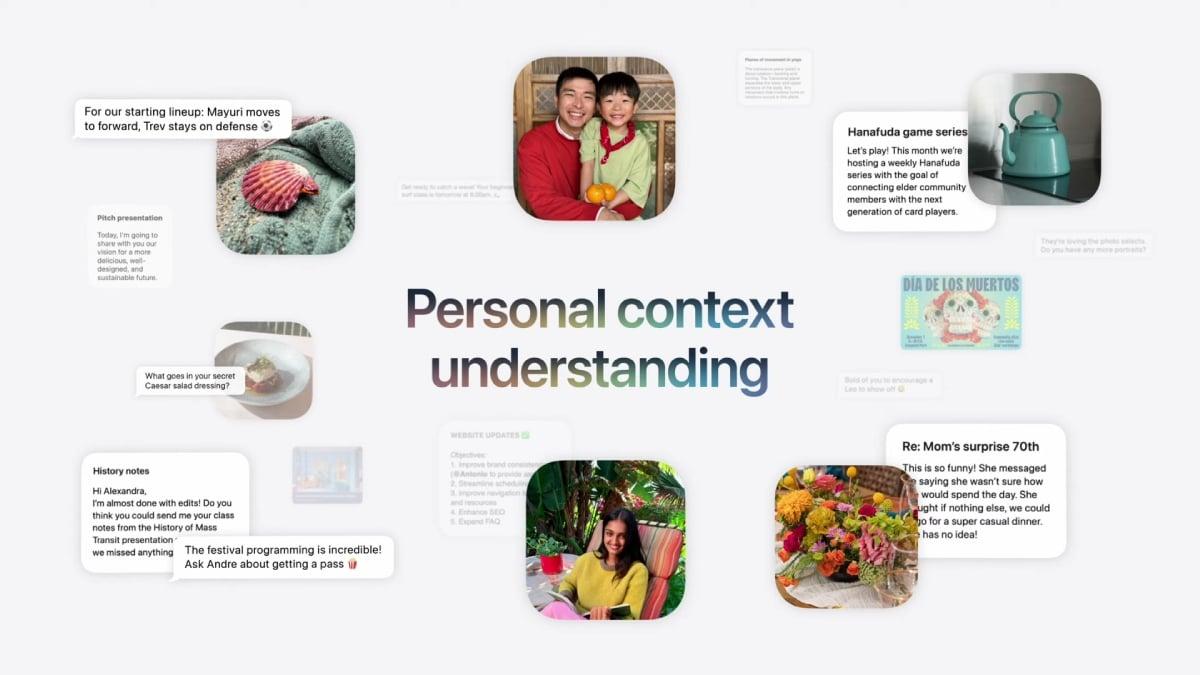
Siri AI transforms into a personal AI companion that leverages personal context from across Apple devices to deliver more relevant responses
2
. The assistant can now search across messages and email to find information even when users can't remember where it's stored. In demonstrations at WWDC, Apple showed how Siri AI handles complex multi-step requests: one user asked about World Cup schedules, requested recipes inspired by a Brazil vs Morocco match, found a dessert mentioned by a friend in Messages, compiled everything into a watch party menu, and sent it to a group chat1
. Another demo showcased cross-app information retrieval, where Siri identified where a photo of an arch was taken, found a friend's new address, and generated directions with a stop at both locations1
.
Source: Gadgets 360
Chatbot-Like Interactions and Standalone App
Apple is making Siri feel more like ChatGPT by introducing a standalone Siri app where users can type requests, upload files, revisit old chats, and continue past conversations
5
. These chatbot-like interactions represent a major departure from Siri's previous one-shot task model. The new "Write with Siri" feature allows users to generate text virtually anywhere they type, with the AI customizing writing style to match previous communications with specific contacts2
. If you normally send your manager quick and direct bulletins, that's what you'll get when drafting an email with Siri. Conversations will be stored locally and via iCloud, letting users start a conversation on one Apple device and finish it on another1
.Related Stories

AI Integration in Smartphones Accelerates
The Apple's AI updates signal a defining shift toward an AI-first era for smartphones
4
. Francisco Jeronimo, vice president of client devices at IDC, noted that "the winning AI experience for consumers will not be the loudest or most technically complex. It will be the one that understands context, respects privacy, works reliably across apps and reduces friction without forcing users to change behavior"4
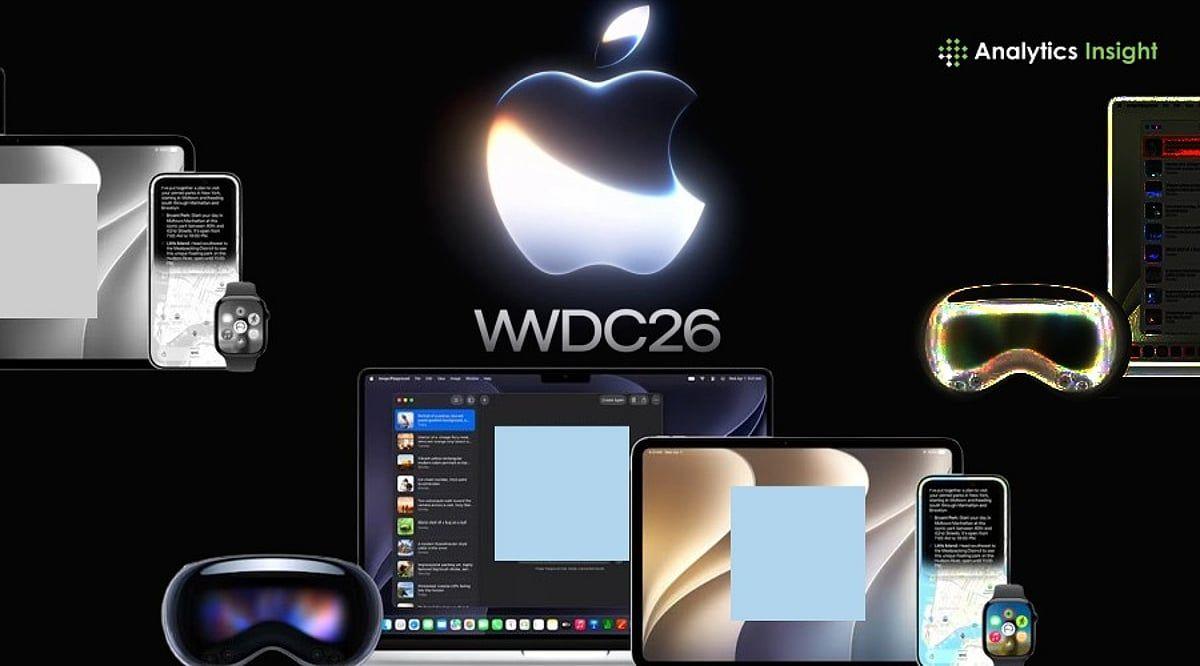
. On macOS, Siri AI integrates into Spotlight search, which can now identify when a typed query should start a Siri conversation rather than just return files or web results1
. On iOS, the assistant lives in the Dynamic Island with new animations replacing the previous glowing screen edges2
.
Source: Analytics Insight
User Privacy Concerns Amid Deeper Data Access
While Apple highlighted on-device processing as part of its privacy-preserving approach, the trade-off remains clear: to make Siri smarter, Apple wants Siri to access more personal data
3
. Marshini Chetty, a computer scientist at University of Chicago focusing on user privacy, acknowledged that "it could have good benefits, make you super efficient, and be really helpful, but it does make the privacy issue a little bit more murky"5
. The question facing iPhone users is whether they still want the AI assistant Apple promised them two years ago, and whether they're comfortable with Siri knowing them that well. Dipanjan Chatterjee, vice president and principal analyst at Forrester, suggested Apple will convince skeptics "so long as they deliver what they have promised, and in short order"4
.References
Summarized by

Navi
[2]
Related Stories
Apple launches dedicated Siri app, marking the assistant's biggest transformation yet
08 Jun 2026•Technology

Siri AI gets real-world tests: Apple's revamped assistant shows promise but faces accuracy issues
17 Jun 2026•Technology

Apple's Siri revamp will offer auto-deleting chats as privacy takes center stage in iOS 27
17 May 2026•Technology

Recent Highlights
1
Microsoft and Nvidia Launch Surface Laptop Ultra: A $2,599 AI-Ready PC With RTX Spark Chip
Technology

2
Scientists Build AI Model That Reconstructs Images From Brain Scans in Record Time
Science and Research

3
Anthropic AI Cuts Live Internet Access After Model Sends False Homicide Tip to Philadelphia Police
Technology

Recent Highlights
Today's Top Stories





Don’t drown in AI news. We cut through the noise - filtering, ranking and summarizing the most important AI news, breakthroughs and research daily. Follow topics that matter to you and stay ahead.


