China Deploys AI-Powered Robotic Antelope for Wildlife Surveillance in Tibet


2 Sources
[1]
China deploys robot antelope in Tibet to surveil real herds
BEIJING, Aug 12 (Reuters) - To the wolves of Tibet, China's first 'robot antelope' may look as appetising as the real herds that roam the rugged tundra, but the "creature" is part of Beijing's growing surveillance that now even reaches into its most remote places. Its doe-like eyes and thick brown
[2]
China unveils antelope robot to study endangered Tibetan species
A lifelike robotic Tibetan antelope is now roaming the high-altitude wilderness of Hoh Xil National Nature Reserve in Northwest China's Qinghai Province. Equipped with 5G ultra-low latency networks and advanced artificial intelligence (AI) algorithms, the bionic robot is being used to collect
Share
Copy Link
China has introduced a 5G and AI-integrated robotic antelope in Tibet's Hoh Xil plateau to monitor endangered Tibetan antelope populations, showcasing advanced surveillance technology in remote areas.
China's Robotic Antelope: A Technological Marvel in Wildlife Conservation
In a groundbreaking move, China has deployed its first 'robot antelope' in the rugged tundra of Tibet's Hoh Xil plateau. This innovative creation, developed through a collaboration between Xinhua, the Chinese Academy of Sciences, and Hangzhou-based DEEP Robotics, represents a significant leap in wildlife surveillance technology
1
.Advanced Features and Capabilities

Source: Interesting Engineering
The robotic antelope is a marvel of modern technology, seamlessly blending into its natural surroundings. With its doe-like eyes and thick brown fur, it is nearly indistinguishable from real antelopes. The robot is equipped with state-of-the-art 5G connectivity and artificial intelligence (AI) vision systems, enabling real-time monitoring of the migration, feeding, and mating behaviors of endangered Tibetan antelope species
1
.Operating at an altitude of over 15,092 feet (4,600 meters) above sea level, this bionic robot utilizes ultra-low latency 5G networks and advanced AI algorithms to collect data without disturbing the natural behavior of the wildlife it observes
2
.Expanding Technological Footprint in Tibet
The deployment of the robotic antelope is part of China's broader technological expansion in Tibet. The region has seen significant advancements in its digital infrastructure, with 5G coverage reaching every district by late 2023. This technological leap supports a growing range of AI applications, including small drones for radar-impenetrable areas, telemedicine consultations, and smart yak herding technologies
1
.Related Stories

Implications and Concerns
While the robotic antelope represents a significant advancement in wildlife conservation efforts, it also raises questions about the extent of China's surveillance capabilities. The project is part of China's substantial investment in Tibet, which aims to boost the region's role in President Xi Jinping's Belt and Road initiative while also tightening surveillance over its population
1
.Some analysts and human rights campaigners have expressed concerns about China's use of "grey-zone" tactics in the region. A report from the Center of Strategic and International Studies documented instances of China leveraging local telecommunications networks to surveil dissidents living in neighboring Nepal, alongside cases of cyber theft
1
.The Future of Wildlife Monitoring
The introduction of the robotic antelope marks a new era in wildlife conservation technology. By allowing researchers to gather crucial data without disturbing the natural habitat, this innovation could potentially revolutionize our understanding of endangered species and their ecosystems. However, it also underscores the need for careful consideration of the ethical implications of such advanced surveillance technologies in both wildlife conservation and broader societal contexts.
References
Summarized by

Navi
[2]
Related Stories
Chinese spy robot video near India border sparks debate as China deploys humanoid patrols
03 Dec 2025•Technology
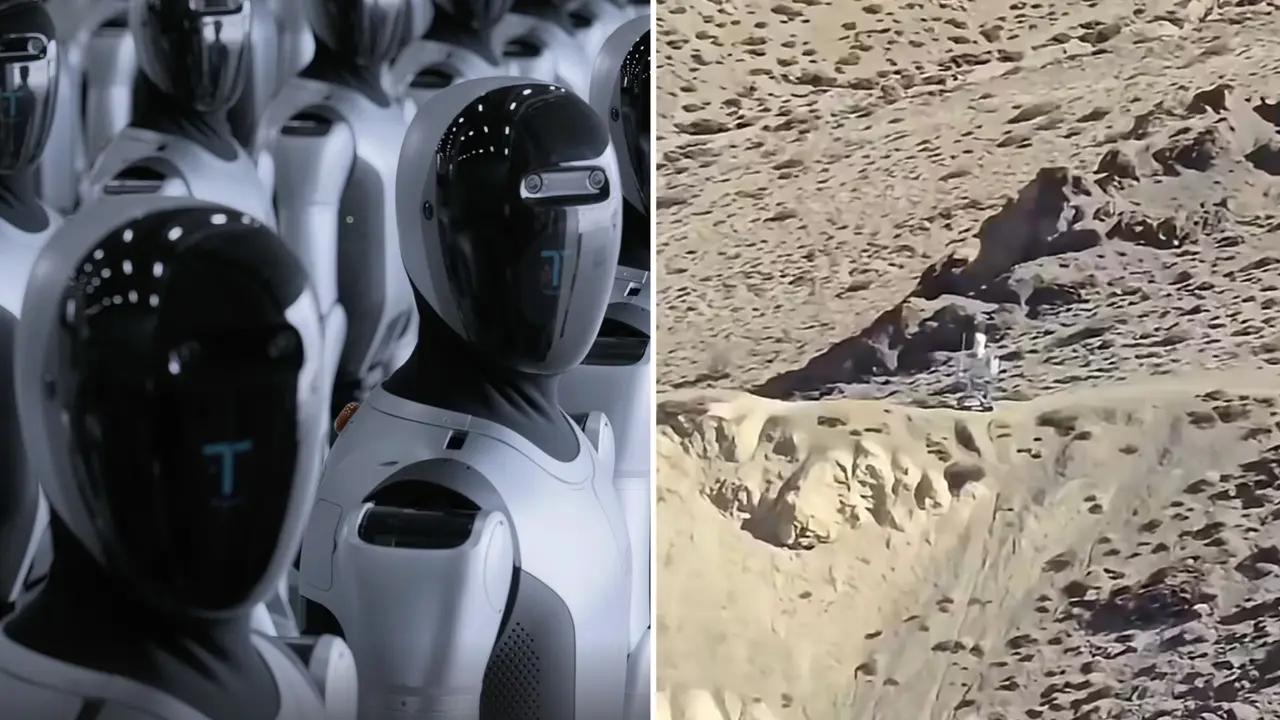
Humanoid robot Pemba summits volcano at 20,341 feet, prepares for Mount Everest challenge
09 Jun 2026•Technology

China Deploys AI-Powered Spherical Robot for Urban Policing
11 Dec 2024•Technology

Recent Highlights



Recent Highlights
Today's Top Stories



Don’t drown in AI news. We cut through the noise - filtering, ranking and summarizing the most important AI news, breakthroughs and research daily. Follow topics that matter to you and stay ahead.


