China exports jump 27% in June as AI boom fuels semiconductor demand amid domestic struggles


6 Sources
[1]
China's June trade tops forecasts buoyed by AI boom
BEIJING, July 14 (Reuters) - China's exports surged in June, buoyed by demand for chips and data centre computing power to fuel the global AI boom, giving policymakers grappling with how to boost domestic demand in the world's second-largest economy a much-needed buffer. The stronger-than-expected
[2]
The AI boom drove China's 27% export jump in June as AI and the Iran war reshape global trade | Fortune
China's exports accelerated in June, jumping 27% from a year earlier thanks partly to the boom in artificial intelligence, the customs agency said Tuesday. The increase in exports in June was much better than economists had expected. Exports rose 19.4% year-on-year in May. Imports in June surged
[3]
China's June exports surge 27% from year earlier as AI demand grows
China's exports accelerated in June, jumping 27% from a year earlier thanks partly to the boom in artificial intelligence, the customs agency said on Tuesday. The increase in exports in June was much better than economists had expected. Exports rose 19.4% year-on-year in May. Imports in June
[4]
China's exports ride AI boom as domestic economy struggles
China's exports saw a significant surge in June, driven by global AI demand and auto sales. Imports also jumped considerably, reaching a five-year high according to customs data. This strong export performance is helping China maintain its trade surplus despite domestic demand challenges. Auto
[5]
China's exports surge 27% from a year earlier as AI boom drives strong demand
China's exports jumped twenty-seven percent in June, driven by strong artificial intelligence demand. Imports also surged significantly, reflecting increased global needs for electronics. This export strength helps balance weaker domestic spending and investment within China. Policymakers globally
[6]

China's June trade tops forecasts buoyed by AI boom
BEIJING, July 14 (Reuters) - China's export growth topped forecasts in June as strong demand for semiconductors and a rush by manufacturers to ship goods to the U.S. ahead of potential new tariffs countered broader concerns about the Iran war and weakening global demand. The stronger-than-expected
Share
Copy Link
China's exports surged 27% in June, far exceeding forecasts as global demand for AI-related technology drove semiconductor and data center equipment sales. Imports also jumped 36% to a five-year high, pushing the trade surplus to $125.6 billion. The strong performance masks persistent domestic economic challenges, including a prolonged property crisis and weak consumer spending that leave manufacturers heavily dependent on overseas markets.
China Exports Surge 27% on AI Boom and Semiconductor Demand
China's exports climbed 27% from a year earlier in June, delivering a stronger-than-expected performance that reflects how deeply the AI boom is reshaping global trade flows
1
. The June trade data showed exports outpacing May's 19.4% gain and crushing economist forecasts of 18.2% growth1
. This marks the best performance in four months for the world's second-largest economy, driven primarily by global demand for AI chips and data center computing power needed to fuel artificial intelligence applications1
.Imports rose sharply as well, jumping 36% compared to May's 27.4% increase—a five-year high that exceeded the 24% growth economists had anticipated
1
. China's trade surplus widened to $125.6 billion in June, up from $105.4 billion the previous month, keeping the nation on track for a second consecutive year of surpluses exceeding $1 trillion4
.AI-Related Technology Drives Export Performance
"With the rapid growth of AI, our imports and export of products in this field are robust," said Wang Jun, vice minister of China's General Administration of Customs
2
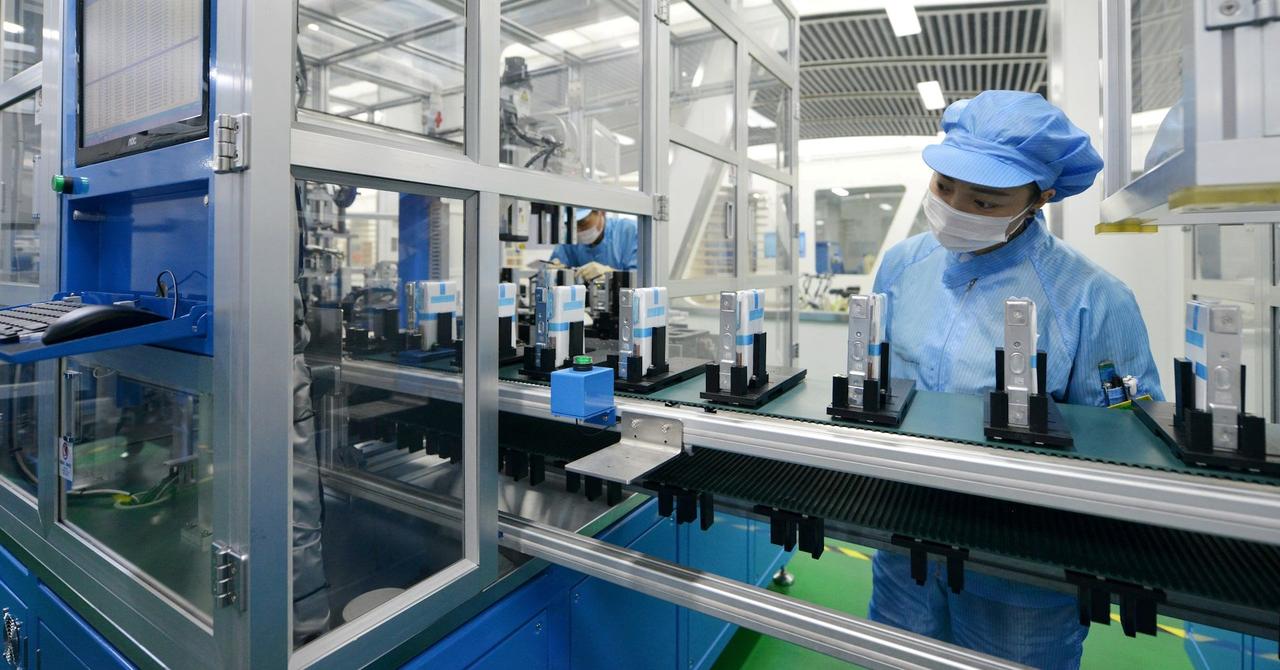
. Trade in electronic components, computer spare parts, and other computing hardware jumped nearly 57% to 5.1 trillion yuan ($760 billion) in the first half of the year2
. China sold 32 billion integrated circuits to global markets in June alone.
Source: ET
Julian Evans-Pritchard, head of China Economics at Capital Economics, noted that "trade values took another big leg up in June" predominantly reflecting "the recent surge in semiconductor prices on the back of the AI boom"
3
. The semiconductor demand is visible in import patterns: purchases from South Korea, a major chip manufacturer, rose 85% from a year earlier, while imports from Taiwan climbed 41.1% over the same period1
.Beyond semiconductors, China's monthly car exports topped 1 million units for the first time in June
4
. Electric vehicles and other tech-related products have benefited as rapid AI adoption increases the need for advanced electronic equipment3
.
Source: Fortune
Domestic Economic Challenges Persist Despite Export Strength
While China's exports surge 27% provides a crucial buffer for policymakers, domestic economic challenges remain acute. "Domestic demand remains a drag. Retail sales remain pretty flat and fixed asset investment was negative last month," said Xu Tianchen, a senior economist at the Economist Intelligence Unit in Beijing
1
. The strength in export manufacturing has helped offset prolonged weakness in domestic spending and investment caused by a property crisis that has weighed on the economy for several years3
.The reliance on overseas markets has reached remarkable levels. The ratio of annual exports to total manufacturing sales hit 24% over the first four months of this year, the highest level since China's accession to the World Trade Organization in 2001
4
. In 2019, that ratio stood at 18.3%, rising to 22.3% last year. "That would be considered high for a small export-focused country; for the world's second-largest economy, it is remarkable," according to Gavekal Dragonomics4
.Chinese leaders have attempted to boost consumer spending through trade-in subsidies for autos and home appliances, but many ordinary Chinese continue avoiding big-ticket purchases amid economic pressures
3
. The International Monetary Fund raised China's annual growth forecast by 0.2 percentage point to 4.6%, but expects the economy to expand just 4.1% in 20273
.Related Stories
Geopolitical Tensions and Trade Imbalances Intensify
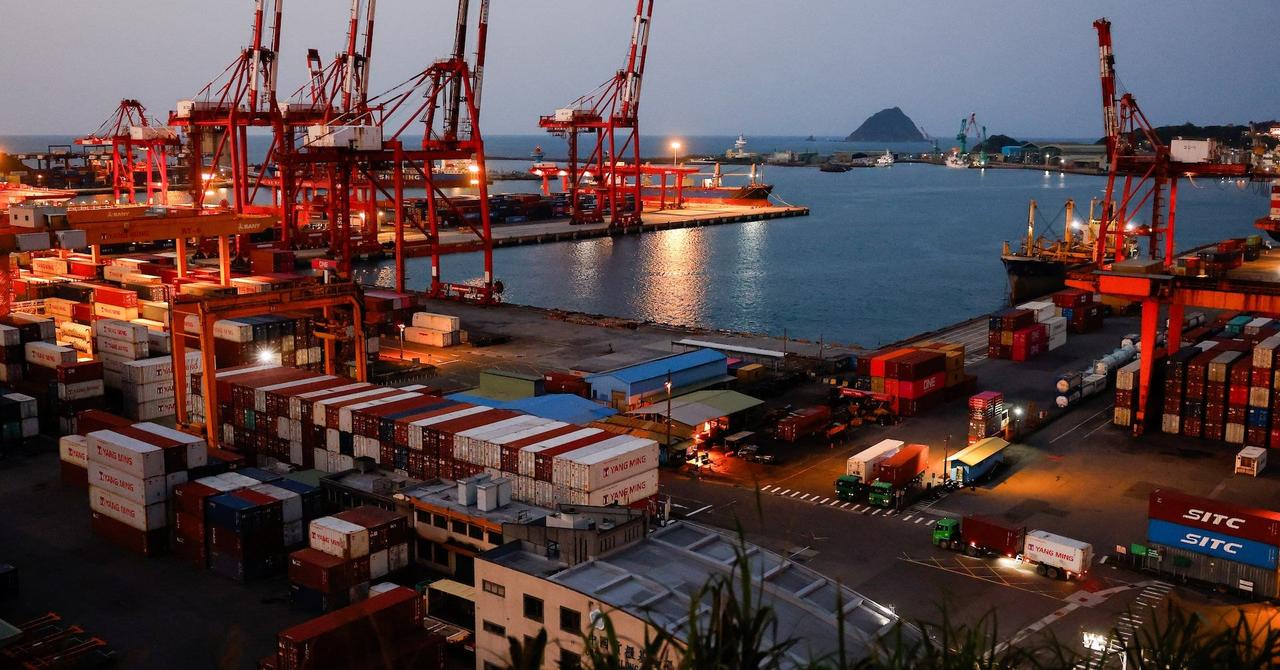
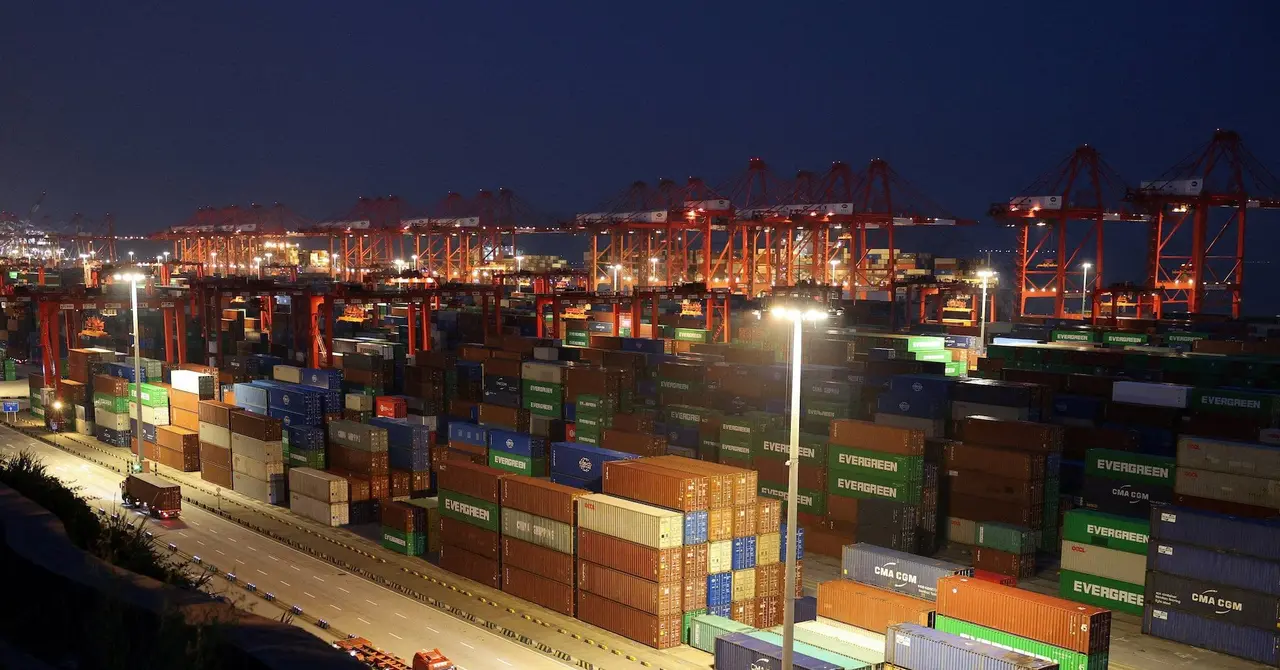
The export surge is heightening geopolitical tensions with major trading partners. Policymakers in the U.S. and Europe have expressed alarm over rising trade deficits with China
2
. To bypass trade barriers such as higher tariffs, Chinese businesses have been relocating factories to regions like Europe while expanding exports to Southeast Asia, Latin America, and Africa2
.
Source: Reuters
Exports to Southeast Asia surged nearly 35% in June from a year ago, while shipments to the European Union and Latin America increased more than 18% and 28%, respectively
3
. Exports to the United States climbed almost 14% from a year earlier, partly due to front-loading of orders ahead of expected tariff hikes and comparisons to weak shipments after President Donald Trump implemented higher tariffs following his return to office3
.Fragile Growth Outlook Amid External Pressures
While the June trade data provides optimism for the second half of the year, experts warn of fragility ahead. "While growth is likely to continue, it is increasingly fragile," said Wei Li, Head of Multi-Asset Investments at BNP Paribas Securities (China)
5
. Robust shipments in autos and AI-related items will remain dependent on global demand for AI and regulatory barriers imposed by trading partners5
.The Iran war has also influenced trade patterns, driving up import costs and contributing to the sharp rise in import values
2
. However, China appears to be drawing down energy stockpiles rather than subjecting producers to higher prices, with June oil imports hitting their lowest level since October 20164
. Customs Vice Minister Wang Jun acknowledged that "we still face serious risks and challenges in the second half of the year"2
, pointing to continued uncertainty over trade relations and external demand conditions.References
Summarized by

Navi
Related Stories
AI Demand Powers China Factory Activity as High-Tech Exports Offset Geopolitical Headwinds
30 Jun 2026•Business and Economy
South Korea Exports Jump 62.8% in July Driven by AI Investments and Semiconductor Demand
01 Aug 2026•Business and Economy

AI Boom Propels Global Trade Growth to 3.9% Despite Geopolitical Disruptions, WTO Reports
08 Oct 2026•Business and Economy
Recent Highlights
1
Microsoft and Nvidia Launch Surface Laptop Ultra: A $2,599 AI-Ready PC With RTX Spark Chip
Technology

2
Meta Muse AI Agent Surges to 6.6M Downloads Despite Privacy and Security Controversies
Technology

3
Scientists Build AI Model That Reconstructs Images From Brain Scans in Record Time
Science and Research

Recent Highlights
Today's Top Stories












Don’t drown in AI news. We cut through the noise - filtering, ranking and summarizing the most important AI news, breakthroughs and research daily. Follow topics that matter to you and stay ahead.


