China rebuilds smartphones around AI agents as ZTE's NaviX Ultra sells out in hours


5 Sources
[1]
China is rebuilding the smartphone around AI agents. ZTE's NaviX sold out in hours.
ZTE showed the NaviX Ultra at WAIC, calling it the first agentic AI smartphone. It runs ByteDance's Doubao agent. StepFun and Honor showed similar devices. ZTE showcased the NaviX Ultra at the World AI Conference in Shanghai this week, calling it the world's first agentic AI smartphone. The
[2]
Pocket-size AI: Powerful phones star at China show
Shanghai (AFP) - Tech firms are racing to roll out advanced smartphones that use artificial intelligence to do everything from ordering food to composing messages upon a simple voice command. Wide adoption of phones running on so-called AI agents would be a revolution, but would also take control
[3]
Pocket-size AI: Powerful phones star at China show
Tech firms are developing AI agent smartphones that could revolutionize mobile use. These advanced phones aim to perform tasks using voice commands and AI. Major app companies are restricting access, which hinders the AI agent's functionality. Companies like Nubia, Honor, and StepFun are showcasing
[4]
Chinese Smartphone Companies Rework Devices Around AI | PYMNTS.com
That's according to a report Sunday (July 19) by Bloomberg News, which cited the example of ZTE's new line of smartphones with built-in AI services, including the NaviX Ultra, which it deemed the world's first agentic AI smartphone. That followed another recent unveiling by StepFun, which has
[5]

China smartphone makers turn to agentic AI as device sales slow By Investing.com
Investing.com -- ZTE Corp. (HK:0763) unveiled a range of smartphones with integrated artificial intelligence services, joining Chinese manufacturers seeking to make agentic AI a central part of mobile operating systems, Bloomberg reported. The state-backed telecommunications company demonstrated
Share
Copy Link
Chinese smartphone manufacturers are betting big on agentic AI to revitalize declining sales. ZTE unveiled the NaviX Ultra at Shanghai's World Artificial Intelligence Conference, calling it the world's first agentic AI smartphone. The initial 30,000 units sold out quickly and doubled in price on resale markets. StepFun and Honor also showcased similar devices, signaling a major shift in how smartphones operate.
Chinese Smartphone Manufacturers Bet on Agentic AI to Reverse Declining Sales
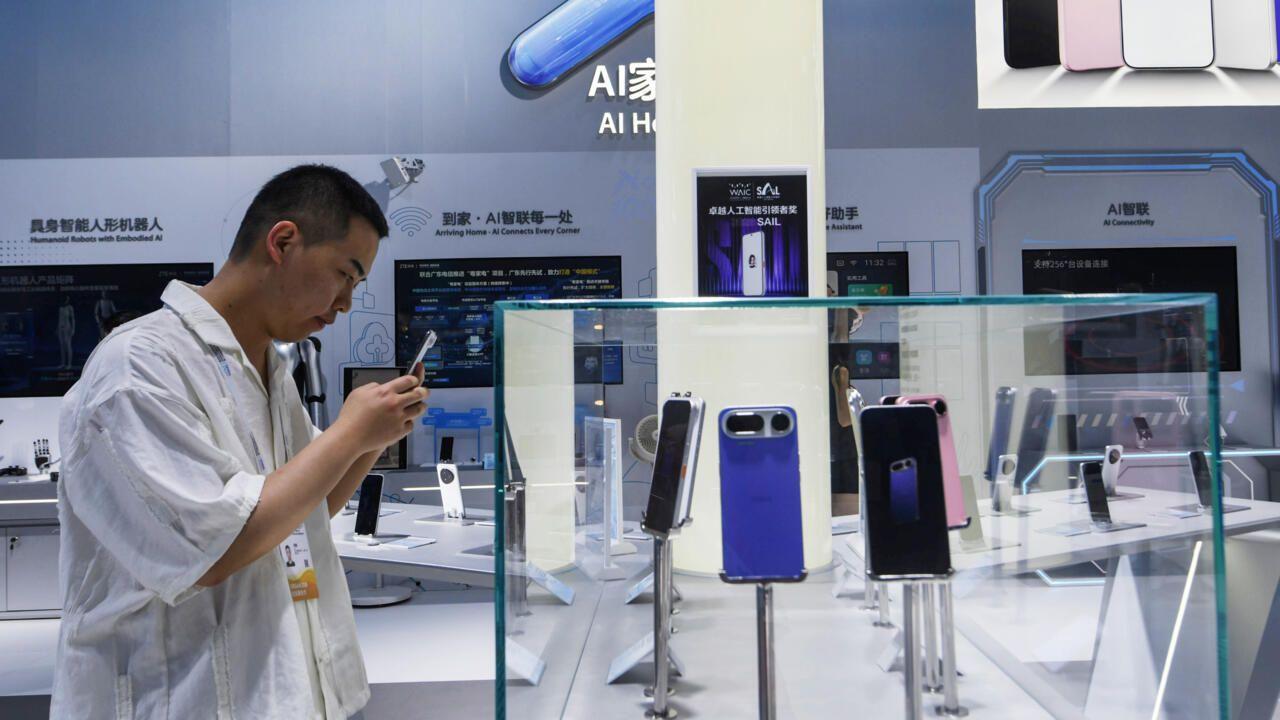
Chinese smartphone manufacturers are rebuilding the smartphone around AI agents in a bold attempt to revitalize the struggling smartphone market. At the World Artificial Intelligence Conference in Shanghai this weekend, ZTE showcased the NaviX Ultra under its Nubia brand, positioning it as the world's first agentic AI smartphone
1
. The device runs ByteDance Doubao, China's massively popular AI chatbot, and can be activated through voice commands or a dedicated button2
. Available in four colors—black, pink, white, and blue—the NaviX Ultra was prototyped in December at 3,499 yuan ($516), and the initial production run of 30,000 units sold out quickly, with used models trading at roughly twice the original price5
.
Source: France 24
StepFun and Honor Join the Race for AI Agent Smartphones
ZTE wasn't alone in showcasing AI-powered smartphones at the conference. StepFun, a Shanghai-based AI startup, unveiled the STEPX Neo, an AI agent-native smartphone featuring a proprietary operating system with a built-in agent called Amoo
1
. StepFun's chairman Yin Qi announced that "deep partnerships" had been established with major Chinese platforms including Alipay and ride-hailing giant Didi, enabling the smartphone to provide one-stop support for travel bookings, everyday purchases, local services, office productivity, and video editing3
. Meanwhile, Honor, the smartphone maker spun off from Huawei, showcased its "Robot Phone" with an AI agent co-developed with Alibaba that will ship on new devices later this year .Autonomous Task Execution Across Apps Defines New Approach
The core innovation behind these AI smartphones lies in their ability to execute autonomous task execution across multiple applications rather than simply stacking isolated AI features onto existing interfaces. "Many so-called AI phones on the market simply stack AI functions on top of an existing system," said Nubia chief Ni Fei. "That actually makes it more cumbersome for users"
1
. These agentic AI devices are designed to handle tasks like ordering food, comparing shopping prices, real-time photo editing, map creation, and travel planning through simple voice commands2
. On-device models handle frequent tasks requiring low latency, while cloud-based systems process more complex requests5
.
Source: ET
Platform Restrictions Pose Major Challenge to AI Agent Functionality
Despite the promise of agentic AI, platform restrictions remain a significant obstacle. When ByteDance released the Doubao Phone prototype in December, tech giants including Alibaba, Tencent, and JD.com restricted the built-in assistant's access to their platforms within days
2
. The move effectively disabled the phone's AI agent, forcing ByteDance to turn off the powerful tool in certain circumstances, including when payments were involved3
. Kiranjeet Kaur, associate research director at IDC, explained that platforms want to keep direct contact with their users, otherwise "they lose control to another party." She added, "Agenting is everyone's dream, but we haven't reached there yet," noting that the performance of AI agent tools is still often patchy2
. According to Chinese tech media, the NaviX Ultra does not attempt to force its way into apps but rather seeks to collaborate with them3
.Declining Smartphone Demand Drives Urgent Innovation
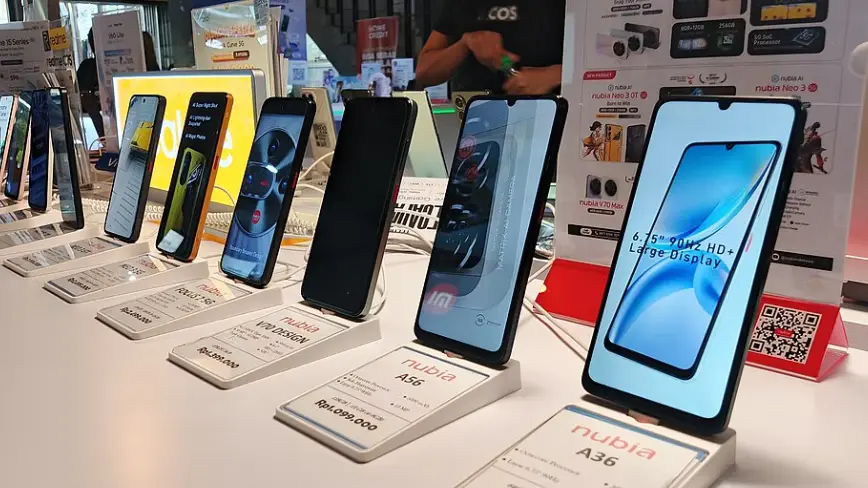
The timing of these launches reflects the urgent need to address declining smartphone demand. China's smartphone shipments have fallen for five consecutive quarters as the memory crisis pushed component costs up and consumer demand down
1
. IDC expects the global smartphone market to post its steepest annual decline on record in 20261
. According to Counterpoint Research, global smartphone sales fell to their lowest second-quarter level in 13 years as manufacturers passed the increasing cost of memory components onto shoppers, with total shipments declining by 11% year over year in the second quarter4
. Chinese manufacturers, many of which sell budget devices with thin margins, are being squeezed hardest, making AI smartphones their primary escape route1
.
Source: The Next Web
Related Stories

Market Expectations and Competition with Apple Intensify
IDC's Arthur Guo predicts that more than half of China's smartphone market could be dominated by AI smartphones in 2026
1
. The launches also deepen competition with Apple, which recently received Beijing's approval to roll out Apple Intelligence in China through partnerships with Alibaba and Baidu1
. "In terms of AI smart devices, we are ahead of Apple," Ni said on Weibo in June1
. Outside China, companies like Google are infusing smartphones with increasingly advanced AI features, while US startup Brain Technologies launched an agentic "Natural AI Phone" in Japan in April in partnership with SoftBank Corp2
.Digital Economy Transformation Looms as App-Based Usage Faces Disruption
Marc Einstein of Counterpoint Research noted, "There is no clear winner in this race yet, which is why it is currently quite a hot topic." However, he predicted that in five or 10 years, we won't be using apps on our phones "like we do today," adding that "this will fundamentally change the digital economy and disrupt business models"
3
. The shift away from traditional app-based usage could reshape how consumers interact with their devices and how companies monetize digital services. Yet challenges remain, as evidenced by struggles in the AI hardware space. Humane AI Pin launched in April 2024 at $699 and was discontinued less than a year later, with returns surpassing purchases. Rabbit R1 sold 100,000 units following its CES 2024 unveiling but faced extensive criticism after failing to match demonstration promises4
. Whether an agent that books flights and edits photos is enough to make people replace a device they already own remains the critical question the market will answer by year's end1
.References
Summarized by

Navi
[2]
Related Stories
MWC 2026 reveals how AI boom collides with memory chip shortage, threatening smartphone market
02 Mar 2026•Technology

Gartner Predicts $298 Billion Market for AI Smartphones by 2025
10 Sept 2025•Technology

StepX Neo debuts as world's first agentic smartphone, beating OpenAI and Apple to market
13 Jul 2026•Technology

Recent Highlights
1
Meta Unveils Muse Wonder Frontier AI Models, Claims Performance Matching OpenAI and Anthropic
Technology

2
IMF Report Warns AI Market Correction Could Spark Global Financial Crisis With $1.4T at Risk
Business and Economy

3
OpenAI Releases 722 AI-Generated Math Solutions, Triggering Existential Crisis in Mathematics
Technology

Recent Highlights
Today's Top Stories








Don’t drown in AI news. We cut through the noise - filtering, ranking and summarizing the most important AI news, breakthroughs and research daily. Follow topics that matter to you and stay ahead.


