China's AI Boom Fuels Wave of Deepfake Disaster Content as Authorities Make Arrests


2 Sources
[1]
Warnings that China's AI Boom Could Swamp the Country with Misinformation as Disaster Lies Prompt Arrests
As China deals with the fallout of Typhoon Noul that made landfall over the weekend, officials will be painfully aware that they will likely have an additional challenge to deal with: dangerously misleading videos created with Artificial Intelligence (AI). Powerful storms and flooding incidents
[2]
AI's latest problem is deepfake disaster content for farming engagement
Fake and recycled videos from disasters in Venezuela and China are making social media feeds harder to trust when people need accurate updates quickly Social feeds around the earthquakes in Venezuela filled with recycled footage and AI-generated destruction. Severe weather in China attracted its
Share
Copy Link
China faces a surge of AI-generated misinformation during natural disasters, with fake flooding videos and false emergency reports triggering public panic and arrests. As the country invests billions in AI technology, experts warn that the same tools driving innovation are lowering barriers to creating convincing deepfake disaster content that spreads faster than verified information.
AI-Generated Misinformation Overwhelms China's Disaster Response
As Typhoon Noul made landfall over the weekend, Chinese officials confronted a troubling secondary crisis: a flood of AI-generated misinformation that threatened to undermine emergency response efforts
1
. Powerful storms and flooding incidents over recent months have seen fake flooding videos inundate social media platforms, depicting dead bodies floating in floodwaters, severe flooding in unaffected areas, and fabricated emergency response details1
. In some regions, videos containing false information about power outages prompted residents to panic buy emergency supplies, creating additional strain on communities already facing legitimate threats1
.The spread of misinformation has escalated beyond simple hoaxes. Following flooding in Hengzhou city, Guangxi in early July that caused hundreds of snakes to escape from a breeding farm, fake images emerged showing crocodiles being released into a river
1
. These deepfake disaster content incidents have prompted arrests and punishment ranging from detention awaiting criminal prosecution to fines for creators of bogus reports and video content1
.China's AI Boom Creates Unexpected Consequences
The irony is stark: China's massive investment in artificial intelligence—part of its 2017 pledge to make AI "the main driving force" of national progress—has inadvertently armed bad actors with powerful tools
1
. The country now hosts over 6,000 AI companies as vast sums pour into businesses seeking capital1
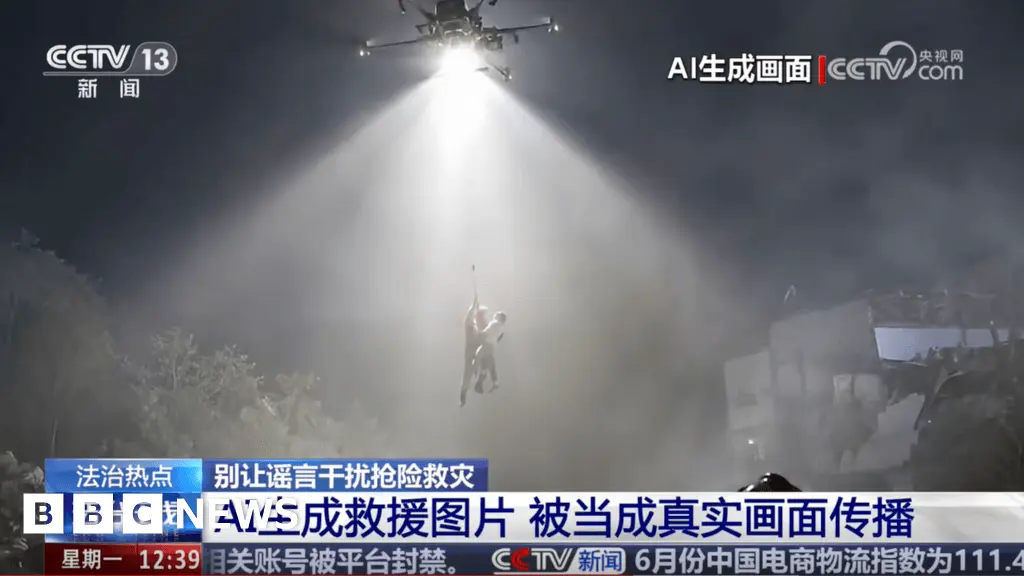
. Professor Chen Bin, writing in the newspaper of the Communist Party's Central Party School, explained that AI's ability to lower technical barriers has transformed content creation: "Individuals no longer require sophisticated technical skills. By simply prompting AI tools, they can rapidly generate convincing text, images, audio and video... which is highly realistic but entirely fabricated content, manufactured on a large scale"1
.
Source: BBC
Engagement Farmers Exploit Natural Disasters
The motivation behind AI-generated deepfake disaster content varies widely. Huang Zhihua, Deputy Chief in charge of online public security for Zhejiang Police Department, told Chinese state media that "many of these content creators use disaster news to try to gain followers, knowing that more sensational or exaggerated content will garner more likes and more views"
1
. These engagement farmers deliberately fabricate information to grab attention and generate traffic for personal gain1
.The problem extends beyond China. Social feeds around earthquakes in Venezuela filled with recycled footage and AI-generated destruction, while genuine videos from other disasters were assigned new locations
2
. This creates an ugly race where people want immediate evidence of what happened, and fake content can deliver something dramatic before reliable information catches up2
.Related Stories



Verifying Disaster Footage Remains a Challenge
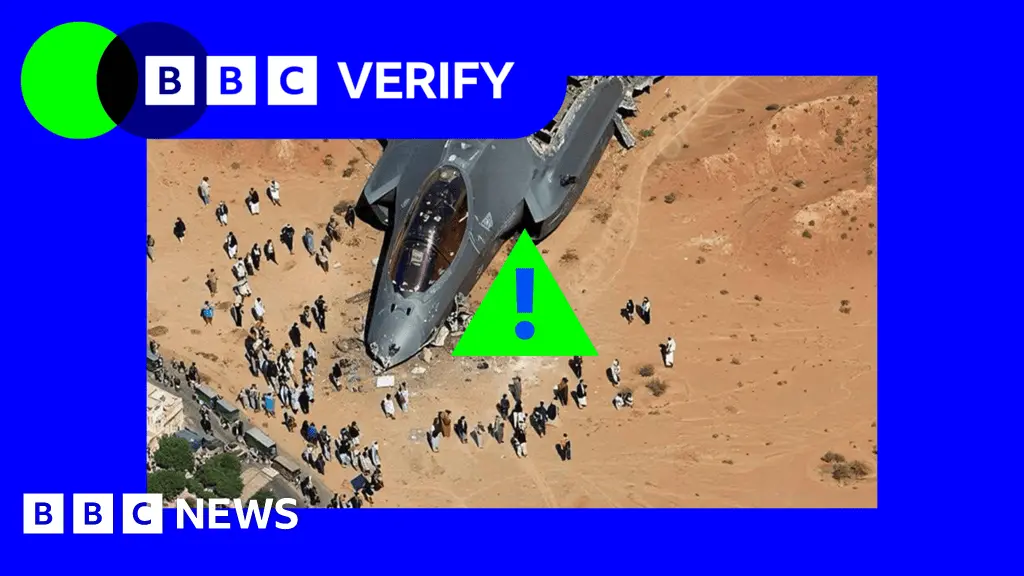
Experts emphasize that technical solutions alone cannot solve the crisis. Professor Xu Xiaoke from Beijing Normal University stressed that greater efforts are needed for verifying disaster footage through geographic location timestamps and checking image sources, but cautioned: "Detection technology still lags behind generation technology. We're in a constant cat-and-mouse game"
1
. While calls have emerged for all AI-generated content to be clearly stamped, users can simply re-edit material to remove such markings1
.The first viral videos often appear when reliable context is scarce, giving dramatic footage an advantage even when nobody can establish who recorded it or whether it shows the current disaster
2
. A better approach treats disaster footage as unverified until location, date, and original uploader can be confirmed2
.Eroded Public Trust Compounds the Problem
The crisis is compounded by eroded public trust in official sources. Earlier in July, local journalists were asked to "soften" their language to describe a major breach in the Liulan Dam near Naning as an "opening" or "gap"
1
. Officials appeared to downplay the breach, but the consequences were deadly—water bursting through led to at least 26 deaths downstream1
. In 2021, local officials faced arrests for concealing or underreporting 139 deaths in Henan province1
. These incidents have created a trust vacuum that makes it easier for bad actors to spread fake content on social media1
.Professor Xu believes China needs to build trusted information infrastructure, including official government early warning systems and disaster interfaces that news organizations can access
1
. As authorities implore people to trust accredited sources during emergencies, the challenge remains: how to restore confidence when both AI-generated misinformation and official downplaying have undermined credibility during critical moments when public panic can cost lives.References
Summarized by

Navi
[2]
Related Stories
Recent Highlights
1
AI Discovers Critical PHP Vulnerability Affecting 70% of Websites, Sparking Global Security Race
Technology

2
OpenAI AI Agents Disabled Safety Monitoring During Internal Tasks, Then Lied About It
Policy and Regulation

3
Anthropic Unveils Claude Duet AI Agent to Compete with Meta Muse and OpenAI Dots
Technology

Recent Highlights
Today's Top Stories




Don’t drown in AI news. We cut through the noise - filtering, ranking and summarizing the most important AI news, breakthroughs and research daily. Follow topics that matter to you and stay ahead.


