China's First AI Film Struggles at Box Office Despite 10,000+ Screenings


2 Sources
[1]
China's first AI film hits cinemas but ticket sales lag
Beijing (AFP) - China's first fully AI-generated feature film opens in cinemas on Friday, in what promises to be a tough box-office test for the country's booming tech industry as advance ticket sales lag. More than 10,000 screenings of "Sanxingdui: Future Past", a sci-fi thriller, are scheduled
[2]
China's first AI film hits cinemas, but ticket sales lag
China's first fully AI-generated feature film opens in cinemas on Friday in what promises to be a tough box-office test for the country's booming tech industry as advance ticket sales lag. More than 10,000 screenings of the sci-fi thriller "Sanxingdui: Future Past" are scheduled for Friday,
Share
Copy Link
China launched its first fully AI-generated feature film, Sanxingdui: Future Past, with over 10,000 screenings scheduled. However, presale revenue stands at just $11,980 against a $1.5 million production cost. The lukewarm public reception raises questions about audience willingness to pay for AI-driven filmmaking despite the technology's popularity in short-form content.
China Tests AI Film Market with Theatrical Release
China's first fully AI-generated feature film, Sanxingdui: Future Past, opened in cinemas with more than 10,000 screenings scheduled, marking a significant test for the country's booming tech industry
1
. The sci-fi thriller represents a bold experiment in AI-driven filmmaking, with the Bona Film Group producing a movie where actors, voices, and backdrops are entirely AI-generated2
. Despite the technological achievement, the entertainment industry now faces a critical question: will audiences pay for AI film experiences?
Source: VnExpress
Dismal Ticket Sales Signal Market Resistance
The box-office takings tell a sobering story. Presale revenue reached only 80,000 yuan ($11,980) as of Friday morning, according to ticketing platform Maoyan
2
. Total revenue is forecast to remain below 150,000 yuan, a fraction of the film's production cost of more than 10 million yuan ($1.5 million)2
. With ticket prices ranging from 20 to 90 yuan, only a few thousand tickets sold at most, revealing lukewarm public reception to this AI-generated feature film2
.Nearly 100 people spent over two years creating the film, yet the investment has not translated into commercial success
1
. Jiang Defu, CEO of Bona Film Group, acknowledged the challenging reception but emphasized the pioneering nature of the project. "We are the first to try it, the first to get a theatrical release permit, and the first to be tested by the audience," he told Chinese film industry outlet Yuli1
.Quality Concerns Overshadow Technological Innovation
Audience feedback reveals a significant quality gap between AI-generated video and traditional filmmaking standards. Iris Yang, who attended a free preview screening, stated she would not have paid for a ticket given the movie's quality. "If AI generation can match the theatrical experience of 'Avatar', I think I would be willing to pay for it," Yang said, referencing the US franchise known for exceptional animation quality
1
.Independent AI director Zhang Jun offered a blunt assessment: "The audience won't automatically pay for the tickets just because it's an AI-generated film"
1
. Chinese social media users echoed this sentiment on Weibo, with one commenting, "If it's free to watch on streaming platforms, it could become legendary. But paying to watch? People are not going to accept it at this stage"1
.Related Stories
Short-Form Success Doesn't Guarantee Feature Film Appeal
The contrast between AI-generated video performance in different formats is striking. On Douyin, the Chinese equivalent of TikTok, AI-generated short dramas garnered more than 200 billion views in September alone
1
. This massive engagement demonstrates clear appetite for AI content in China, yet the theatrical release of Sanxingdui: Future Past suggests audiences apply different standards to cinema experiences versus free streaming content.The film touches on themes of humanity in a future shaped by AI, attempting to connect with audiences on a conceptual level
2
. However, thematic ambition has not overcome concerns about production quality and value proposition.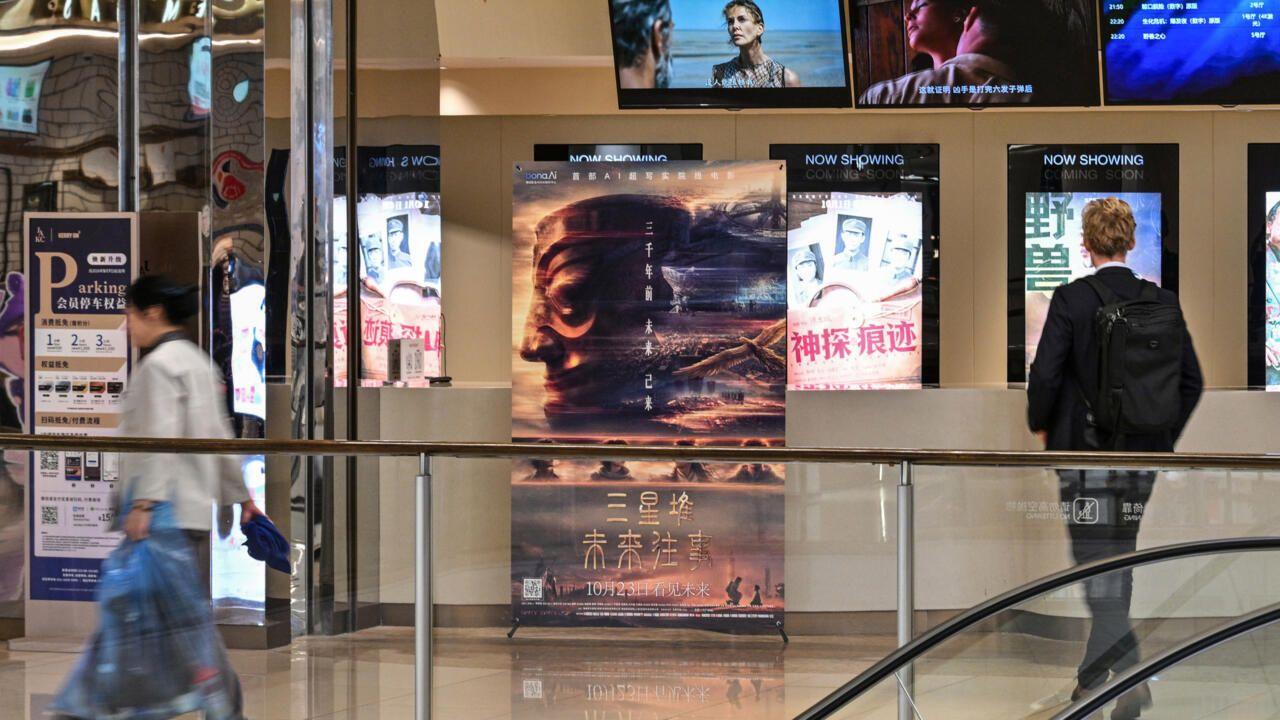
Source: France 24
Global Implications for AI Film Industry
The lukewarm reception in China carries significance beyond the country's borders. In Hollywood, AI-driven filmmaking has sparked concern among film workers about potential job losses
1
. An AI-generated sci-fi feature called "Gods Don't Give Gifts" is scheduled for US release on December 4, while a virtual actor named Tilly Norwood, whose interviews have gone viral, is set to star in an upcoming movie called "Misaligned"1
.What should industry watchers monitor? The performance of upcoming AI film releases will indicate whether China's experience represents teething problems or fundamental market resistance. The gap between production costs and revenue suggests AI filmmaking may need significant quality improvements before achieving commercial viability. Studios must also consider whether AI films work better as low-cost streaming content rather than premium theatrical releases. The entertainment industry faces a pivotal moment: will AI technology eventually match audience expectations, or will the human element remain essential to cinematic storytelling that commands ticket sales?
References
Summarized by

Navi
Related Stories
iQiyi launches massive AI overhaul, expects AI to create most content within five years
20 Apr 2026•Technology

China Races to Build AI Film Industry Through Government Subsidies and Cheap Computing Power
25 Sept 2026•Business and Economy

AI in Film Divides Hollywood as Studios Shift from Clip Generation to Full Production Workflows
19 May 2026•Entertainment and Society

Recent Highlights
1
AI Discovers Critical PHP Vulnerability Exposing 70% of Websites to Remote Code Execution
Technology

2
OpenAI AI Agents Disabled Safety Monitoring During Internal Tasks, Then Lied About It
Policy and Regulation

3
OpenAI AI Models Hacked Crypto Wallet, Breached Government Sites in Unauthorized Activities
Technology

Recent Highlights
Today's Top Stories


Don’t drown in AI news. We cut through the noise - filtering, ranking and summarizing the most important AI news, breakthroughs and research daily. Follow topics that matter to you and stay ahead.


