3 Sources
[1]
'The Odyssey's' AI-Generated Competitor Is Bereft of Humanity
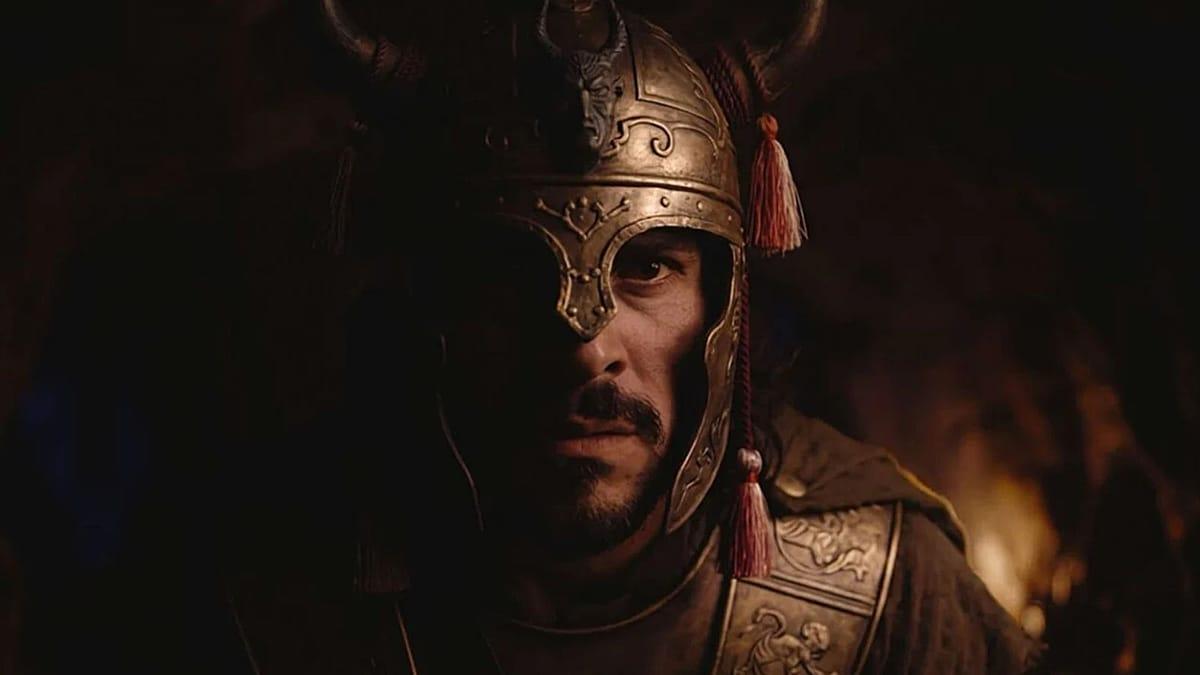
Christopher Nolan's upcoming epic, The Odyssey, which was shot with groundbreaking IMAX cameras and features immensely talented actors, has an AI competitor. A new AI-generated adaptation of the classic Homeric epic is also hitting screens soon and I have to ask, what the hell are we doing? Nolan's The Odyssey won't be unanimously praised and there is plenty of room for competition. But at least any of it flaws will be the result of fundamentally human decisions. Real, extremely talented people like Christopher Nolan himself, acclaimed cinematographer Hoyte Van Hoytema, and of course, ancient Greek poet Homer, all brought a very human touch to their work. Fountain 0, self-proclaimed as "the leading AI movie studio," brings none of that to its new AI-generated feature film, Odysseus: The Fall. Those cursed with broad awareness of AI-generated movies may recall that this company premiered an AI-generated movie, Dreams of Violets, at Tribeca just last month. To put it very mildly, we weren't impressed by what we saw. The conversation surrounding the film was somewhat muddied by the fact that the movie was about very real people being killed earlier this year by the Iranian government. It's a tragic situation, one that warrants attention. It's just a shame that such an important human story was told without any real humanity. It doesn't seem that Odysseus: The Fall will correct this gravest of sins. Based on the trailer, which does have some rather striking visuals, viewers can expect stilted dialogue and uncanny faces for its over two hours of running time. AI-generated movies, even when they do look good, are the visual equivalent of a pinch of cotton candy. They could satisfy your sweet tooth for a fleeting moment, and then you're left wanting for more. You consumed nothing of value and experienced a poor imitation of pleasure. There are plenty of actual, human-made movies that essentially exist only to fulfill a very basic concept of entertainment. And you know what, if this influx of AI-generated slop has taught me anything, it's that I appreciate relatively basic, mostly shallow human-made art more than ever. Long live the "popcorn movie." There's nothing wrong with art that exists solely to entertain and excite. Art doesn't have to be bold and powerful to be worthwhile. It can just scratch a shallow itch. But it does have to be human. "I have always felt passionately about Homer's epic tale since I originally read it years ago. The supernatural challenges Odysseus faced, and the chronicling of his heroics and his failings as a person, long ago captured my imagination. But being able to bring that story to life in my own vision while literally putting myself in Odysseus' shoes was a creative opportunity of a lifetime," says Ash Koosha, writer, director, producer, sole creator, co-founder of Fountain 0, and kinda-sorta star of Odysseus: The Fall. Koosha used his own likeness for the role of Odysseus in the film. Make of that what you will. "The proprietary video production software we created, to refine and elevate the film's video imaging, is what enables the film to rise to the level of human production, and is the central technology 'secret sauce' of this film's quality," adds Pooya Koosha, producer and post-producer on Odysseus: The Fall and co-founder of Fountain 0. "However, the core video AI model on top of which our software is built is absolutely critical to the high-quality look and feel of the film. We cannot offer enough praise for the AI model, Kling, which is what we used to develop the image rendering of every scene. We are finding through experimentation with each film that we are creating new tools and techniques enabling us to overcome challenges that put our filmmaking at the ultimate cutting edge of how an AI movie can be created at the same level of any human production." Pooya Koosha delivered the likeness of the character, Eurylochus. Proponents of AI-generated movies, who I assume almost exclusively live in bubbles in C-suites across the technology company landscape, argue that AI technology like this puts artistic creativity into the hands of more people. That's an admirable goal in principle. What's not obviously true, and arguably not at all the case, is that generative AI alone is the right way to make artistic creation more accessible. "Many will ask with a major Hollywood release of another take on the classic Homer story, why make this particular film now? First, there are so very, very few who have access to the hundreds of millions of dollars to produce a movie through traditional means to tell a story as vast and difficult as one that does justice to the original Odyssey, and we wanted to demonstrate that even filmmaking at this level could be fully democratized by AI," says Tom Rogers, Executive Chairman of Fountain 0 and executive producer of the new movie. "Second, we wanted to provide a basis of comparison in the same time frame with a movie coming from one of the world's most revered directors, so moviegoers might be curious enough to see both films developed out of the same classic tale as a way to better understand the level at which AI is able to both contribute already to the art of filmmaking, and to increasing the number of quality films that can be offered to the public." To keep the pattern going, Rogers' likeness appears in the movie as the character Mentor. Alongside Koosha and Rogers, the group obtained likenesses from nine other people to use in the movie, including a professional actor, some models, and others in Fountain 0's "network." What Rogers and many others neglect to mention is that while AI may "democratize" filmmaking in a broad sense, the devastating effects of AI are not nearly as equally distributed. In fact, the environmental impact of AI technology appear to disproportionately impact low-income people. That's not a strong case for providing more people with greater opportunities. In a minor consolation, it doesn't appear that Fountain 0 believes Odysseus: The Fall will be the superior adaptation when compared against Christopher Nolan's Oscar-hunting blockbuster. "With the state of AI video generation still being quite nascent, we expect much feedback that the Nolan film is a superior adaptation of this great epic adventure," Rogers says. But what Fountain 0 seems to believe is that its film should exist.
[2]
Someone's Made A 135 Minutes AI Slop Version Of The Odyssey
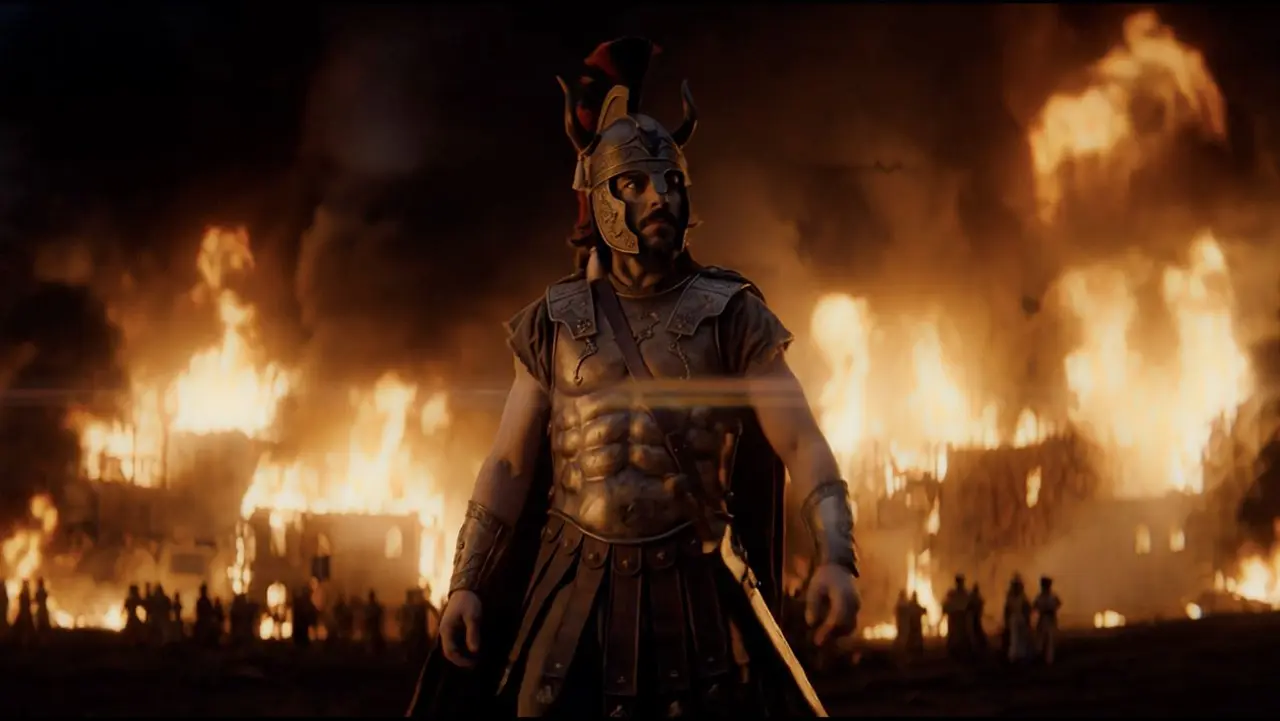
There's no doubt that genAI movies are improving in their fidelity. With each new stunt pulled, the tech edges ever further through the uncanny valley, becoming more easily able to trick the eye at first glance. And that shit sucks, even if it's still nowhere near being able to successfully replicate anything beyond a rapidly cutting trailer. However, Ash Koosha, the AI-brained creator behind last year's Tribeca Film Festival entrant Dreams of Violets, hasn't let that stop him from co-creating a 135-minute Odyssey knock-off that he's planning to sell directly to viewers later this year. Dreams of Violets was, by the few accounts coming out of Tribeca, not a good film. It was, however, rather clever in the way it got around the enormous limitations of genAI-created video and the software's lack of object permanence. As demonstrated in January's farcical "live-action" Zelda movie trailer created by techbro P.J. Ace, genAI currently cannot remember...well, it cannot remember at all, and as such it doesn't "know" what faces it created in any previous scene. As such, the token requirements to create anything even close to object permanence becomes so spectacularly expensive that right now, at least, it's not really feasible. Hence production company Fountain 0's Dreams of Violets, a film ostensibly about the suffering of people under the regime in Iran, was created as a series of vignettes, dream-like drifts between different characters and moments, presumably in order to evade this massive limitation. And that was only 74 minutes long. As The Hollywood Reporter reveals, Koosha now returns with Odysseus: The Fall, an epic 135-minute movie, seemingly as some sort of attempt to piggyback off the buzz around Nolan's forthcoming The Odyssey. This film, its creator is quick to announce, only cost him a mid-five-figure sum, rather than the $250 million said to have been spent by Nolan. Oooooh, we're required to say, $50,000 instead of $250 million! Hollywood is doomed! 5,000 times cheaper sure seems like a lot. Then you watch the trailer: I'm not here to pretend that this isn't, on some level, incredibly impressive-looking. But it's incredibly impressive-looking for something made by AI. Just take a second glance and you notice how Odysseus doesn't look the same from moment to moment. There are some truly sloppy moments, like when characters are running, or moments where two characters attempt to interact. Plus those rock-throwing dudes are the worst, and dramatically change shape and color between cuts. It doesn't bode well for the full-length film, though to find out what that's like when it eventually releases later this summer, it seems you're going to need to fork out $9.99 via the Fountain O website, and that's just to rent it. As usual, and as is almost always the case with any genAI project, this is far less about the product than the tech making it. Odysseus: The Fall doesn't exist out of an auteur's passionate drive to tell a story, but rather as a tech demo for software that Fountain 0 is hoping to sell to others. And I cannot put this better than Dylan Beattie himself who, speaking at a recent conference, pointed out the following AI creators: "The people who are going all-in on it are still selling AI. Let's imagine you had built a machine that can build houses...you push a button and instead of taking six weeks to put a house up you put it up in six hours. If you had that machine, would you be going around trying to get people to invest in your machine, or would you just be building a shitload of houses and selling them?"
[3]
AI-Generated Feature 'Odysseus: The Fall' Unveiled as Christopher Nolan's 'The Odyssey' Hits Theaters
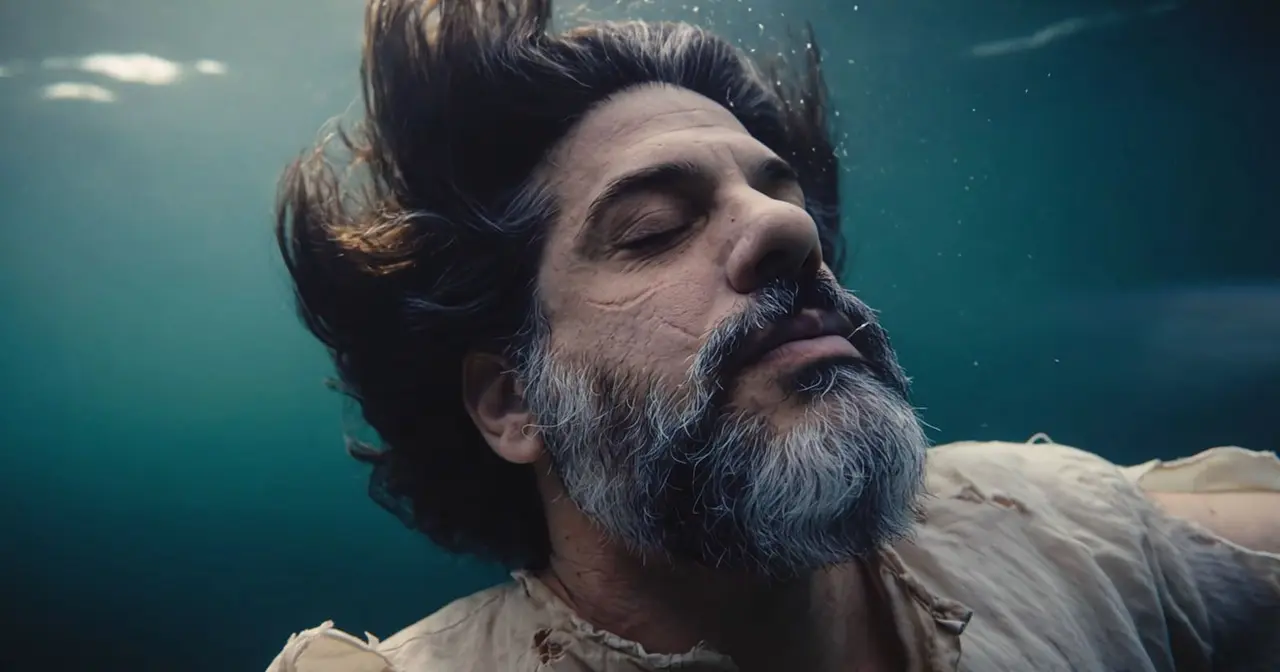
Fountain O, a new artificial intelligence-driven company launched to produce full-length AI generated films and TV series, has announced its second feature, Odysseus: The Fall. Ash Koosha, creator of the earlier AI-generated Iranian resistance movie Dream of Violets that cost $2,000 to make and debuted at Tribeca, has returned with another live action tale budgeted at "mid-five figures" and based on the Greek hero Odysseus. Fountain O, unveiling the project on Tuesday, is looking to build audience buzz by piggy-backing on Christopher Nolan's The Odyssey epic Greek epic adaptation budgeted at around $250 million for production and to hit theaters July 17. "We very much hope that Christopher Nolan's film, The Odyssey, is a raging success at the box office, and in some way that our version of the journey of Odysseus might further that success by bringing to theaters those who might not otherwise come out to see the film, simply because they are curious to see the ultimate in human creation and compare it to one man's collaboration with AI," Ash said in a statement. Nolan's epic The Odyssey stars Matt Damon as Odysseus, whose long journey home to Ithaca after the Trojan War reunites him with his wife, Penelope (Anne Hathaway), and son, Telemachus (Tom Holland). The cast also includes Zendaya, Robert Pattinson, Lupita Nyong'o, Jon Bernthal, Travis Scott and Charlize Theron. The AI-generated Odysseus: The Fall, at 135 minutes in length, in its own take on Odysseus' journey home centers on "the fractured memory of a drowning man in his final minutes -- a voyage that is really a trial, where every monster wears his own handwriting. Stripped of the word 'clever,' what remains is a man reckoning with what he actually did to get home. It ends where the songs never go: not with a hero's welcome, but with forgiveness offered by the one person who knows exactly what he is," a synopsis from Fountain O reads. As with Dreams of Violets, actors, sets and cameras in Odysseus: The Fall were entirely replaced by AI models in its production. At the same time, the script, the images and the voicing of characters was done by Koosha using human creativity. Koosha in a director's statement argued storytellers should not feel threatened by AI tools. "It's a threat to nothing except distance, the distance between a person with a story and the means to tell it. More films will be made this way; that seems certain to me, the way it was certain once that anyone would be able to shoot on the camera in their pocket. What has to survive the change is the only thing that ever mattered: the story, and the reason for telling it. A tool has never made a film worth watching. A person with something urgent to say has made every one of them, and that won't change, whatever they're holding when they say it." Koosha and his producer Tom Rogers, a longtime tech and media executive (he founded CNBC while running NBC Cable), with Odysseus: The Fall are looking to promote their proprietary AI video production software. Rogers, executive chairman of Fountain 0 and executive producer of Odysseus: The Fall, said while democratizing movie making by using AI tools and proprietary video production process, "we wanted to provide a basis of comparison in the same time frame with a movie (The Odyssey) coming from one of the world's most revered directors, so moviegoers might be curious enough to see both films developed out of the same classic tale as a way to better understand the level at which AI is able to both contribute already to the art of filmmaking, and to increasing the amount of quality films that can be offered to the public". And Pooya Koosha, producer and post-producer of Odysseus: The Fall, pointed to the Chinese AI video generator software Kling in use to make the second Fountain O movie title after Sora AI video generation software -- which similarly generates videos and short films from user prompts -- was shuttered by OpenAI. Chinese AI tools are increasingly in use as companies look to reduce the cost of AI bills in manufacturing processes. "We cannot offer enough praise for the AI model, Kling, which is what we used to develop the image rendering of every scene. We are finding through experimentation with each film that we are creating new tools and techniques enabling us to overcome challenges that put our filmmaking at the ultimate cutting edge of how an AI movie can be created at the same level of any human production," Pooya Koosha said in his own statement. The AI-generated feature also used Google Nanobanana for imagery and core frames, Claude AI for language related editing and Google Gemini for project research. The Fountain 0 proprietary tech was used for blocking actors, frame accuracy and world modeling. The Koosha brothers were born in Iran and left the country in 2009. They're also no strangers to cloud computing and AI technology, having founded Claigrid, a cloud AI personalization company with Tom Rogers as its executive chairman. So far, no streamer or theatrical distributor has picked up Dreams of Violets for a commercial release after the Tribeca titles was shopped around. For now, Fountain O will make Odysseus: The Fall and Dreams of Violets available for viewers to stream via the Fountain O website and a $9.99 per-titled rental price. Dreams of Violets will be available to stream on July 17, and Odysseus: The Fall will be available later this summer.
Share
Copy Link
Fountain O unveils Odysseus: The Fall, a 135-minute AI-generated adaptation of Homer's epic, timed to coincide with Christopher Nolan's $250 million The Odyssey. Created for mid-five figures using Kling and other AI tools, the film reignites debate about AI's role in filmmaking and whether generative AI can replicate human artistry.
Fountain O, an AI-driven film production company, has released Odysseus: The Fall, a 135-minute AI-generated film that directly competes with Christopher Nolan's The Odyssey, which hit theaters on July 17
3
. While Nolan's epic adaptation reportedly cost $250 million to produce, the AI-generated adaptation of Homer's Odyssey was created for mid-five figures, representing a cost difference of roughly 5,000 times2
. The timing appears deliberate, with Fountain O's executive chairman Tom Rogers stating they wanted to "provide a basis of comparison in the same time frame" so audiences could assess "the level at which AI is able to both contribute already to the art of filmmaking"3
.
Source: THR
Created by Ash Koosha, who previously debuted the AI-generated film Dreams of Violets at Tribeca Film Festival, Odysseus: The Fall represents Fountain O's second feature-length production
3
. Koosha served as writer, director, producer, and sole creator, even using his own likeness for the role of Odysseus1
. His brother Pooya Koosha produced and handled post-production, delivering the likeness for the character Eurylochus1
.The production relied heavily on generative AI tools, with the Kling model serving as the core video AI platform for developing image rendering in every scene
3
. Pooya Koosha praised Kling extensively, stating "we cannot offer enough praise for the AI model, Kling, which is what we used to develop the image rendering of every scene"1
. The production also incorporated Google Nanobanana for imagery and core frames, Claude AI for language-related editing, and Google Gemini for project research3
. Fountain O's proprietary software handled blocking actors, frame accuracy, and world modeling3
.Actors, sets, and cameras were entirely replaced by AI models, though Koosha emphasized that the script, images, and character voicing involved human creativity
3
. The film will be available for $9.99 rental via the Fountain O website when it releases later this summer2
.Despite improvements in visual fidelity, the AI-generated live-action movie faces significant technical limitations. The trailer reveals persistent object permanence issues, with Odysseus appearing different from moment to moment
2
. Current generative AI cannot maintain consistency across scenes because it lacks memory of previously created faces and elements, making the token requirements for object permanence "spectacularly expensive"2
. Critics noted sloppy moments during running sequences and character interactions, with rock-throwing characters dramatically changing shape and color between cuts2
.
Source: PetaPixel
Related Stories
The project reignites debate about AI in filmmaking and whether AI's role in filmmaking serves creative expression or functions primarily as a tech demonstration. Rogers argued that AI tools could "fully democratize" filmmaking at the highest level, making storytelling accessible beyond those with "hundreds of millions of dollars"
1
. Koosha framed AI as reducing "the distance between a person with a story and the means to tell it"3
.However, critics contend the film represents a soulless imitation lacking human artistry. Unlike Nolan's version featuring acclaimed cinematographer Hoyte Van Hoytema and talented actors, the AI-generated film offers "stilted dialogue and uncanny faces" across its runtime
1
. One observer noted that AI projects typically exist less as artistic products than as tech demos for proprietary software companies hope to sell2
. The ethical and artistic implications remain contested, with some arguing that even shallow human-made entertainment holds more value than AI-generated content1
.Summarized by
Navi
23 Jun 2026•Technology

27 May 2026•Entertainment and Society

19 May 2026•Entertainment and Society

1
Technology

2
Business and Economy

3
Technology