China's Kaiwa Technology Unveils Controversial AI-Powered 'Pregnancy Robot' with Artificial Womb


3 Sources
[1]
China Is Building an AI Robot Uterus, and Are We Just Basically 'Dune' Now?
In a development that completely demolishes the line between robotics and reproductive science, China's Kaiwa Technology says it has introduced humanoid robots equipped with advanced artificial womb systems. What could possibly go wrong with this line of experimentation? Well, those of you who
[2]
China's Kaiwa Technology develops pregnancy humanoid robot with artificial womb technology
Kaiwa Technology, based in Guangzhou, announced plans for the world's first humanoid robot equipped with artificial womb technology. The company targets a 2026 market debut with pricing below 100,000 yuan ($13,900). The humanoid robot incorporates an artificial womb embedded in its abdomen,
[3]
'Pregnancy robots' could give birth to human children in...
What a time to be alive -- people are marrying AI bots, and now robots might soon be able to carry babies. Reportedly, China is working on designing a bot with an artificial womb -- which will receive nutrients through a hose -- in its abdomen that will soon be able to carry a fetus for
Share
Copy Link
Kaiwa Technology in China has developed a humanoid robot with an artificial womb, capable of simulating pregnancy and potentially giving birth to human children. This innovation raises significant ethical and legal questions while potentially offering new solutions for infertility.
Kaiwa Technology's Groundbreaking 'Pregnancy Robot'
In a development that blurs the lines between robotics and reproductive science, China's Kaiwa Technology has introduced a humanoid robot equipped with an advanced artificial womb system. The Guangzhou-based company claims to have a "late stage" prototype that combines artificial intelligence with bioengineering to mimic the hormonal and physical processes of pregnancy
1
.Technical Specifications and Functionality

Source: ET
The robot features biosynthetic organs capable of simulating gestation in a controlled environment. It uses artificial amniotic fluid and nutrient delivery systems to support fetal development
2
. According to Zhang Qifeng, Kaiwa Technology's founder, the fetus develops within the artificial amniotic fluid while receiving nutrients through connected tubes, replicating natural gestation conditions2
.Market Potential and Pricing
Kaiwa Technology aims to launch the product by 2026, with an estimated retail price of around 100,000 yuan ($13,900)
2
3
. This pricing strategy positions the technology as a potentially more affordable alternative to traditional surrogacy, which can cost between $100,000 to $200,000 in the United States1
3
.Potential Benefits and Applications
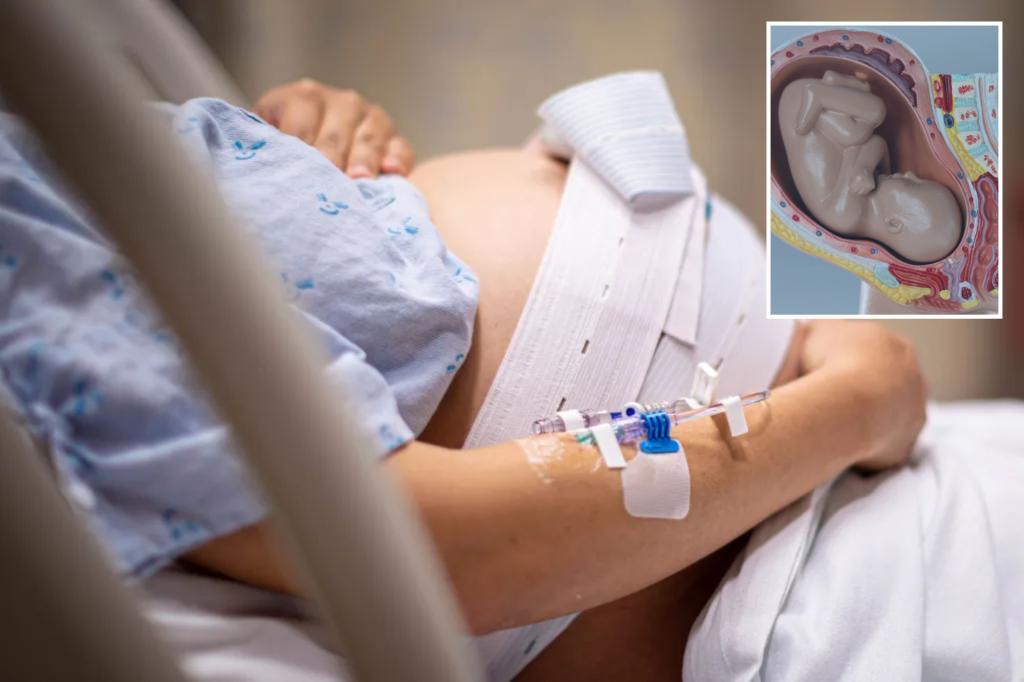
Source: New York Post
The technology could open new avenues for infertility research and reproductive assistance. It may provide a more accessible surrogacy option and help in cases of extreme prematurity, potentially preventing serious complications like brain injuries, lung damage, or blindness in premature infants
1
.Ethical and Legal Considerations
The development of this technology raises significant ethical and legal questions. Concerns include:
- The potential misuse or dehumanization of the gestation process
- The creation of "human-like entities" without full biological rights or moral considerations
- Ownership and rights issues related to embryos or children conceived or delivered through this method
- The complex legal landscape surrounding reproductive technology across different countries and cultures
1
2
Zhang Qifeng has reported discussions with Guangdong Province authorities regarding ethical and legal considerations, with related proposals submitted as part of ongoing policy and legislative deliberations
2
.Related Stories


Scientific Context and Related Developments
Artificial womb research has shown promising results in animal studies. In 2017, researchers at Children's Hospital of Philadelphia successfully nurtured a premature lamb in a "biobag" system
2
. However, current artificial womb systems primarily function as neonatal incubators supporting life after partial gestation, whereas Kaiwa's concept aims to support the entire process from fertilization to full-term development2
.Expert Opinions and Criticisms
Yi Fuxian, an obstetrician at the University of Wisconsin-Madison, expressed skepticism, calling the robot "likely just a gimmick." He pointed out that synthetic gestation has caused problems in sheep studies and raised concerns about potential health risks and mental health issues
1
.Global Interest and Potential Impact

Source: Gizmodo
The development has attracted attention from tech sectors in China and South Korea, countries facing declining birth rates. South Korea, which has declared its low birth rate a national emergency, may see this technology as a potential solution to its demographic challenges
1
.As this technology continues to develop, it will undoubtedly spark further debate on the future of human reproduction, the role of AI in healthcare, and the ethical implications of merging robotics with human biology.
References
Summarized by

Navi
[3]
Related Stories
Recent Highlights



Recent Highlights
Today's Top Stories



Don’t drown in AI news. We cut through the noise - filtering, ranking and summarizing the most important AI news, breakthroughs and research daily. Follow topics that matter to you and stay ahead.


