3 Sources
[1]
New 'companion' humanoid robot recognizes emotions with 90% accuracy
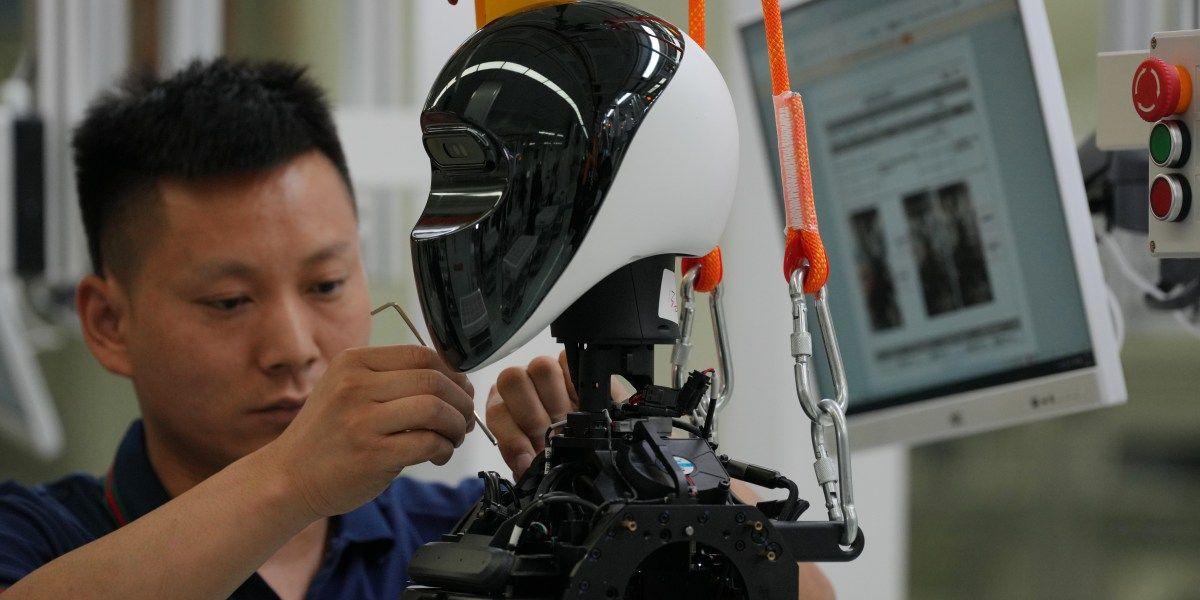
Chinese firm UBTech has introduced the UWORLD U1 Series, which it describes as the world's first full-size ultra-bionic humanoid robots designed for mass production. Announced on June 30 at UBTech's 2026 Global Launch Event in Shenzhen, the platform combines proprietary biomimetic skin, embodied AI hardware, an operating system, emotion-driven large language models (LLMs), and system-level manufacturing. UBTech says the integrated architecture is designed to overcome key barriers to deploying humanoid robots at scale in real-world environments. At the event, the company outlined a three-stage vision for human-robot collaboration, progressing from hazardous work to everyday assistance and ultimately seamless interaction between people and intelligent robots. The UWORLD U1 Series is built on UBTECH's proprietary end-to-end technology stack, integrating biomimetic skin, embodied intelligence hardware, an operating system, emotion-driven large language models (LLMs), and system-level manufacturing to improve the real-world deployment of humanoid robots. The full-size humanoid features 88 degrees of freedom and a dual-pivot biomimetic cervical spine that enables it to reproduce up to 90 percent of fundamental human movements. It is powered by what UBTech describes as the world's first emotion-aware LLM for long-term companionship, capable of identifying more than 20 fine-grained emotional states with over 90 percent accuracy. Its biomimetic fast-and-slow brain architecture combines rapid intuitive responses with deep reasoning. The system delivers reactions in about 500 milliseconds while supporting complex decision-making through AI models with hundreds of billions of parameters. A proprietary facial expression actuation system synchronizes speech and lip movements with less than 20 milliseconds of latency, producing more natural communication. The platform also incorporates Agent Memory OS, a cross-temporal memory framework that enables persistent long-term interactions. A proactive care engine continuously interprets environmental context, allowing wake-word-free communication and context-aware responses. UBTech has also implemented a three-layer privacy architecture based on local-first processing, minimal cloud reliance, and user-controlled hardware protections. Together, these technologies are designed to support advanced cognitive capabilities, natural human-robot interaction, persistent memory, and secure data handling across consumer and commercial humanoid robot applications. The company also outlined its long-term vision for human-robot collaboration, describing a three-stage evolution. The first focuses on deploying robots for hazardous and repetitive tasks, followed by expanding their role into everyday life through companionship and service applications. The final stage envisions increasingly seamless interaction between humans and intelligent robots across daily life. Along with the UWORLD, UBTech also introduced the Human-Robot Companionship Initiative, a program aimed at using humanoid robots to provide long-term emotional and psychological support for vulnerable groups. The company cited demographic trends in China, noting that more than 90 million adults live alone and 118 million older adults are classified as empty-nest seniors. It also said an estimated 10 percent to 20 percent of people living alone meet the clinical criteria for mental health disorders, highlighting the need for accessible companionship and care. As part of the initiative, the company expects to donate 100 customized U1 Series humanoid robots in 2026. Each unit will incorporate 3D facial reconstruction and voiceprint-based identity replication technologies to recreate designated individuals for personalized interaction. According to UBTech, the robots will also integrate emotion-driven interaction models, dedicated long-term memory systems, and multimodal situational awareness, enabling them to recognize users, retain memories across interactions, understand environmental context, and deliver more personalized companionship and psychological support over extended periods.
[2]
China's UBTech unveils eerily lifelike companion robots, and yes, they want to move in with you
UBTech's new humanoid robots are built for companionship, using emotion-aware AI, long-term memory, and humanlike expressions to become part of your everyday life. A humanoid robot designed to live in your house, learn your habits, and pick up on your mood without being prompted is no longer science fiction. Shenzhen-based UBTech Robotics unveiled its Uworld U1 series this week, introducing three robots built for companionship rather than factory work or household chores. A body that moves like yours, and a brain that reads how you feel The lineup includes the semi-torso U1 Lite, the full-body U1 Pro, and the high-performance U1 Ultra, priced starting at 119,800 yuan (~$17,650). According to the company, each model features 88 degrees of freedom and a dual-pivot biomimetic cervical spine that can replicate up to 90 percent of basic human movements. UBTech says the robots' facial expressions and lip movements synchronize with speech in as little as 20 milliseconds, making conversations feel almost natural. A "fast-and-slow brain" architecture combines quick reactions with deeper reasoning, allowing the robot to respond in around half a second while more complex processing happens in the background. The biggest selling point, however, is emotional intelligence. UBTech claims the U1 series runs on the world's first large language model designed specifically for long-term emotional companionship. The system can reportedly identify more than 20 emotional states with a claimed accuracy of 90 percent, while an onboard memory platform called Agent Memory OS allows the robot to remember people, preferences, and household routines over time. The company also says the robots can proactively engage with users based on context, eliminating the need for a wake word. Betting on loneliness as a market UBTech is openly positioning the U1 series as a response to loneliness and social isolation. The company cites China's population of more than 90 million adults living alone and 118 million "empty-nest" seniors as evidence of a growing need for long-term companionship technologies. As part of a new Human-Robot Companionship Initiative, it plans to donate customized U1 robots this year to children separated from their parents, seniors living alone, and families facing difficult circumstances. Recommended Videos Those customized units push the concept into far more unsettling territory. According to UBTech, the robots will utilize 3D facial reconstruction and voiceprint replication technologies to recreate the appearance and voice of a specific person. Combined with long-term memory systems and emotion-focused AI models, the goal is to provide personalized emotional support. The company says user data will remain protected through a privacy framework that prioritizes local processing and minimizes cloud dependence. Still, the idea of a humanoid robot that can mimic a missing parent, an absent partner, or a deceased loved one feels less like a consumer gadget and more like something pulled straight from a particularly uncomfortable episode of Black Mirror.
[3]
Chinese firm sells hyper-real, 'always loyal' humanoid robots
Shenzhen (China) (AFP) - Their metallic frames covered in supple, lifelike skin, a posse of new Chinese robots meant for companionship can offer users AI-generated conversation or a hand to hold, complete with manicured nails. The company UBTech says its "U1" robot -- equipped with eye cameras, chest sensors, and listening microphones -- is the world's first full-sized, ultra-realistic humanoid designed for mass production. Touted as an antidote to loneliness, the robots are priced at 119,800 yuan ($17,600) for the most basic type and 990,000 yuan ($145,700) for an "Ultra" version with more advanced features. "Our bionic robots can accompany you for a lifetime," Michael Tam, head of UBTech's brand UWorld, said Tuesday at a launch event in the southern Chinese tech hub Shenzhen. "It will never betray you, will always be loyal to you, and will love you unconditionally." If you pay enough, the androids' hair, face and outfits can be customised to resemble a loved one, a celebrity, or an imaginary character. Male and female U1s can speak through an artificial intelligence tool programmed by the company to offer soothing words if it detects fatigue or stress, and get to know its user over time. The product is mainly aimed at single people and those aged over 60 -- a "colossal market" in China of around 120 and 320 million respectively, according to Tam. "These people have a great need for companionship," he said. UBTech says it has already had more than 13,300 pre-orders, with deliveries due to start in September. 'Niche market' Robotics is a booming sector worldwide, and Chinese startups have raced ahead in recent years, helped in part by their access to the country's existing supply chains. The basic U1 can move its head, eyes and mouth, and has a battery life of up to four hours -- but it doesn't do housework or cooking, and its skills do not extend to the bedroom either. It is not designed to offer intimate relations, at least "for now", UBTech says. But it can discuss users' daily concerns, remind them to take medication and help spot potential health problems, or even propose watching a World Cup match together. Generative AI is also being deployed elsewhere in an effort to ease loneliness, especially among elderly populations. In South Korea, cuddly ChatGPT-powered dolls are used in some care homes, while a lamp-like AI device called ElliQ offers similar companionship and safety-monitoring services. Lian Jye Su, a Singapore-based chief analyst at Omdia, told AFP that he does see "value in a companion robot, albeit in a niche market" such as elderly care or mental wellness. But "they have to pass the 'uncanny valley' test to appear physically and emotionally acceptable", with current models perhaps too off-putting to sell well, Su said, referring to the phenomenon in which interactions with artificial objects are so human-like it triggers unease. Sci-fi vibes The race to develop AI tools that humans trust has raised concerns over data privacy and the risk of becoming emotionally attached to a machine, including accusations that chatbots have encouraged suicides. UBTech says the data processed by its U1 robots is encrypted and will not be used to train its AI models. In Shenzhen on Tuesday, the company did not shy away from sci-fi associations, showing off its ultra-realistic bots with outfits and visuals inspired by video games, and a spaceship on a giant screen. Robots of all shapes and sizes can be seen in many places in China, from hotels to shopping centres and in factories. The country accounted for 85 percent of the world's humanoid installations last year, according to Barclays bank. The government has designated robotics a strategic industry, and says that by last year, more than 140 Chinese companies had already launched more than 330 humanoid robot models. These companies, like their global rivals, are also ploughing resources into the development of physical AI -- technology that allows robots to move and interact with the world autonomously. For now, the scope and performance of real-life use cases for robots that use AI for movement remains limited, however, with most impressive displays pre-programmed or remotely operated.
Share
Copy Link
Chinese robotics firm UBTech launched the UWORLD U1 Series, claiming it's the world's first full-size ultra-bionic humanoid robot designed for mass production and AI companionship. The robot can identify over 20 emotional states with 90% accuracy and features biomimetic skin, long-term memory, and customizable appearances. Priced from $17,650, it targets China's 90 million adults living alone and 118 million empty-nest seniors.
Chinese robotics firm UBTech has unveiled the UWORLD U1 Series at its 2026 Global Launch Event in Shenzhen on June 30, positioning it as the world's first full-size ultra-bionic humanoid robot designed for mass production and AI companionship
1
. The lineup includes three models: the semi-torso U1 Lite, the full-body U1 Pro, and the high-performance U1 Ultra, with pricing starting at 119,800 yuan (~$17,650) for the basic model and reaching 990,000 yuan ($145,700) for the Ultra version2
3
. The company reports receiving more than 13,300 pre-orders, with deliveries scheduled to begin in September3
.
Source: Interesting Engineering
The hyper-realistic humanoid robot features 88 degrees of freedom and a dual-pivot biomimetic cervical spine that enables it to reproduce up to 90 percent of fundamental human movements
1
. What sets the U1 Series apart is its emotion recognition capabilities—the robot runs on what UBTech describes as the world's first emotion-aware large language models specifically designed for long-term companionship, capable of identifying more than 20 fine-grained emotional states with over 90 percent accuracy1
. The biomimetic skin covering the metallic frames creates a supple, lifelike appearance, while a proprietary facial expression system synchronizes speech and lip movements with less than 20 milliseconds of latency, producing natural communication1
2
.
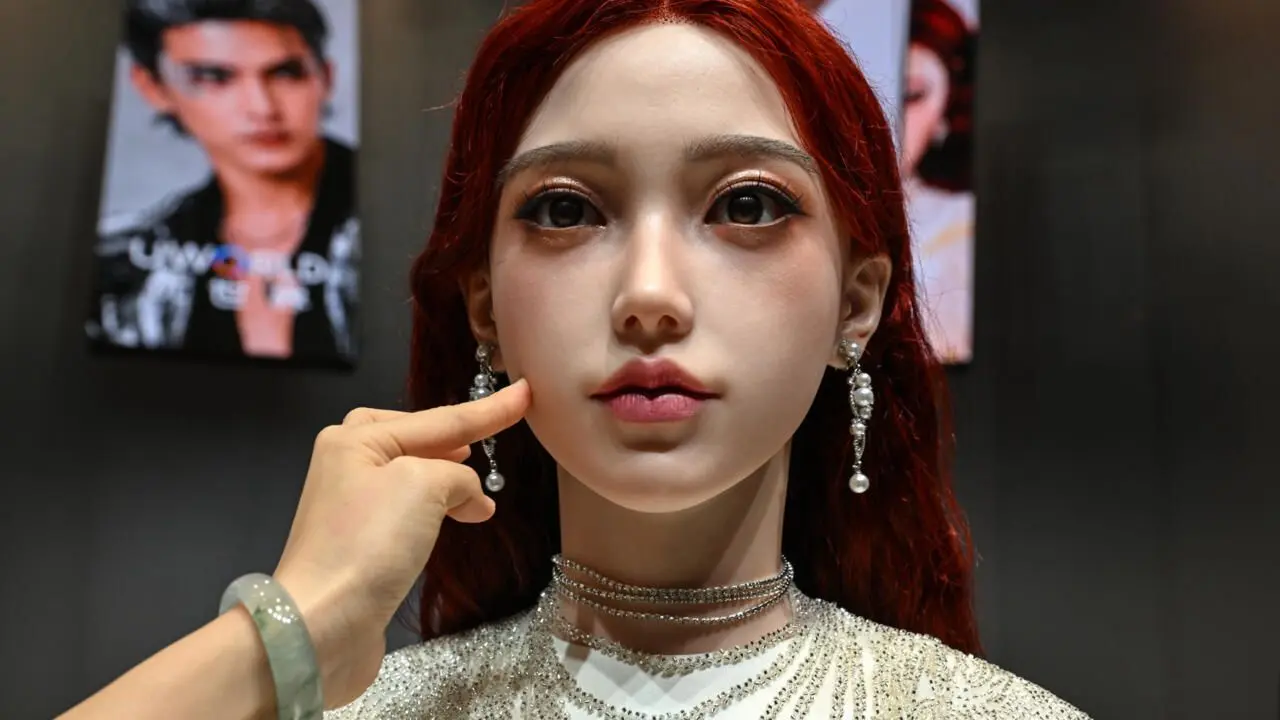
Source: France 24
UBTech is openly positioning the U1 Series as a response to China's growing loneliness epidemic. The company cites demographic trends showing that more than 90 million adults live alone and 118 million older adults are classified as empty-nest seniors in China
1
2
. Michael Tam, head of UBTech's brand UWorld, stated at the launch event that "our bionic robots can accompany you for a lifetime" and "will never betray you, will always be loyal to you, and will love you unconditionally"3
. The company estimates that 10 percent to 20 percent of people living alone meet clinical criteria for mental health disorders, highlighting the need for accessible emotional support1
.The platform incorporates Agent Memory OS, a cross-temporal memory framework that enables persistent long-term interactions
1
. This system allows the robot to remember people, preferences, and household routines over time2
. A proactive care engine continuously interprets environmental context, enabling wake-word-free communication and context-aware responses1
. The robot's fast-and-slow brain architecture combines rapid intuitive responses with deep reasoning, delivering reactions in about 500 milliseconds while supporting complex decision-making through AI models with hundreds of billions of parameters1
2
.Related Stories
UBTech has implemented a three-layer privacy architecture based on local-first processing, minimal cloud reliance, and user-controlled hardware protections
1
. The company states that data processed by U1 robots is encrypted and will not be used to train its AI models3
. However, the customization features push into controversial territory. For sufficient payment, the robots' hair, face, and outfits can be customized to resemble a loved one, celebrity, or imaginary character3
. Through the Human-Robot Companionship Initiative, UBTech plans to donate 100 customized U1 Series robots in 2026, incorporating 3D facial reconstruction and voiceprint-based identity replication technologies to recreate designated individuals for personalized interaction1
.China's robotics industry has accelerated rapidly, with the country accounting for 85 percent of the world's humanoid installations last year, according to Barclays bank
3
. The government has designated robotics a strategic industry, and by last year, more than 140 Chinese companies had launched more than 330 humanoid robot models3
. However, experts express caution about market viability. Lian Jye Su, chief analyst at Omdia, told AFP that while he sees "value in a companion robot, albeit in a niche market" such as elderly care or mental wellness, the robots "have to pass the 'uncanny valley' test to appear physically and emotionally acceptable," with current models perhaps too off-putting to sell well3
. The basic U1 can discuss daily concerns, remind users to take medication, and help spot potential health problems, but it doesn't perform housework or cooking, and its battery life extends only to four hours3
.Summarized by
Navi
[1]
[2]
05 Feb 2026•Technology

06 Jan 2026•Technology

03 Jun 2026•Business and Economy

1
Policy and Regulation

2
Technology

3
Science and Research